NEW YORK CITY—As the United States celebrates its 250th anniversary this year, New York is commemorating 400 years since the Dutch founded New Amsterdam at the tip of the island of Manhattan. The New York Historical has just opened the first-of-its kind exhibition that examines life in New Amsterdam through the lens of exceptional 17th-century Dutch paintings, along with maps and historic documents. On view through Aug. 30, 2026, “Old Masters, New Amsterdam” includes portraits, landscapes, genre scenes, and still lifes by leading artists of the Dutch Golden Age lent by private collectors and public institutions.
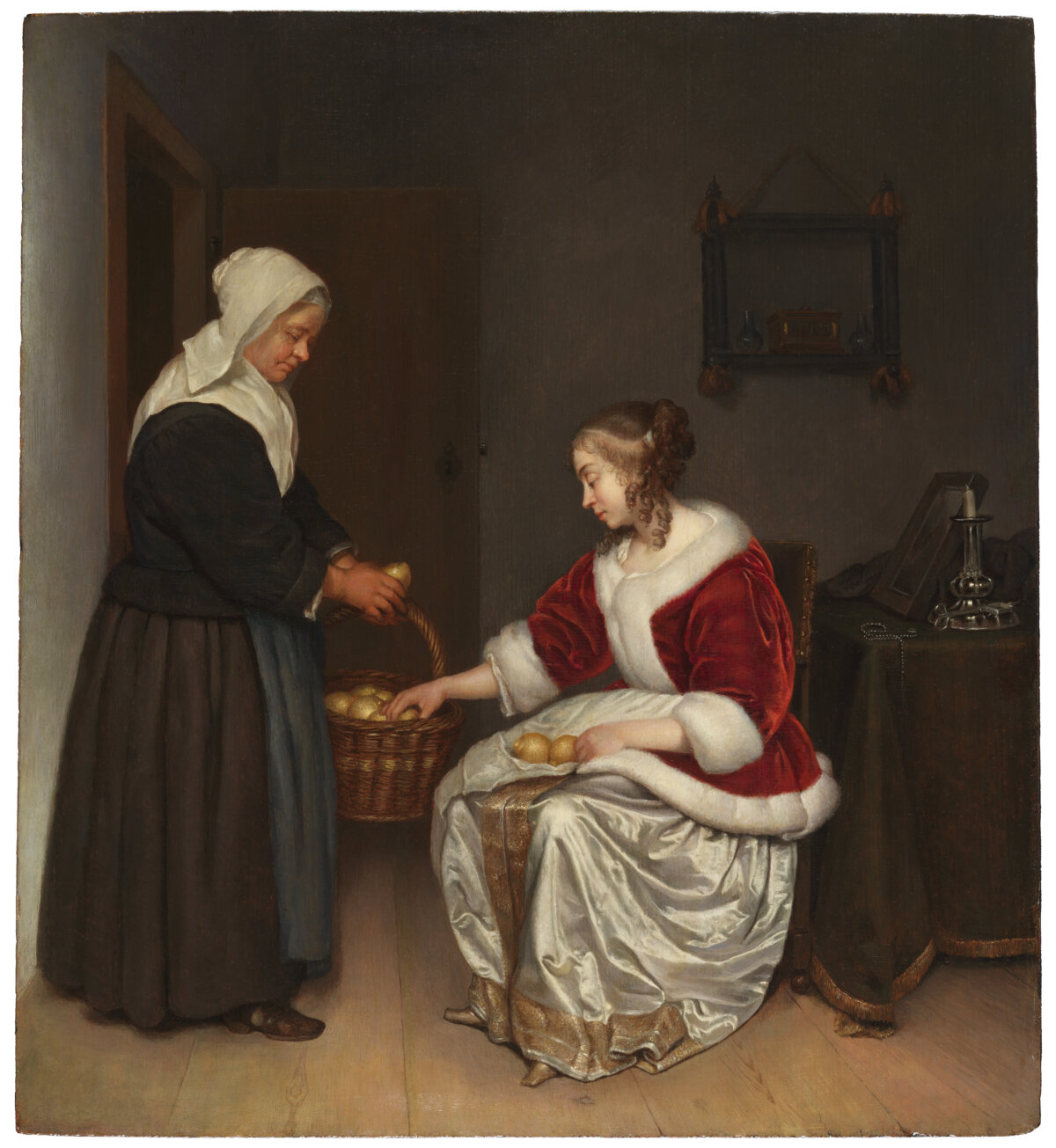
The exhibit brings to vivid life multiple facets of New Amsterdam. This diverse Dutch settlement of commerce became the capital of New Netherland in 1626. The New Netherland colony was founded by the Dutch West India Company and included parts of five future states.
Navigating New Amsterdam
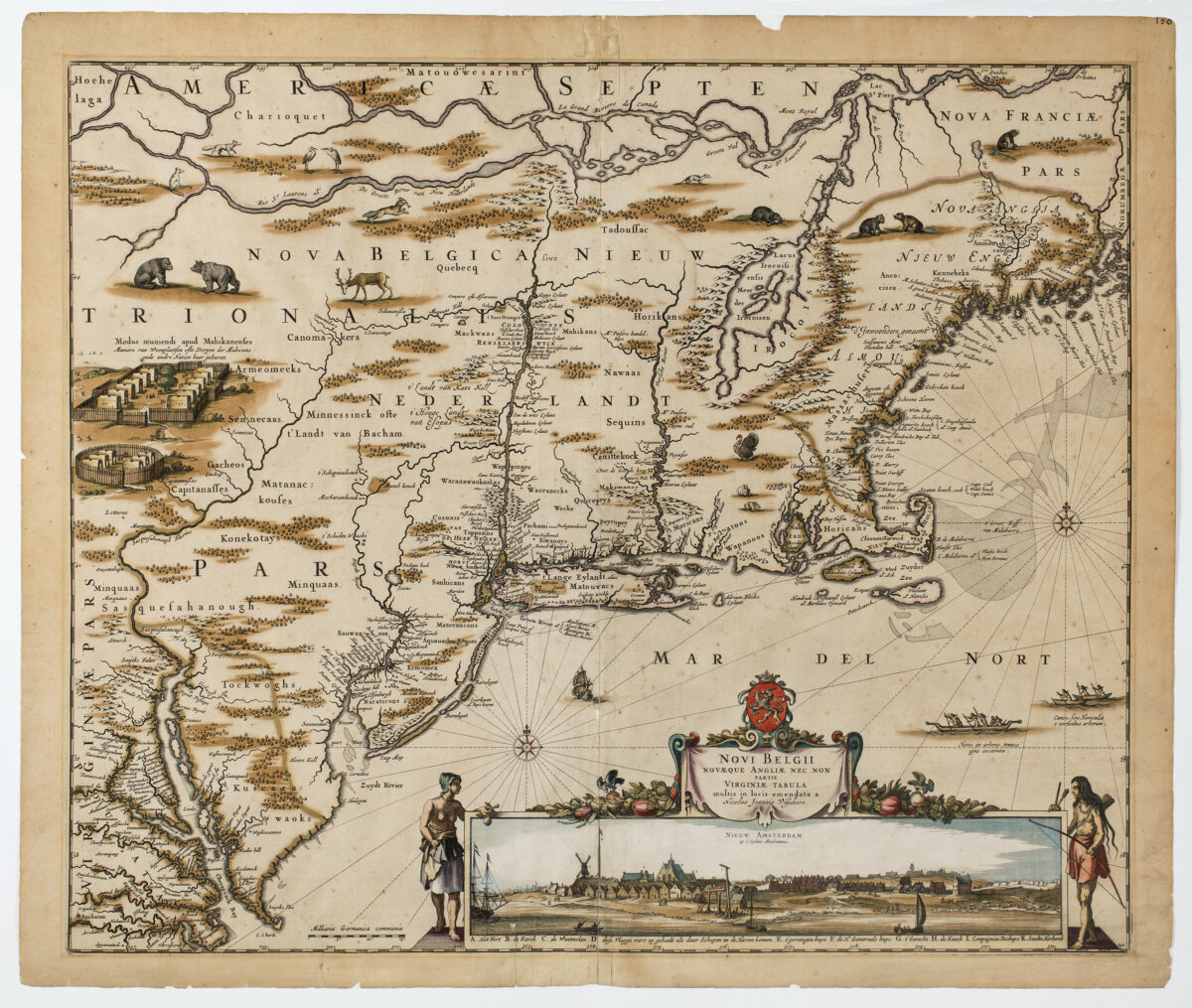
In the beginning of the exhibit, a map helps orientate the viewer: “Novi Belgii Novaeque Angliae nec non Partis Virginiae tabula” by famed cartographer Nicolaes Visscher (1649–1702). Visscher created the most detailed as well as accurate map of North America’s eastern seaboard while the Dutch controlled New Netherland. The map includes places with familiar names, such as “Lange Eylandt” (Long Island) and “Caep May” (Cape May).
Fifty years later in 1664, the British captured New Amsterdam and renamed it. However, the Dutch legacy of individuality, religious tolerance, entrepreneurship, capitalism, and creativity carried over, indelibly shaping how New York evolved during colonial times and as part of the new United States.
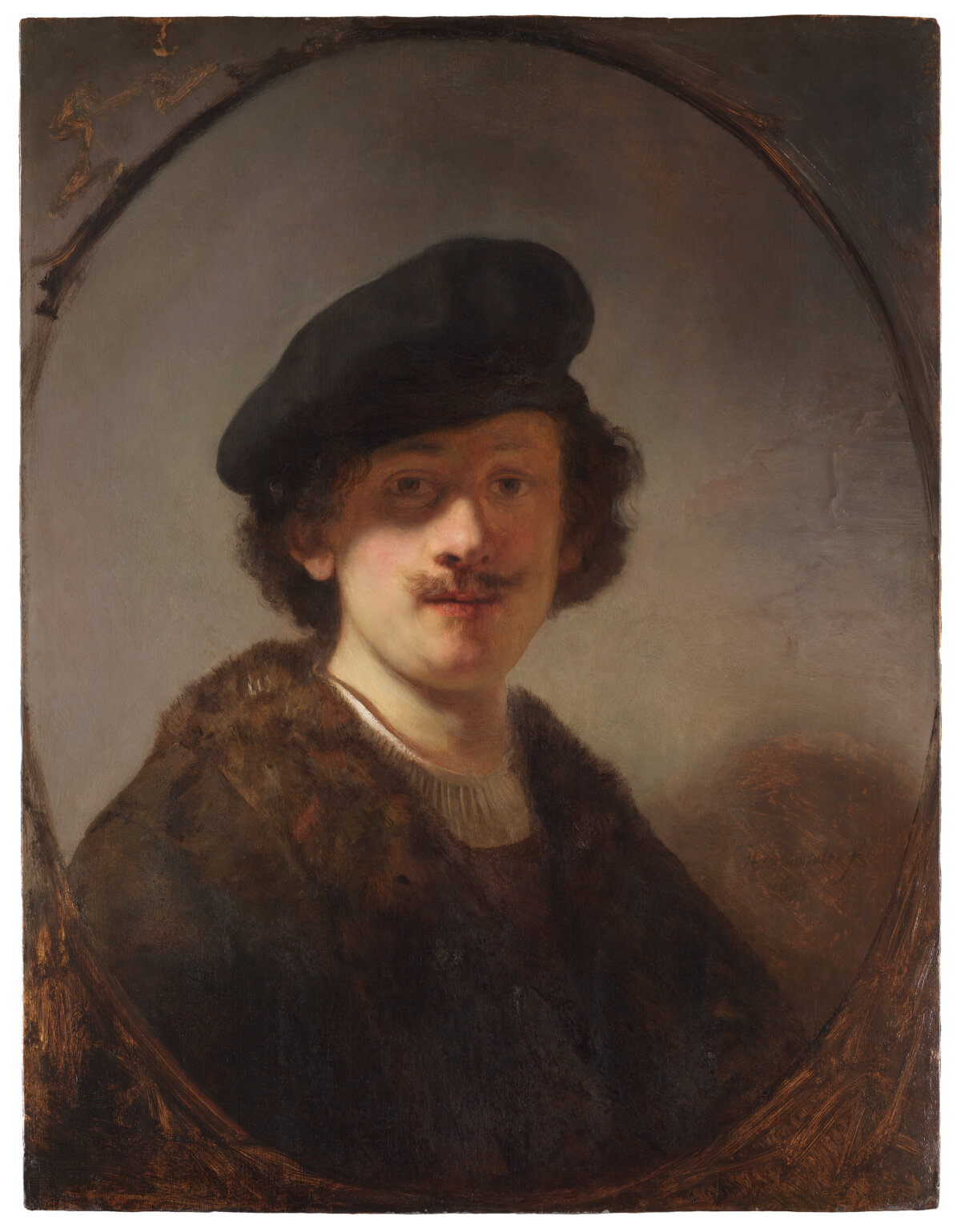
Of the more than 60 paintings in the exhibit, 45 are generously lent by The Leiden Collection, which is an astonishing assemblage of 17th-century Dutch art owned by businessman and philanthropist Thomas S. Kaplan and his wife, Daphne Recanati Kaplan. The Leiden Collection contains the largest grouping of Rembrandt paintings in private hands. Several are on view here, including one of Rembrandt’s remarkable self-portraits. Indeed, all of the paintings discussed in this article are part of The Leiden Collection.
None of the artists in the show ever visited America. However, their pictures provide insights into Dutch domesticity, pastimes, religion, work, commerce, and material culture, which had parallels in the Dutch settlement of New Amsterdam. Divided into six thematic sections—The Wider World, The Individual Self, at Home, At Work, At Play, and Food and Drink—the exhibit explains aspects of life in Europe that were echoed by the settlers as well as what made New Amsterdam, and later New York, truly new.
The Leiden Collection
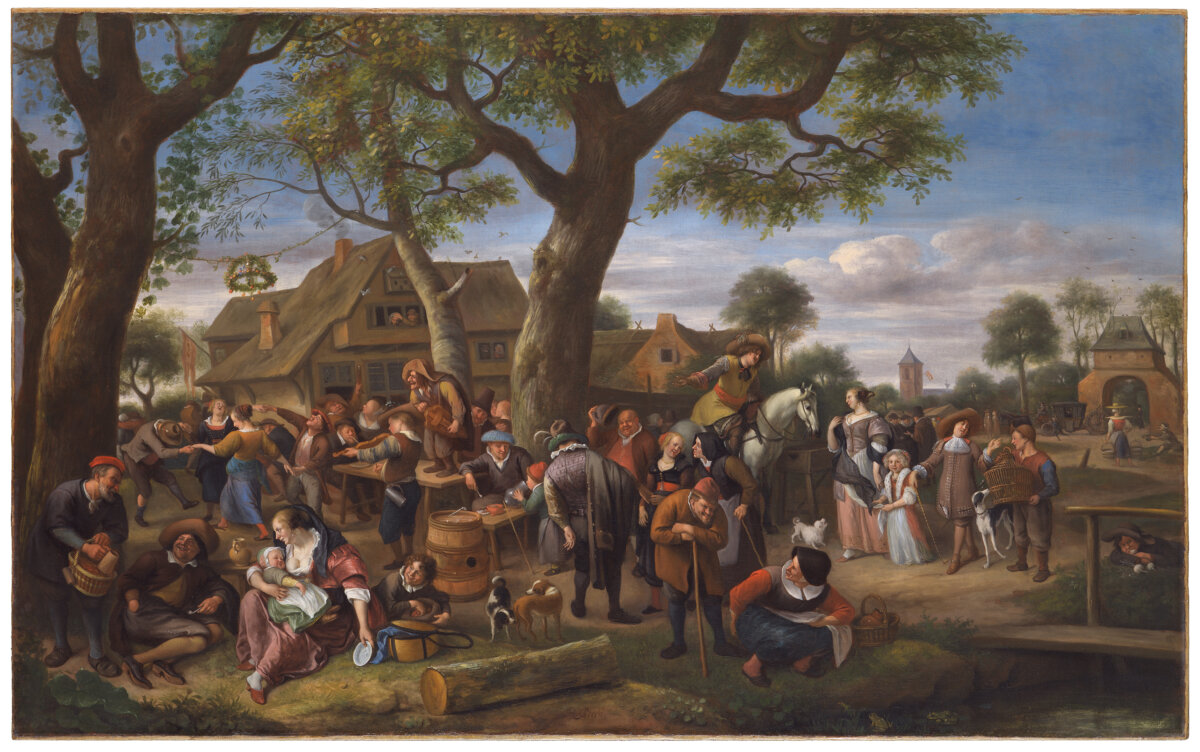
The show’s largest work is Jan Steen’s exuberant painting “Peasants Merrymaking Outside an Inn” from circa 1676. Steen is known for boisterously humorous scenes. This canvas depicts a country fair in the Dutch Republic with an array of detailed vignettes and individuals. In New Amsterdam, taverns and street fairs were popular places to gather and unwind.
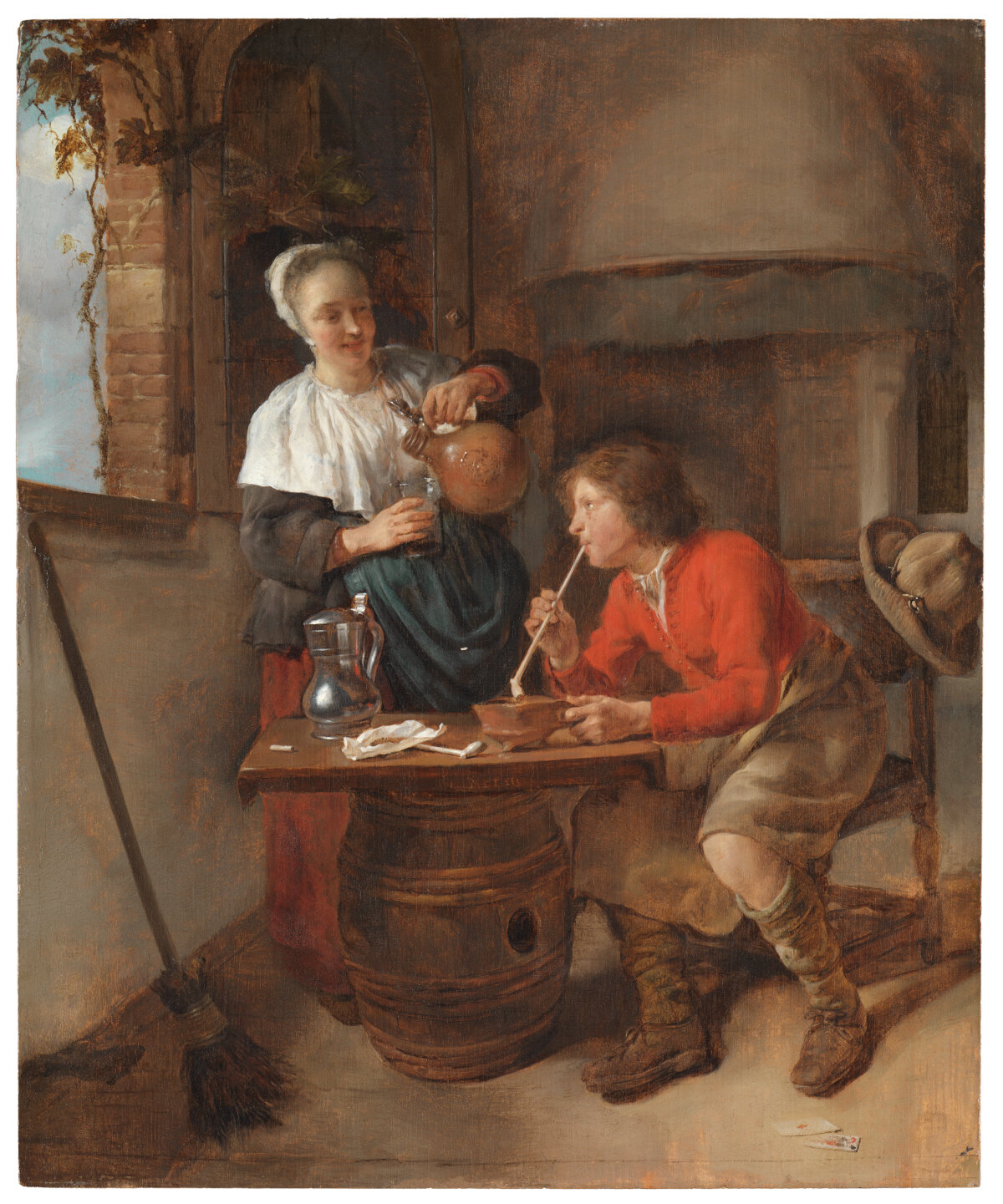
Another example of this in the show is “Young Man Smoking and a Woman Pouring Beer” from circa 1656 to 1658 by Gabriel Metsu. Some of Metsu’s paintings reflect Steen’s influence. In this tavern scene the setting is simple, from the libation being poured to the architecture and furniture. The humble interior would have had equivalents in Dutch Manhattan, which generally had more modest dwellings.
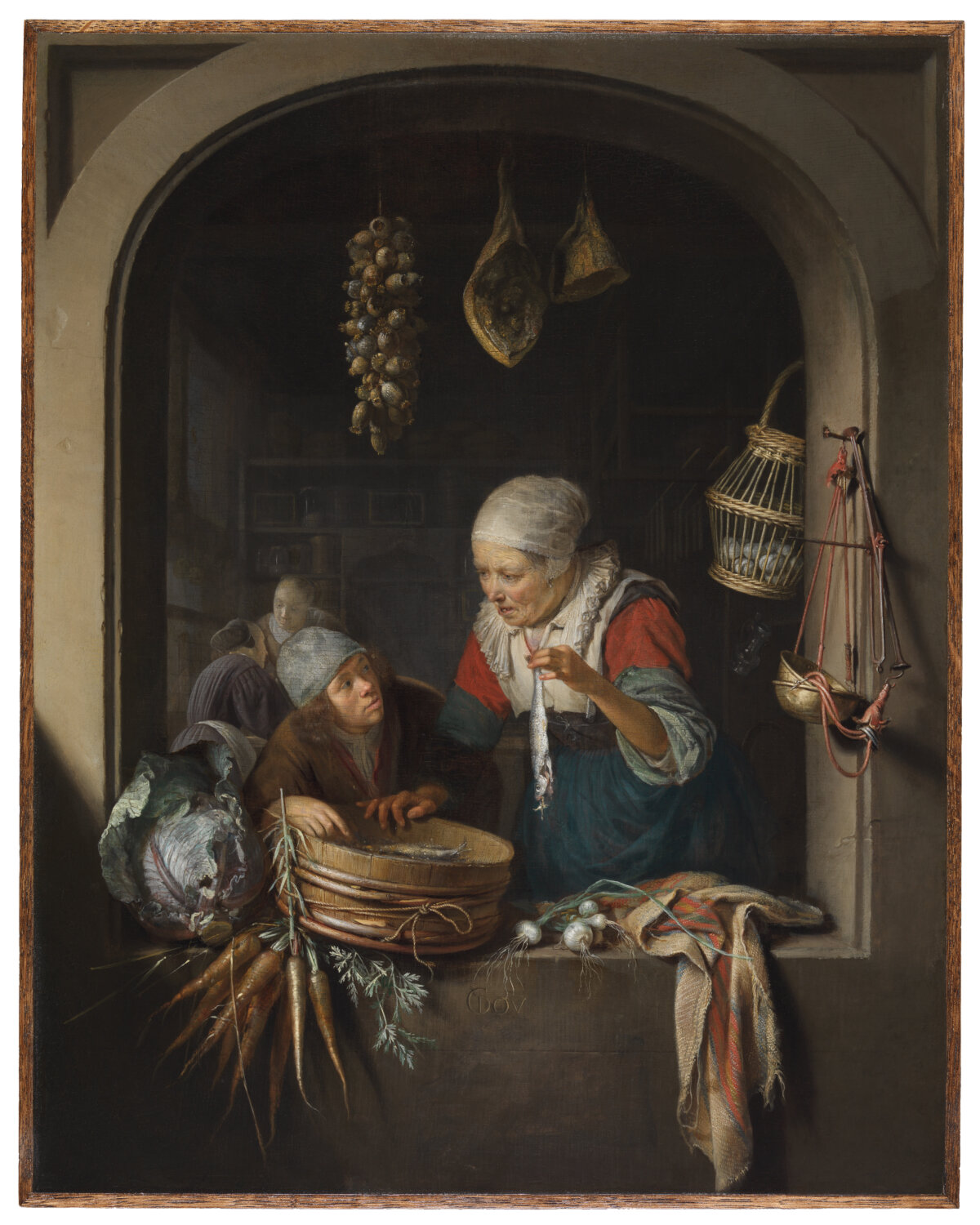
Metsu may have studied with Gerrit Dou, who himself was in the workshop of Rembrandt. Dou is renowned for compositions with minutely rendered details painted in a highly finished, seamless style. Many of his works that present a snapshot of everyday life have scenes framed in illusionistic arched stone openings. One such example of these “niche” paintings is the 1664 “Herring Seller and Boy.” Shopkeeping was a respectable means of employment for 17th-century women, and this work, formerly in the collection of Catherine the Great, Empress of Russia, shows a fisherboy trying to sell his catch to an older woman who will in turn sell it to her customers.
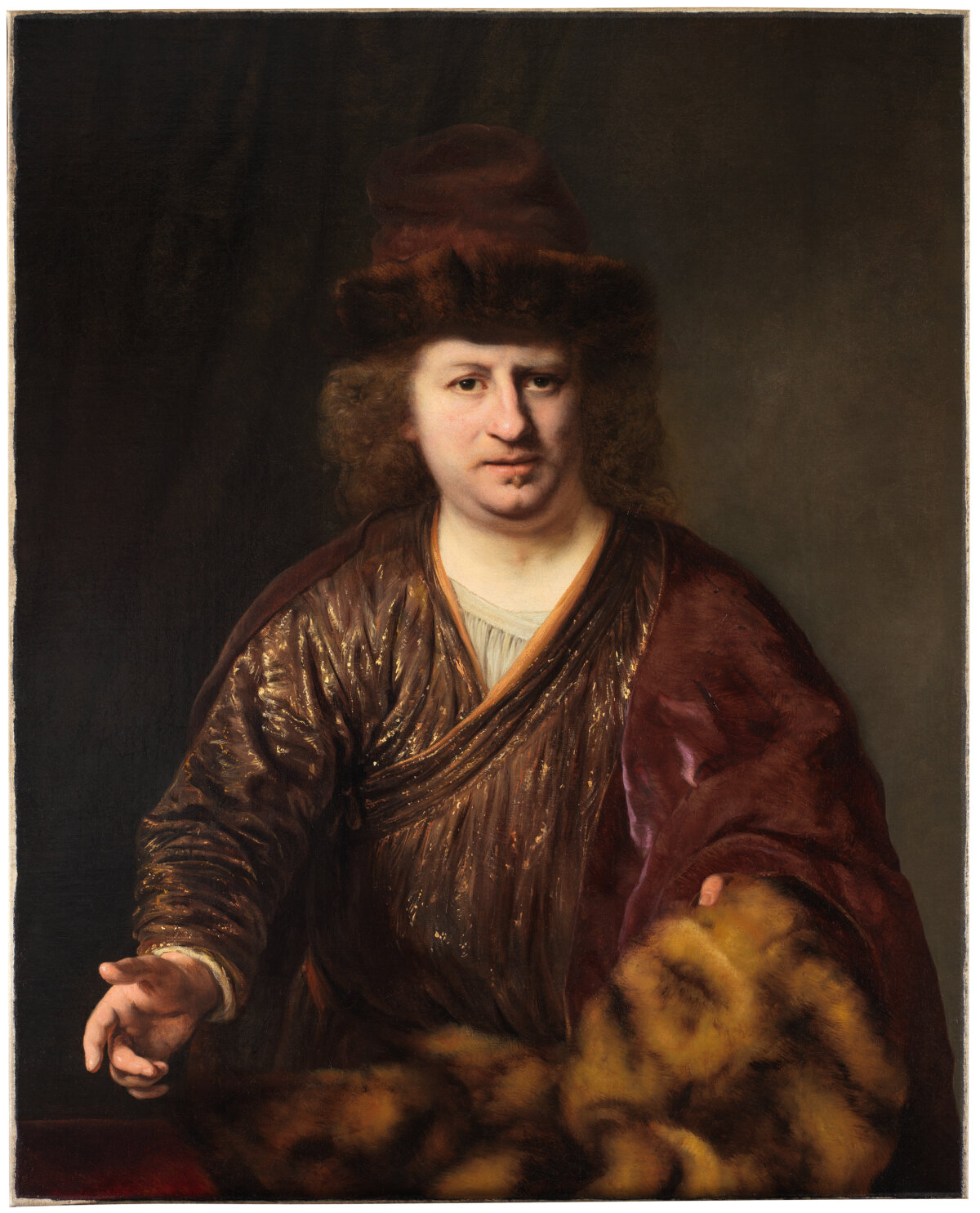
Another student of Rembrandt was Ferdinand Bol. His three-quarter-length “Man with a Fur-Trimmed Hat” from circa 1646 to 1648 speaks to Dutch wealth from commercial trade. Fur, whose texture is brilliantly conjured in oil in the present canvas, was a key component of their international commerce. North America provided beaver pelts and other furs for Amsterdam’s luxury markets.
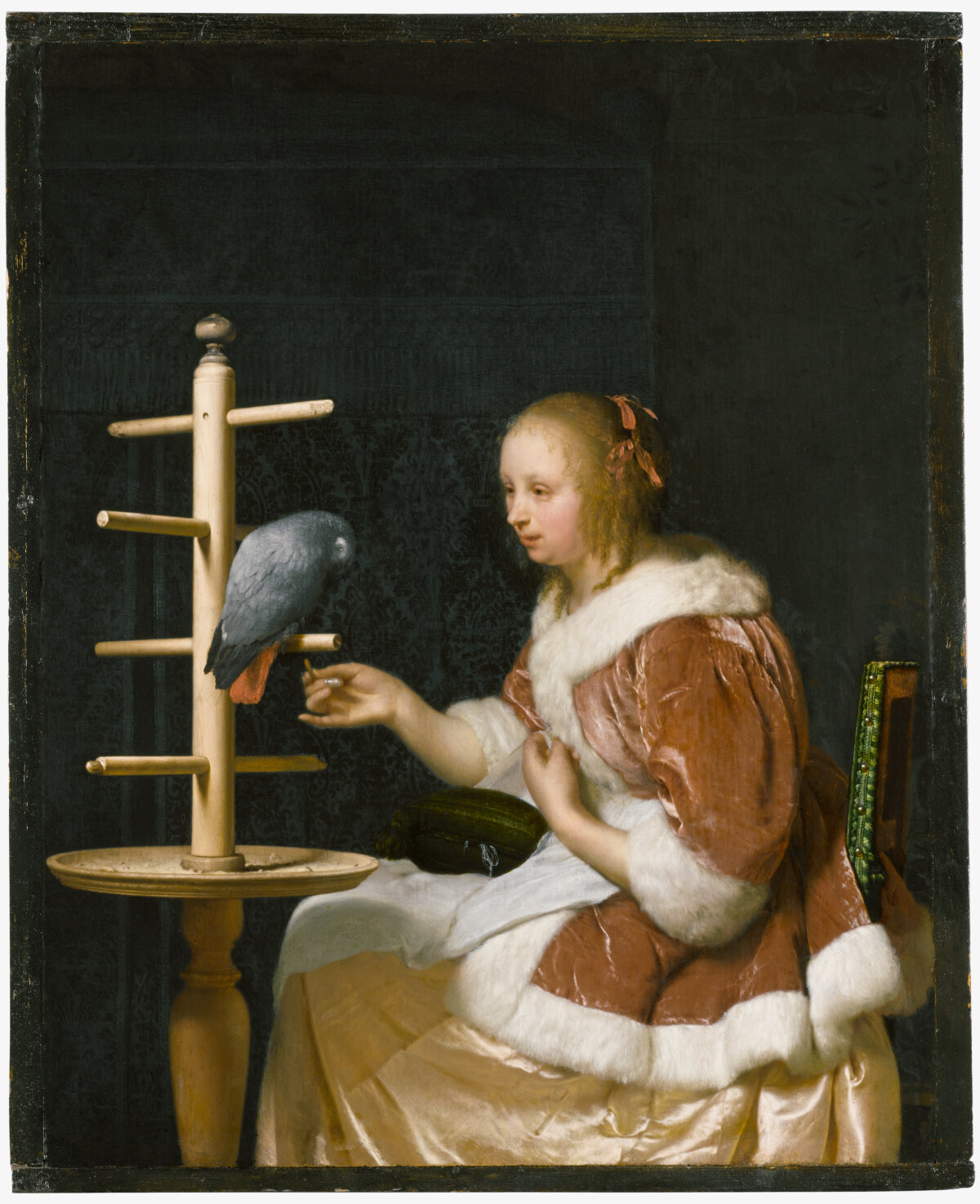
Popular wares in Amsterdam’s luxury shops included birds, such as parrots and parakeets, imported from the Caribbean and South America. In New Netherland, elite Dutch colonists bought exotic birds as household pets as well, along with other luxury goods. Frans van Mieris’s 1663 refined panel “Young Woman Feeding a Parrot” shows such a tamed creature in a domestic setting with its elegantly dressed owner. Van Mieris’s teacher was Dou, and this work is executed with a highly skilled smooth finish.
“Old Masters, New Amsterdam” blends history and art history in a fascinating exhibition. The masterpieces on display feature compelling compositions. Their exquisitely rendered textures, colors, light, and characterizations are a joy to behold. The viewer experience is made all the richer by relating these scenes to what life would have been like in the New World’s Dutch settlement. Visitors can take home a fully illustrated, 65-page complimentary booklet, a keepsake that allows one to savor the artistry and history.
“Old Masters, New Amsterdam” exhibition at the New York Historical will be on view through Aug. 30, 2026. To learn more, visit nyhistory.org.
What arts and culture topics would you like us to cover? Please email ideas or feedback to features@epochtimes.nyc.