During Hollywood’s Golden Age, Bette Davis was the most versatile female star of the big screen. She was adept at playing both victims and villains, and she had no problems sacrificing her glamor to play emotionally unattractive characters.
Her highly articulated phrasing, intense gaze, and melodramatic cigarette smoking made her an easy target for comic imitation. But the intensity and the intelligence of her acting could not be denied.
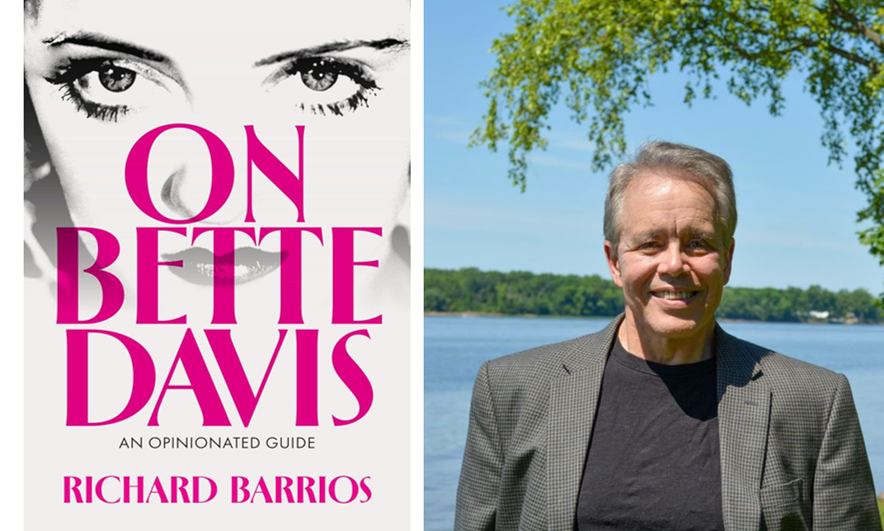
From “Bad Sister” in 1931 to “Wicked Stepmother” in 1989, Davis was both an integral part of many classic productions and a casualty of a few stinkers. Richard Barrios’s “On Bette Davis” provides cogent insight to the highs and lows of the star’s output.
A Rough Start
Ironically, the film industry initially didn’t know what to do with Davis. She was an up-and-coming Broadway actress when producer Samuel Goldwyn complained she wasn’t photogenic in a 1930 screen test. Universal Pictures signed her that year but quickly lost interest and let her go a year later.
She arrived at Warner Bros. through the intervention of actor George Arliss, who requested her for his 1932 feature “The Man Who Played God.” The studio kept her busy with 16 films in her first two years there. However, the films failed to provide a star-making performance.
Davis felt stardom could be obtained as the vicious Cockney waitress Mildred in the 1934 adaptation of W. Somerset Maugham’s “Of Human Bondage,” which was being produced at RKO Radio Pictures.
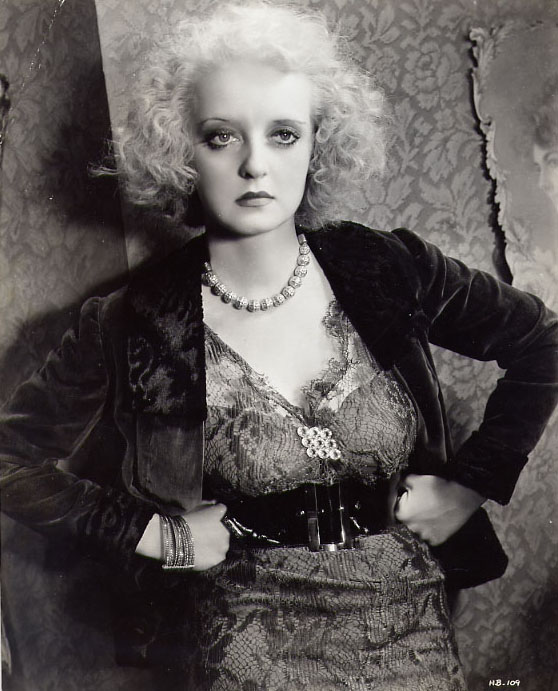
She aggressively lobbied studio head Jack L. Warner to loan her to RKO, but Warner was aghast over her playing such a negative character. She only got the part when RKO offered Irene Dunne for Warner’s production of “Sweet Adeline.”
An Extraordinary Output
Although “Of Human Bondage” wasn’t commercially successful, the force of Davis’s performance overwhelmed critics and raised her visibility in the film industry. When she was omitted from the Academy Award nominations as Best Actress, the rules were altered to allow write-in votes for Davis (she lost to Claudette Colbert for “It Happened One Night”).
Davis would win the award the following year for “Dangerous,” which she sourly viewed as a consolation prize for a lesser work. But Barrios offers a vigorous defense of “Dangerous,” stating it gave Davis “a more complex role” as the self-destructive actress, as well as her first above-the-title billing.
Later in the book, Barrios champions other Davis films that never quite reached classic status but still contain memorable performances. The author highlights her performance as a nightclub hostess who testifies against an abusive gangster in “Marked Woman” (1937). For that film, she insisted on being made-up to resemble the victim of a too-brutal assault. This created a startling dramatic effect unusual for that era.
Her humorous rendition of the World War II-era ditty “They’re Either Too Young or Too Old” in the 1943 musical revue “Thank Your Lucky Stars” offers what Barrios calls “about five on-key notes and a whale of a lot of personality.” The author hails her unlikely casting as the bedraggled Bronx housewife planning her daughter’s wedding in “The Catered Affair” (1956) as “a spectacular transformation.”
Oddly, Warner Bros. often took her for granted. The studio envisioned Norma Shearer or Irene Dunne for “Now, Voyager” (1942), but Davis fought bitterly to snag what turned out to be one of her greatest achievements. Despite her status, she had to do a screen test for consideration as the matriarch in “Life With Father” (1947); that role went to Dunne.
Davis repeatedly tried to get Warner Bros. to back her in a biopic of Mary Todd Lincoln and adaptations of Edith Wharton’s “Ethan Frome” and C.S. Forester’s “The African Queen.” She did costume tests for “The Miracle,” the story of a nun who nearly renounces her vows, but the film never went off the storyboards.
Late Career Surprises
Davis’s star power began to ebb after her 1950 triumph in “All About Eve.” With few exceptions, most notably “What Ever Happened to Baby Jane?” (1962), she usually found herself the sole memorable aspect of forgettable films.
She eagerly accepted television guest roles; she even shot a pilot episode for a proposed comedy series about an interior decorator who gets involved in her clients’ dilemmas. Barrios notes her “bizarre flirtation” with television Westerns. This included three separate appearances on “Wagon Train.” One episode featured Davis displaying her legs in a brief can-can dance.
But Davis didn’t accept every role. She turned down the lead in “Come Back, Little Sheba” (1952), which she regretted, but had no remorse rejecting the lesbian-themed drama “The Killing of Sister George” (1968). Although she wanted it, she was not chosen to succeed Carol Channing on Broadway in “Hello, Dolly!”
Perhaps the most charming reason she gave for accepting a role was when she headlined the 1978 Disney caper “Return to Witch Mountain.” The star explained she wanted to be in a film that her grandchildren could see and enjoy.
Reading “On Bette Davis” will encourage readers to revisit the star’s work and appreciate her formidable talents. For classic movie lovers, this book is a must-have.
‘On Bette Davis: An Opinionated Guide’
By Richard Barrios
Oxford University Press: April 14, 2026
Hardcover, 248 pages
What arts and culture topics would you like us to cover? Please email ideas or feedback to features@epochtimes.nyc