




Although her small body of work included only 101 poems, Elizabeth Bishop (1911–1979) left behind one of the biggest footprints on 20th-century American literature. Among those poems, one of them not only came to be her most well-known work but also became one of the most famous examples of the villanelle.
A villanelle is notoriously difficult to write despite having two repeated lines that compose almost half of the poem. It’s this very repetition that makes it so difficult, because as the poem progresses, these two refrains should gather new shades of meaning.
Villanelles follow a strict form of five tercets and a quatrain. The 19-line poem contains only two rhymes; its rhyme scheme is aba aba aba aba aba abaa.
Bishop’s villanelle “One Art” is a reflection on loss.
‘One Art’
The art of losing isn’t hard to master;
so many things seem filled with the intent
to be lost that their loss is no disaster.
Lose something every day. Accept the fluster
of lost door keys, the hour badly spent.
The art of losing isn’t hard to master.
Then practice losing farther, losing faster:
places, and names, and where it was you meant
to travel. None of these will bring disaster.
I lost my mother’s watch. And look! my last, or
next-to-last, of three loved houses went.
The art of losing isn’t hard to master.
I lost two cities, lovely ones. And, vaster,
some realms I owned, two rivers, a continent.
I miss them, but it wasn’t a disaster.
—Even losing you (the joking voice, a gesture
I love) I shan’t have lied. It’s evident
the art of losing’s not too hard to master
though it may look like (Write it!) like disaster.
Acquainted With Loss
Bishop’s life was marked by loss from a young age; her father died when she was only 8 months old, and her mother suffered from mental illness and was committed to an institution when Bishop was 5. She was raised by her maternal grandparents in Nova Scotia and became a painter, poet, and author of short stories.
By the time of her death at age 68, she had received the Pulitzer Prize, the National Book Critics Circle Award, the Neustadt International Prize for Literature, the 1970 National Book Award and many others. Yet despite being highly respected, it wasn’t until after her death in 1979 that she became famous, such that she is now regarded as one of the major American postwar poets.
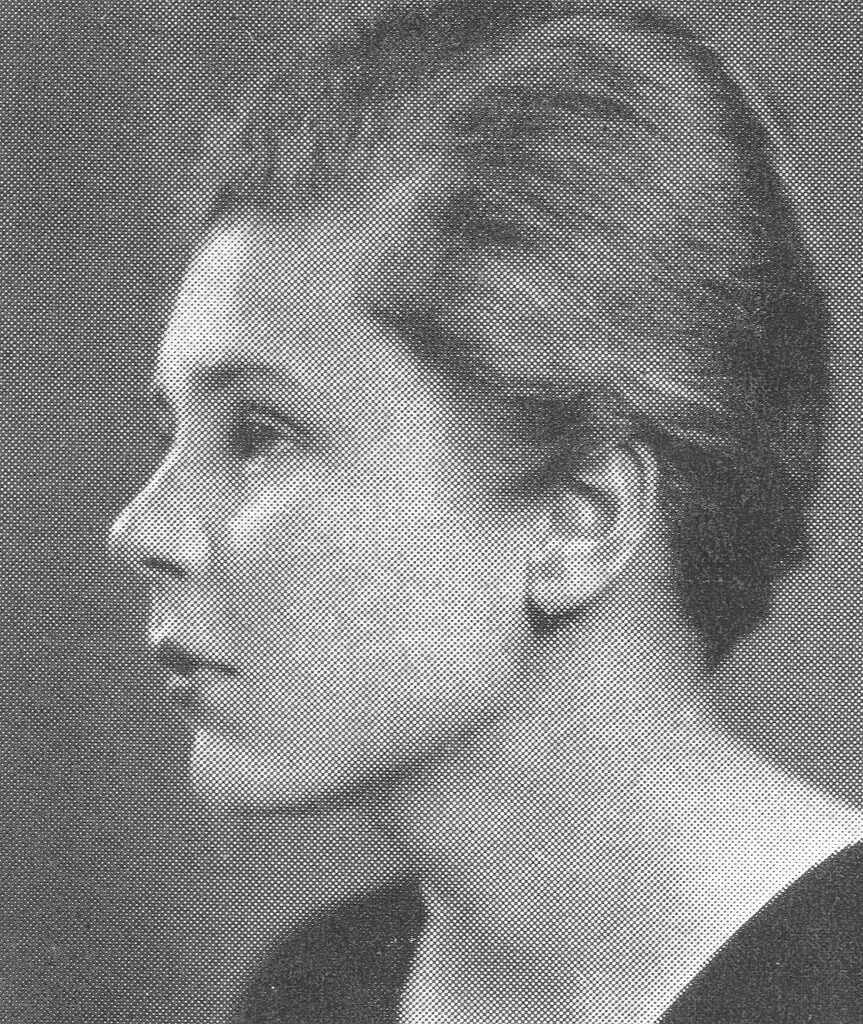 Elizabeth Bishop upon graduating from Vassar College in 1934. (Public Domain)
“One Art” begins on what seems a lighthearted note; the speaker jokingly puts a positive spin on losing. We have a catalog of lost objects: keys, an hour, the names of people or places. But by the end of the third stanza, it’s clear that this isn’t a poem about someone who is mildly unorganized or forgetful. Contained in the forgetfulness of “where it was you meant/ to travel” are lost dreams; the poem is no longer about losing one’s keys or other small items.
The beginning of the fourth stanza loops back to the loss of small objects, and yet as the poem progresses, the losses grow in magnitude; with every stanza, the speaker is practicing “losing farther, losing faster.” The loss of her mother’s watch signifies a more personal, emotional loss; it was an object she cherished, just as the houses mentioned in that stanza were places she loved.
The idea of losing things as large as cities, rivers, realms, or continents is almost comical until we read “lost,” not in the sense of “misplaced,” but of having been separated from those things. The fifth stanza contains a change of tone in the speaker’s admissions that she misses what she lost. She has lost not only a house but the land she loved, and she moves past denial into an open admission of longing.
In the last stanza, with the progression of the catalogue of losses, we can expect to find the deepest loss of all. It’s the only stanza with four lines, in which the two refrains are joined at the conclusion. But in this iteration, the speaker drops the guise of indifference; she owns that the loss does look like disaster. In the command to herself “Write it!,” we see that she has to labor to give birth to words that only begin to touch upon her grief.
Variants of the word “love” appear in each of the stanzas in the second half of the poem, but they progress from what is “loved” or “lovely” things (so described to create emotional distance) to a voice and gesture she actively loves.
The glib tone of the first stanzas and the speaker’s denial of grief can’t withstand the force of the heartbreak over losing someone she loves. It can’t be laughed away or passed off as trivial. In such suffering, the speaker realizes the necessity to give grief an outlet to grief. It demands to be acknowledged and expressed.
 The picturesque 16th-century Heinsheim Jewish Cemetery, near Bad Rappenau, Germany. (Aristeas/CC BY-SA 4.0)
To ‘Master’ Grief
Has the speaker has actually mastered the art of losing? On one hand, by saying that the art of losing isn’t hard to master, the speaker points to the fragility of our lives and underlines how everything we have can be lost in a moment. In this sense, having lost so much, the speaker can claim to have mastered the art of losing.
On the other hand, if the art of losing entails grieving well, the speaker has only just passed the point of acknowledging her grief. At the start of the poem, she tries to negate her losses by saying that the items are “filled with the intent/ to be lost”; she reframes the losses to make it seem as though these things or people are willingly leaving her.
Bishop cycles through several types of denial: using humor to deflect from the pain, trivializing the losses, and creating emotional distance between herself and what she’s loved. Throughout the poem, she wrestles with language to try to come to terms with the loss without owning its pain, to accept loss and bypass suffering. However, she can’t deny the reality of her pain without also denying her love; she can’t simultaneously claim to have lost a love and say that it doesn’t look like a disaster.
In the end, she realizes there is no way around grief, only through it. The only real way to master the art of losing is to learn the art of grieving well.
What arts and culture topics would you like us to cover? Please email ideas or feedback to features@epochtimes.nyc
