
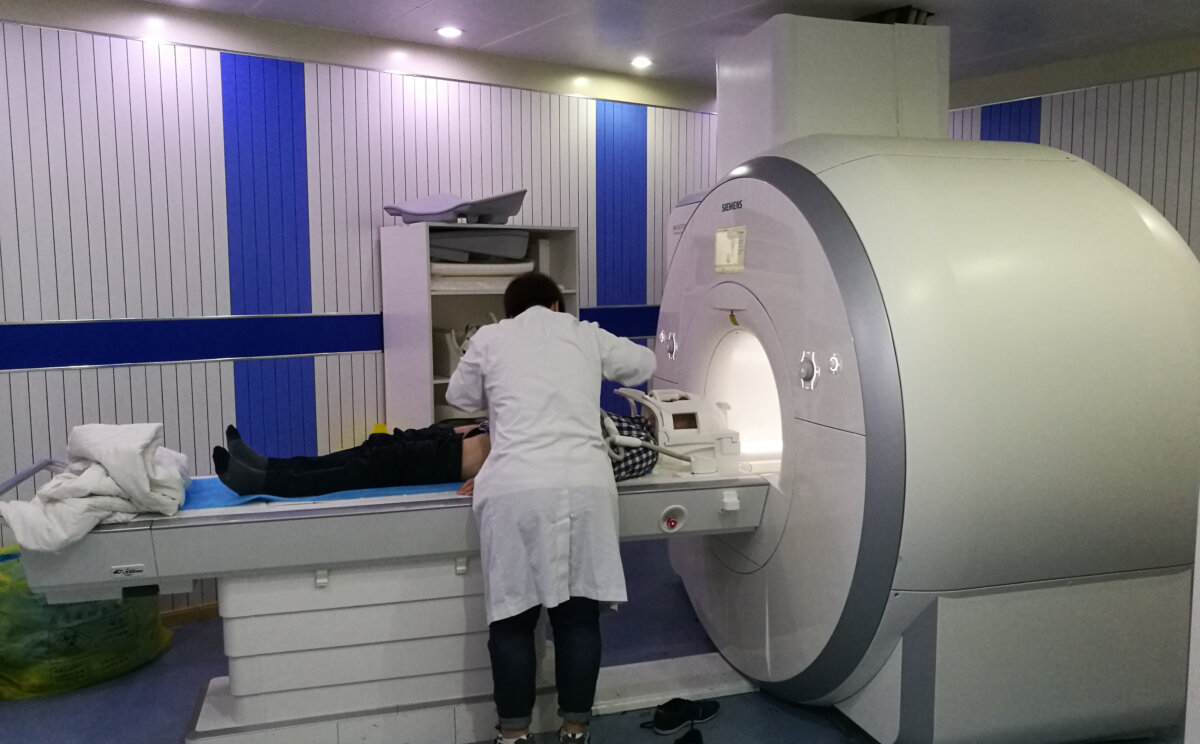
In the summer of 2025, finance professional Shira Kupperman Boehler was with her husband, Adam, in New York City for a series of business meetings. When the couple found a stretch of free time in their schedules, Boehler’s husband made a surprising suggestion: They should each get a whole-body MRI scan.
His suggestion was inspired by a previous MRI that found he had an asymptomatic sinus blockage that could have resulted in facial bone erosion had it not been caught early. The 44-year-old Boehler was a health-conscious long-distance runner who was the picture of good health. Despite her skepticism of the suggestion, she humored her husband and underwent the MRI.
The results of the MRI included the discovery of a minor sinus infection and a few nodules created by a thyroid condition she had had since her 20s. There was also a 3.8-centimeter spot on her right lung.
As Boehler recalls in “One Scan Saved My Life,” a follow-up CT scan found that the spot grew in diameter to 4.1 centimeters. A biopsy was scheduled to determine whether the spot was a fungal infection that was very common in the middle Tennessee area where she lived. However, it turned out to be Stage 1 adenocarcinoma, the most common type of cancer that starts in the organs.
Boehler’s remarkable story serves a double-barreled purpose: providing an overview of how the disease is viewed and serving as a memoir of how she faced and overcame a health crisis.
Unlikely Patients
Boehler’s initial reaction to her diagnosis was the declaration that she never smoked. Contrary to popular belief, lung cancer is not a health condition that is unique to smokers. Indeed, she later discovered that 25 percent of lung cancer patients never touched a cigarette.
But smoking alone doesn’t contribute to lung cancer. The presence of radon in homes, exposure to workplace and home carcinogens, including asbestos and coal products, and genetic risks are also contributing factors.
For reasons that Boehler cannot explain, Asian American non-smoking women have an abnormally higher likelihood of developing lung cancer than men in their demographic or in other racial groups.
Then, there is the question of awareness. Boehler points out that lung cancer results in more deaths per year than the combined fatality rates of breast cancer, pancreatic cancer, and ovarian cancer.
Yet the disease doesn’t receive the same level of awareness, publicity, and research funding as other cancers do. Boehler includes testimony from a survivor who tried in vain to get her local cancer centers to highlight Lung Cancer Awareness Month in November.
Making matters worse are the health insurance companies that routinely deny early screening coverage for non-smokers. Boehler paid out of pocket for her screenings. As a result of denied access to early screenings, only 28.1 percent of lung cancers are detected early.
“Lung cancer screening is also the only preventive screening that requires you to go see a primary care physician first,” Boehler wrote. “You have to schedule a shared decision-making visit, then get your referral, then schedule your screening. These hoops you have to jump through aren’t required for any other screening, including colonoscopies, mammograms, and pap smears (all interventions whose development and adoption caused death rates for these cancers to fall dramatically).”
A New Awareness
For her personal journey, Boehler offers a sensitive retelling of how she and her four children acclimated to her health situation. Boehler embraced her Jewish faith with greater strength during this time, refusing to miss a Yom Kippur service scheduled right before her preoperative procedures.
She also provides great details about the robot-assisted surgery she underwent. For that experience, a breathing tube was inserted down her windpipe to force air into the left lung while the right lung was collapsed to accommodate the cancer’s removal. Boehler’s recovery period required her to show greater patience, which was not easy for her go-getter personality.
It would not be a spoiler to reveal that Boehler is cancer-free. And with “One Scan Saved My Life,” she has taken on a new mission to ensure others share her good fortune.
Boehler said she is especially excited about the potential of artificial intelligence technology to improve the diagnosis and treatment of lung cancer. Her book also provides a checklist of strategies that she recommends for educating the public. This includes linking breast cancer and lung cancer awareness, since women who are diagnosed with breast cancer are more likely to receive a primary lung cancer diagnosis later.
In November 2025, the lung disease-focused nonprofit LUNGevity Foundation planted 60,000 white flags on the National Mall in Washington, each representing two lives lost to lung cancer per year. Boehler used the observance to eloquently envision when 60,000 flags could be planted “for all the lives saved.”
“One Scan Saved My Life” could possibly save the lives of readers who never gave any thought to lung cancer. For that, Boehler’s eloquent and informative work deserves immediate attention.
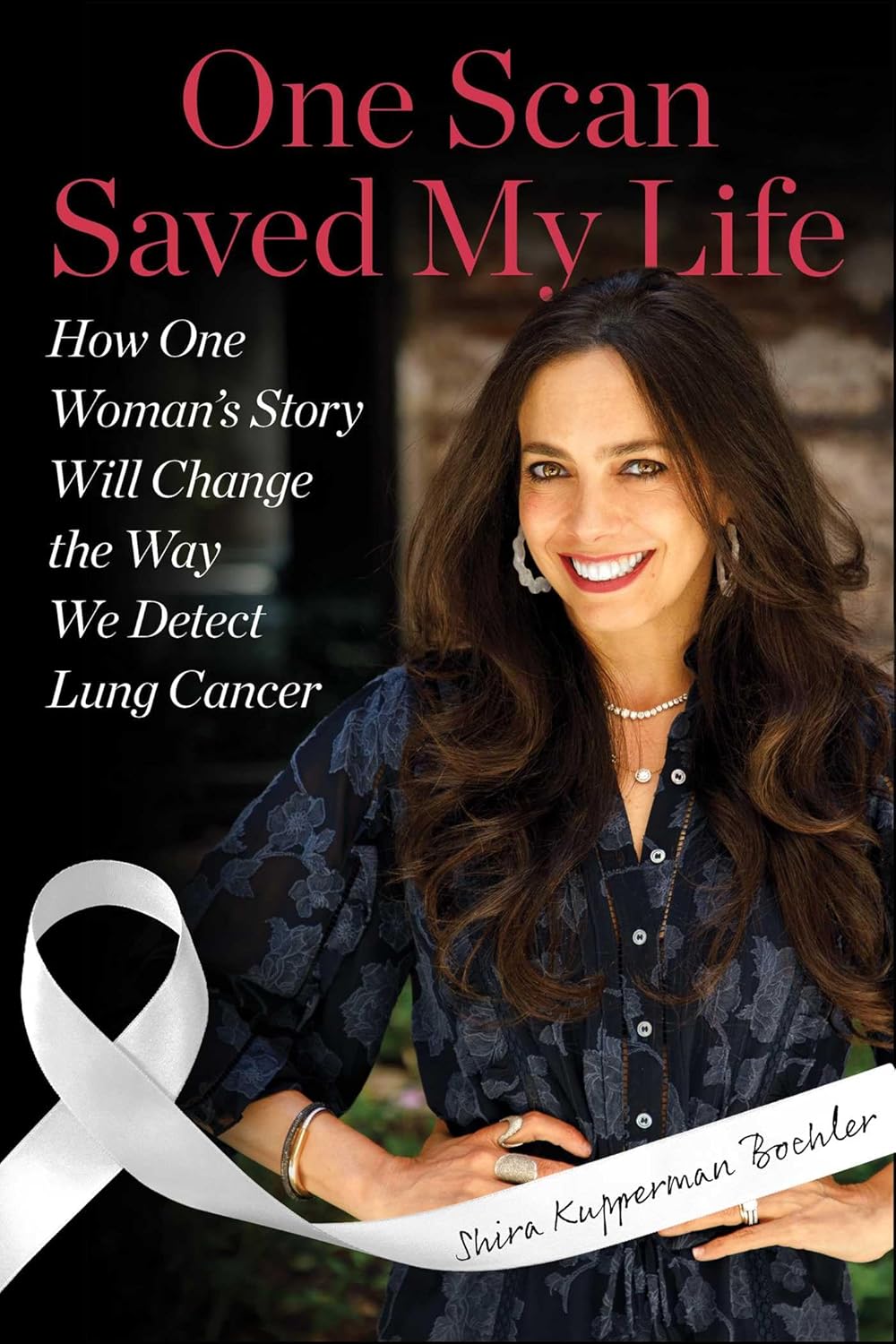
“One Scan Saved My Life: How One Woman’s Story Will Change the Way We
Detect Lung Cancer”
By Shira Kupperman Boehler
Skyhorse: April 28, 2026
Hardcover, 240 pages
What arts and culture topics would you like us to cover? Please email ideas or feedback to features@epochtimes.nyc