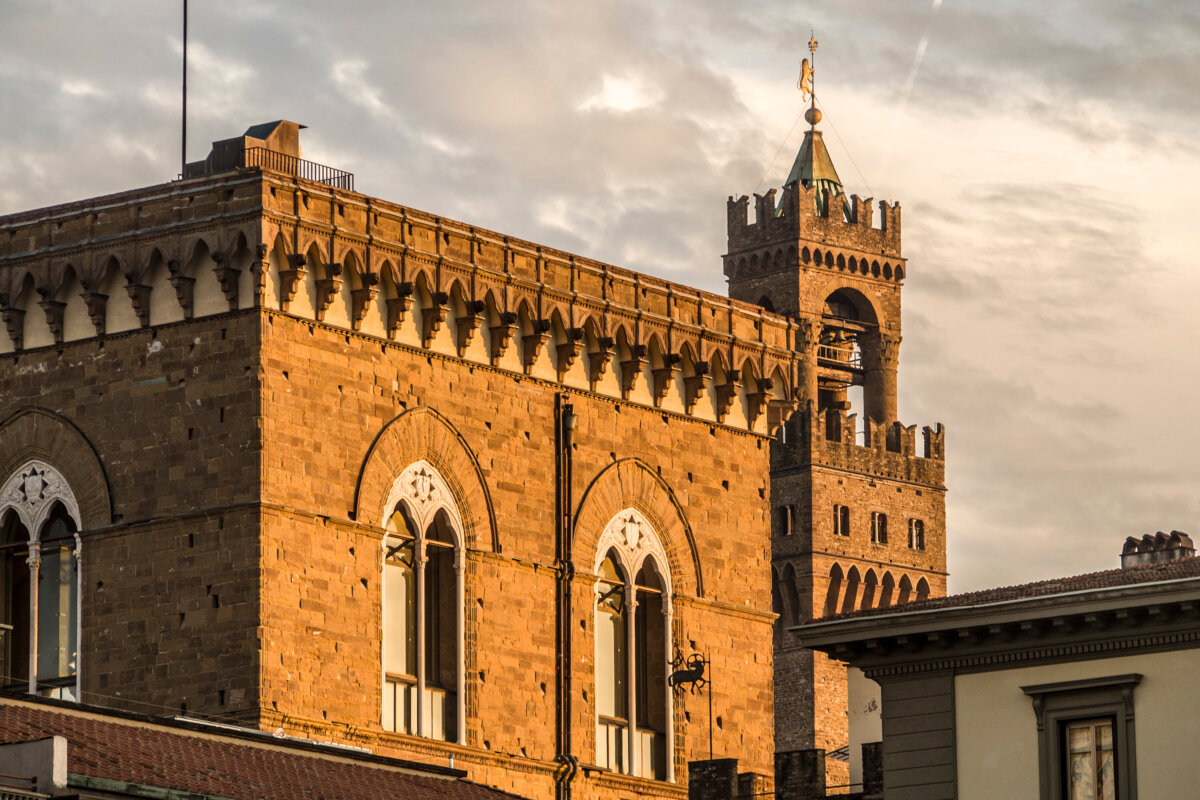
Orsanmichele was designed primarily as a secular building with a chapel inside. At 131 feet tall, the building features three uniform floors. Walls are made of a pietraforte, a local variety of sandstone. Their rough and rusticated appearance was a deliberate stylistic choice popular in the 14th century. The third-floor windows feature biforas, or windows divided by a column and topped with a pointed arch. (stefano cellai/Shutterstock)
Built on a piazza in the heart of Florence, Italy’s civic and religious center, the Orsanmichele is an exquisite example of the late Italian Gothic style. The communal building and church rank among the city’s famed architectural masterpieces. It also shares a forgotten medieval history.
The site originally contained an oratory dedicated to San Michele in Orto (St. Michael in the Garden), believed to date back to the eighth century. The building was demolished in the 13th century and rebuilt as a loggia (covered gallery) for the city’s grain market. However, the commerce building soon became a pilgrimage site when miracles were attributed to a painted image of the Virgin on a pillar.
Thirty years after fires severely damaged the loggia in 1304, the city council commissioned Taddeo Gaddi, Giotto’s most talented student, to oversee a project. Gaddi’s task was unique: He would include both a chapel and a market in a single structure that could showcase the city’s splendor through its arts and architecture.
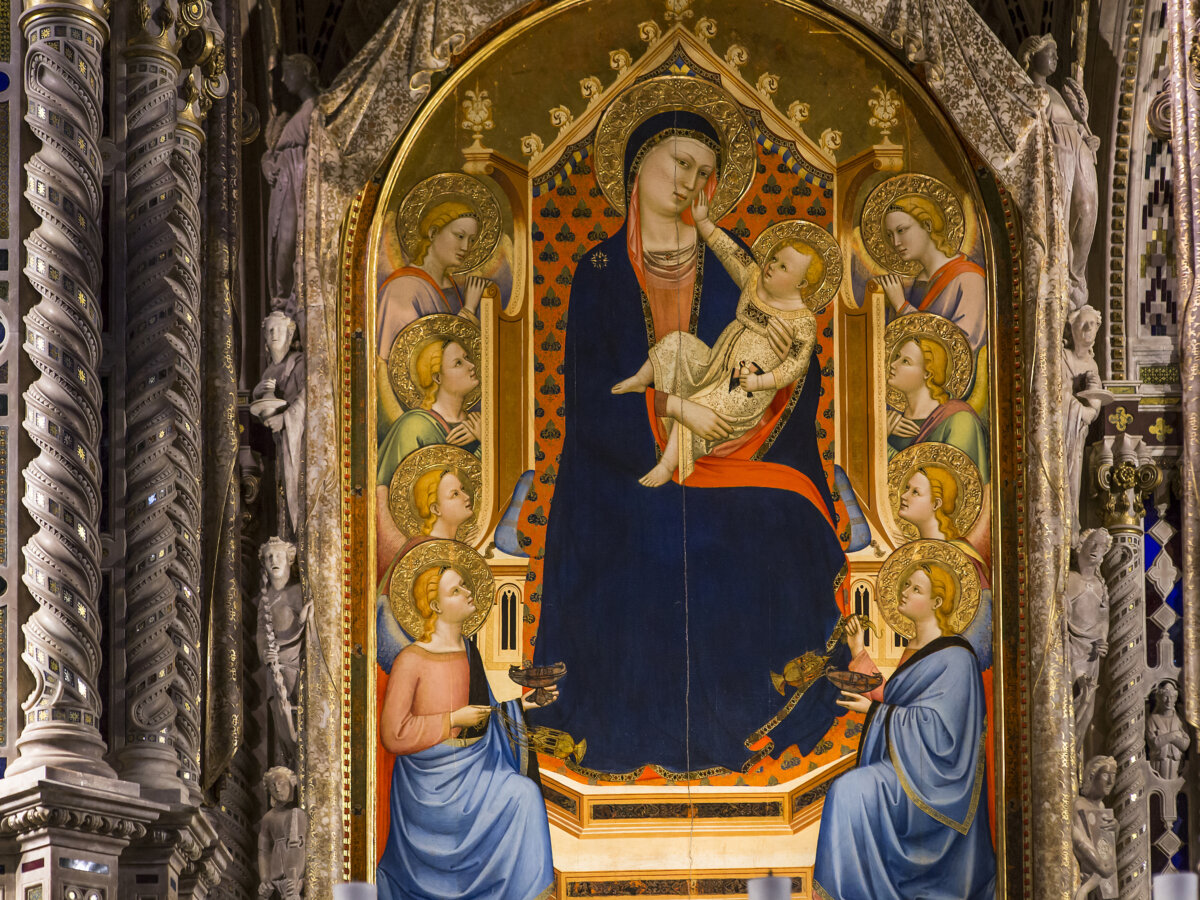
Bernardo Daddi’s “Madonna and Child” (“Madonna delle Grazie”) replaced the faded fresco of the Virgin. In 1365, it was nominated the “official painting of Florence” and attracted droves of devotees following miraculous cures during the Black Plague. This fueled Orsanmichele’s transformation from a grain market to an enlarged chapel. In 1380, two uniform levels were added to the building so that Orsanmichele’s upper floors could be used as a granary; wheat chutes are still visible inside the piers.
After Florence’s historic city center was nominated as a World Heritage Site in 1982, Orsanmichele’s exterior sculptures were replicated and replaced to preserve them from further weather damage. The original marble statues are now housed in the Museum of Orsanmichele on the building’s upper floor. The museum features masterpieces by the Renaissance sculptors Lorenzo Ghiberti, Donatello, Nanni di Banco, Andrea del Verrocchio, and Giambologna, and it offers visitors panoramic views of the historic red-roofed city.
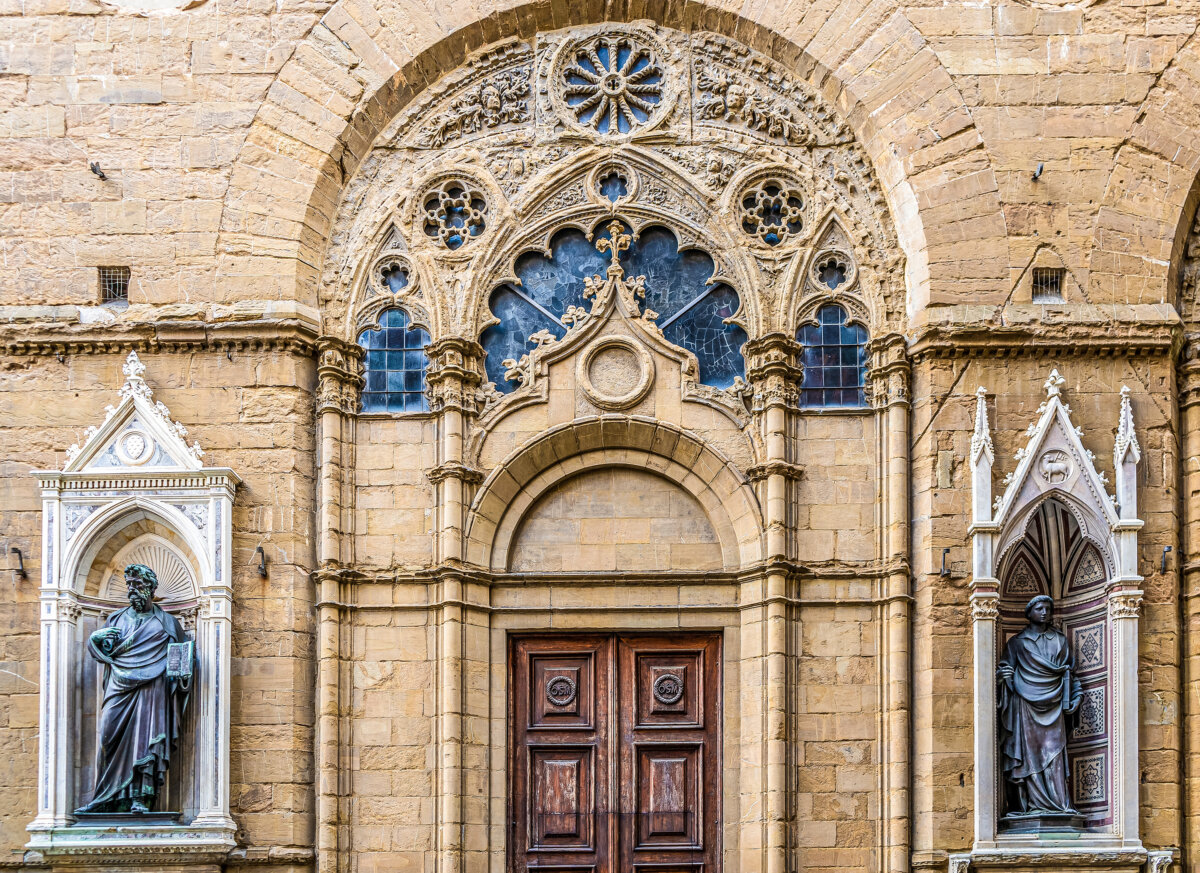
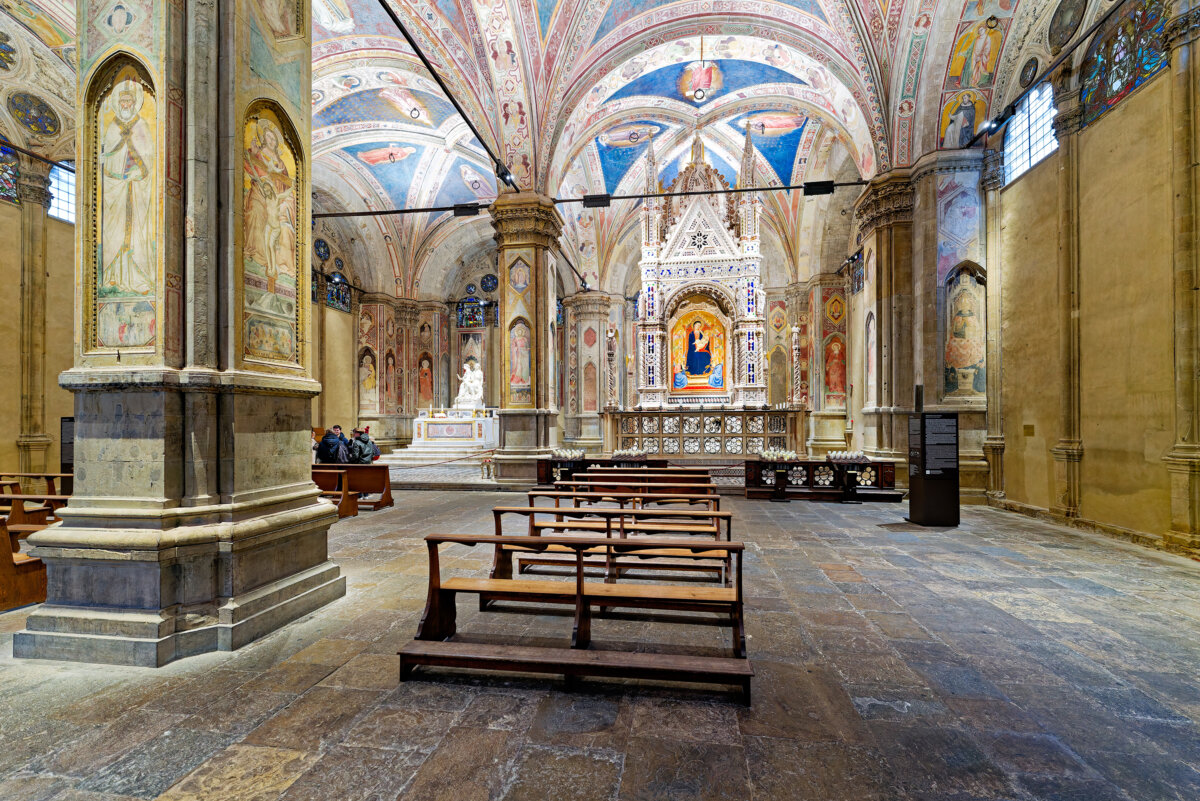
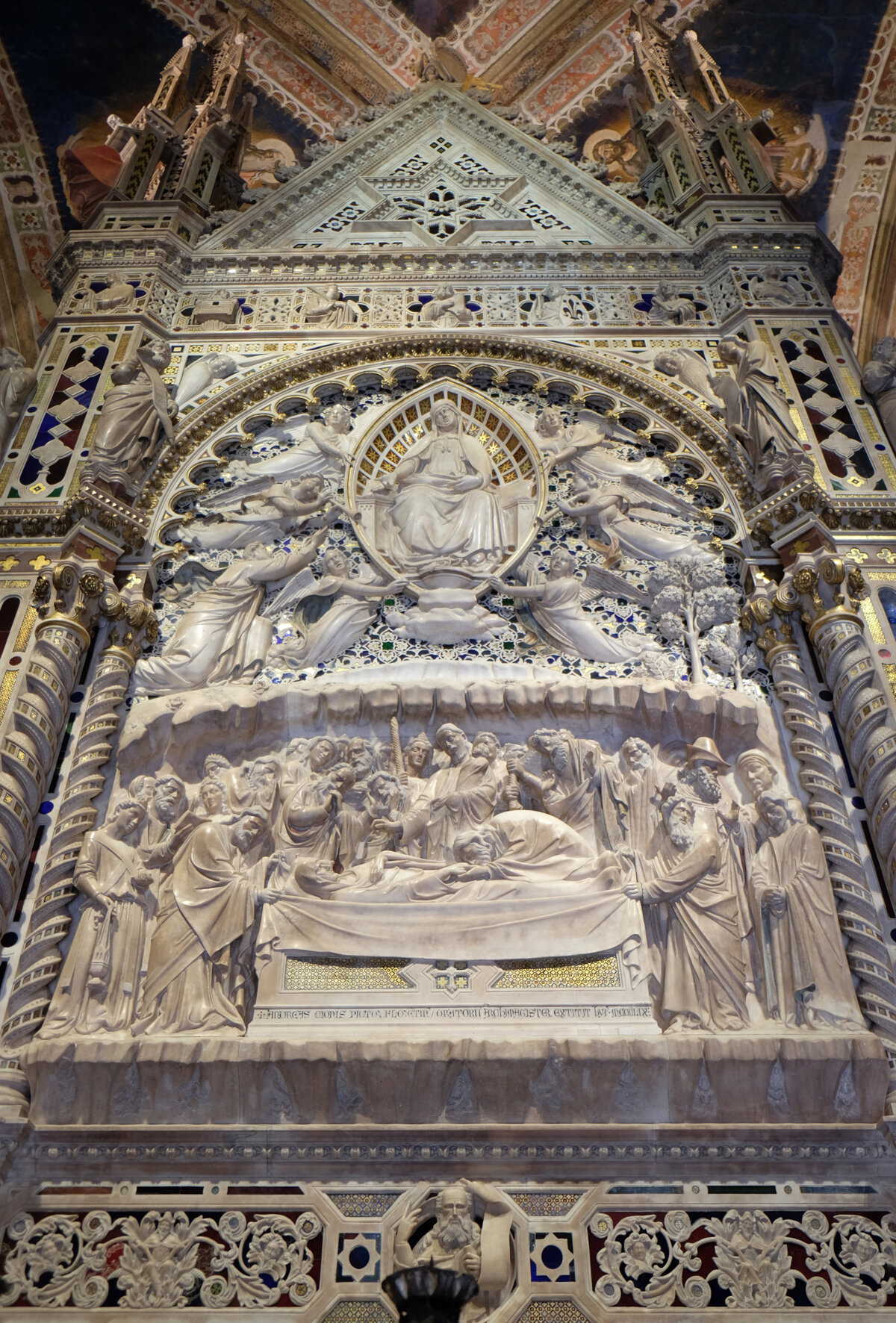
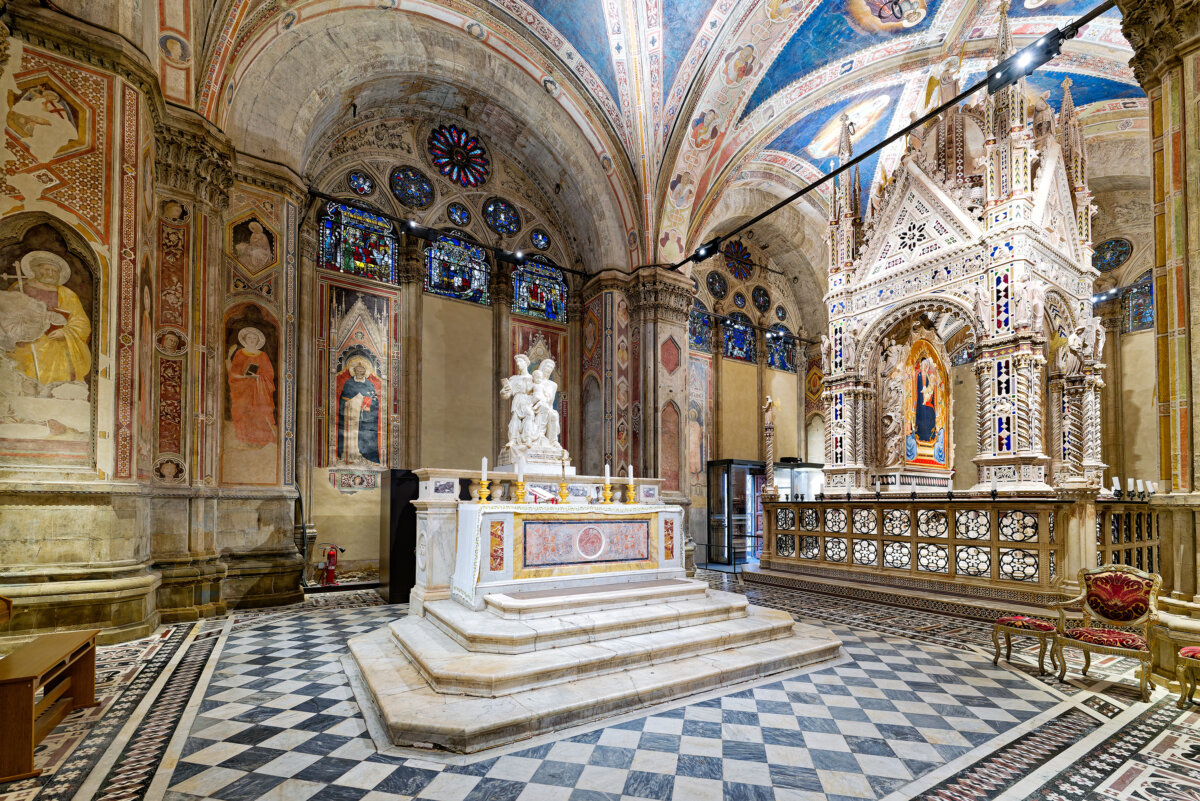
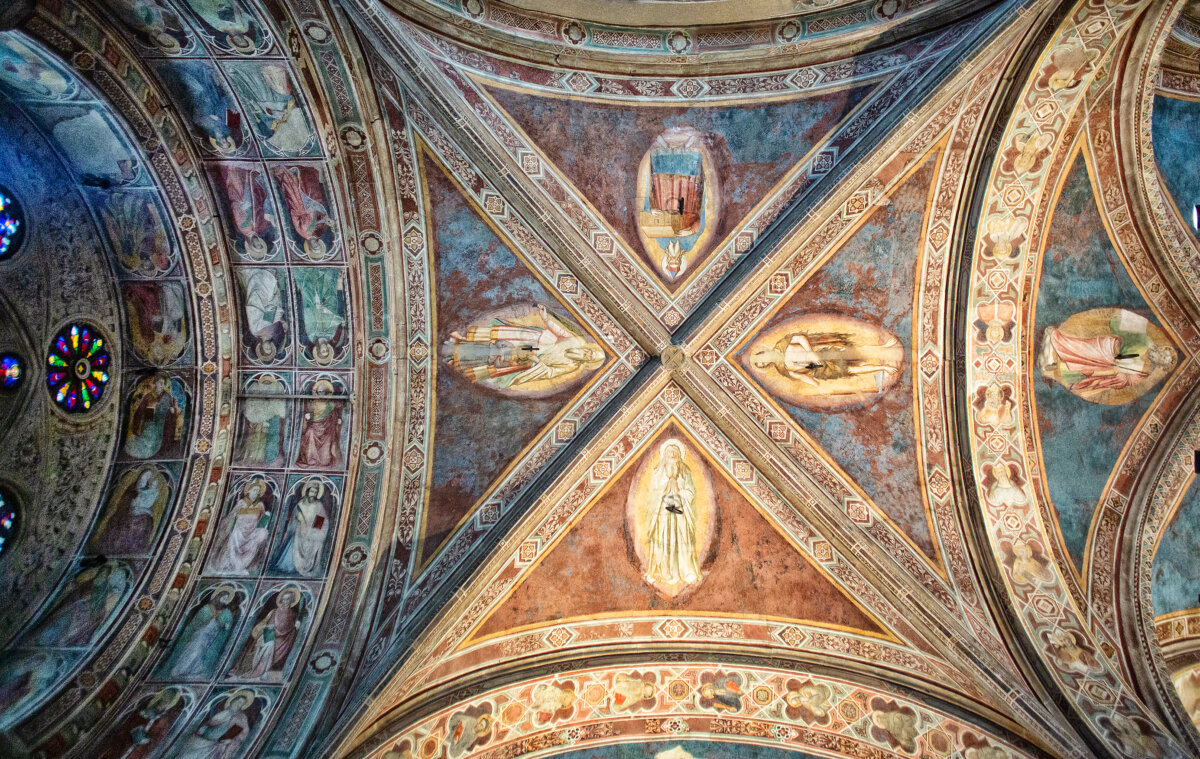
In 1367, the loggia’s archways were closed up and reconstructed with elegant mullioned windows during its conversion from a market to a church. Each of the main guilds was assigned a space between the arches to make a framed niche, featuring its patron saint. Standing more than eight feet tall, statue replications of Lorenzo Ghiberti’s St. Matthew (L) and St. Stephen are among Orsanmichele’s 14 exterior sculptures that decorate the building’s façade. (Alex_Mastro/Shutterstock) A model of late Italian Gothic architecture, the Orsanmichele’s oratory features frescoed groin vaults and stained-glass windows with detailed tracery. The monumental marble tabernacle, sculpted by Andrea di Cione (Orcagna), was built to showcase Bernardo Daddi’s famed “Madonna and Child” and is one of the chapel’s most elaborate and impressive features. (MB_Photographer/Shutterstock) Although the front of the tabernacle was designed to display Bernardo Daddi’s “Madonna and Child,” exquisite scenes of the Virgin’s life were carved by Orcagna, a leading sculptor of Florence’s proto-Renaissance era. The tabernacle’s two largest and most detailed scenes are the death of the Virgin (below) and her assumption into heaven (above). (Zvonimir Atletic/Shutterstock) Bernardo Daddi’s “Madonna and Child” (“Madonna delle Grazie”) replaced the faded fresco of the Virgin in 1347. Daddi’s painting showcases proto-Renaissance naturalism depicted in the interactions of the Virgin and Child. Circling the portrait are Orcagna’s sculpted angels, who pull back a marble curtain, or veil, and are bordered by twisted columns. (Isogood_patrick/Shutterstock) Saint Anne, mother of the Virgin Mary and patron saint of Florence, is honored in Orsanmichele’s side chapel. On the altar is a sculpture of Anne, Mary, and the infant Jesus by Francesco da Sangallo—one of the building’s few High Renaissance artworks. The side chapel, which was originally the interior market, is just as large as the main chapel to the right. (MB_Photographer/Shutterstock) Orsanmichele’s ceilings are covered in frescoes in the proto-Renaissance style, by artists including Ambrogio di Baldese and Niccolò di Pietro Gerini. Near the top are four of the 12 male saints depicted in the three vault caps above the northern aisle (the southern aisle showcases 12 female saints). Painting saints on the intrados (inner curve of an arch) reflects the Byzantine influence on Italian religious architecture. (Steve Lovegrove/Shutterstock)
What arts and culture topics would you like us to cover? Please email ideas or feedback to features@epochtimes.nyc.
James Baresel is a freelance writer who has contributed to periodicals as varied as Fine Art Connoisseur, Military History, Claremont Review of Books, and New Eastern Europe.