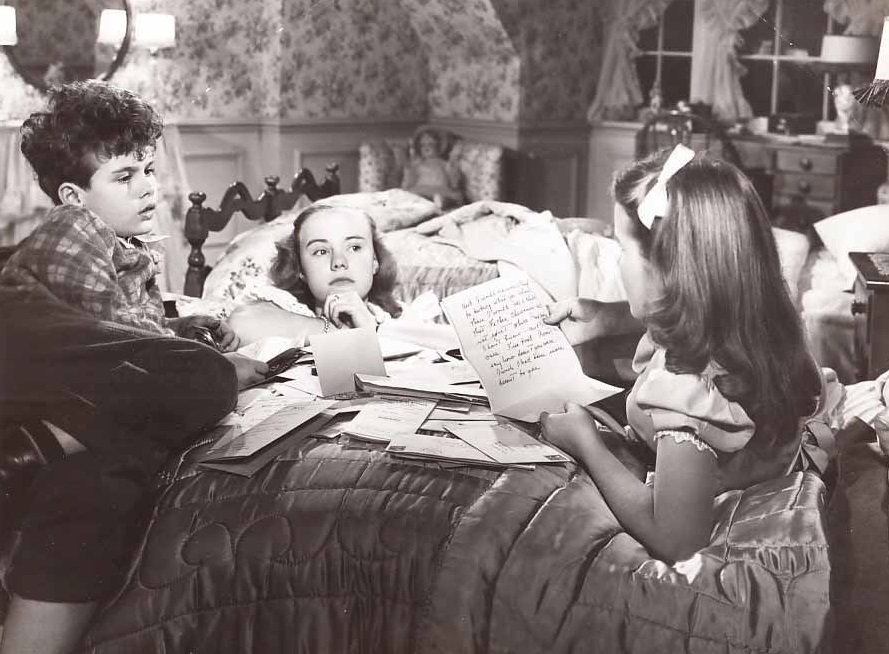
One of classic Hollywood’s favorite premises was a group of precocious children saving the day, whether this meant reuniting their estranged parents, solving a crime, matchmaking, or a combination of all three.
Two films that focus on this theme are “Home, Sweet Homicide” from 1946 and “The Man in the Net” from 1959. Although both films deal with the ugly topic of murder, their tones are very different.
One is a light-hearted romantic comedy centered on three siblings who solve a crime while matchmaking for their widowed mother. The other is a tense psychological drama in which a man enlists the aid of a town’s juveniles when he’s framed for killing his unstable wife.
‘Home, Sweet Homicide’ (1946)
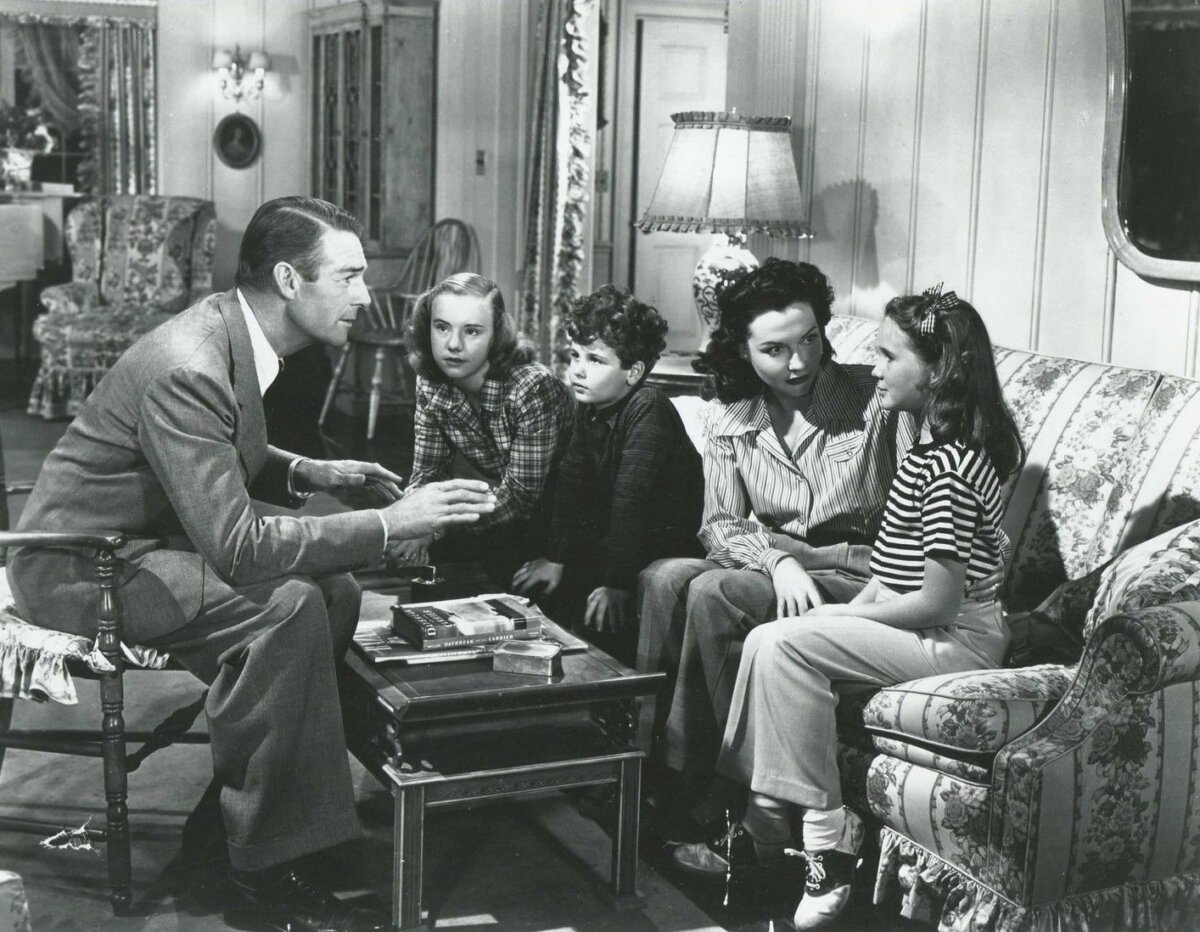
One afternoon at exactly 4:41, the three young children of widowed mystery writer Marian Carstairs (Lynn Bari) hear two gunshots. Dinah (Peggy Ann Garner), April (Connie Marshall), and Archie (Dean Stockwell) learn that their neighbor, Mrs. Sanford (Lenita Lane) has been murdered.
The children lead the police off the trail so their mother can solve the crime, which they think will result in increased fame and higher sales of her books.
When their mother refuses to have anything to do with it, the children decide to solve it themselves. They hide Mr. Sanford (Shepperd Strudwick), the primary suspect in the case, while searching for clues to prove him innocent.
However, when the officer in charge of the case turns out to be Lt. Bill Smith (Randolph Scott), a charming policeman with the same name as their mother’s fictional detective, the young trio begins concocting a new plot, one which may lead to the altar.
‘The Man in the Net’ (1959)
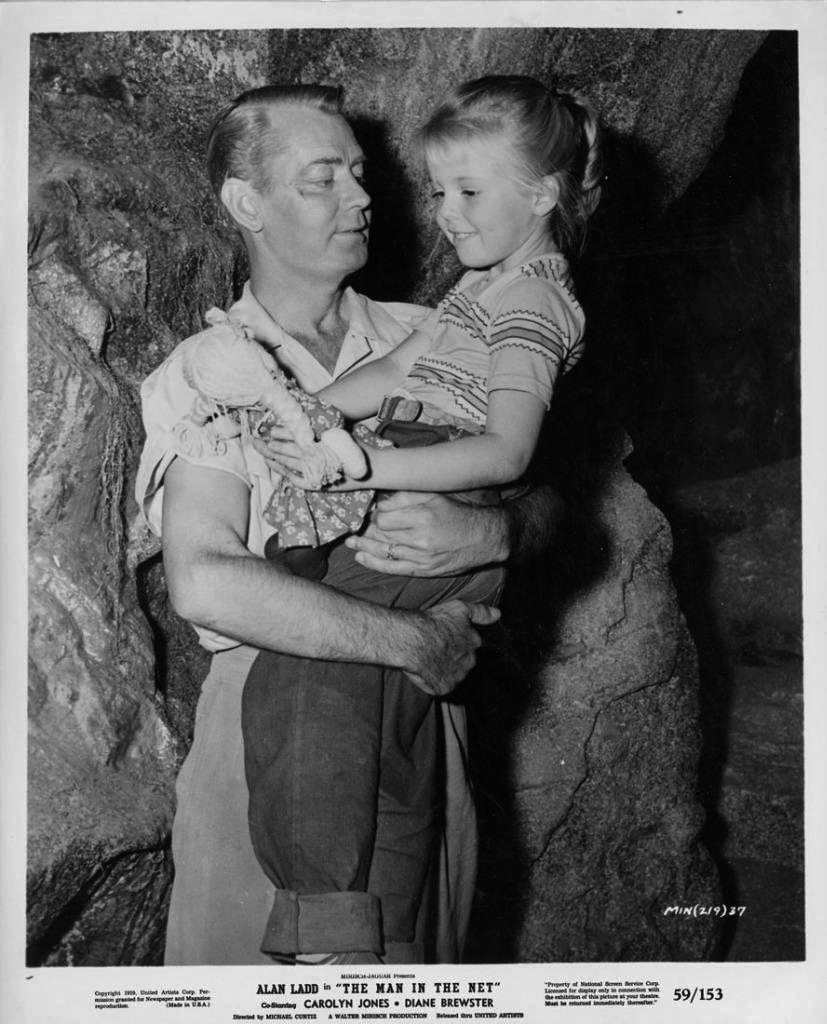
Struggling artist John Hamilton (Alan Ladd) moved from New York to the small town of Stoneville, Connecticut, for the sake of his troubled wife, Linda (Carolyn Jones). Although Linda’s alcohol-induced mental breakdown motivated the relocation, she resents it.
John befriends local children, while the town’s elite snub him in favor of his more sophisticated spouse. When John receives an offer to get his old job back at double the salary, Linda is thrilled. But he refuses to return to the “rat race” of the big city, which he believes caused her mental collapse.

When Linda shows up to a party drunk and sporting a black eye, she lies that John hit her during a fight; this turns everyone against him except kind-hearted Vickie Carey (Diane Brewster).
John insists that Linda must see their psychiatrist friend and heads into the city the following day to make the appointment. When he returns, he finds the house trashed, all his paintings destroyed, and Linda gone, leaving behind only a typewritten note. Soon, it begins to look like Linda was murdered. As all the evidence begins to point to John, he must rely on his only friends, the town’s children, to help him.
Two Stories
At face value, the premises of these films aren’t similar. While one focuses on three children who try to solve a crime and help their mother at the same time, the other explores a man’s attempts to navigate a troubled marriage. “The Man in the Net” only begins to resemble “Home, Sweet Homicide” in its later segments.
Mr. Sanford doesn’t have much of a relationship with the Carstairs children, and their harboring him is really just a means to an end as they do their best to solve the crime. In contrast, John’s friendship with the children of Stoneville is a core element of the story, standing out as one of the only positive points in an otherwise dark premise.
The element of the murder itself is also much darker in “The Man in the Net,” mostly because Linda is a character we’ve really gotten to know. Disturbed and manipulative as she may be, we’ve grown to have some sympathy for her, so the idea of her being killed is unsettling.
Mrs. Sanford, in contrast, is a tiny character, whom we see only in one brief scene at the beginning of the film. Her sole purpose in the film is to be the murder victim, and, seeing how she treats her husband at the beginning, the audience isn’t likely to feel sorry for her.
The Meeting Point
What these movies have in common lies in concept rather than in tone or storyline. So many classic films have children outsmarting or assisting adults in very difficult, grown-up situations. The children in both these films face serious peril and fright, but withstand it bravely for the sake of someone they love.
In addition to the children hiding a man accused of murder, there are some similar elements to the solving of the murders. In both cases, it was discovered that the victim was killed due to being a blackmailer. Spoiler alert, both murderers are ultimately revealed through an incriminating recording: a phonograph record in the first and a roll of tape in the second.
If you love a good murder mystery but don’t want something too heavy or dramatic, “Home, Sweet Homicide” has all the charm of a classic “Nancy Drew” or “Hardy Boys” mystery. The film presents a sweet romance and an amusing sibling relationship.
If you’re in the mood for something in the same vein but with a higher level of peril and drama, “The Man in the Net” is a great choice.
Ultimately, both films truly highlight the young talent that was so prevalent throughout the Golden Age of Hollywood.
What arts and culture topics would you like us to cover? Please email ideas or feedback to features@epochtimes.nyc