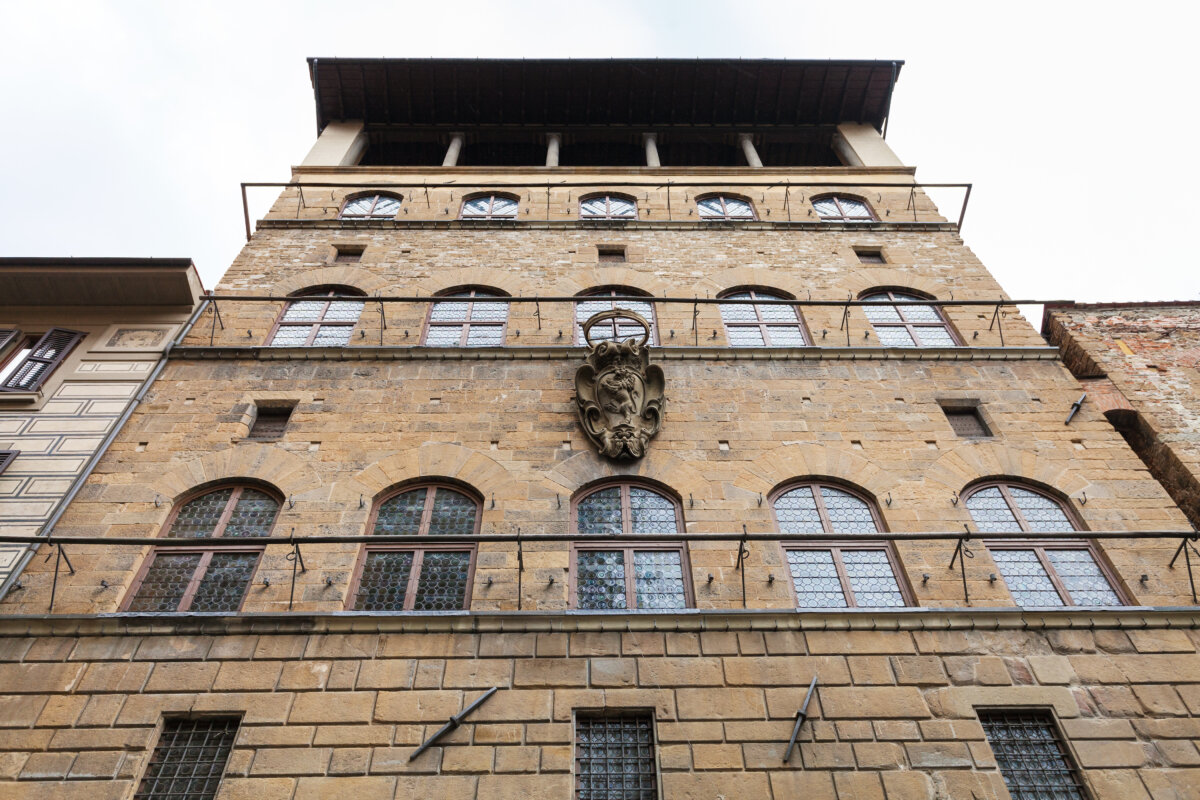
Originally built on a narrow medieval street, Palazzo Davanzati is a fine example of transitional architecture of the early Renaissance period. Above the ground floor and its open courtyard, three floors rise, topped by a loggia added in the 16th century. Fourteenth-century sandstone arches, originally open from the courtyard to the street, are topped with upper stories of smooth sandstone, culminating in the Renaissance loggia. The intricately carved Davanzati family crest adorns the facade. (vvoe/Shutterstock)
Rising from a piazza in the city of Florence, Italy, the Palazzo Davanzati is an outstanding example of architectural transition—a medieval tower house becoming a Renaissance palace. The palazzo’s architecture provides a window into the life and times of two important Florentine families: the Davizzis and the Davanzatis.
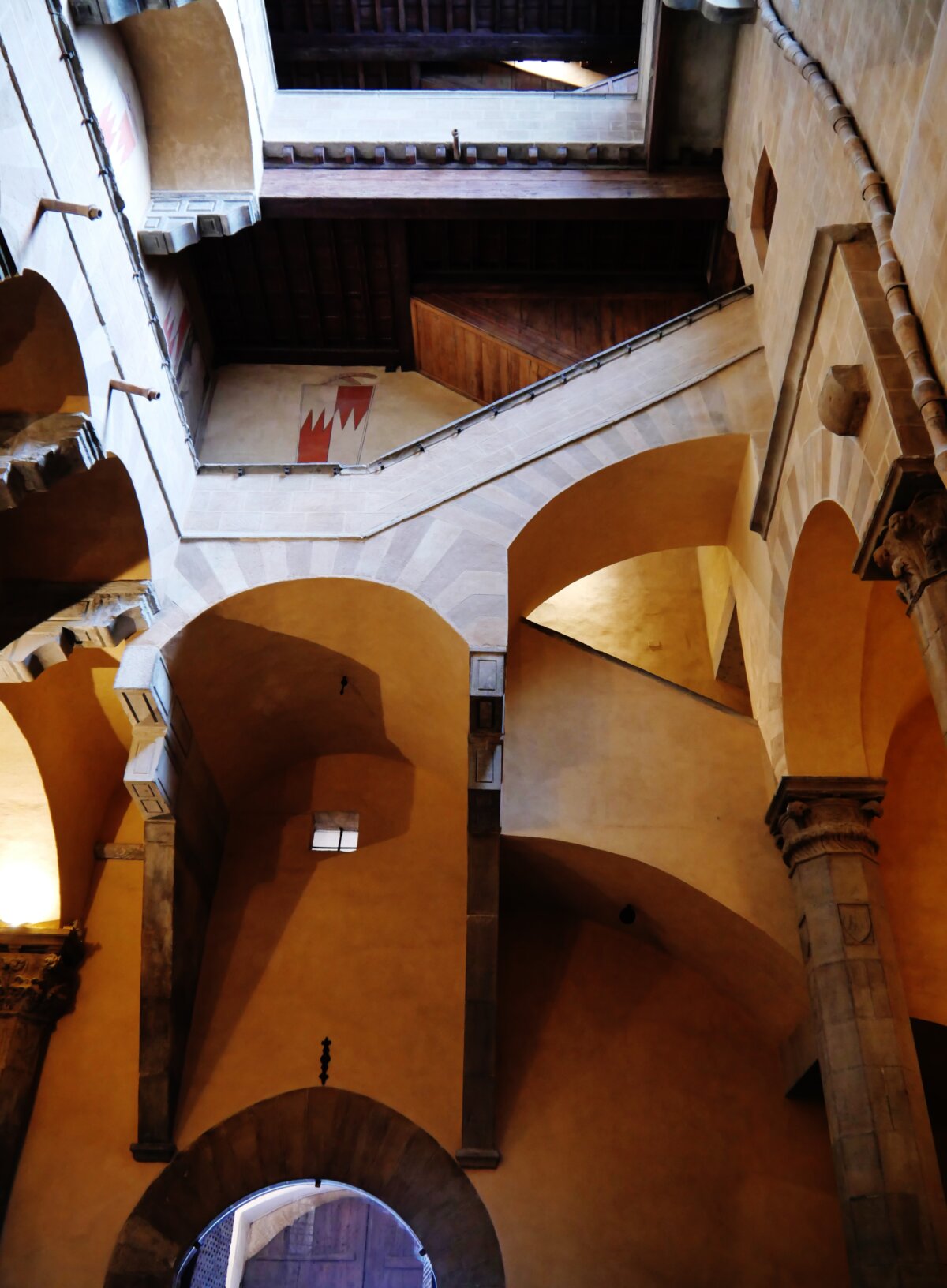
The structure was first built in the 14th century when the prosperous Davizzi family, who were wool merchants, put together several properties they owned and built the tall edifice. The home was open at street level through a series of arches, which provided a place of commerce for the family’s wool trade. A magnificent staircase ascended in a central courtyard that was formerly open to the sky. The palazzo also featured modern Renaissance culture’s finer conveniences such as indoor toilets (or “agiamenti”), copper bathtubs, and water provided to each floor with a rope and pulley.
In 1578, the palazzo was purchased by another prosperous merchant, Bernardo Davanzati. The house remained in the possession of the Davanzati family until the last heir, Carlo Davanzati, tragically died in 1838. The estate then divided the house into smaller units. When the city of Florence was rebuilt in the 19th century, the Palazzo Davanzati barely escaped demolition. Elia Volpi, an antiquarian, rescued and restored the house by reuniting the smaller dwellings into the original palace-like home. In 1910, Volpi opened the house as his Museo Privato della Casa Fiorentina Antica, a museum in which he continually displayed valuable furnishings and sold them at auction.
Egyptian antique dealers Vitale and Leopoldo Bengujat acquired the building in the 1920s, using it to display their eclectic collection of furnishings. It was this version of the palace that became the inspiration for E.W. Marland when he built his Renaissance mansion in Ponca City, Oklahoma.
In 1951, Palazzo Davanzati was purchased by the Italian government, becoming a state museum and later undergoing a thoughtful, curated restoration that was completed in 2012. The restoration lovingly preserves the castle’s elaborate murals, furnishings, and artifacts that give rare insight into the life of the 15th-century merchant class.
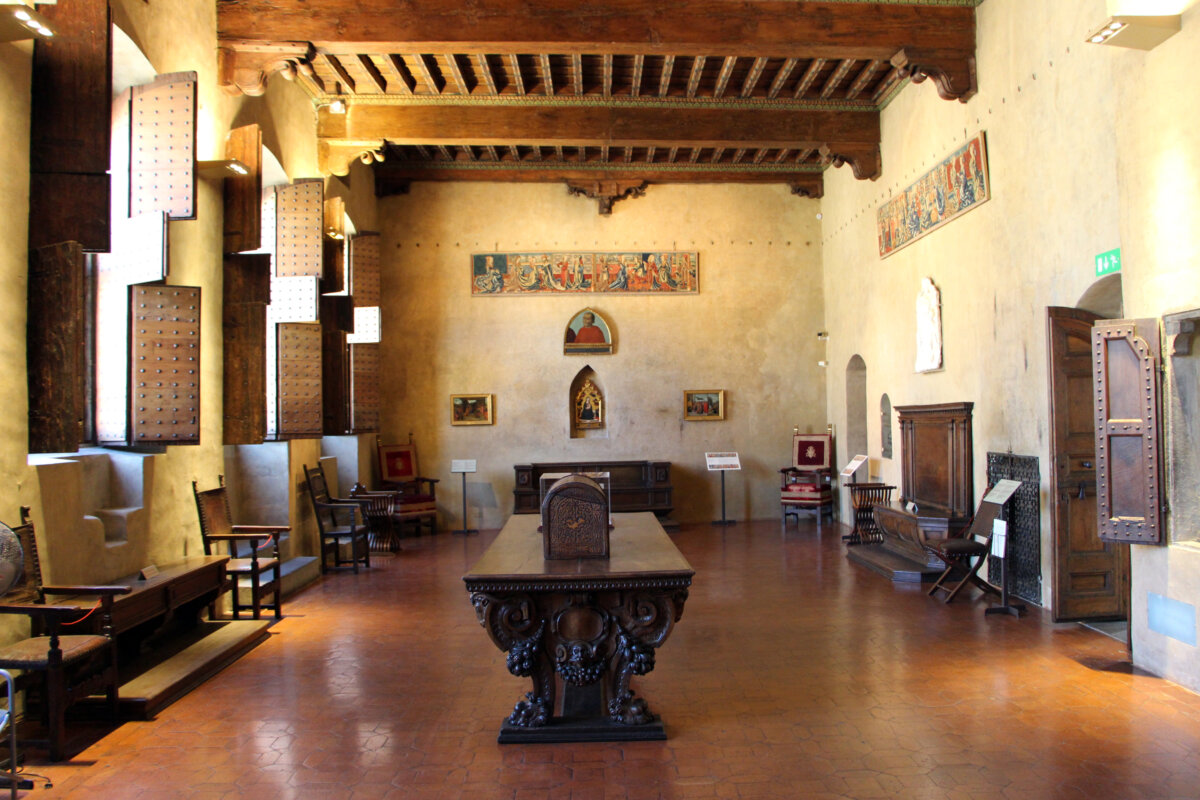
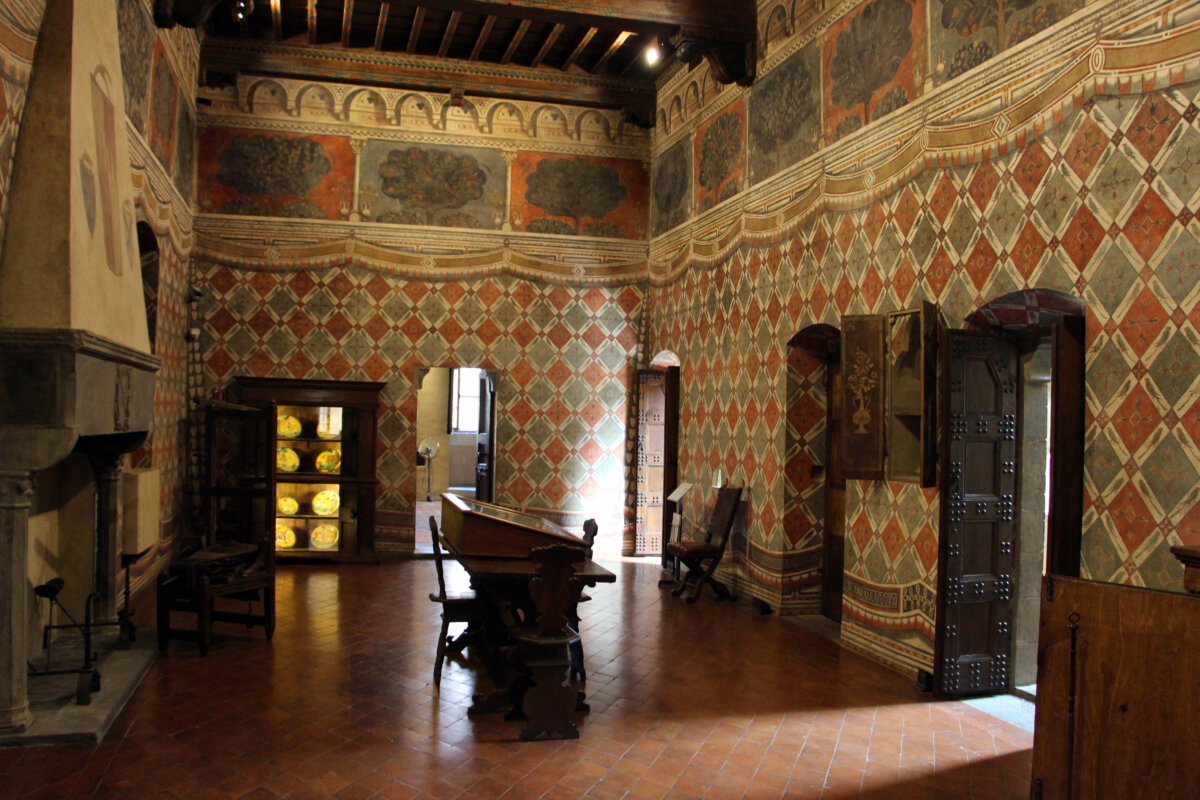
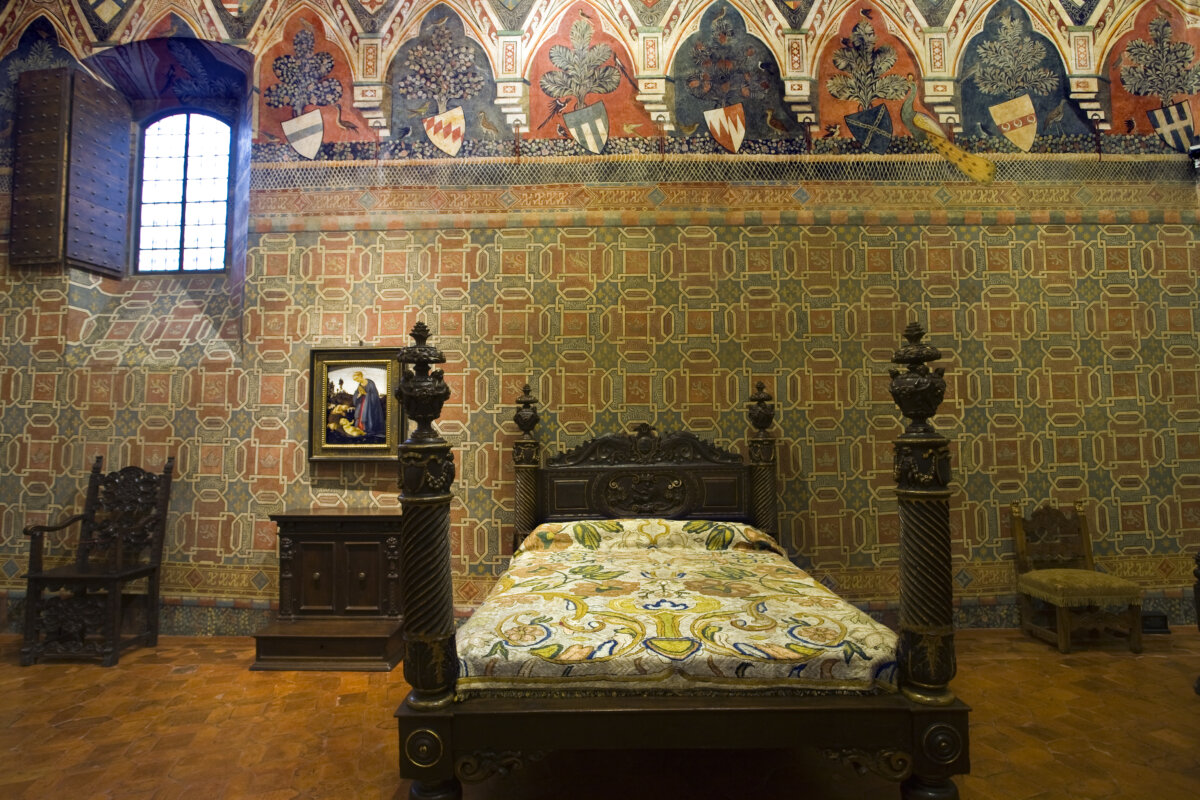
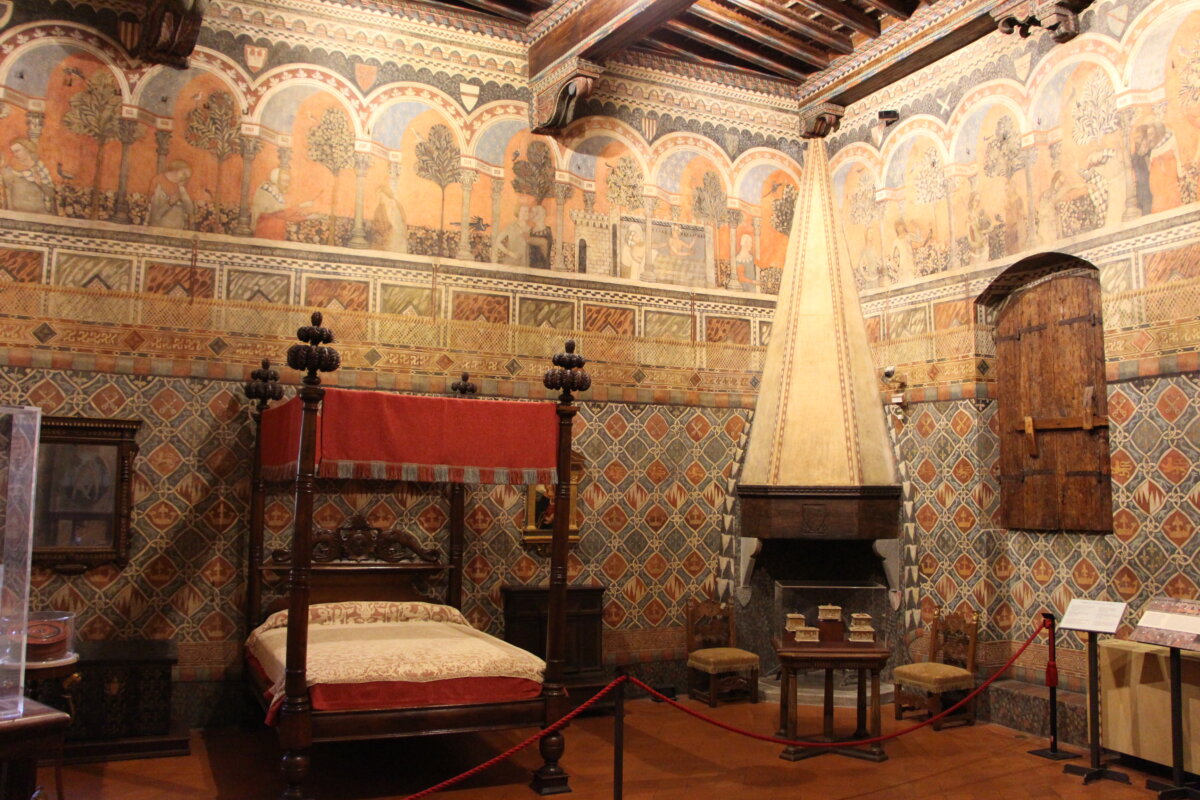
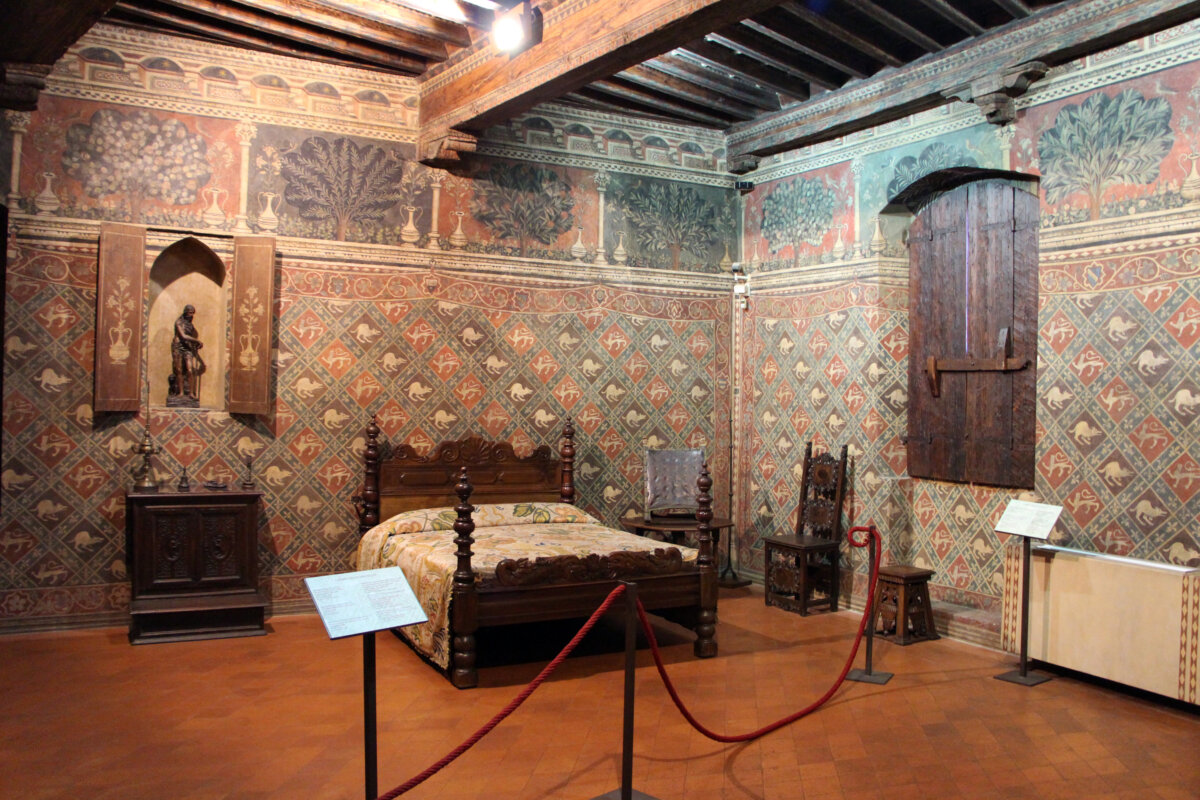
Once open to the sky, the central courtyard features a unique staircase that calls to mind the etchings of M.C. Escher in its complexity. Stone consoles support the three galleries of the staircase and are adorned with the coat of arms of the Davizzi family, the home’s original owners. (Zairon/ CC-BY-4.0) The first floor’s Great Hall is decidedly medieval; it is the largest room in the home and was used to host banquets. Wooden panels in the floor cover “murder holes,” through which hot oil could be dropped onto invaders below when it became necessary to defend the palace. The furnishings are 15th- and 16th-century acquisitions, but the hooks for hanging medieval tapestries and animal furs can still be seen. (Sailko/CC-BY-SA-3.0) Parrot Room, aptly named for the birds in the repeating lozenge (diamond-shaped) designs, is a fine example of medieval mural painting. The frescoed trompe l’oeil technique creates the illusion of draped textiles, as well as architectural details surrounding the panels in the frieze. The room was used as a solar, or medieval living room, for the family. (Sailko/CC-BY-SA-3.0) The first-floor bedroom, also known as the Peacock Chamber, was actually more than a bedroom. Here, the lady of the house would spend her day doing handworks, caring for her children, and receiving guests. Adorned with intricate murals featuring heraldic coats of arms and alternating geometric panels featuring motifs of crowns and lions, the room holds a bed from the 16th century, as well as window glass, which would not have been added before that time. (OfTheVillage/Shutterstock) This second-floor bedroom was the marriage chamber of Paolo Davizzi and his wife, Lisa degli Alberti. The frescoed frieze depicts the medieval chivalric tale “La Castellana di Vergi,” written in 13th-century France. The frieze, illustrating the tale’s themes of love, betrayal, and tragedy, was likely chosen to serve as a moral reminder about the dangers of extramarital affairs. The corner fireplace’s hood features the quartered arms of the two families. (Sailko/CC-BY-SA-3.0) The third-floor bedroom features geometric patterns with animals that loosely resemble wolves. The frieze above contains fanciful depictions of trees. The shuttered window shows how the house would be closed off from the outside air before window glass was installed in the 16th century. (Sailko/CC-BY-SA-3.0)
What arts and culture topics would you like us to cover? Please email ideas or feedback to features@epochtimes.nyc.
Bob Kirchman is an architectural illustrator who lives in Augusta County, Va., with his wife Pam. He teaches studio art to students in the Augusta Christian Educators Homeschool Co-op.