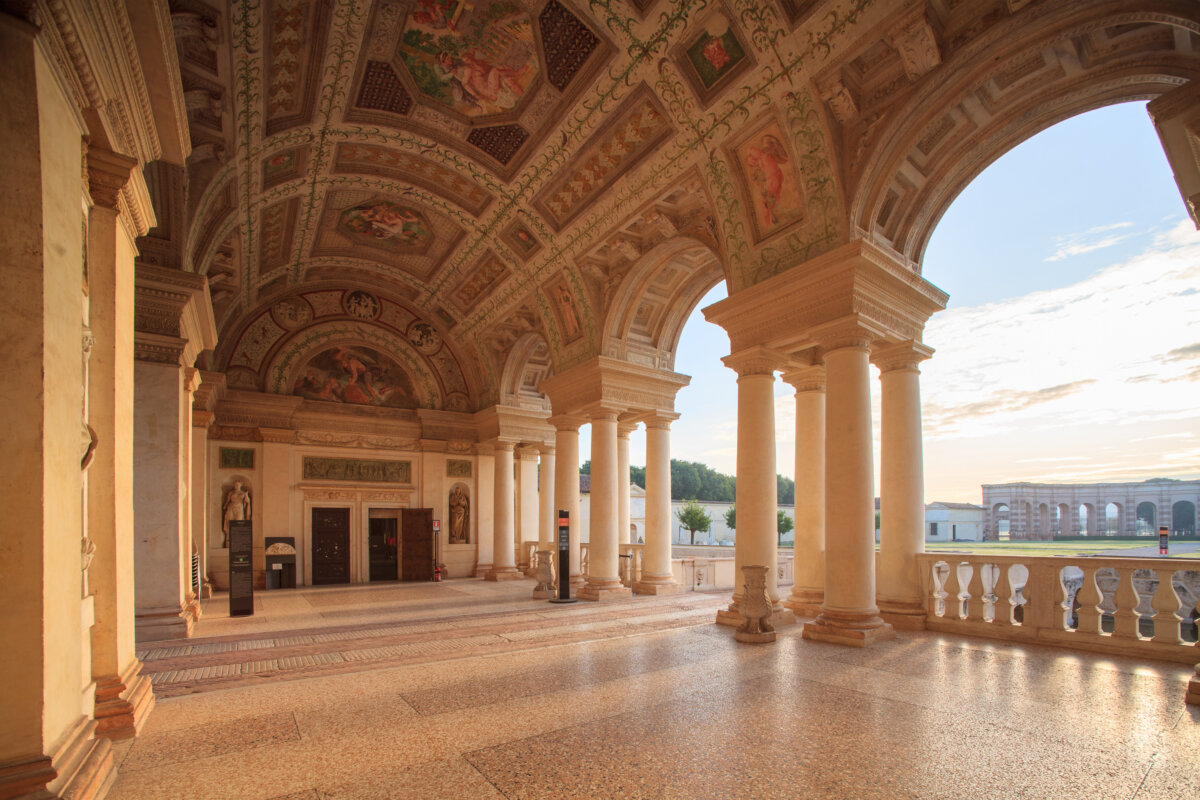
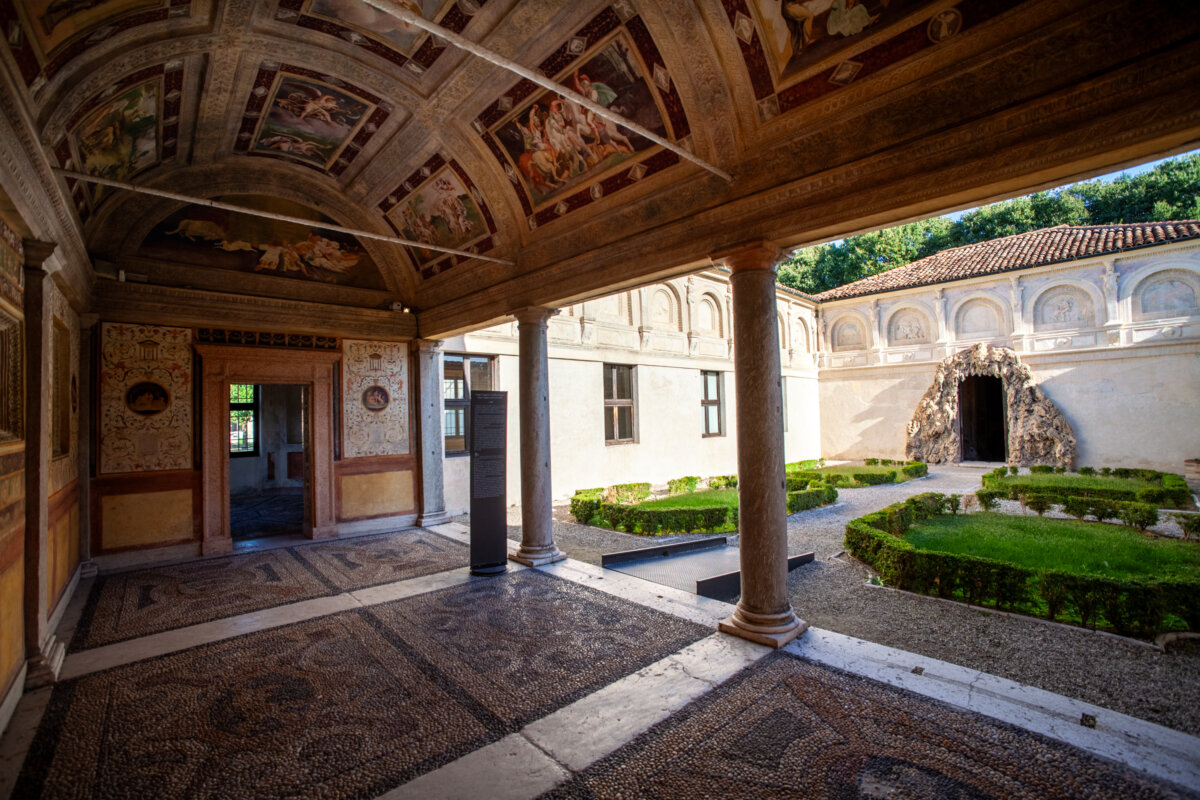
The Loggia of David honors the biblical hero and depicts scenes of his many feats. An image of him slaying Goliath appears on the far wall above the doors. The loggia, similar to a great hall, would have been fitting for receptions and distinguished guests, such as The Holy Roman Emperor, Charles V. and the King of France, Henry III. (J.H.Smith)
In the early 16th century, the Duke of Mantua, Federigo Gonzaga, called upon artist Giulio Romano to create a pleasure palace for his “honest leisure,” to host receptions and welcome distinguished guests. At the time, the city of Mantua was an island set amid four lakes in central Italy. The site for the palace was on a smaller island, called Teieto, just beyond the city walls. Gonzaga wished to create a place that would be “not dwellings for men but houses for the Gods,” as art historian Vasari wrote in his “Lives of the Artists.” For Romano, this was a golden opportunity to unleash the creativity he had cultivated while working under Raphael in Rome.
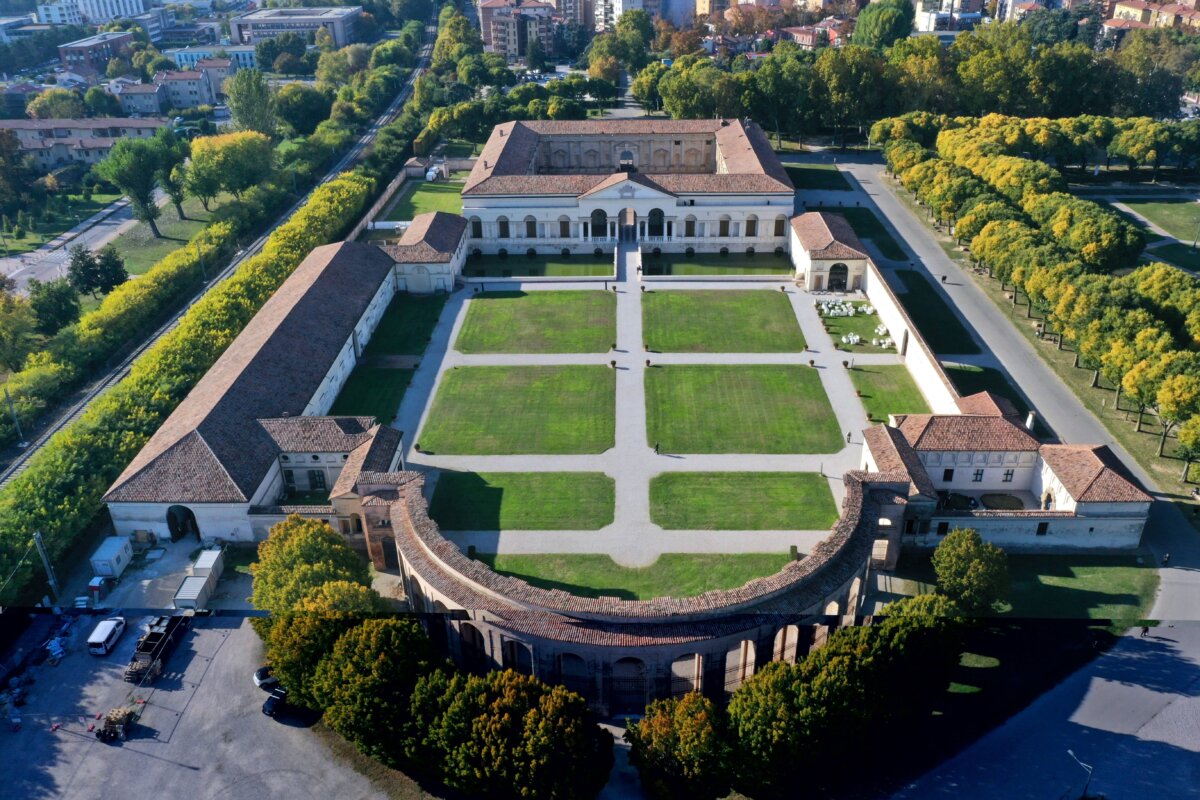
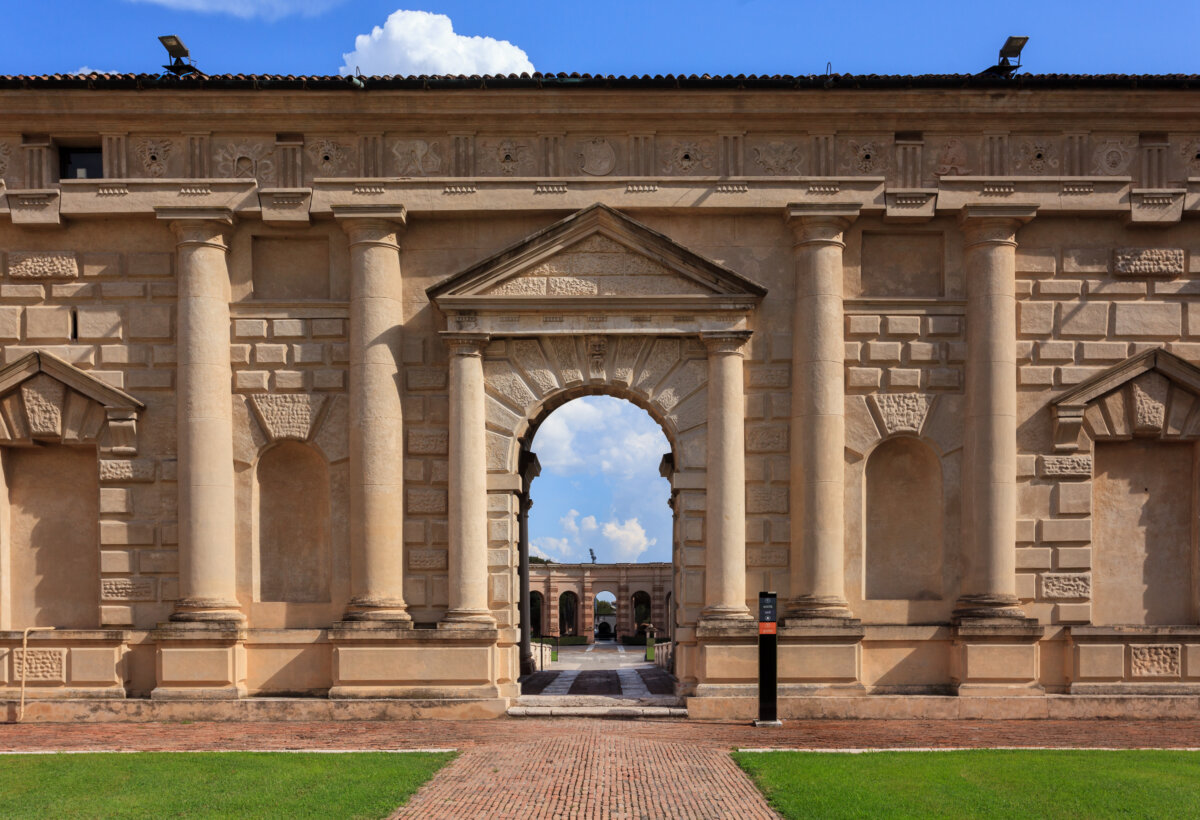
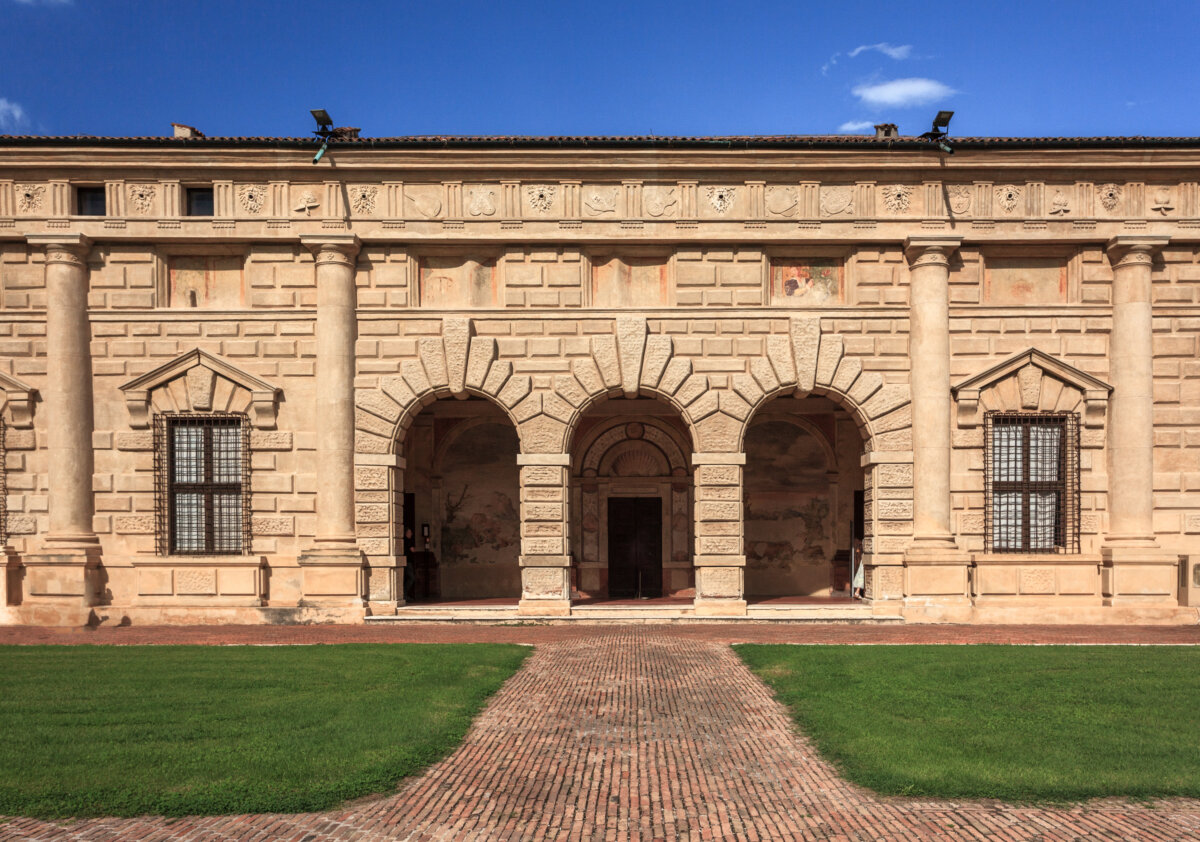
The palace complex is symmetrically arranged on a central axis with two courtyards, one at the back of the other. The principal building employs the Vitruvian description of a courtyard house, where four entrances open onto the courtyard, one on each of the four sides. The two-storied square courtyard has a massive, heavy feeling thanks to the giant Doric columns and the rough-cut ashlar walls.
As one passes through the central arch dividing the two courtyards, the contrast of the rough, weightedcourtyard heightens the experience of the exquisitely ornamented Loggia of David.
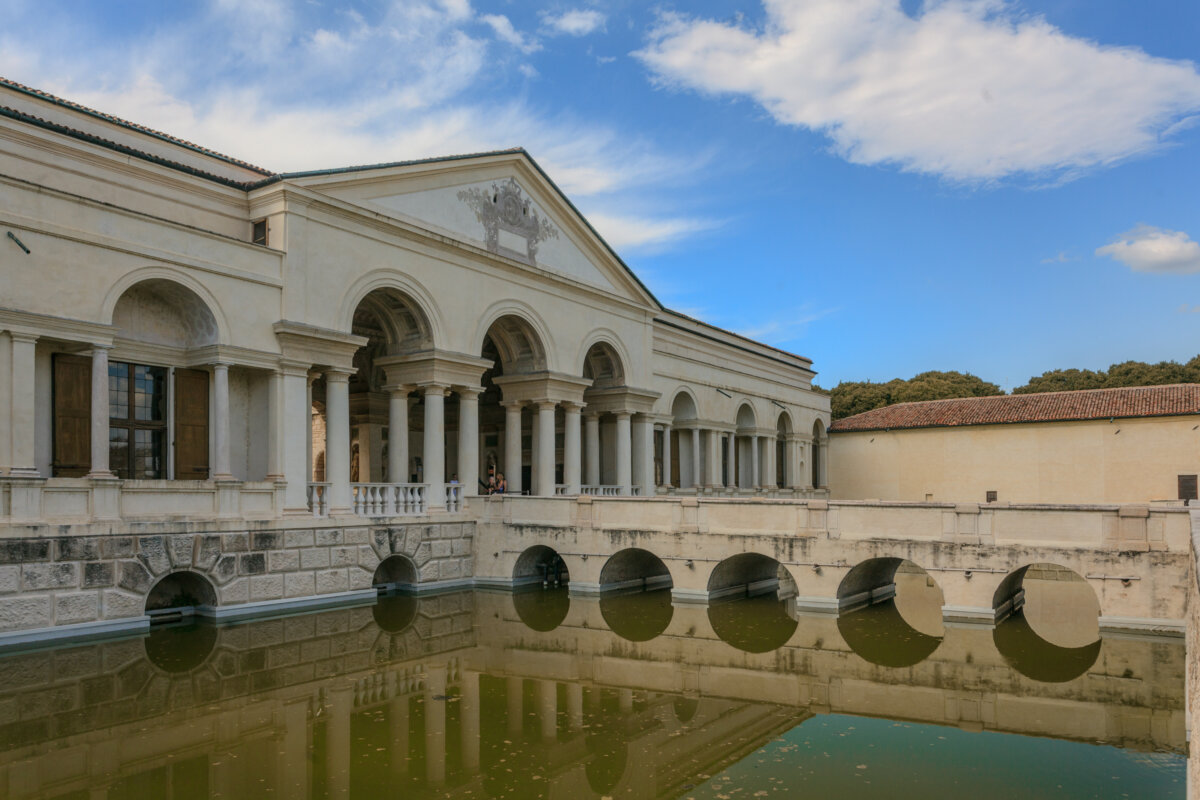
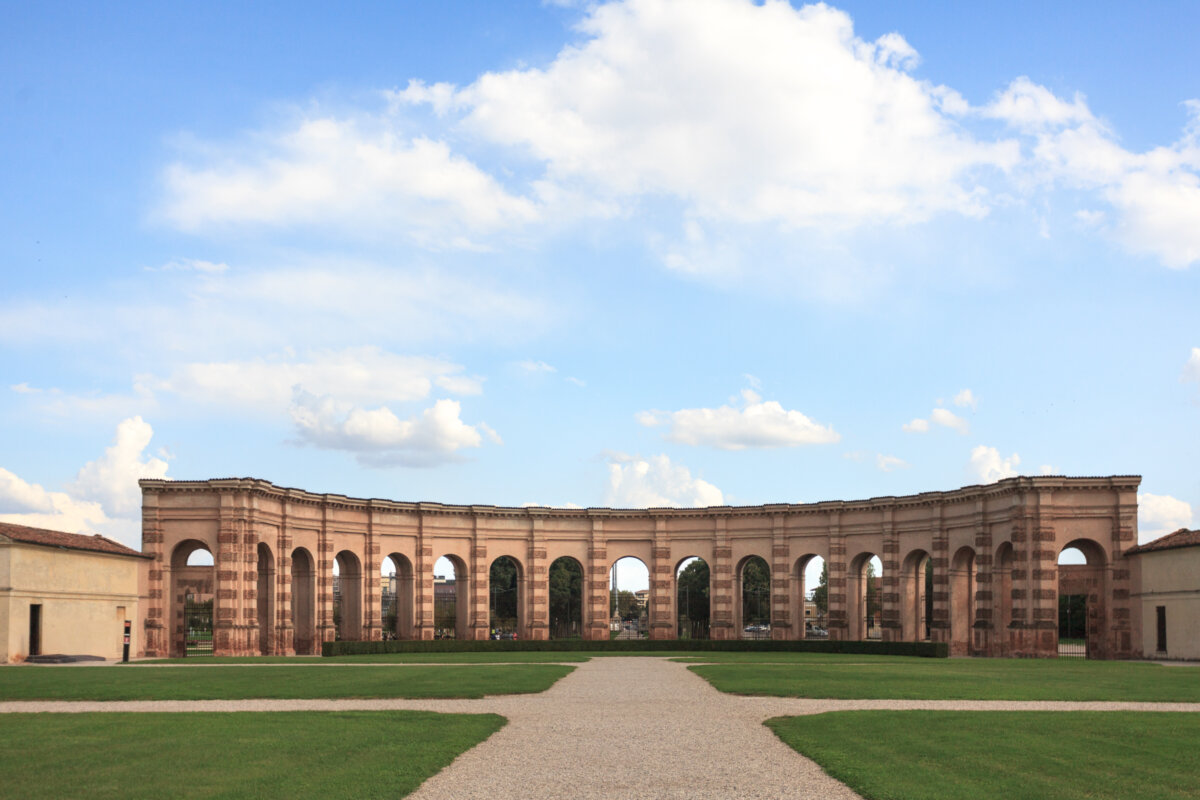
This loggia is at the center of the complex and has a grand presence as it overlooks a fishpond reminiscent of a mote before a great castle. A bridge leads into the expansive Courtyard of Honor that, although now a modest lawn, was once filled with an elaborate garden of flowers and plants with a secret garden beyond. The courtyard and the complex are completed at the far end with an Esedra, a semicircular double colonnade that holds the space while offering a view into the distance.
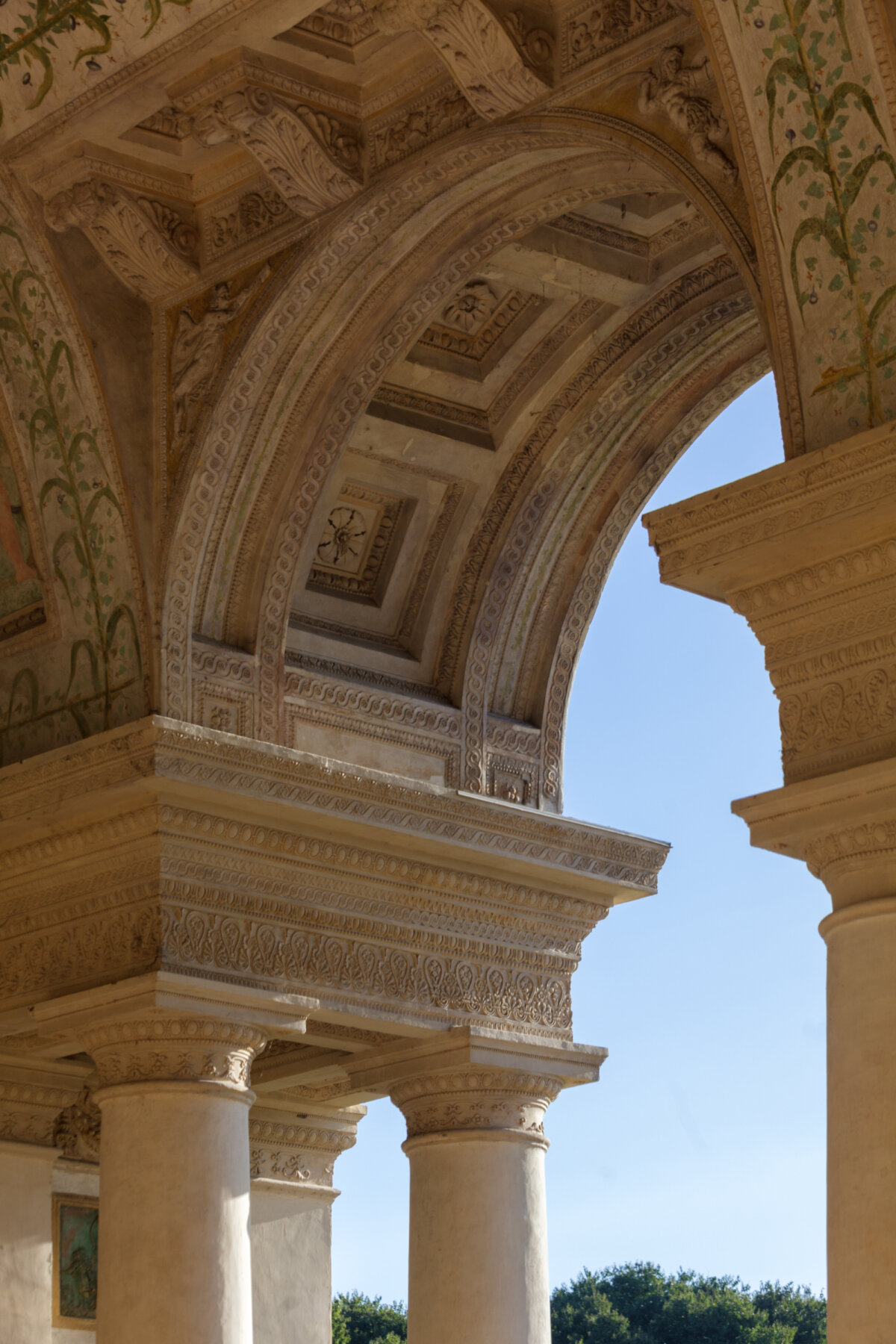
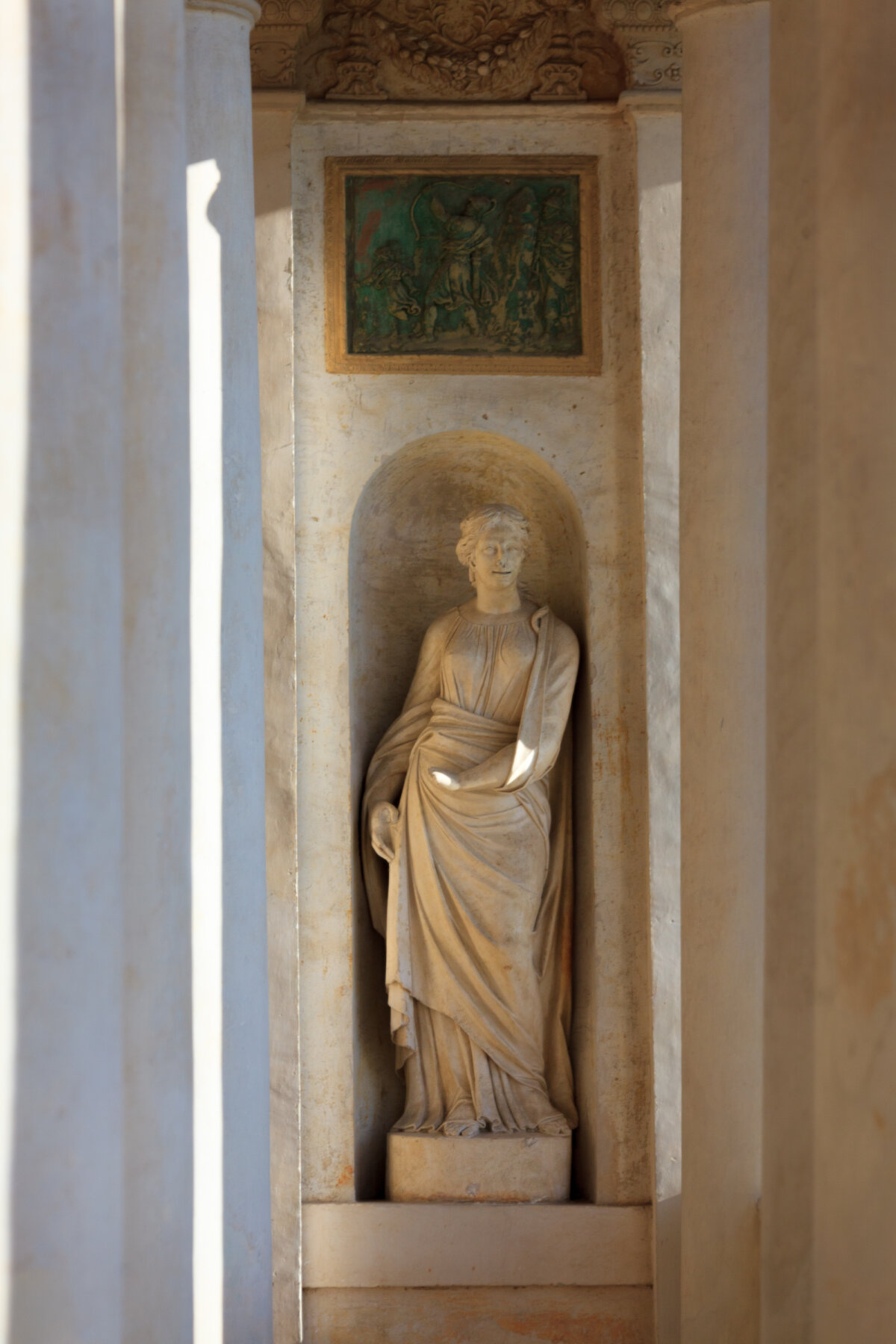
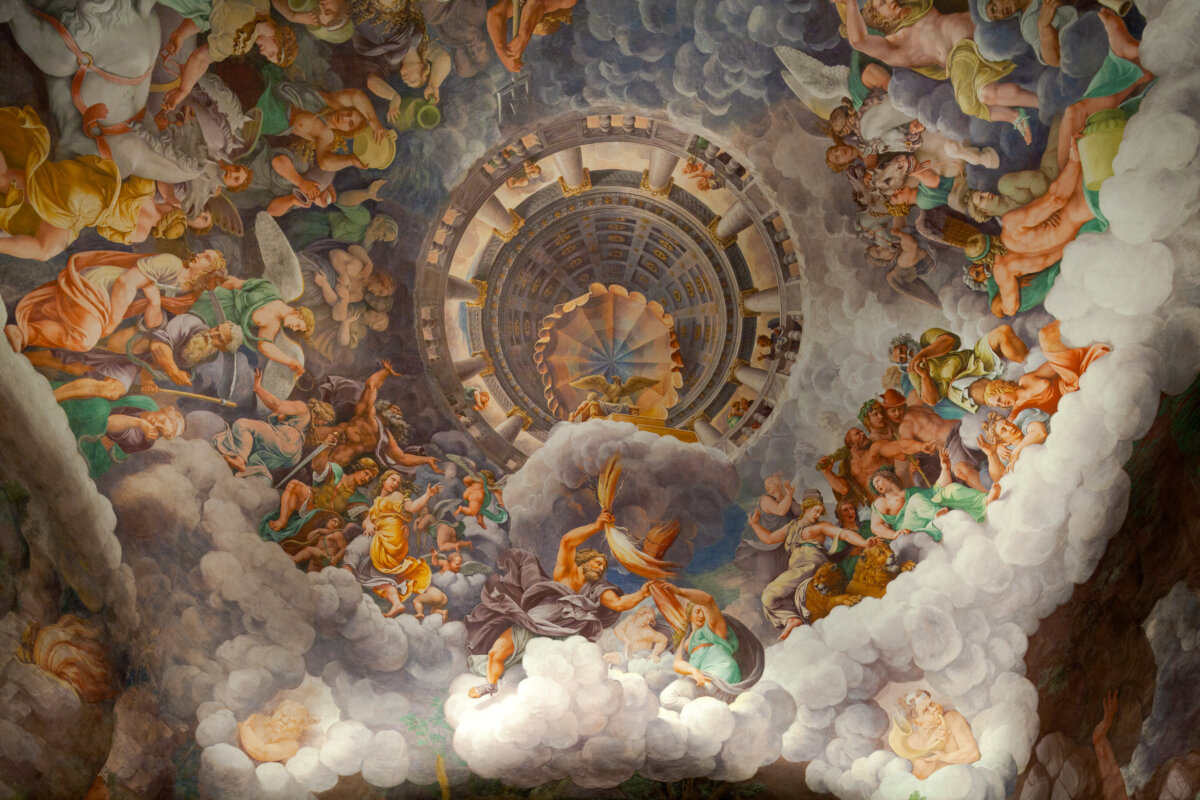
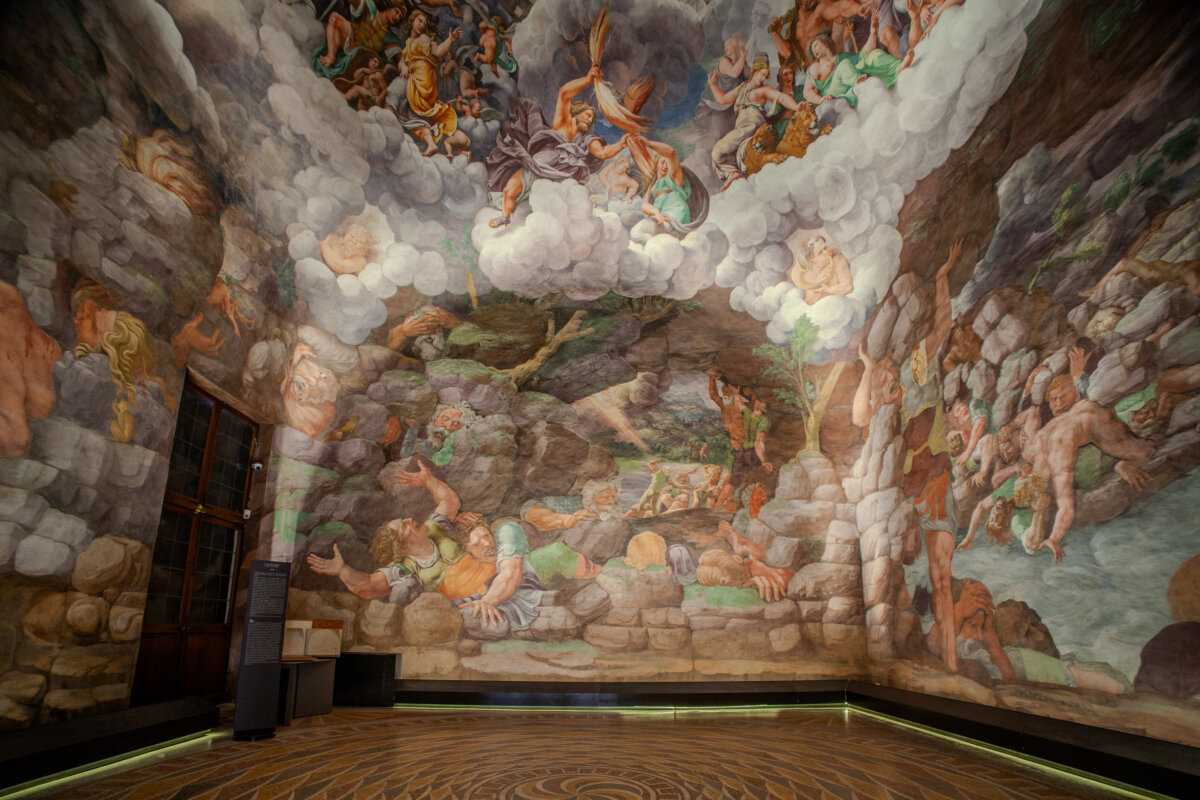
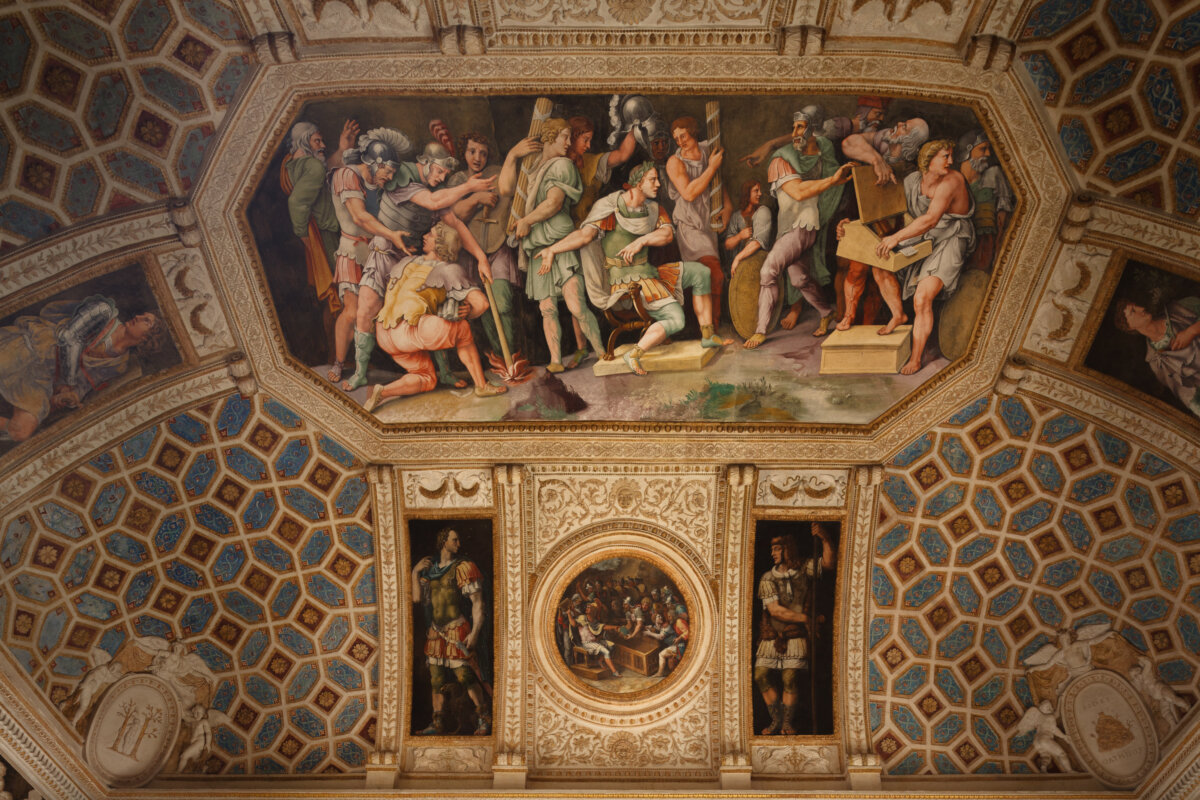
An aerial view of the back of the palace. The expansive court is centered on the main axis, and the bridge crosses the fishpond to the Loggia of David with the main courtyard and building beyond. (D-Visions/Shutterstock) Doric pilasters, or embedded columns, of the giant order surround the arched entrance and hold up the entablature, the horizontal band above. Note the triglyphs (three vertical lines repeated in the entablature), where one slips down between each of the columns. This unusual disruption of the line brings the stability of the world around them into question. (J.H. Smith) The Loggia of the Muses opens onto the arrival courtyard from the north. Doric pilasters of giant order, ashlar stone, and the three arched openings establish a commanding presence for the façade. (J.H. Smith) Like finely crafted lace, intricate ornamentation softens the material and invites viewers to explore the detail of the arch. Here, rosettes within the arch, angles, and floral decoration provide refinement in the Loggia of David. (J.H. Smith) In the Loggia of David, set within a niche between the rows of columns, Virtue, in the guise of a maiden, stands, gracefully animating the space. (J. H. Smith) A bridge leads from the Loggia of David seen here from across the fishponds to the Courtyard of Honor. The Serliana, or Palladian window, an arch with a pair of columns on either side, repeats across and underpins the dynamic façade. (J.H. Smith) An Esedra, a semicircular double colonnade of a series of arches, is a focal element that holds the space and completes the expansive Courtyard of Honor. A door to the secret garden is visible on the far left. (J.H. Smith) A Secret Garden is deep in the palace grounds. A loggia wraps around the formal courtyard garden until it reaches a grotto, a cavelike place set within the far wall. (J.H. Smith) A centerpiece of the palace is the Chamber of the Giants, where an epic battle takes place. On the ceiling, Romano depicted an ancient Greek legend, the Fall of the Giants, from Ovid’s “The Metamorphoses.” The giants attempted to assault Olympus by stacking Mount Ossa on top of Mount Pelion. Jupiter calls upon the immortal Olympians to fend off the assault and quell the giants’ arrogant attempts. (J.H. Smith) Romano creates an immersive scene by extending the fresco from floor to ceiling. Thunderbolts, fast-flowing streams of water, and the ultimate collapse of the mountains leave the giants in defeat. It’s a lesson and reminder of their place in this world, which is under the heavens and the greater cosmos. (J.H. Smith) In the Chamber of the Emperors, the ornamented ceiling depicts the rulers and officials of the day as examples of virtue and honor. The central image illustrates a story by Pliny the Elder that tells of Caesar ordering Pompey’s letters to be burned. Caesar had just defeated Pompey and would not read the correspondence. (J.H. Smith)
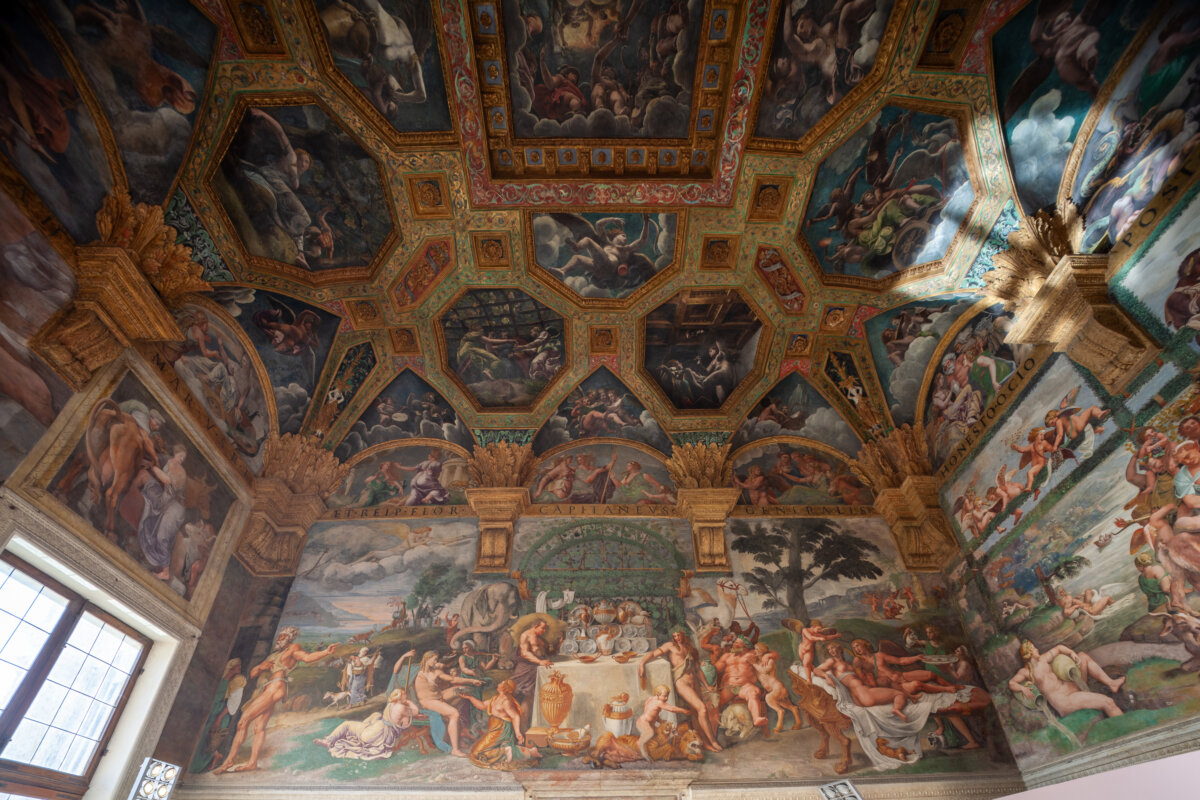
Only the most important guests visited the Chamber of Cupid and Psyche. The scene on the far wall depicts the preparation of the country banquet. On the lower right, Voluptas (“Pleasure”), the daughter of Cupid and Psyche, reclines on a bed. A verse on the right wraps around the room: “[The Duke] ordered this construction for his honest leisure after hard labors, to regain his strength in peace” (“Honesto ocio post labores ad reparandam virt[utem] quieti constraui mandavit”). (J.H. Smith)Would you like to see other kinds of arts and culture articles? Please email us your story ideas or feedback at features@epochtimes.nyc