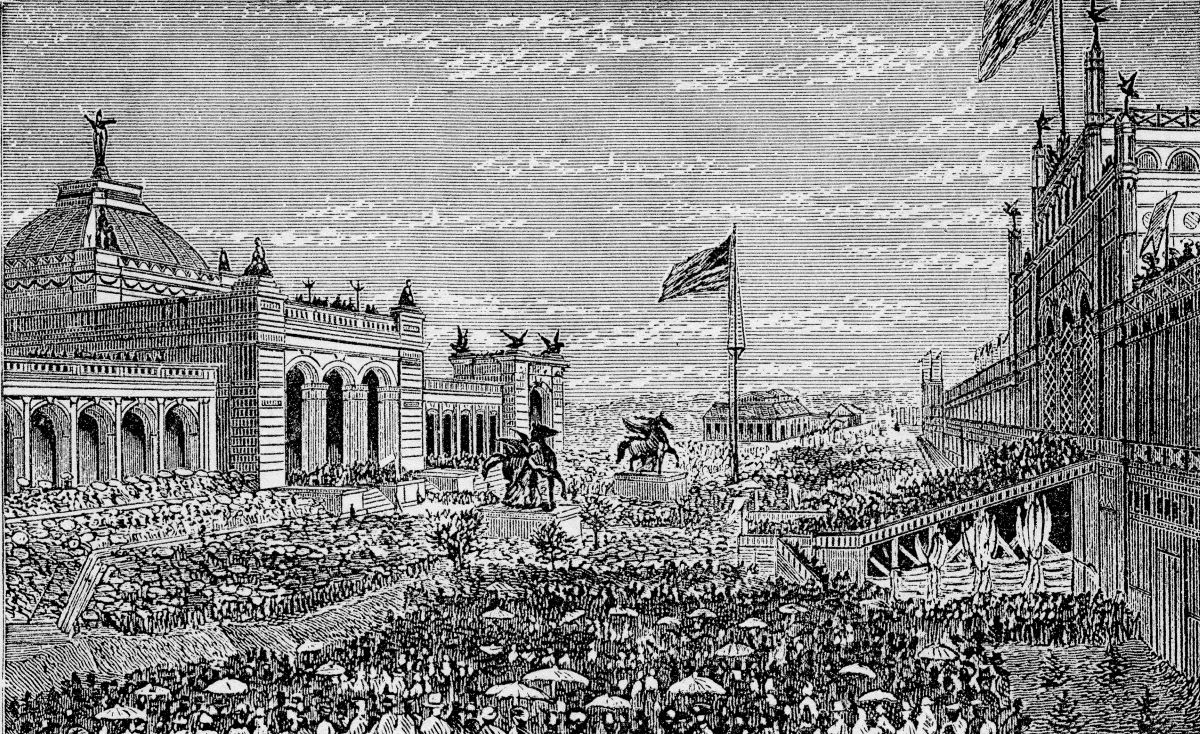
Even after the tragedy of the Civil War, it would have been impossible to be oblivious to America’s upcoming centennial. The country’s 100th birthday was a milestone that the nation’s citizens were happily awaiting. For such a momentous occasion, only a spectacular celebration would do.
During the country’s 90th year, in December of 1866, John Campbell, a professor at Wabash College in Indiana, became the first (or at least is credited with that recognition) to officially propose the idea of hosting a world’s fair commemorating 1776. He presented the idea to Morton McMichael, the mayor of Philadelphia—the birthplace of the country’s birth certificate, the Declaration of Independence.
Over the course of a few years, the idea finally picked up steam among the city’s political, social, and business communities. In 1871, the city petitioned Congress to authorize a centennial celebration to be held in Philadelphia. On March 3, 1871, Congress passed legislation to celebrate “the one hundredth anniversary of American independence by holding an industrial exhibition of arts, manufactures, and products of the soil and mine, in the city of Philadelphia, and State of Pennsylvania, in the year 1876.”
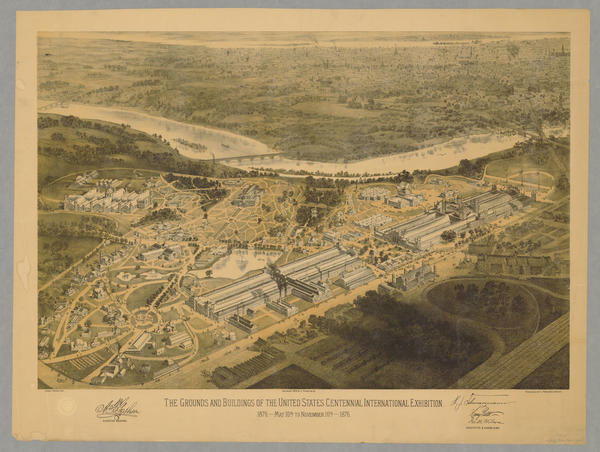
The city already had an ideal location for the industrial exhibition—an approximate 250-acre tract on the west side of the 3,160-acre Fairmount Park. The section would house the more than 200 pavilions, along with its seven miles of various avenues and pathways. But in order for the exposition to be accomplished. it needed funding. That would be much more difficult than anticipated.
Raising Funds in a Panic
When Congress passed its 1871 bill, it created the United States Centennial Commission, but the legislative body made it clear that Congress would play no role in funding the event. The city of Philadelphia got the financial ball rolling with a donation of $50,000, though it would ultimately provide $1.5 million in subsidies. The Commonwealth of Pennsylvania raised $1 million. Daniel J. Morrell, the congressman from Pennsylvania who helped pass the legislation, assisted in creating the commission’s financial board in 1872, which attempted to sell $10 million in stocks for the exposition. But even with the combination of stocks and a subscription program organized by the Women’s Centennial Exhibition Committee, the effort fell far short of its $11 million goal, raising less than $2 million.
Regardless of the financial shortcomings, on July 3, 1873, President Ulysses S. Grant issued a proclamation
“There will be held at the city of Philadelphia, in the State of Pennsylvania, an International Exhibition of Arts, Manufactures, and Products of the Soil and Mine, to be opened on the 19th day of April, A.D. 1876, and to be closed on the 19th day of October, in the same year. And in the interest of peace, civilization, and domestic and international friendship and intercourse, I commend the celebration and exhibition to the people of the United States, and in behalf of this Government and people I cordially commend them to all nations who may be pleased to take part therein.”
Peace and civilization, however, would be tested less than three months later with the Panic of 1873, which proved to be America’s worst financial crisis until the Great Depression. The crisis made raising funds from the private sector even less feasible. With an opening day deadline less than three years away and a global financial crisis that would not be resolved quickly, the Centennial Exposition of 1876 and America’s first world’s fair was in trouble.
Choosing Schwarzmann
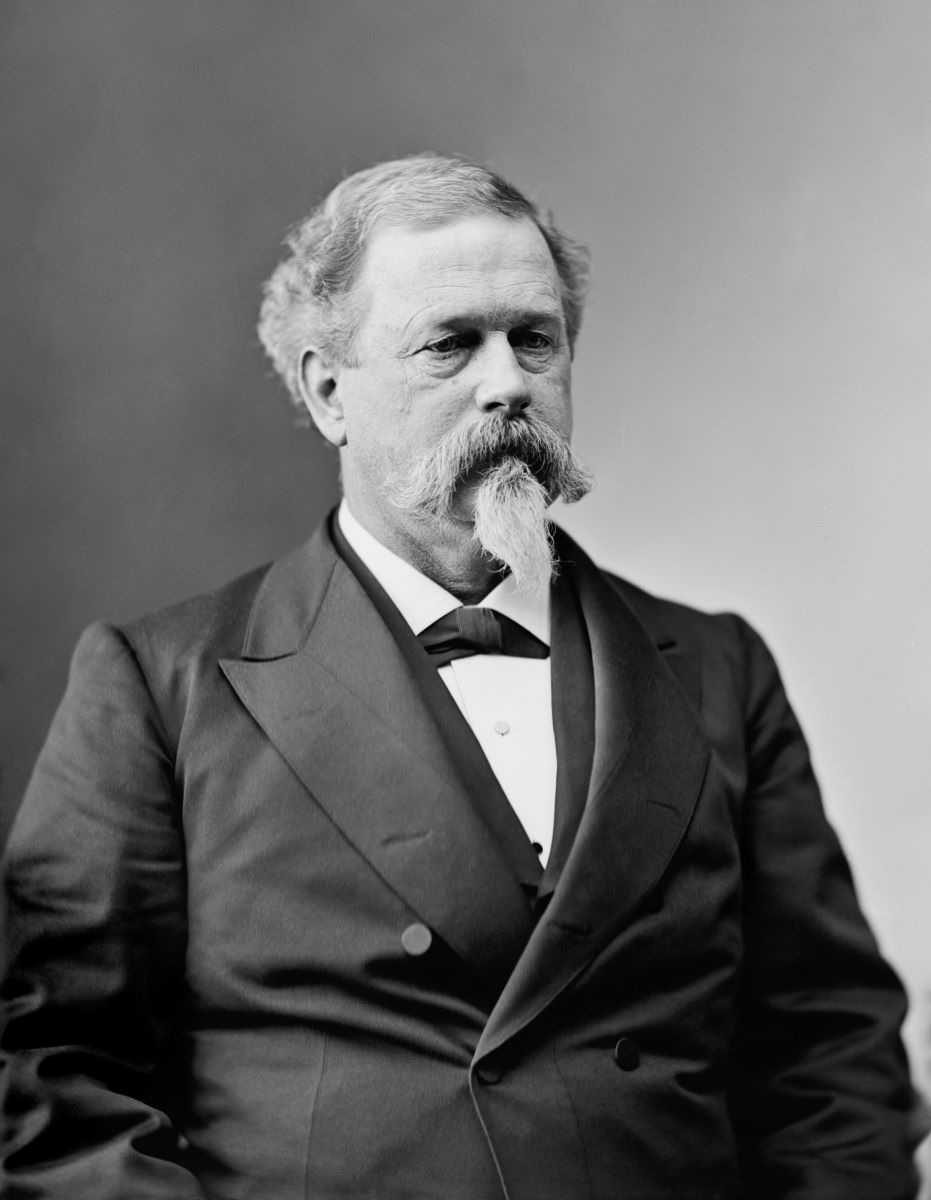
The Centennial Commission, led by Congressman Joseph Hawley of Connecticut, nonetheless pressed forward in organizing and preparing for the event. Hawley, a retired Union general who was born in the country’s 50th year, was a patriotic force for the exposition. Another force was the aforementioned Campbell, who was the Commission’s secretary. Arguably the most important position, however, fell to German immigrant architect, Hermann J. Schwarzmann.
Schwarzmann was born in Munich in 1846 to a successful painter and decorator. He attended the Royal Military School and became a lieutenant. A decade before the Centennial Exposition, Schwarzmann fought in the very brief Austro-Prussian War of 1866. About a year later, he immigrated and settled in Philadelphia. As an employee at Fairmount Park, his talent for design and architecture was quickly recognized. Beginning as an assistant engineer, he was quickly promoted to chief engineer of the park. During his early tenure, he designed the architecture and the landscape of the Philadelphia Zoological Gardens. The Gardens opened in 1874. Around this time, he also submitted a design proposal for the Centennial Exposition’s Art Gallery. Not only was his design proposal accepted, but he was named chief architect for the Centennial Exposition.
The German architect got to work creating the layout of the massive expo, as well as the design of many of the buildings.
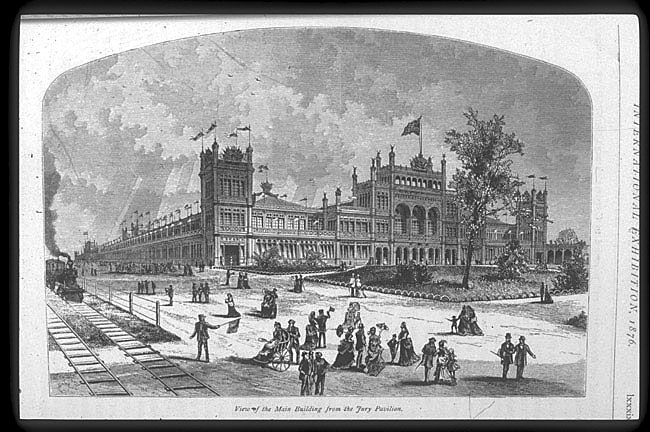
The Exposition’s main building was the Main Hall, which covered an incredible 35 acres. In fact, upon its construction, it was the country’s largest building. There was also the Schwarzmann-designed Horticultural Hall, which was not destroyed until 1955, and Memorial Hall, which is still used as a museum. There were numerous buildings that represented states, like New York, New Jersey, Massachusetts, and Pennsylvania, as well as foreign countries, like Brazil, Canada, England, France, Germany, and Japan. Demonstrating America’s innovation, agriculture, technology, and art was the Shoe and Leather Building, the Butter and Cheese Factory, Brewers’ Building, U.S. Government Building, and the Campbell Printing Press Building, among many others. Arguably the most impressive building was the Machinery Hall.
Corliss and the Machine
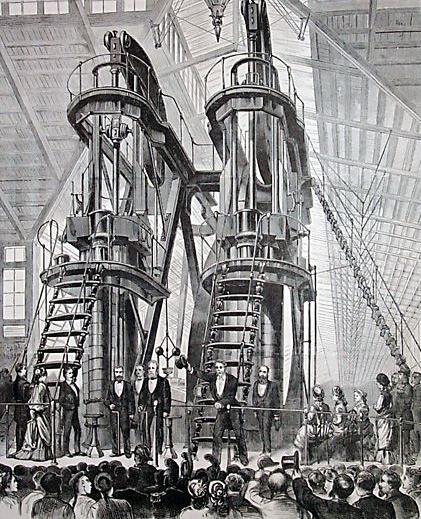
The Machinery Hall certainly had many of the latest technologies and innovations. In fact, there were nearly 2,000 exhibits in the Hall, including a line of Philadelphia’s own Baldwin Locomotive Works locomotive engines. There were machines that sawed logs, pumped water, and made clothes, shoes, newspapers, and wallpaper. As impressive as this was, nothing could compare with the source that powered those hundreds of machines.
George H. Corliss had abandoned his career as a merchant to pursue machine building and inventions, and moved from New York City to Providence, Rhode Island. His first machine was a boot-stitcher. His talents placed him in important positions within major companies. But in 1856, during the country’s 80th year, Corliss opened his own business called the Corliss Steam Engine Company. By the time the Centennial Exposition of 1876 was nearing, Corliss’s company began building a massive steam engine.

In order for the machine to reach Philadelphia from Providence, its parts had to be placed in 65 train cars. The 700-ton engine stood approximately 45 feet high. Its power-producing flywheel, rotated by two large cylinders, weighed 56 tons and was 30 feet in diameter. The engine produced 1,400 horsepower. The overall cost of the engine was $200,000; Corliss did not charge the Centennial.
When the famous novelist and journalist, William Dean Howells, witnessed the size and power of engine, he wrote, “It rises loftily in the centre of the huge structure, an athlete of steel and iron with not a superfluous ounce of metal on it; the mighty walking beams plunge their pistons downward, the enormous flywheel revolves with a hoarded power that makes all tremble, the hundred life like details do their office with unerring intelligence.”
Along with the landscaping, the many buildings, and the practically countless innovations from a plethora of industries, the Corliss Centennial Engine, as it became known, would be a sight to behold.
The Expo Opens
Despite the financial constraints produced by the Panic of 1873, in early 1876, the federal government relented and agreed to loan a much-needed $1.5 million for the Centennial Exposition. Part of this loan agreement, however, stated that if the expo did well enough financially, monies collected would be put toward building a National Museum in Washington.
It was during this week in history—150 years ago—on May 10, 1876 (about a month later than the date proclaimed by President Grant), that America’s first world’s fair, the Centennial Exposition of 1876 began. The opening ceremony was conducted inside the Machinery Hall on a 56-foot wide platform, which housed the Corliss Centennial Engine.
Thousands of spectators surrounded the platform to witness the president of the Centennial Commission, Hawley, introduce the exposition’s most distinguished guest, President Grant. Grant stood before the gathered crowd and extolled the efforts of Americans over the past 100 years:
“And now, fellow-citizens, I hope a careful examination of what is about to be exhibited to you will not only inspire you with a profound respect for the skill and taste of our friends from other nations, but also satisfy you with the attainments made by our own people during the past one hundred years. I invoke your generous cooperation with the worthy Commissioners to secure a brilliant success to this International Exhibition, and to make the stay of our foreign visitors, to whom we extend a hearty welcome, both profitable and pleasant to them. I declare the International Exhibition now open.”
President Grant and Emperor Dom Pedro II of Brazil stepped toward separate levers on the Corliss machine and shifted them. The machine came to life, its connections spread throughout the Hall, powering the electrical lighting, elevators, and the latest and greatest machines.
A Most Successful World’s Fair
The opening day of the Exposition witnessed 186,672 visitors. Some of the most important and lasting creations, inventions and innovations were showcased during the six-month celebration, including the telephone, the typewriter, sewing machines, root beer, popcorn, and tomato ketchup.
The Centennial Exposition of 1876 (also known as Philadelphia World’s Fair, the United States Centennial Exhibition, or the much longer International Exhibition of Arts, Manufactures and Products of the Soil and Mine) was one of the most successful world’s fair in history. The fair welcomed more than 9 million visitors overall, and, by its conclusion, the commission’s financial board, which had struggled to sell stocks for the event, had a $2 million surplus with which they were able to pay off the Congressional loan.
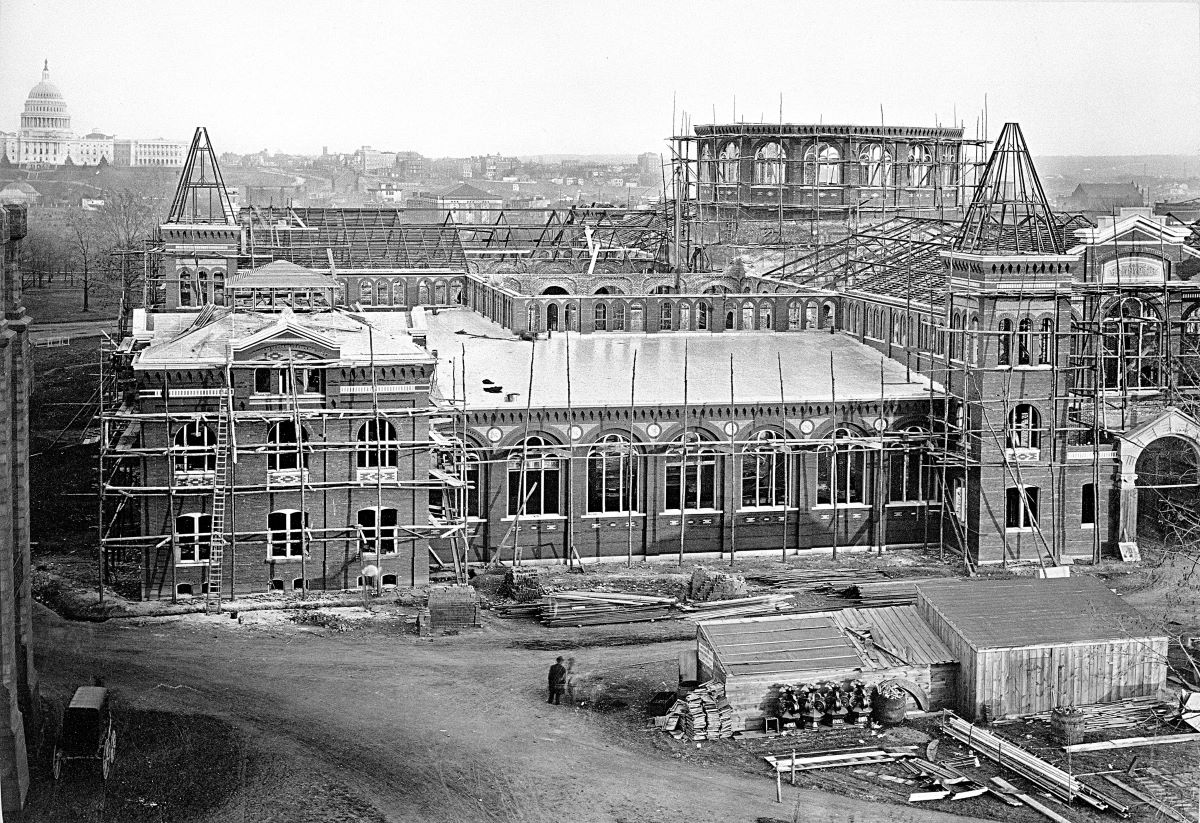
As promised, the repayment of that loan led to the construction of the National Museum. Spencer F. Baird, who was the Smithsonian Institution’s assistant secretary as well as a board member of the Centennial Commission, convinced many of the exhibitors, including from numerous states and 34 countries, to donate their exhibits to the soon to be built National Museum. More than 60 train cars, carrying approximately 4,000 crates, arrived in Washington. The donated exhibits filled the Museum, which is now known as the Arts and Industries Building.
Never miss a This Week in History story! Sign up for the American History newsletter here.
What arts and culture topics would you like us to cover? Please email ideas or feedback to features@epochtimes.nyc