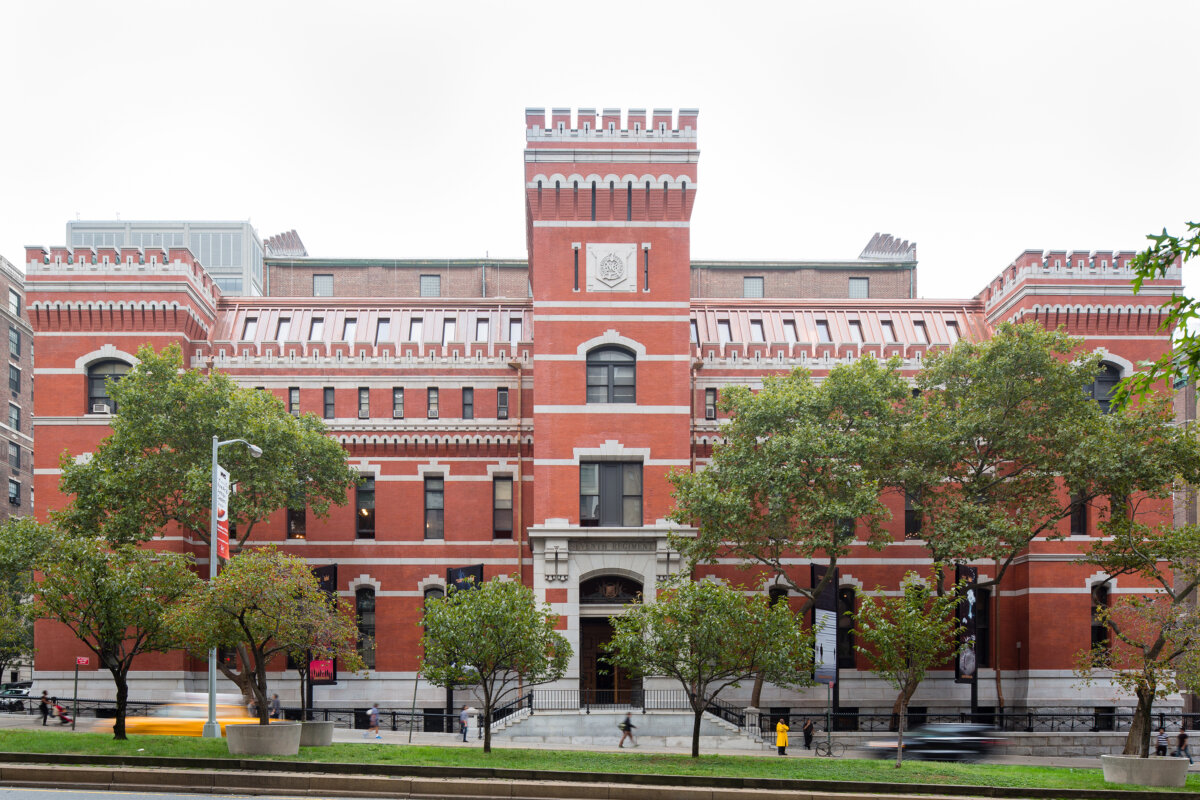
Occupying a block in New York City, the armory’s 200-foot-wide main facade faces Park Avenue. The Victorian Gothic Revival structure is constructed from Philadelphia red brick with granite trim, quoins, and arches. Park Avenue Armory features three protruding towers with crenellated parapets and corbeled brick cornices. (James Ewing/Park Avenue Armory)
The Park Avenue Armory is one of the most distinguished buildings on Manhattan’s Upper East Side, notable for its history, imposing architecture, and glorious interiors. The New York National Guard’s 7th Regiment built the brick Gothic Revival-style building from 1877 to 1881. Occupying an entire block along posh Park Avenue, the armory was used by the Regiment for military matters, but it also functioned as a social and cultural arena for New York’s Gilded Age high society. The militia members were from prominent families, and their wealth funded the greatest designers, artists, and craftspeople who constructed the building.
Regiment veteran Charles W. Clinton was the architect for the entrance, grand staircase, drill hall, and other elements. The sumptuous Reception Rooms on the first floor and Company Rooms on the second floor were designed by a who’s who of the American Aesthetic Movement, including the Herter Brothers, Pottier & Stymus, and the newly formed Associated Artists, a cooperative firm led by Louis Comfort Tiffany and Candace Wheeler with consulting architect Stanford White. The New York City Landmarks Preservation Commission cites the armory as “the single most important collection of nineteenth-century interiors to survive intact in one building.”
For much of the 20th century, the armory was neglected; in 2000, it was listed as one of the “100 Most Endangered Historic Sites in the World” by the World Monuments Fund. Today, the armory is stewarded by the nonprofit Park Avenue Armory Conservancy. It is currently undergoing a $215 million renovation and restoration by the celebrated architectural practice Herzog & de Meuron. The revitalized space hosts ticketed programming of visual and performance arts as well as art fairs and guided tours. The armory is once again a New York City cultural hub.
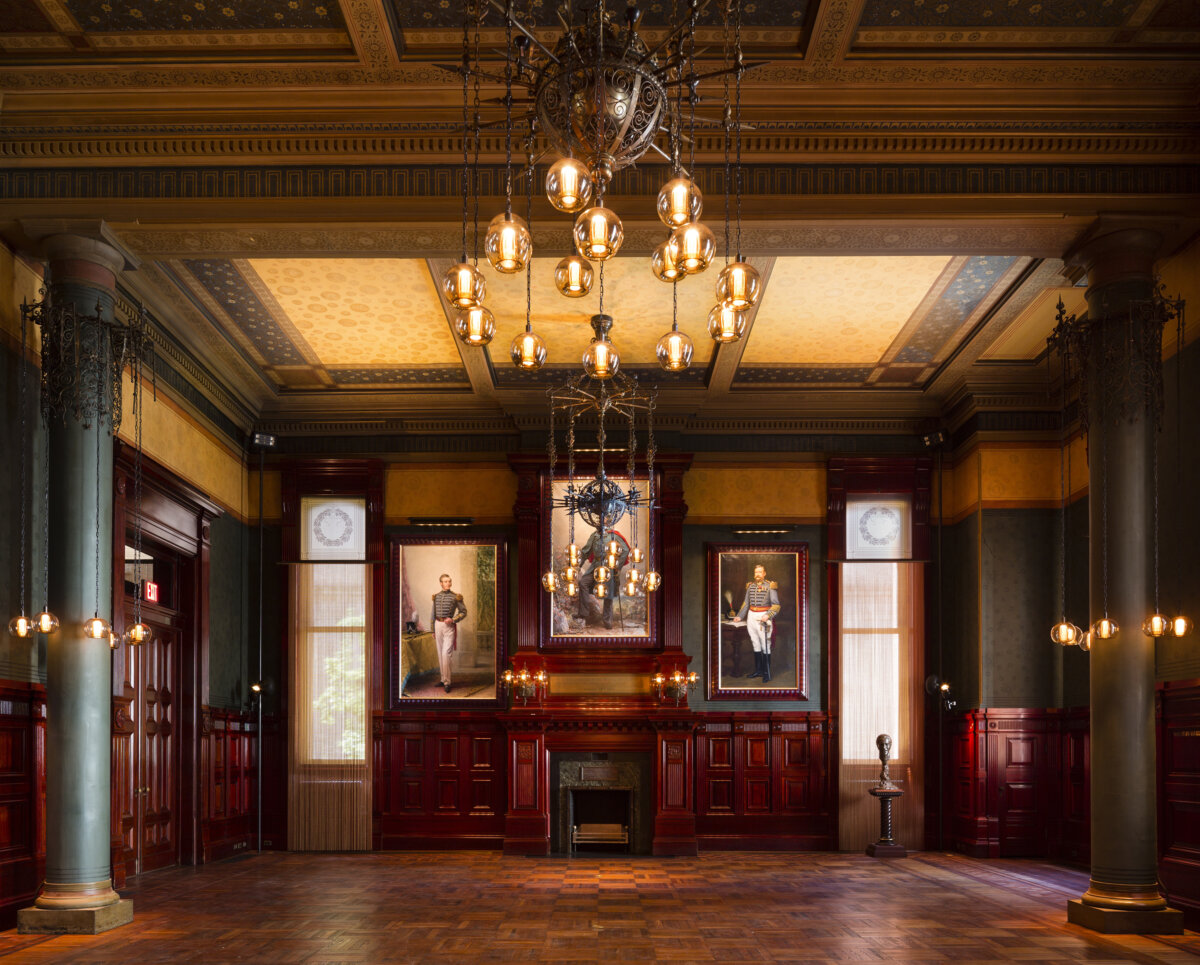
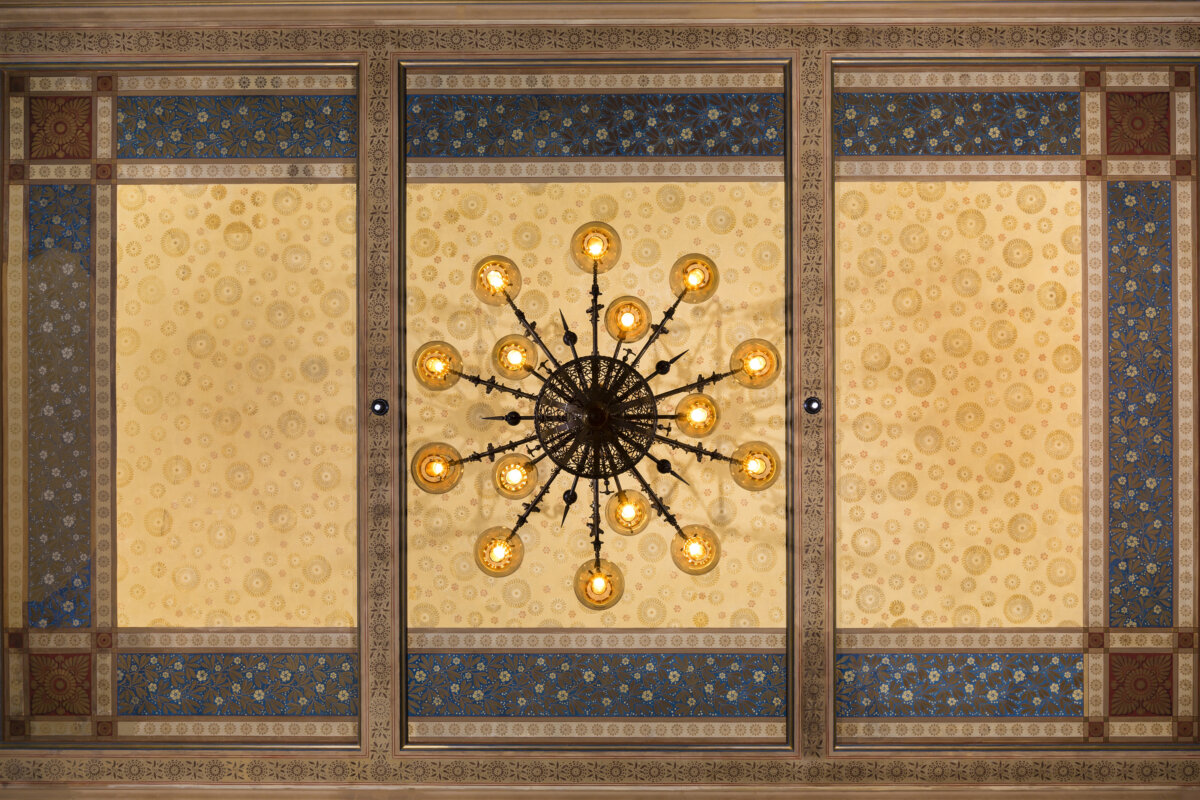
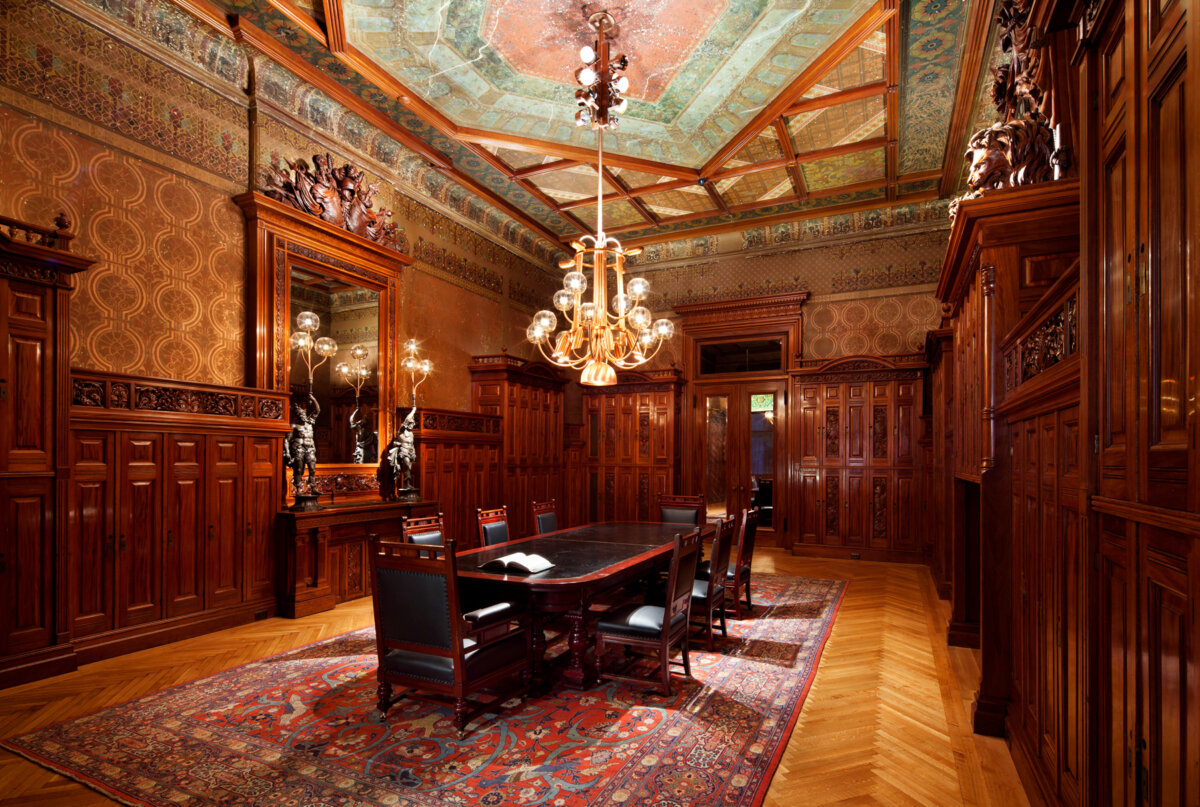
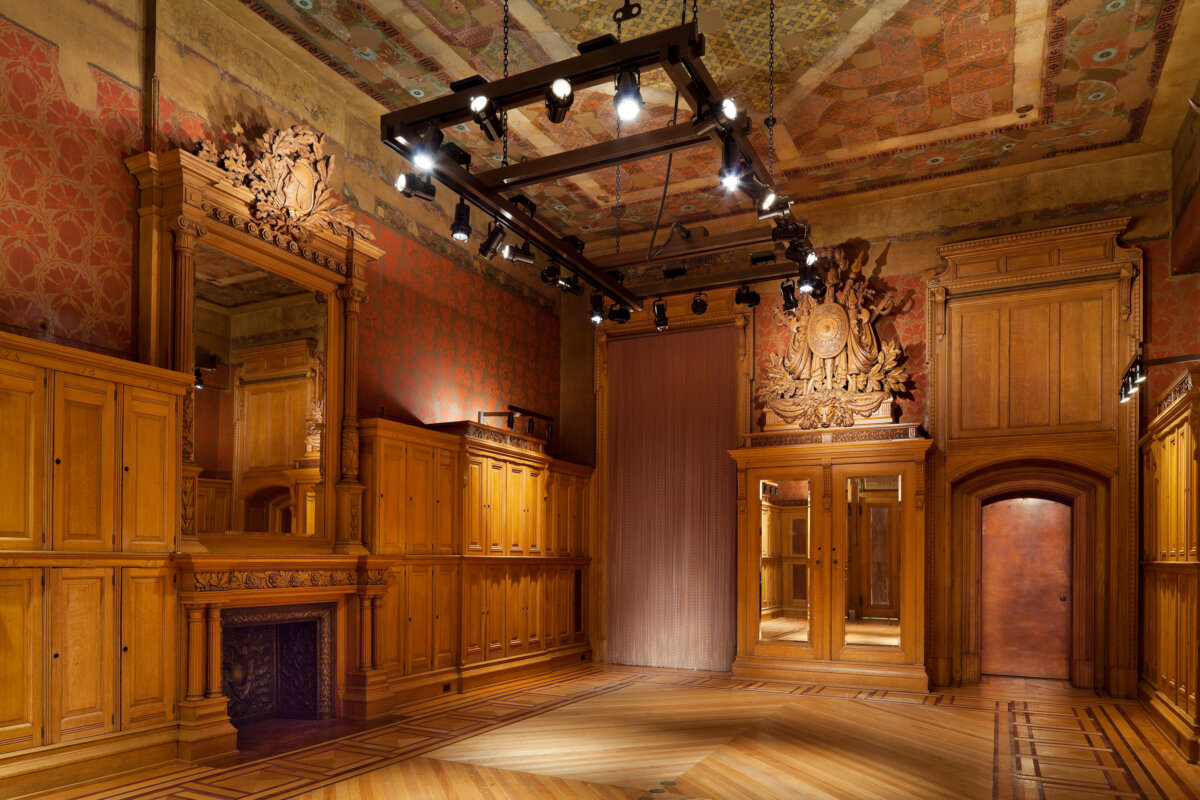
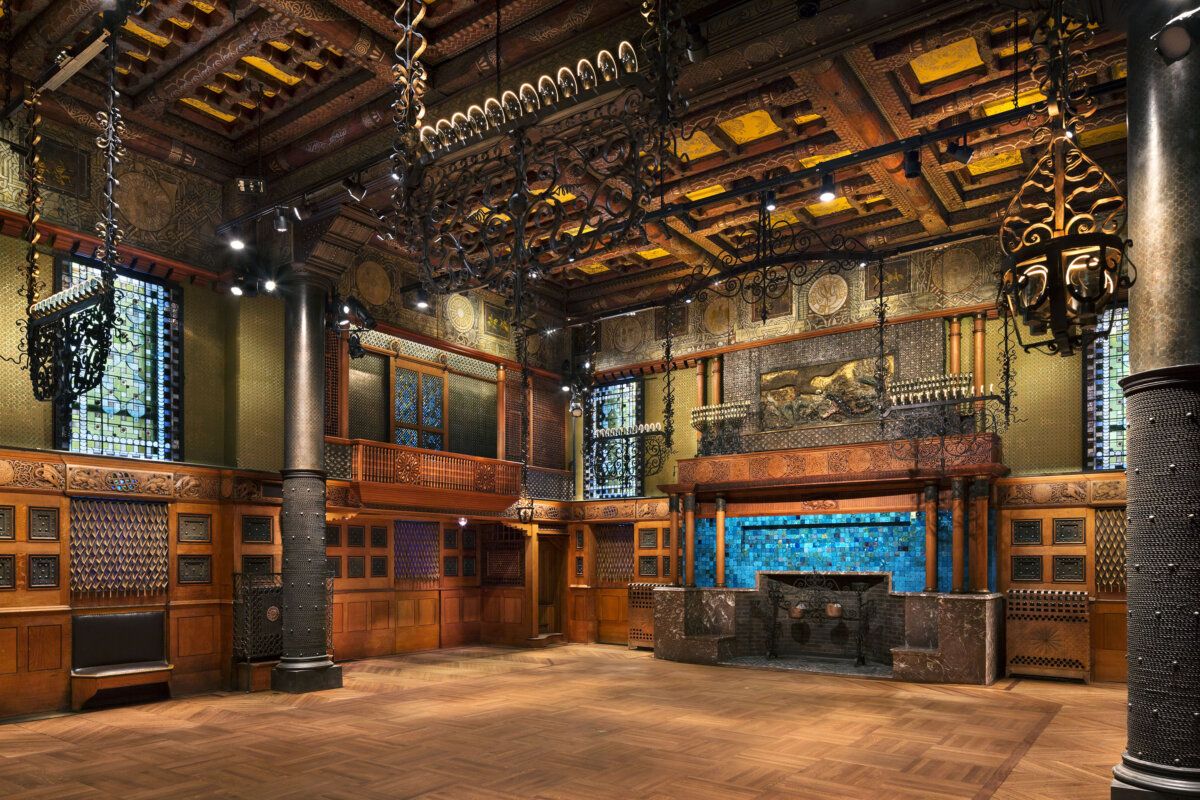
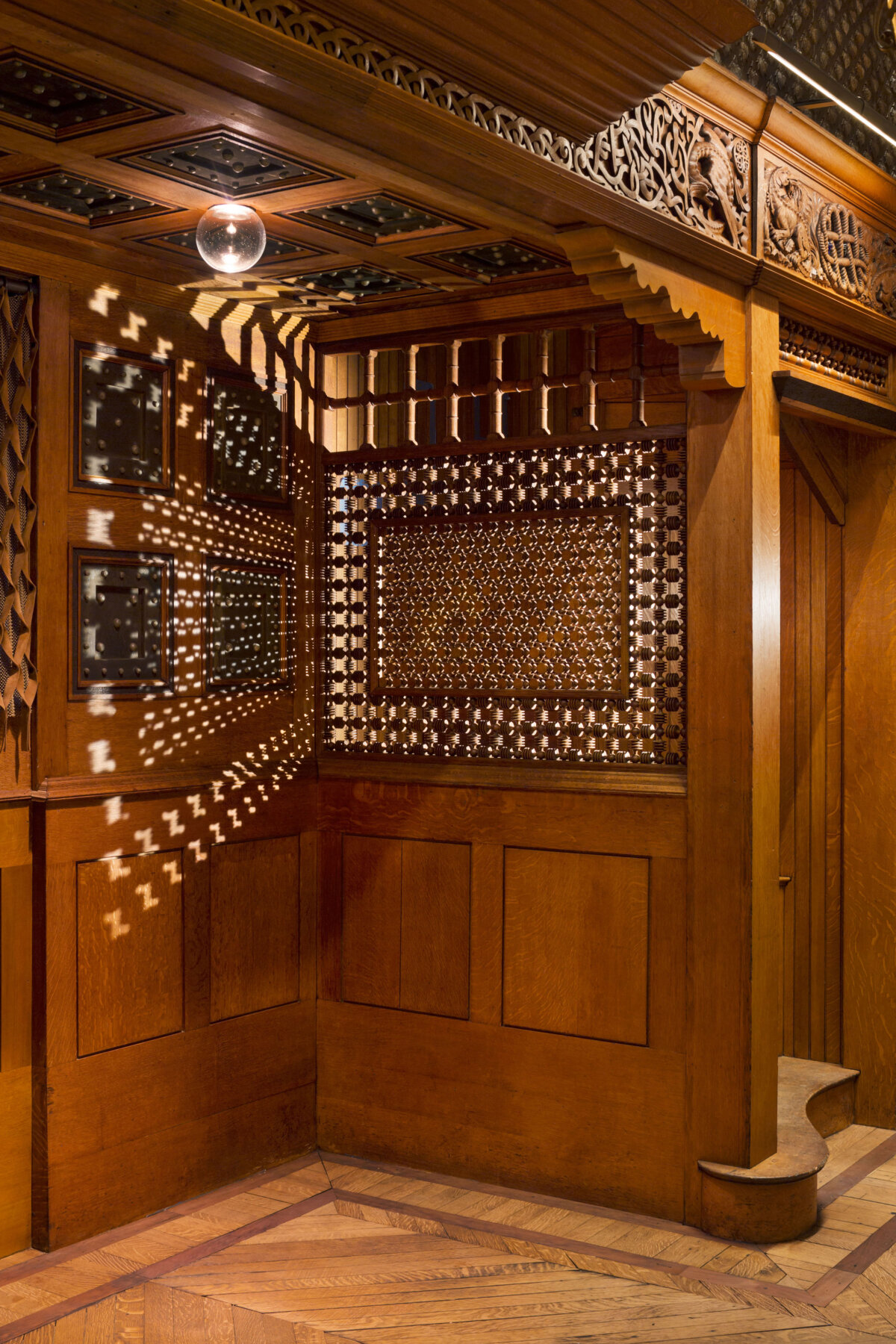
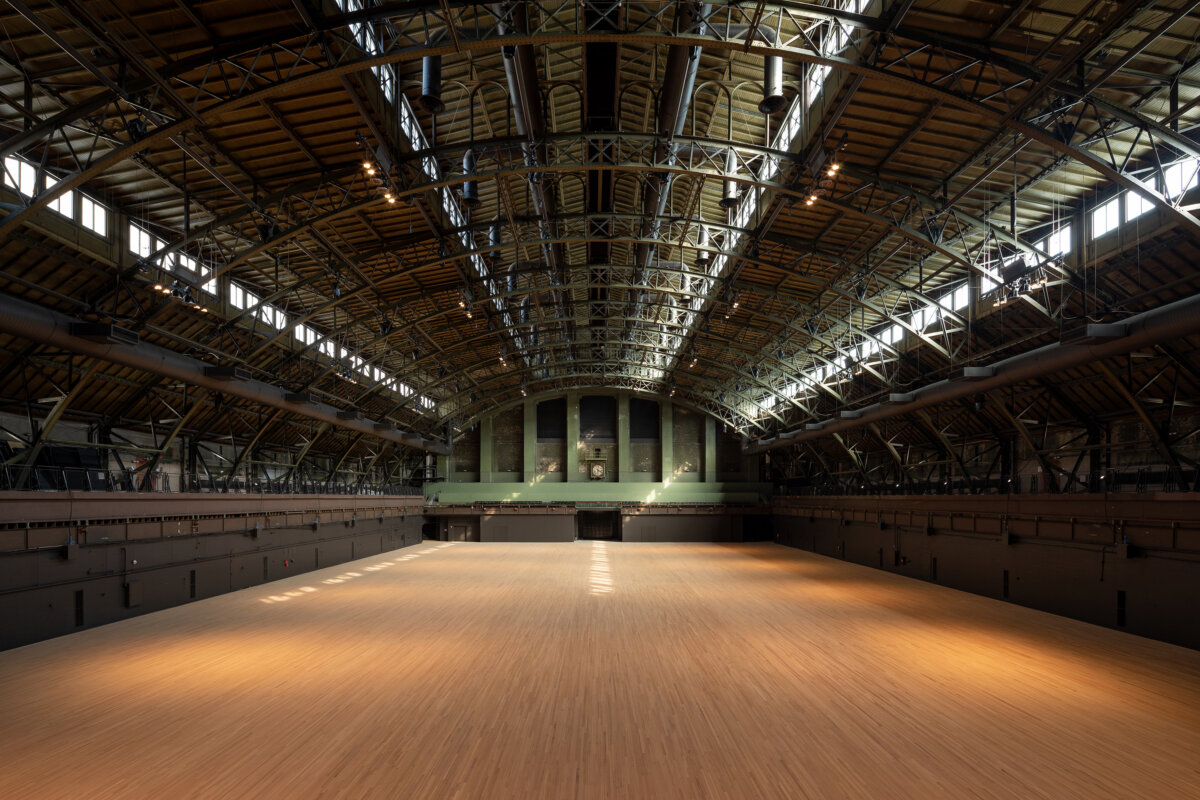
The grand Board of Officers Room is a rare example of the Herter Brothers’ surviving interiors in the United States and is one of five of their rooms in the armory. An exceptional New York-based cabinetmaking and decorating company, bold-faced client names included Vanderbilt, Morgan, and President Ulysses Grant. The room, reflective of its creators’ mature style, features fine Honduran mahogany woodwork in a blood-red hue and deep-green walls with floral stencils. (James Ewing/Park Avenue Armory) The Board of Officers Room’s beautiful ceilings were stenciled in a series of cream panels with blue borders. First cleaned and renovated in 1906, a second refurbishment 26 years later altered its appearance. Other parts of the room were dramatically changed, too. By 1998, the ceilings were falling. The 2013 restoration of the room revealed the original artisans’ brushstrokes and color palette on the walls and ceilings. (James Ewing/Park Avenue Armory) Well-established by the time of their 1880 commission for Company D, Pottier & Stymus was among the country’s leading furniture makers and interior decorators, with clients including titans of industry and the White House. This Renaissance Revival room, restored in 2010, showcases intricately carved mahogany woodwork, a trompe-l’oeil painted ceiling, and walls with terra cotta stencils over a copper field. (James Ewing/Park Avenue Armory) Originally designed in 1880 by Pottier & Stymus in a Renaissance Revival style, Company E’s striking interior underwent alterations in the 1890s that included Tudor-style plasterwork and new wallpaper. The 2010 restoration thoughtfully reestablished the original decorative scheme of stenciled red and copper walls and warm oak woodwork that glows again. (James Ewing/Park Avenue Armory) The crown jewel of the armory is the Veterans Room, the most important intact interior by Associated Artists. Tiffany spearheaded the room’s overall style, drawing on Greek, Moorish, Celtic, Egyptian, Persian, and Japanese elements. The experimental, exuberant, and richly layered result, which is a designated interior landmark, is a stunning example of the American Aesthetic Movement at its zenith. (James Ewing/Park Avenue Armory) An early-career Stanford White, who had just joined the Gilded Age architectural firm McKim, Mead & White, was responsible for the Veterans Room’s architectural arrangements. This directive included all of the intricate hand-carved ornamental woodwork. Upon the room’s completion, The New York Times heralded it as “the most magnificent apartment of its kind in this country.” (James Ewing/Park Avenue Armory) The 55,000-square-foot Wade Thompson Drill Hall, evocative of the original Grand Central Depot and 19th-century European train stations, is one of the largest unobstructed spaces of its kind in New York. Eleven elliptical wrought iron arches are a feature of the 80-foot-tall barrel-vaulted roof, which is the oldest of this scale in the United States. (James Ewing/Park Avenue Armory)
What arts and culture topics would you like us to cover? Please email ideas or feedback to features@epochtimes.nyc.
Michelle Plastrik is an art adviser living in New York City. She writes on a range of topics, including art history, the art market, museums, art fairs, and special exhibitions.