




R | 2h 7m | Documentary, Biography, Music | 2026
One half of the most successful songwriting duo of all time, Paul McCartney reached what most would consider his career pinnacle well before age 30.
In tandem with John Lennon, McCartney penned some of the most memorable songs in the history of recorded music. Not just Rock & Roll, but all music, ever. That’s a tough act to follow, and provides the crux of director Morgan Neville’s subversive documentary, “Paul McCartney: Man on the Run” (“Man”).

With “Man,” Neville continues his winning string of musical documentaries which have previously focused on Brian Wilson, Muddy Waters, Johnny Cash, Hank Williams, and Keith Richards. Neville has also made superb docs about Anthony Bourdain, Steve Martin, and Fred Rodgers. With the possible exception of Ken Burns, Neville may be the most relevant and commercially successful living documentarian.
“Man” is not a full-blown McCartney biography or career retrospective. Instead, it’s an overview of his life and artistic output during the 1970s. In the great scheme of things, this stretch was not McCartney’s finest musical era.
The movie opens with the breakup of the Beatles. Many cite the release of McCartney’s first solo album (“McCartney”) as the catalyst. However, it came months after Lennon privately announced his own departure.
It was the inclusion of a bile-riddled printed mock interview that McCartney enclosed with press copies of the album that rubbed everyone the wrong way. Making matters worse, the album was universally panned, and for good reason. It contained a single standout song, “Maybe I’m Amazed,” surrounded by a sea of truly mediocre filler.

McCartney’s second album, “Ram,” was equally panned and derided. Many detractors blamed McCartney for including Linda, a professional photographer with limited musical talent, as a co-writer and performer.
In 15 minutes into the movie, Neville proves exactly why his work is so well respected by audiences and his peers. He’s thoroughly unbiased with his presentations and choice of material.
Archival Footage
What’s even more impressive is that McCartney is the executive producer of “Man.” He could have easily reined in—or tried to rein in—Neville and demanded he avoid archival footage that made the subject appear fallible. Maybe McCartney did try and Neville ignored him, or perhaps he convinced McCartney balance and neutrality were the way to go.
With that groundwork laid, Neville takes the same approach with the next two albums (“Wild Life” and “Red Rose Speedway”). The first two releases by the new band Wings were met with even more hostility from the press and established a pattern: Without the other Beatles to keep him in check, McCartney just wasn’t as compelling.
Perhaps recognizing he was approaching career DEFCON 5 and risking his formidable legacy, McCartney, Linda, and Denny Laine travelled to Nigeria to record the third Wings album, “Band on the Run” (“Band”).

With “Band,” not only did the losing streak end, it produced what remains McCartney’s finest non-Beatles album. For better or worse, it’s also the sole Wings studio album (out of seven) that is worth your time.
At this point, you might wonder why you should even bother watching “Man,” and this hesitancy is valid. As a major Beatles fan, I’ve seen nearly every movie and documentary about them I could ever find, and there’s next to nothing in “Man” I’ve ever seen before. For that reason alone, if you’re a Beatles fan, it’s well worth your time.
Audio Interviews
For me, the best facet of the movie was the inclusion of audio-only interview snippets from Nick Lowe (a member of a warm-up band on a Wings tour), Mick Jagger, Chrissie Hynde (founder of the Pretenders and a McCartney family friend), and Paul and Linda’s daughters, Mary and Stella. Their collective memories of the era lend the production a golden glow and underscore Paul and Linda’s intractable loving bond.
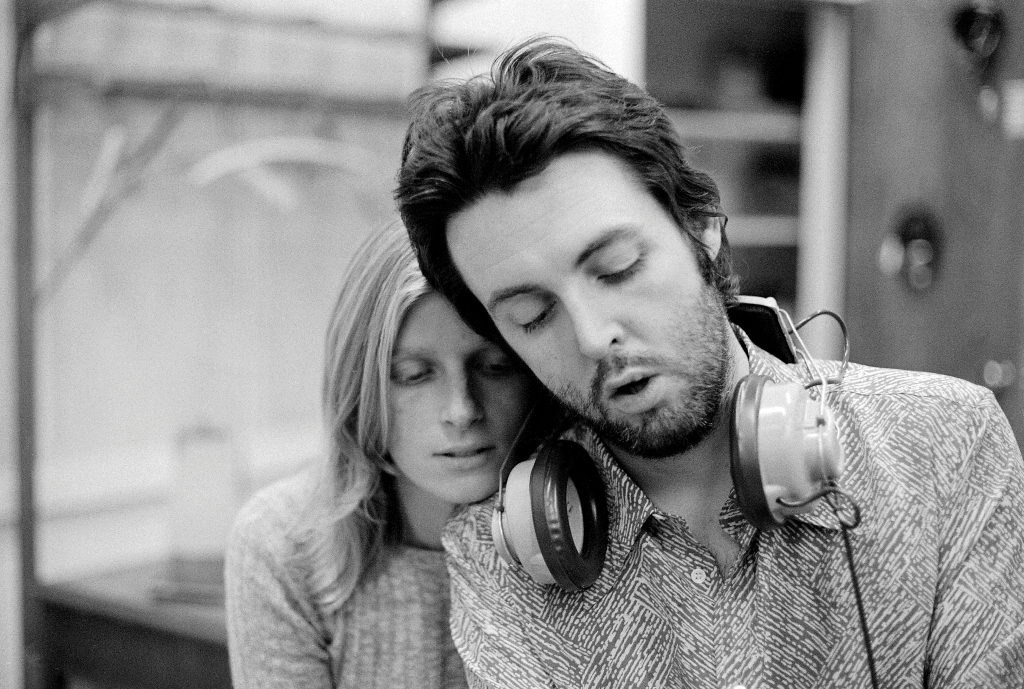
The most moving of the interviews are with Sean Lennon, John’s youngest son. He speaks not only of his admiration for Paul, but also of his father’s respect for Paul’s initial post-Beatles work.
My takeaway from these passages was that John and Paul, despite their sometimes vicious, post break-up spats, never forgot what had drawn them, and the world, together in the first place. They loved and admired each other, even after the Beatles had run their course.
Maybe this is why Paul allowed Neville to include so much not-so-glowing content throughout. Maybe it’s because Paul wished to “clear the decks” and acknowledge an admittedly down phase.
Or, maybe I’m amazed at the way Neville framed McCartney’s weakest career creative period into something totally transfixing.
The movie begins streaming Feb. 27 on Amazon Prime.
‘Paul McCartney: Man on the Run’
Documentary
Director: Morgan Neville
Running Time: 2 hours, 7 minutes ]
MPAA Rating: R
Release Date: Feb. 27, 2026
Rating: 4 stars out of 5
What arts and culture topics would you like us to cover? Please email ideas or feedback to features@epochtimes.nyc
