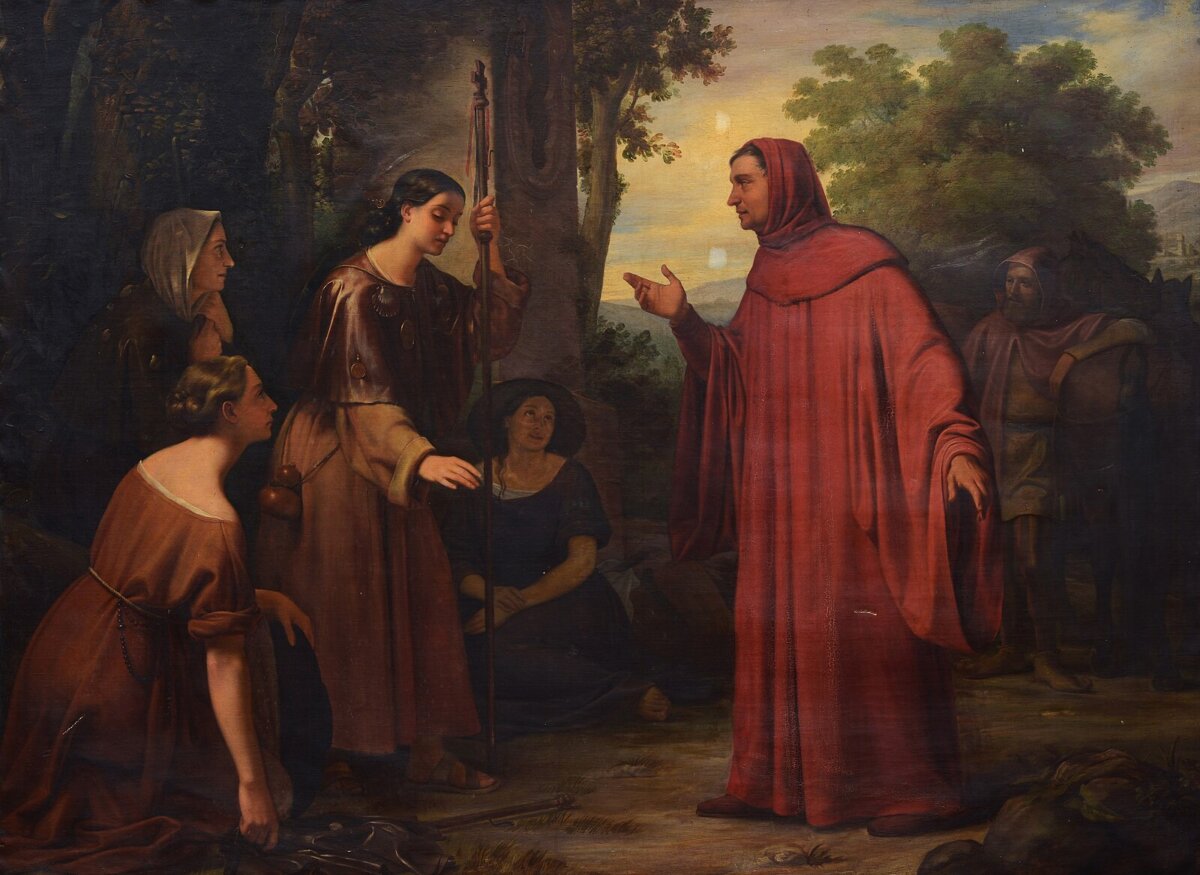
In the middle of the 14th century, Francesco Petrarca—better known as Petrarch—did something no one had ever done: He wrote letters to the dead. Among his recipients were the Greek epic poet Homer and the Roman writers Cicero, Seneca, and Livy.
Petrarch’s letters are full of questions, praises, and reproaches. They show readers what it means to treat an author as a friend, and to befriend the past.
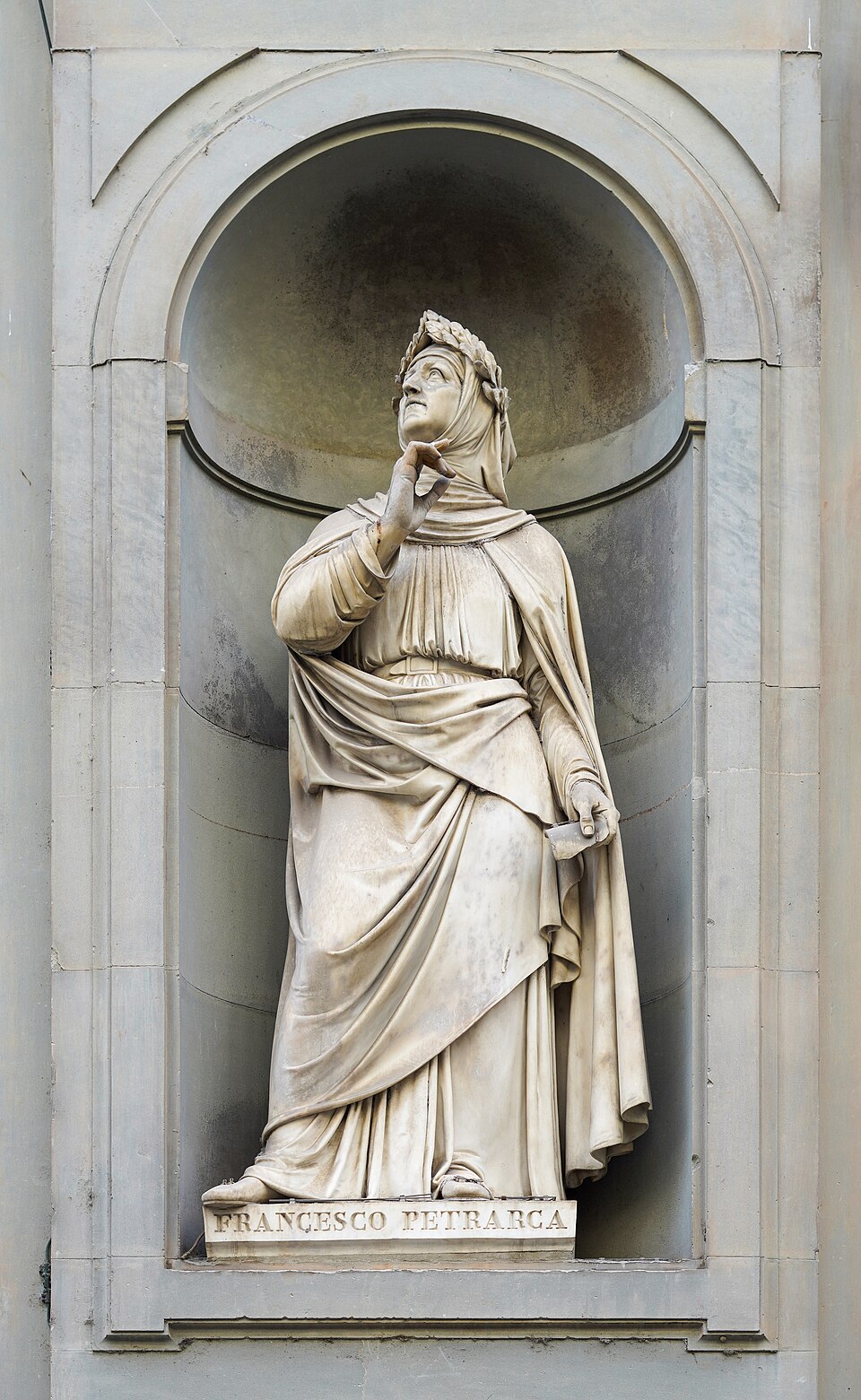 A statue of Francesco Petrarch at the Uffizi Gallery, Florence. (Wikibusters/CC BY-SA 4.0)
Francesco Petrarch: Poet, Scholar, and Humanist
Petrarch (1304–1374) was born in Arezzo, Italy, to Ser Petracco, a notary and an acquaintance of Dante Alighieri. Like Dante, Ser Petracco had been banished from Florence for political reasons. When he was 9 years old, Petrarch moved with his family to Avignon, France, to follow Pope Clement V as he began the Avignon Papacy, a period of about 70 years when the Pope resided in Avignon instead of Rome. Splitting his youth between Italy and France instilled in Petrarch a curiosity for foreign places, which later made him an avid traveler.
Although he completed seven years of legal studies in France and Italy, Petrarch despised courts. He saw lawyers as fraudulent people who sold their intellectual power for material gain. “It went against me painfully to acquire an art which I would not practice dishonestly, and could hardly hope to exercise otherwise,” he wrote in a letter addressed to posterity.
If law represented a greedy, corrupt world, philosophy and Latin poetry called to the young Petrarch as worthier pursuits. Later in the same letter, he noted: “I possessed a well-balanced rather than a keen intellect, one prone to all kinds of good and wholesome study, but especially inclined to moral philosophy and the art of poetry.”
At age 22, Petrarch returned to Avignon, but left shortly after due to an “innate repugnance to town life,” relocating to the quiet Vaucluse valley. There he found time to read, write, and start composing poetry. His first project, the epic poem “Africa,” tells of the Roman general Scipio Africanus, one of the most celebrated military strategists in history, who defeated the formidable Hannibal in the Second Punic War (202 B.C.). The work earned Petrarch an appointment as Italy’s “poet laureate” before it was even finished. Fame followed, and some of Europe’s most influential figures requested his presence.
Driven by what he called a “great inclination and longing to see new sights,” Petrarch began traveling widely in Italy and southern France, finding welcoming hosts wherever he went. He often ventured into libraries and monasteries, searching for lost manuscripts of ancient books. In 1345, while exploring a library in the Verona Cathedral, he stumbled upon a dusty collection of Cicero’s letters. Cicero had written to his brother, Quintus, a close friend, Atticus, and one of his colleagues, Brutus.
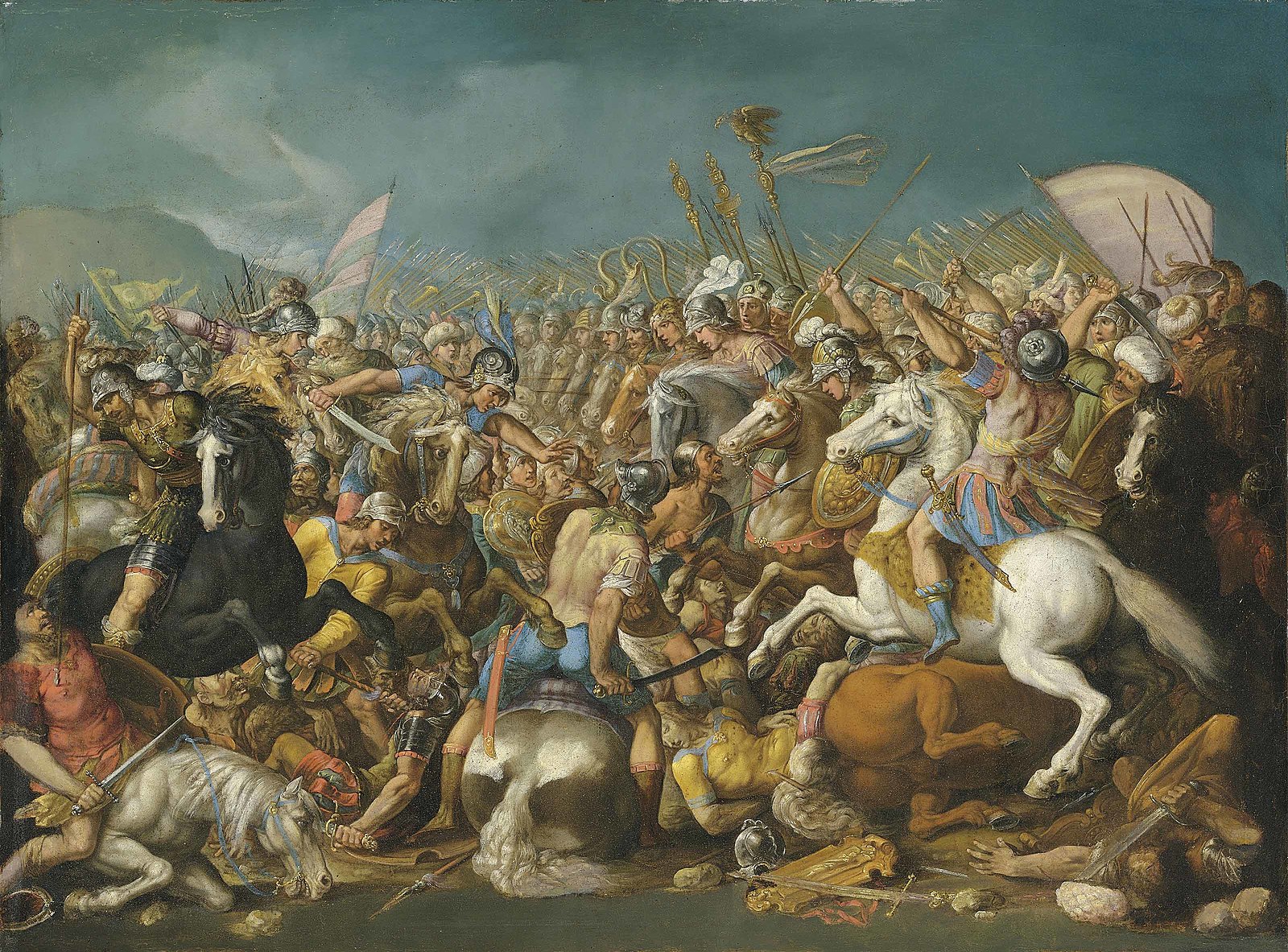 “The Fight Between Hannibal and Scipio Africanus,” by Bernardino Cesari, depicts a battle in one of the Punic Wars. (Public Domain)
Petrarch’s discovery of Cicero’s letters is often cited as the starting point of the Humanist Renaissance, an influential period of fervent scholarship that sought to revive the ancient worlds of Greece and Rome. It also marked the beginning of Petrarch’s special relationship with the ancient authors he so admired.
In “Letters to Classical Authors,” Petrarch addressed Cicero and other authors he had come to love as “friends.” He confessed his admiration for their accomplishments and even scolded them as a mother might scold her son. In this unusual, original act, the humanist inaugurated one of the defining attitudes of the Renaissance: the belief that ancient wisdom wasn’t confined to one historical period, but could rather speak to everyone, always.
A Letter to Homer
Taking the authors Petrarch addressed in chronological order, the first recipient was Homer, the mythic Greek mind behind the “Iliad” and the “Odyssey.” For Petrarch, Homer was a living source of inspiration and “a wished-for friend,” as he said in the letter. He wrote to the ancient poet as if he literally felt his presence, much like one would feel after a pleasant, elating interaction with a stranger:
“I have made preparations to welcome thee with the greatest eagerness and devotion to the innermost recesses of my heart. In a word, my love for thee is greater and warmer than the rays of the sun, and my esteem such that no one could cherish a greater.”
Despite his erudition, Petrarch didn’t know Greek. Homer’s famous poems could only reach him through secondhand opinions and incomplete Latin translations. This linguistic barrier motivated the humanist to learn as much Greek as possible and to encourage scholars to translate Homer’s works, so that others could admire their beauty. But even without knowing Greek, Petrarch recognized the poet’s greatness, hence his grateful praise.
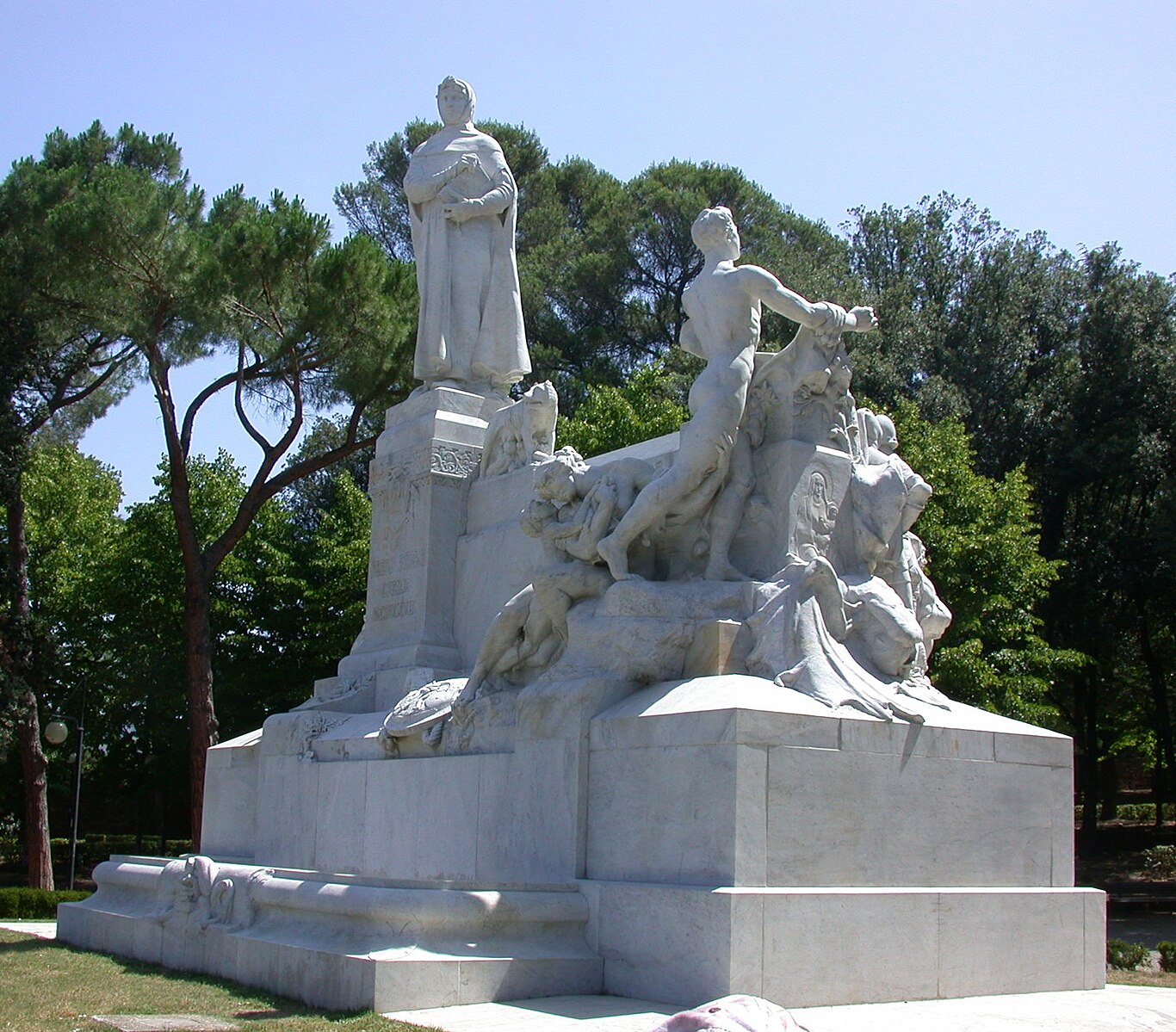 This monument to Petrarch stands in the town of Arezzo, Italy. (RicciSpeziari~commonswiki/CC BY-SA 3.0)
A Letter to Cicero
In one of his two letters to the orator and statesman Cicero, the humanist expressed admiration and disappointment. He thanked Cicero for teaching him how to write well: “It was under thy auspices, so to speak, that I have gained this ability as a writer.” Like many of his contemporaries, Petrarch believed that copying sentences, rehearsing passages out loud, and following closely the progression of an author’s arguments was one of the best ways to become a better writer, speaker, and thinker. Cicero, the rhetorician “par excellence,” was incomparably instructive.
Yet Petrarch’s admiration quickly turned to reproach. While alive Cicero was involved in several political diatribes, which brought about his assassination in 43 B.C.
Petrarch asked the Roman: “What false luster of glory involved thee in the wrangles and frays proper to youths and, driving thee hither and thither through all the vicissitudes of fortune, hurried thee to an end unworthy of a philosopher?”
Although Cicero personified exemplary erudition and rhetorical excellence, Petrarch reminded readers that his dangerous ambition made him lose his way, not unlike some of Petrarch’s contemporaries. Indeed, the humanist lamented the state of his native Italy: “Believe me, Cicero, if thou were to learn of the fallen state of our country, thou wouldst weep bitter tears.” Though the Roman orator succumbed to worldly affairs, at least he possessed unmatched learning. For Petrarch, men of his time couldn’t say the same.
A Letter to Livy
Petrarch’s reflections on his society continue in a letter to the Roman historian Livy (59 B.C.–A.D. 17), author of a monumental history of ancient Rome, from its mythical founding in 753 B.C. to Livy’s times. Petrarch complained to Livy that people were obsessed with material concerns that distracted them from worthier goals. This time he wrote with more frustration:
“Often I am filled with bitter indignation against the morals of today, when men value nothing except gold and silver, and desire nothing except sensual, physical pleasures. If these are to be considered the goal of mankind, then not only the dumb beasts of the field, but even insensible and inert matter has a richer, a higher goal than that proposed to itself by thinking man.”
Confiding in Livy his reservations about the state of the world gave Petrarch clarity about where to seek virtue. Like Cicero, Livy helped him calibrate his own moral compass to avoid unworthy pursuits, which lured him in the royal courts he now frequently visited.
For Petrarch, reading Livy wasn’t just a way to ponder the present. It was also a healthy distraction from it. As he confessed to the historian, “thou didst so frequently cause me to forget the present evils, and transfer me to happier times.” Livy’s stories about people and places past consoled the worried writer, like how friends console each other in times of need.
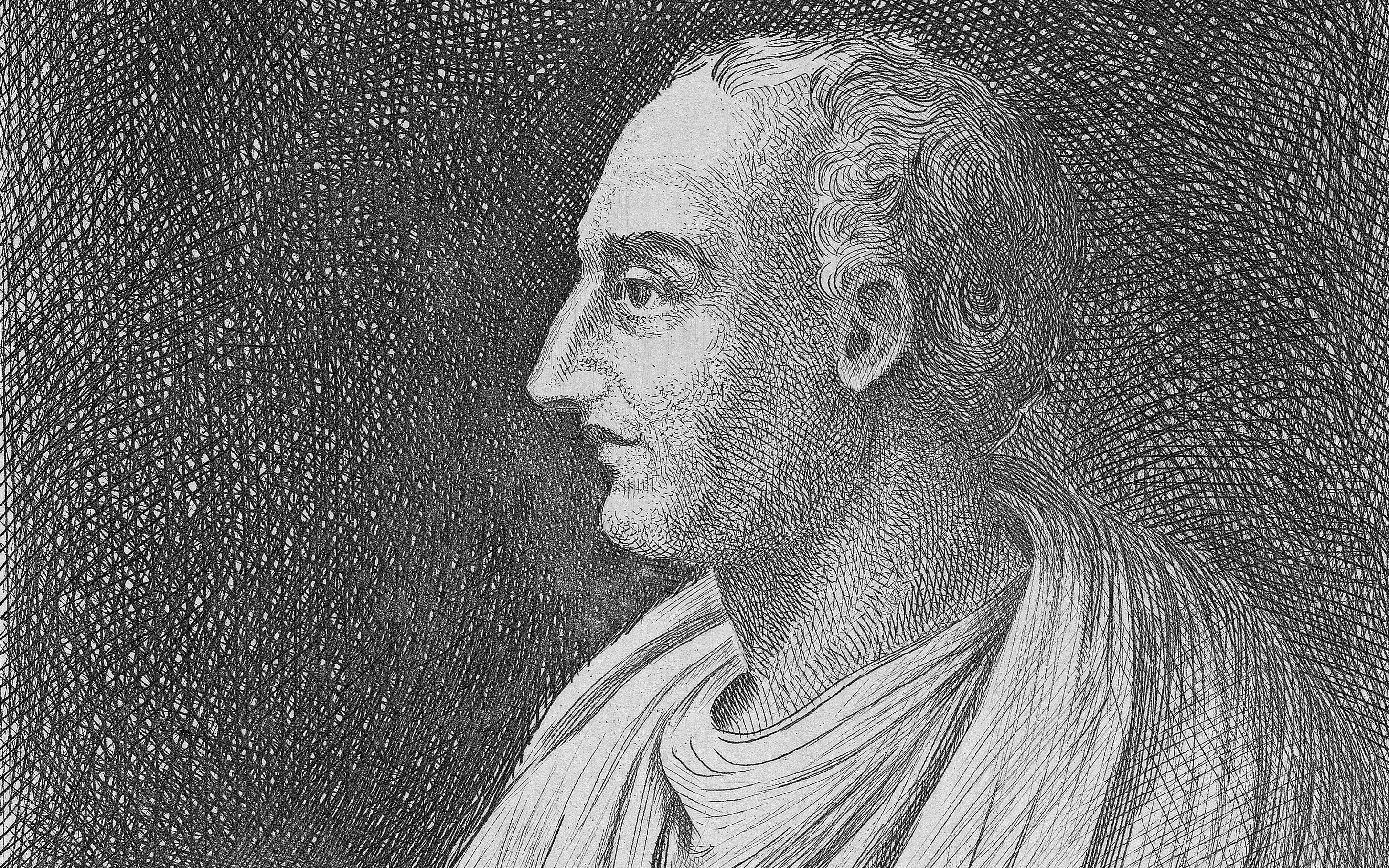 Engraving depicts the Roman historian Livy (59 B.C.–A.D. 17). He is best remembered for his 142-volume “History of Rome,” of which only 35 volumes survive. (Kean Collection/Getty Images)
A Past That Stays Alive
For Petrarch, Homer, Cicero, and Livy weren’t just authors to be feared and respected. Though they were dead, these authors lived on in his imagination. They were friends in whom he could confess, with whom he could converse, and through whom he could learn what it means to belong to a community that transcends time.
Although Petrarch saw studying history and reading ancient authors as an escape in “order to forget [his] own time,” his relationship to the past didn’t stop there. He didn’t just retreat from the world, content reading texts he loved in the privacy of his home. Behind his difficult attempts to recover lost texts was an impulse to help his contemporaries live better, wiser lives. Instead of giving up hope, Petrarch turned to the past for help. He treated Homer, Cicero, Livy, and others like them not as dead authors, but as responsive sources that offered insight into himself and the world. His letters invite readers to do the same.
What arts and culture topics would you like us to cover? Please email ideas or feedback to features@epochtimes.nyc