



As every wedding day approaches, the groom will unceremoniously rent his tux, and the bride will make one of the definitive choices of her life in buying her dress. While so many factors might play into her decision, the color white remains for most brides a nonnegotiable.
There is hardly a trace left of a time when choosing a white dress was unheard of. Today the customary white is most often credited to Queen Victoria. However, it was actually Princess Philippa of England (1394–1430) who first wore white to her wedding many centuries earlier in 1406.
Philippa is remembered for more than just the wedding dress. Her devout, gracious, and fearless character made her one of the most powerful and popular queens of the Middle Ages.
Strength and Purity
Philippa’s mother, Mary de Bohun (circa 1370–1394) came from a long lineage of English royalty. She was far more attentive and dedicated in raising her children than most aristocrats at that time. Though she would tragically die giving birth to Philippa, her exemplary character would nonetheless pass on to her youngest daughter in spirit.
Philippa’s upbringing was entirely in the hands of servants and tutors, and she excelled in her studies in French and Latin. This propensity for languages foreshadowed her tremendous acumen for diplomacy.
She not only won the hearts of her Scandinavian subjects, but also led precarious negotiations with the Hanseatic League. The league was a turbulent alliance of merchant cities spanning from Northern Germany across the Baltic Sea into Russia. Their alliance lasted from the late 12th century until their last formal meeting in 1669.
An English diplomat once stated he would rather deal with any prince in the world than a Hanseatic counselor. The League operated much like a merchant mafia with little formal structure or accountability when internal struggles broke out.
They were infamous for their strategy of blockading port cities when their demands for special trading privileges weren’t met. They ensured their economic dominance first with harsh negotiations and second with war. On both of these fronts, Philippa would defeat them.
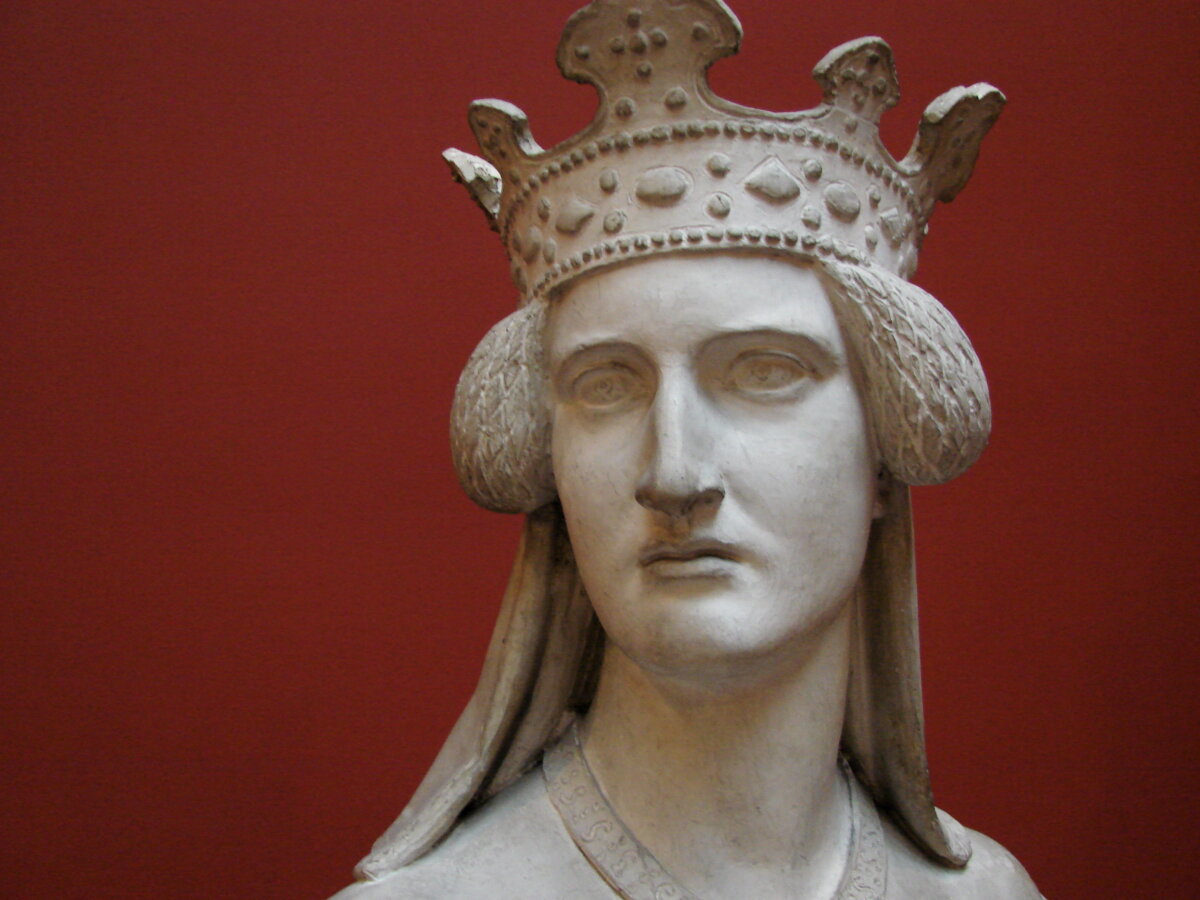
The First White Wedding
Of all suitable princesses, Philippa was chosen to marry Prince Erik (circa 1381–1459) of Pomerania, a region of present-day Poland and Germany along the Baltic Sea. The marriage strengthened the strategic alliance between England and the Kalmar Union which consisted of the same countries that make up modern-day Scandinavia: Denmark, Norway, and Sweden.
Her father, King Henry IV, had recently seized the English throne from Richard II and needed support to legitimize his reign. As it was common for royal weddings to be formalized first by proxy, Erik’s representative first came to Westminster in 1405, and, the following year, the young princess set sail for Sweden.
The wedding was held at the cathedral in Lund, which was the archbishop’s central jurisdiction in Scandinavia. Completed in 1145, it remains one of Sweden’s oldest stone buildings still in use. Philippa’s bold and unprecedented choice of a white tunic dress lined with squirrel and ermine fur remains the earliest documented instance of the now ubiquitous custom. Her aunt, Philippa of Lancaster, also wore white at a later date to become Queen of Portugal.

Bright, rich colors were usually expected for royal weddings, and white was avoided as it was difficult and expensive to maintain. In Philippa’s case, the color served both as a sign of wealth and luxury and as a symbol of her devout and virtuous nature.
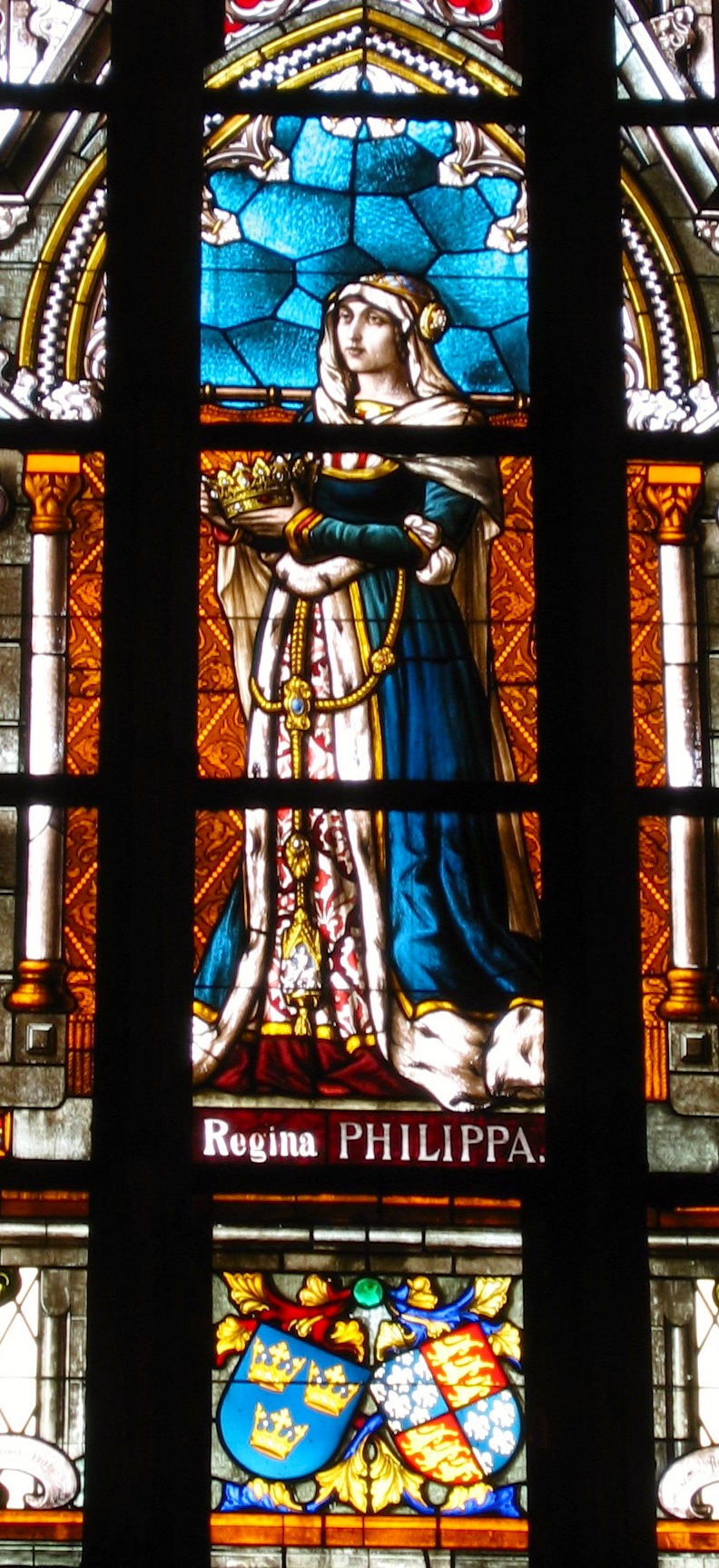
A Queen Among Nuns
Vadstena Abbey became Philippa’s greatest refuge. Vadstena, was a double monastery with sections of 25 monks and 60 nuns. The practice of double monasteries had been considered problematic for centuries and went through several prohibitions and revivals.
The abbey was established by the celebrated St. Bridget of Sweden in 1346. Bridget dedicated her life to the church after the death of her husband in 1344.
In 1422, Pope Martin V, enforced the ban on double monasteries, which prompted Philippa to send an embassy to Rome asking for an exception. With the help of her brothers in England supporting her petition, she succeeded in persuading the pope to grant an exemption from the ban for St. Bridget’s order, the Bridgettines.
Though Philippa and Eric lived out most of their reign in Denmark, Philippa’s attachment to Sweden and to the abbey never faded. A recurring illness resulted in her only pregnancy being a stillborn, after which her health rapidly deteriorated.
Philippa later lived in Sweden where she ruled on behalf of the king. She spent her last days there and was buried at the abbey in Vadstena.
The Bombardment of Copenhagen
One episode of Philippa’s life, especially, spotlights her abilities and the reason for her subjects’ devotion.
During the Dano-Hanseatic War, Philippa’s ease in leading negotiations and managing the court’s affairs allowed Erik to go to Soro Abbey to seek additional support. The Hanseatic League had previously looted and razed Copenhagen in 1368; with Eric’s absence, they were expecting another easy victory.
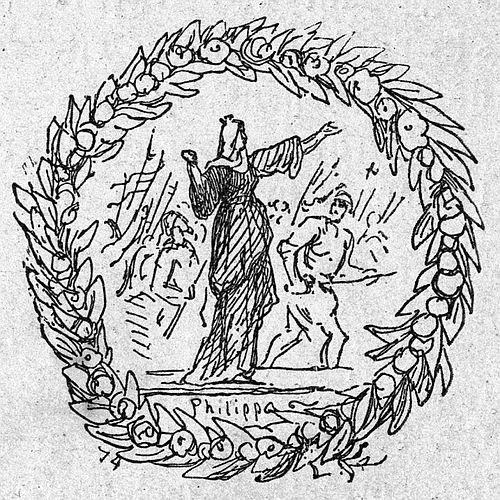
They never imagined Philippa’s acumen to rally the city’s military forces, fortify their defenses, organize the citizens, and ultimately fend off the attack. Many historical accounts describe her delegating orders from the fortress walls. None is more noteworthy than Hans Christian Andersen’s depiction in “Godfather’s Picture-Book”:
“She summons burghers and peasants, inspires and encourages them. They rig the ships and garrison the blockhouses; they bang away with the carbines; there is fire and smoke, there is lightness of heart; our Lord will not give up Denmark! … ‘Blessed be Queen Philippa!’”
Andersen’s account is no hyperbole. Philippa remains one of the most beloved figures in all of Scandinavian history. Her exceptional leadership and virtuous nature afforded her responsibilities unheard of for queens throughout the Middle Ages and her legacy is inextricably tied to the image of a noble bride in white.
What arts and culture topics would you like us to cover? Please email ideas or feedback to features@epochtimes.nyc

.JPG)
