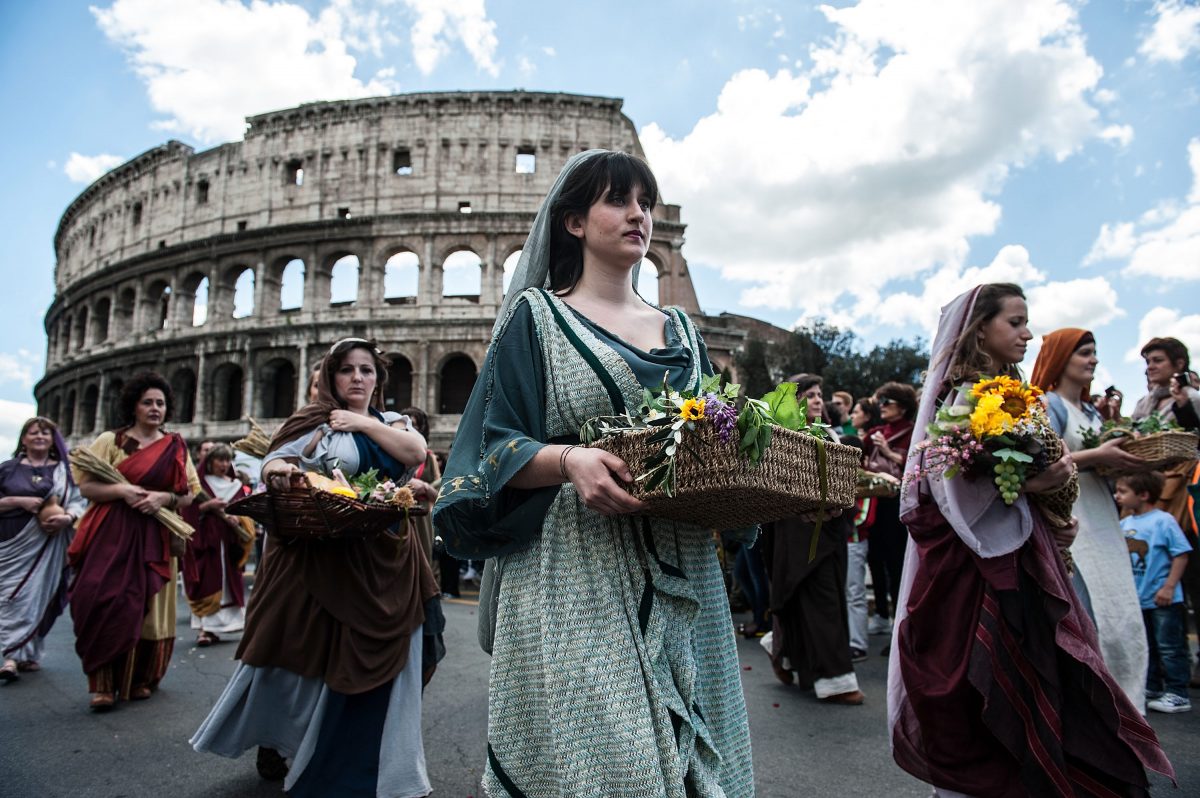
The ancient biographer Plutarch once wrote that ancient Rome was born of “excessive daring and reckless courage.” A more direct equivalent might be “blood and battle.” Romulus, the city’s mythic founder, proclaimed himself king after killing his brother. His rise to power sparked tensions with neighboring tribes, often resolved with all-out wars.
There was one noteworthy exception amid Rome’s initial disarray: its second king, Numa Pompilius (circa 753 B.C.–circa 672 B.C.). If Romulus embodied Rome’s violent origins, Numa represented its potential for peace and moral purity. A pious, pacifistic leader, he ushered Rome into four decades of stability sustained by trust, transparency, and shared religious rituals.
Rome’s Founding: Usurpation and Fratricide
As the popular legend goes, Rome was founded in 753 B.C. by Romulus, twin brother of Remus. Their grandfather was Numitor, king of Alba Longa (now Albano).
Before their birth, Numitor was betrayed by his brother, Amulius, who usurped the throne. When Amulius realized that Numitor’s daughter, Rhea Silva, had been assaulted by Mars (god of war) and was now expecting twins, he ordered her to drown her children in the river Tiber. Rhea Silva kept Romulus and Remus alive, but she abandoned them near the Palatine Hill, now in the heart of Rome.
The twins were briefly raised by the iconic she-wolf, until a shepherd from Alba Longa found them. They lived a simple childhood among the inhabitants of Alba Longa’s verdant hills, away from the vicious halls of power in which they were born.
 “The Shepherd Faustulus Bringing Romulus and Remus to His Wife,” 1654, by Nicolas Mignard. Dallas Museum of Art. (Public Domain)
Romulus and Remus’s political career began when they discovered their royal origins. Amulius didn’t know they’d survived. They exploited their anonymity to plot against him and restore their grandfather to the throne.
Motivated by alliances formed after the successful overthrow, the twins decided to found a new city. They quibbled over details, until Romulus resolved the dispute with cold-blooded murder and proclaimed himself king of Rome.
Romulus established a non-hereditary elective monarchy supported by a senate. The senate could rule provisionally after a king’s death while it chose a successor.
Numa Ascends to the Throne
Romulus’s leadership was as decisive as it was tumultuous. To secure a name for his new city, he took aggressive measures, including waging several wars and abducting the women of the Sabines, one of Rome’s neighboring tribes, on the pretext that Roman men needed wives.
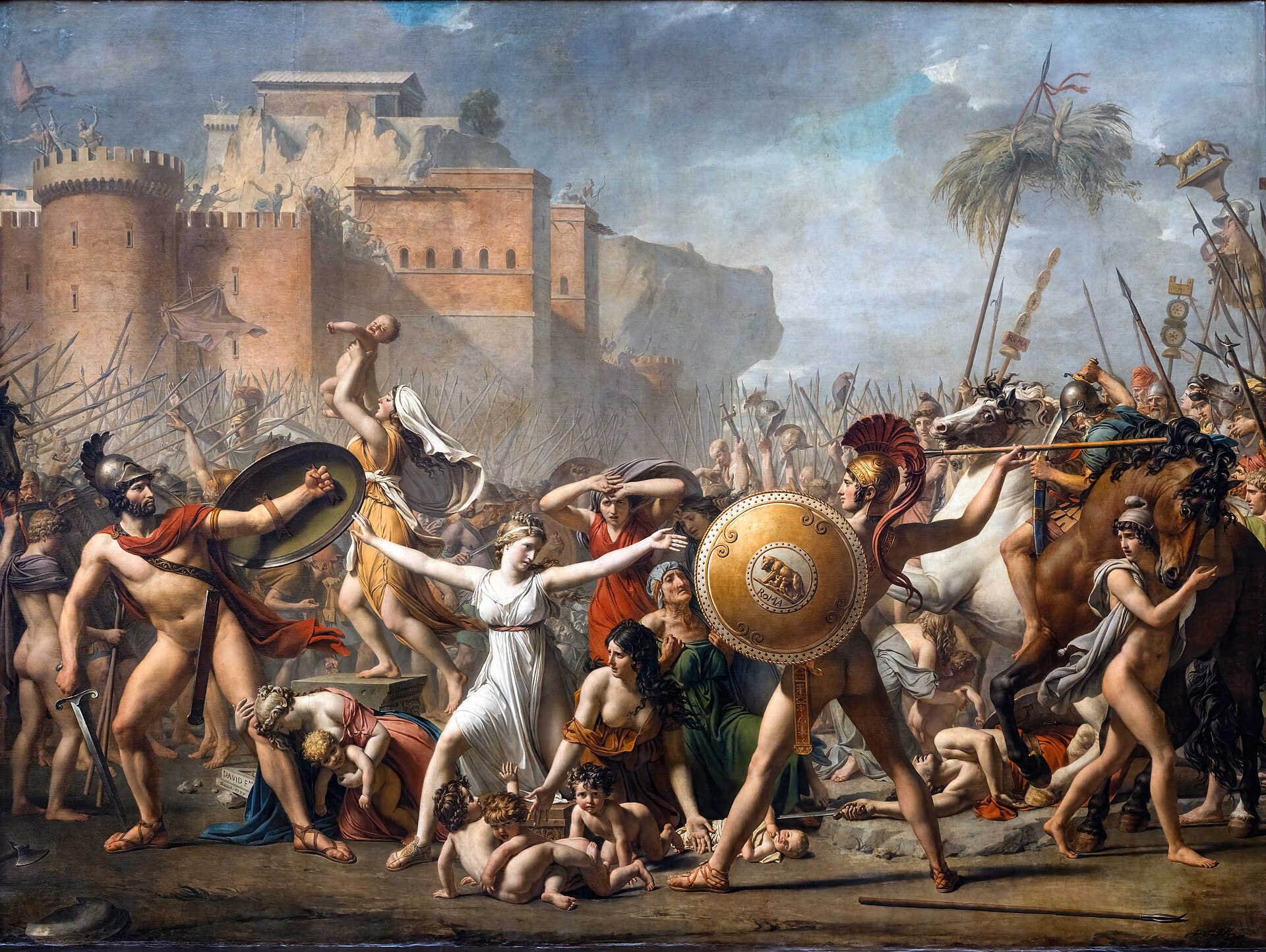 “Intervention of the Sabine Women,” 1799, by Jacques-Louis David. Hersilia, the wife of Romulus and daughter of Titus Tatius, leader of the Sabines, throws herself and her children in between the fighting men to plead for peace. (Public Domain)
Romulus’s reign ended abruptly around 716 B.C. As Plutarch told it in “Life of Numa Pompilius,” an ominous storm swept him away while he offered a public sacrifice. This mysterious disappearance sparked wonder about the king’s supernatural birth. It also opened a power vacuum. By now, Rome included the Sabines and other small conquered tribes. Each had members in the senate, and each vied for the throne. After tense deliberations, the senate agreed to give local Romans the final word, so long as they chose a Sabine.
Numa didn’t expect the nomination. In fact, he didn’t accept it. He told electors that his apparently desirable traits—piety, pacifism, and simplicity—made him unfit to rule. The senators pressed. They framed the kingship as a divine gift, an opportunity to usher Rome into a sorely needed peace. Convinced by the appeal to religion, Numa finally agreed.
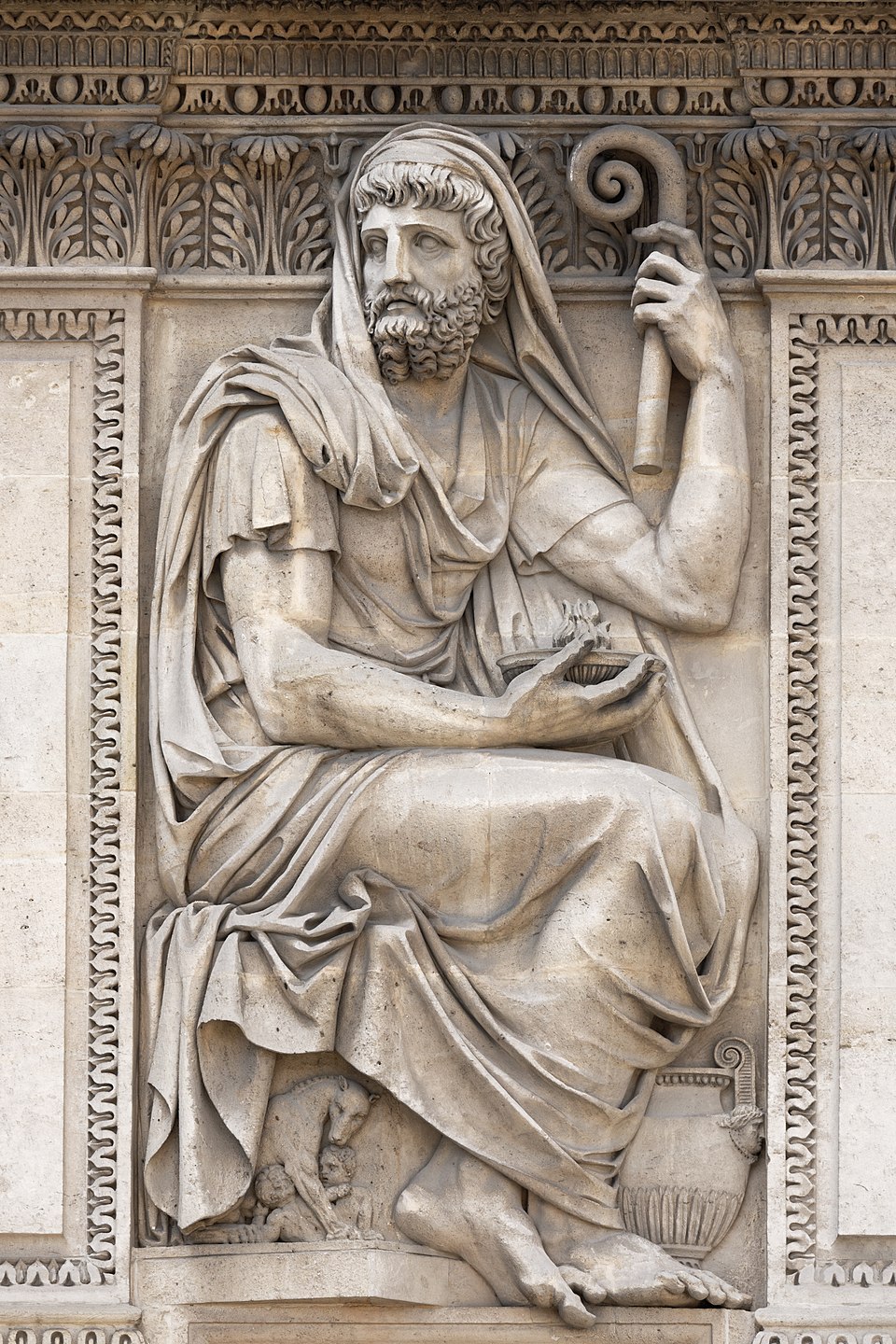 “Numa Pompilius,” by Jean Guillaume Moitte, in relief on the east facade of the Lemercier wing, at the Louvre, Paris. (Public Domain)
Plutarch read Numa’s hesitation as proof of rare moral integrity. He described him as poised and imperturbable: “By natural temperament he was inclined to the practice of every virtue,” which he cultivated through “discipline, endurance of hardships, and the study of wisdom.” He lived simply and austerely, preferring farming to politics and avoiding distracting luxuries. In private, he devoted himself almost exclusively to “the service of the gods, and the rational contemplation of their nature and power.”
Numa’s Reforms
Romulus’s martial rule had expanded Rome’s reach and guaranteed its survival. It was now time to focus on the civic foundations necessary to thrive in times of peace.
The first thing Numa did as king was to disband Romulus’s 300-man private militia. The guards’ purpose was to protect Romulus from assassination attempts. But Numa, Plutarch noted, wouldn’t “reign over those who distrusted him.”
A former full-time farmer, Numa appreciated agriculture’s potential to instill in people a desire for tranquility. To promote agriculture “as a sort of peace-potion, and well pleased with the art as fostering character rather than wealth, [he] divided the city’s territory into districts,” Plutarch noted. Numa then distributed the districts among citizens, monitoring closely their attitudes. He rewarded hardworking families and chided idle ones.
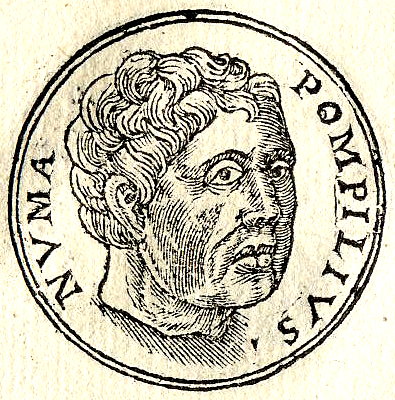 A 1553 engraving from an ancient coin depicting the face of Numa Pompilius. (Public Domain)
Numa also assigned people to trade-based guilds, hoping to encourage collaboration and resolve tribal antagonism. Plutarch called the reform “a source of general harmony.” Animosity between factions vying for supremacy gave way to a healthier, more productive social stratification.
Under Numa’s rule, the Romans hosted frequent religious festivals, partly to earn the gods’ protection as they sought to strengthen their city’s foundations, partly to manifest harmony and social cohesion.
Piety’s Transformative Power
Numa’s most effective changes were in the religious sphere. His attitude towards religion stemmed from a genuine belief in the power of prayer and ritual. But he also knew that shared spiritual practices served a useful social function. Among Numa’s noteworthy religious reforms were the institutionalization of the Vestal Virgins and the creation of several priesthoods, including the “pontifex maximus” (“highest priest”).
The Vestal Virgins were priestesses named after Vesta, a primordial divine protectress of home and family. The priestesses were responsible for preserving Vesta’s “sacred hearth,” a flame that symbolized Rome’s eternal endurance and vitality. Rhea Silva was possibly a Vestal Virgin, a role she might have inherited as punishment from Amulius. Numa lit the sacred fire, ordered its protection, and articulated strict guidelines for the priestesses, whose circular temple still stands in the heart of the Roman Forum.
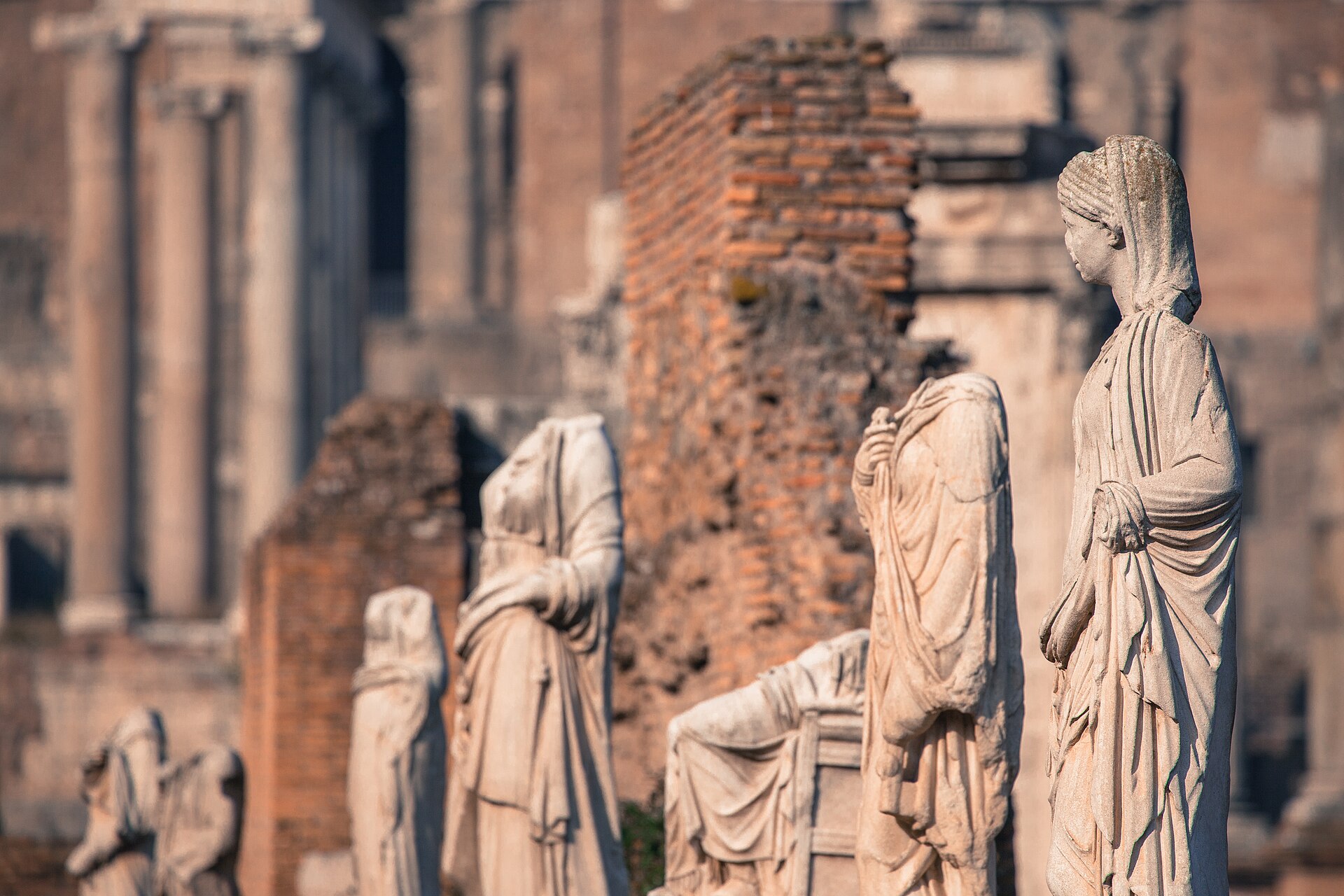 The ruins of the house of the Vestal Virgins sits behind the eastern edge of the Roman Forum. (Bradley Weber/CC BY-SA 2.0)
The Vestal Virgins were selected by Rome’s “pontifex maximus,” a position Numa introduced to enclose Rome’s political hierarchy in an explicitly religious context. The pontifex declared and interpreted divine law, prescribed rules for public worship, monitored individuals’ compliance with religious customs, and presided over important events like senate assemblies or pre-war councils.
During the later Roman empire, the name became the emperor’s. It was eventually adopted by the Catholic Church as a papal title. Since 2012, “pontifex” has been the Pope’s Twitter (now X) handle.
Numa also built temples to “Fides” (“Faith”), goddess of trust, and “Terminus” (literally “Boundary”), protector of borders. If Romulus had secured Rome’s territory “with the spear,” Numa sanctified its borders through prayer and religious sacrifice.
To further promote internal and inter-city stability, Numa founded the order of the “Fetials,” or “guardians of peace.” The Fetials were often sent as diplomatic envoys to neighboring tribes on the verge of declaring war against Rome. Their role was “to put a stop to disputes by conference and speech.”
This new priesthood was largely responsible for the success of Numa’s peacekeeping, which, at least in Plutarch’s assessment, was incredibly remarkable: “There was neither war, nor sedition, not innovation in the state, nor an envy or ill-will to his person, nor plot or conspiracy for views of ambition.”
Numa’s Legacy
Numa ascended to the throne when war seemed inevitable and political fracture imminent. The farmer-turned-king understood that lasting peace entailed more than armies and fortified walls; it required a psychological transformation. He catalyzed this transformation by reorienting people’s attention to activities that inspired peace: farming, craftsmanship, and religious practice.
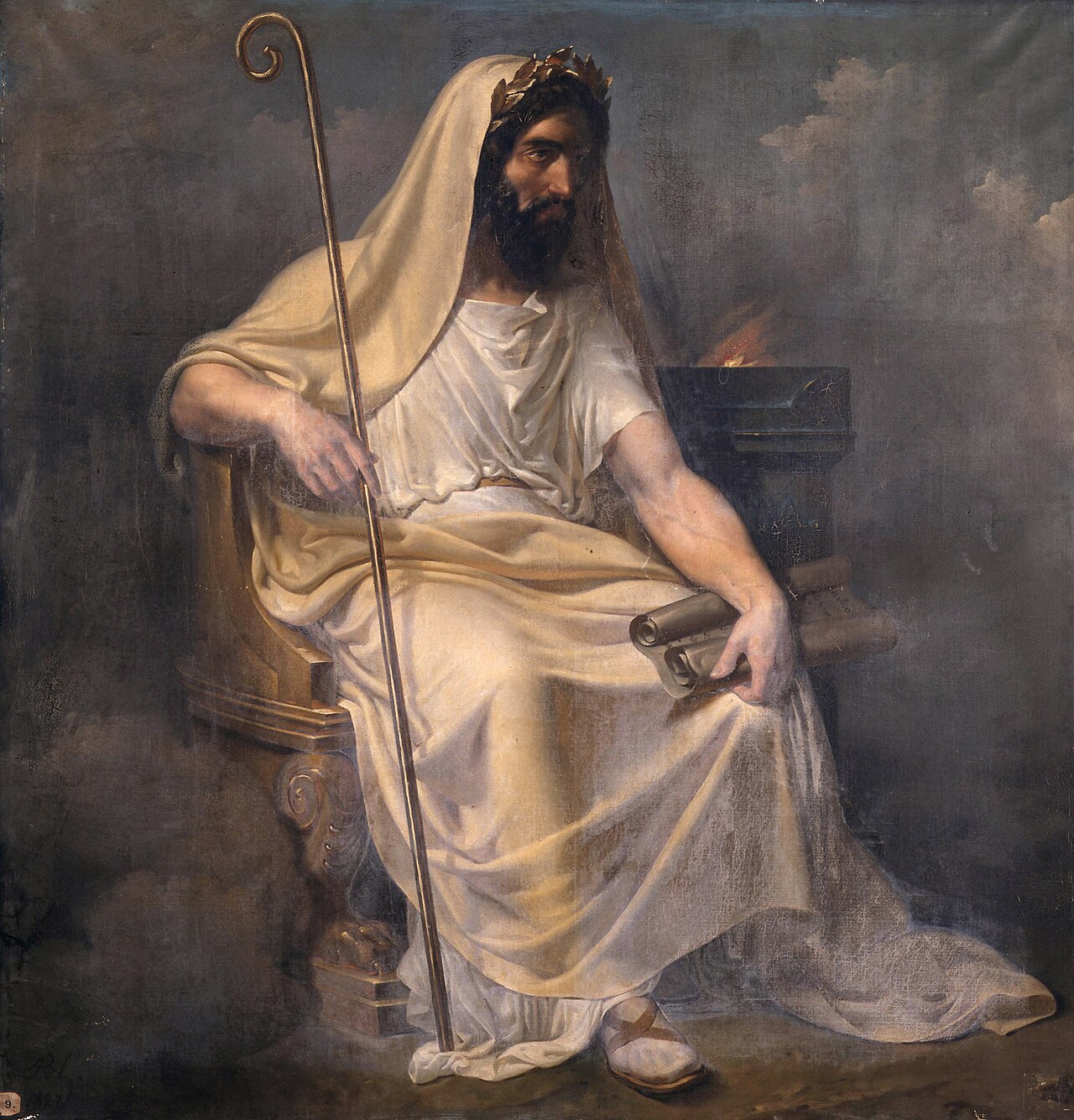 “Numa,” 1828, by Merry-Joseph Blondel. Museum of Art and History of Saint-Brieuc, France. (Public Domain)
In other words, Numa carved out spaces for stillness in a society addicted to action. Rome didn’t give up its arms completely. That wasn’t a viable option. But it did learn to balance its belligerent tendencies with a devoutness that stifled rash desires to wage war or undermine law and order. The king’s greatness lay not in vanquishing bloodthirsty enemies, but in reengineering the conditions that produced enemies in the first place.
Plutarch summarized Numa’s legacy beautifully:
“Not only was the Roman people softened and charmed by the righteousness and mildness of their king, but also the cities round about, as if some cooling breeze or salubrious wind were wafted upon them from Rome, began to experience a change of temper, and all of them were filled with a longing desire to have good government, to be at peace, to till the earth, to rear their children in quiet, and to worship the gods.”
What arts and culture topics would you like us to cover? Please email ideas or feedback to features@epochtimes.nyc