Gaius Plinius Secundus (known as Pliny the Elder) was a military commander who “attempted to record all known facts about the natural world.” He is credited for being the first to catalog and organize vast amounts of information.
Pliny the Elder is also known for writing the world’s first encyclopedia. This was completed two years before he died, attempting to save his friends during the volcanic eruption of Mount Vesuvius.
Pliny was most likely born sometime between A.D. 23 and A.D. 24, but little is known about his early life. Most of what is known about Pliny the Elder was written by his nephew Pliny the Younger who said that his uncle died during the volcanic eruption in A.D. 79 “in his 56th year.”

Pliny became a military commander in his early 20s. During his time in the military, he documented everything around him everywhere he went. In fact, while in Rome he traveled around in a sedan chair so that he could dictate notes to his scribe. For Pliny, all time was wasted when not spent in study.
After several years in the military, Pliny returned to Rome and studied law. During the Roman Emperor Nero’s reign from A.D. 54 to A.D. 68, Pliny stayed out of government affairs due to his distaste for the emperor.
When Pliny’s friend Vespasian became emperor in A.D. 69, Pliny was appointed a procurator (a governor of a province in ancient Rome).
In A.D. 77, Pliny put his life’s worth of writings into an encyclopedic series of books titled “Natural History” (“Historia Naturalis”). “Natural History” consisted of 37 books that encompassed topics including anthropology, zoology, botany, and astronomy.

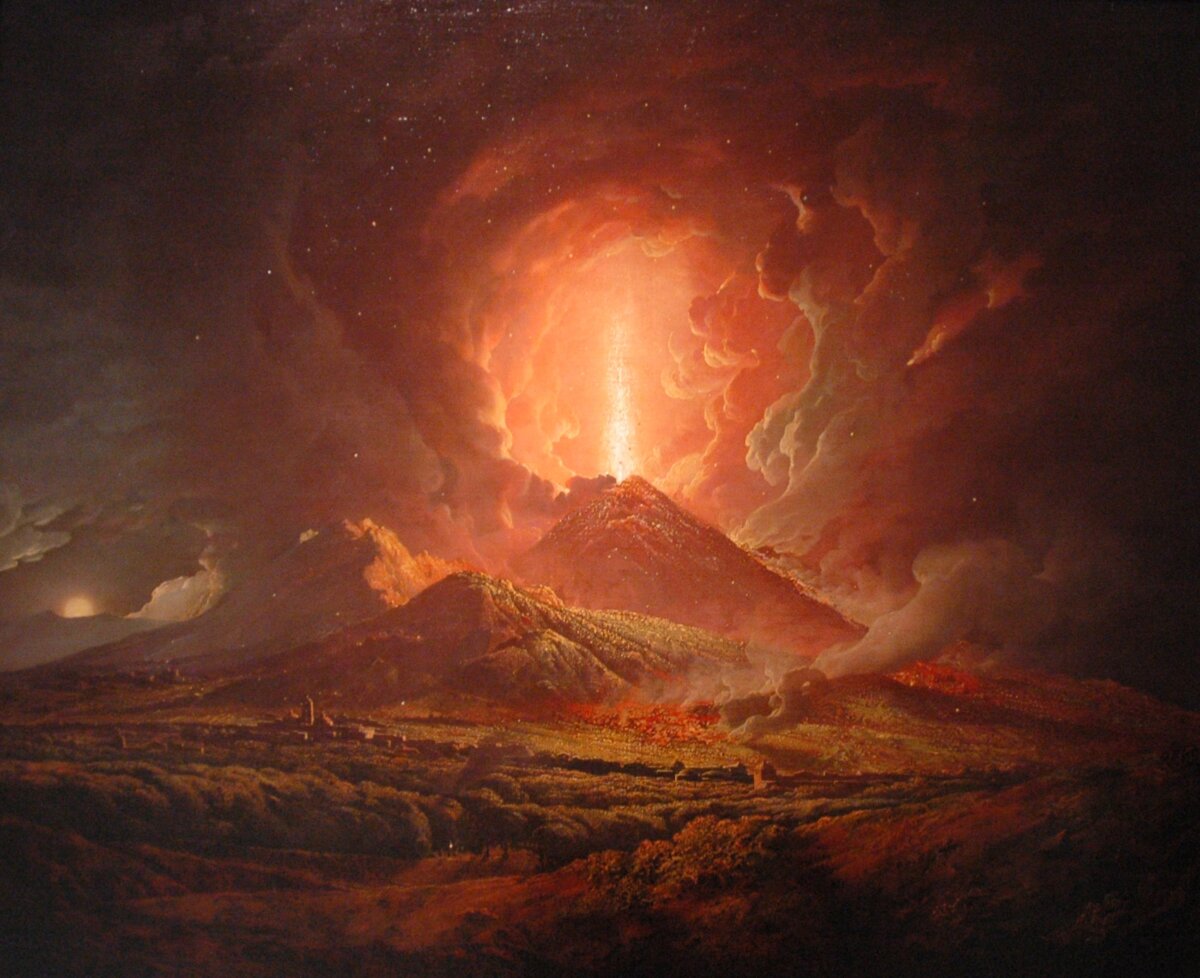
Vesuvius
In A.D. 79, Pliny was living with his sister and nephew in Misenum, when one of the world’s most tragic natural disasters struck nearby. On the afternoon of Aug. 24, Pliny was studying when his sister told him she saw a giant cloud she saw outside. Pliny the Younger later described the cloud as large, shaped like an umbrella pine.
Pliny the Elder then climbed up high to get a better look. Curious as to what the cloud was, Pliny traveled toward it to see what was happening. Just before he left the house, Pliny received a written message from his friend Rectina, who was in the danger zone of the volcanic eruption and needed help.
“My uncle’s scholarly acumen saw at once that it was important enough for closer inspection, and he ordered a fast boat to be made ready, telling me I could come with him if I wished,” Pliny the Younger wrote in “Letters,” “I replied that I preferred to go on with my studies, and it so happened that he had assigned me some writing to do.”
Pliny gathered a small fleet of ships that he commanded and headed toward the danger on a rescue and information-gathering mission. He arrived at his Rectina’s house, where his friends begged him to turn back as conditions had worsened. However, Pliny insisted on pushing further to his friend Pomponianus’s house in Stabiae, closer to the volcanic eruption.
When Pliny arrived at his friend’s house, he attempted to calm him by acting calmly. But outside the home, they saw “tall broad flames blazed from several places on Vesuvius.” Pliny comforted the people saying these were just “fires left by the terrified peasants.” Pliny and his friend attempted to stay in the house as ash and pumice stones fell to the ground. Then the building started to shake.
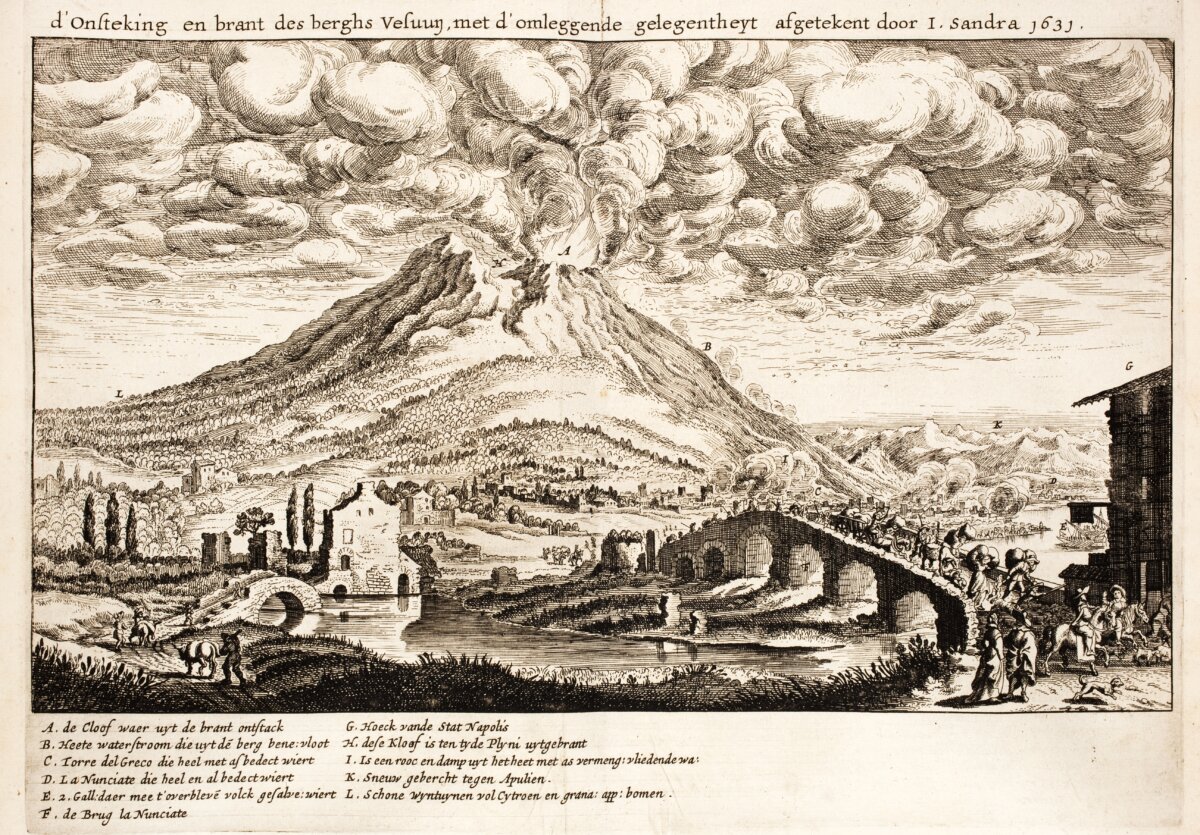
Pliny and his friends decided to leave the house as the stones falling from the sky increased. They protected their heads with pillows as they raced towards their fleet of ships.
As Pliny approached the shore, he began to grow weak. Others tried to hold him up, but it was too late. Pliny suddenly fell to his death.
Pliny’s body was found on the beach two days later. Pliny the Younger said his uncle died from the toxic gases from the volcano. However, other accounts believe Pliny the Elder suffered a heart attack.
Despite Pliny’s tragic death, many historians believe that around 2,000 people were saved from the volcano’s wrath due to Pliny’s efforts.
Over the years, scientists have used sections of Pliny’s “Natural History” to write modern encyclopedias. However, some things in the book, like Pliny’s treatment for ulcers, were later debunked by modern research.
What arts and culture topics would you like us to cover? Please email ideas or feedback to features@epochtimes.nyc