



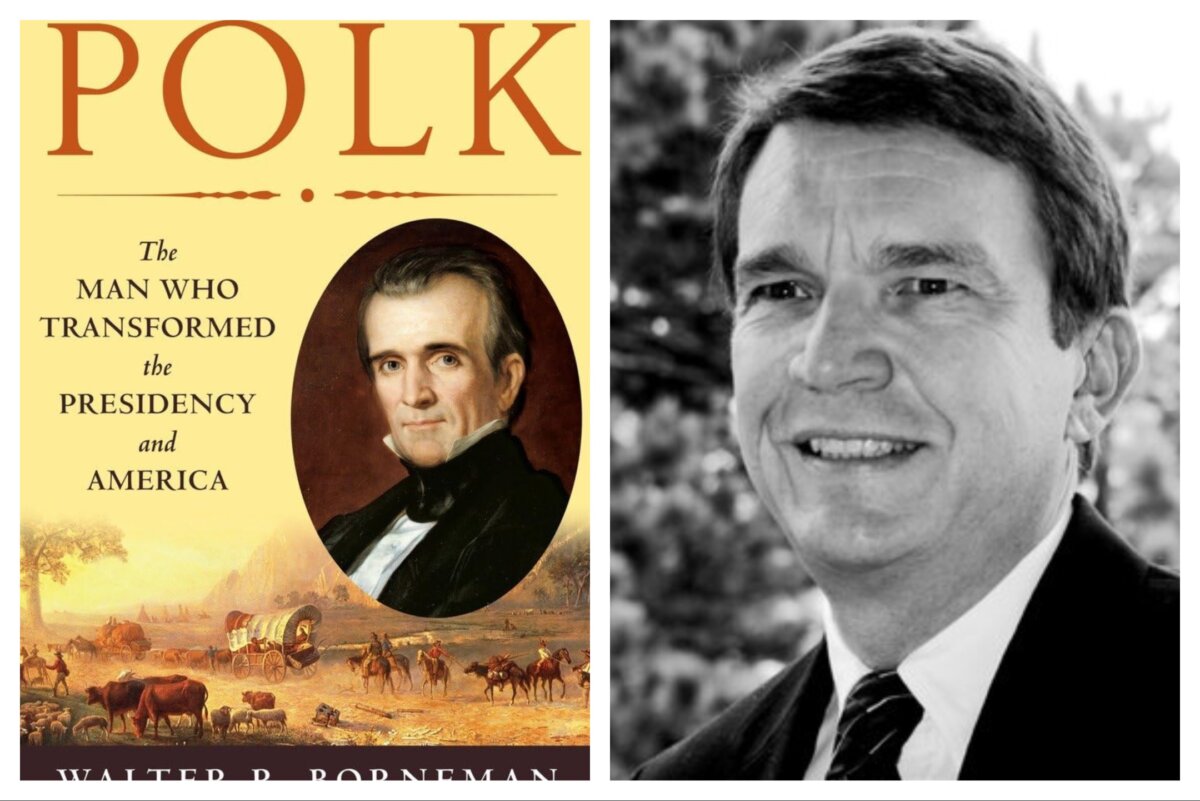
In contrast to the volumes written about presidential greats like George Washington and Abraham Lincoln, only a handful of books focus on James K. Polk, leaving many history readers to think his 1845–1849 presidency was ineffective. Yet in “Polk: The Man Who Transformed the Presidency and America,” historian and author Walter R. Borneman shows us just how tenacious and accomplished the leader was.
Borneman taps two main primary sources for his research: Polk’s personal diary, which he began keeping during the first year of his presidency, and his extensive published correspondence.
Sixteen pages of maps, three full pages of key dates, 13 pages of drawings and an early daguerreotype add to the rich text that tells the story of Polk’s life, from his birth in a simple log cabin in rural Pineville, North Carolina, to his family’s move to Tennessee.
As a young adult, Polk attended the University of North Carolina, but he then returned to Tennessee to become a lawyer, enter state politics, and marry Sarah Childress. For nearly 30 years, from the time he was elected to the Tennessee House of Representative in 1823 to his death in 1849, Polk was a busy man.
A Successful Term
History, however, often paints Polk as a “dark horse” president—coming out of nowhere—and because he prematurely announced he was only running for one-term, people assumed he would be a “lame-duck” president. Borneman counters that assumption in his introduction: “If he was indeed [a dark horse], he chose to ride boldly across a bright land and in doing so opened up the American West to half a century of unbridled expansion.”
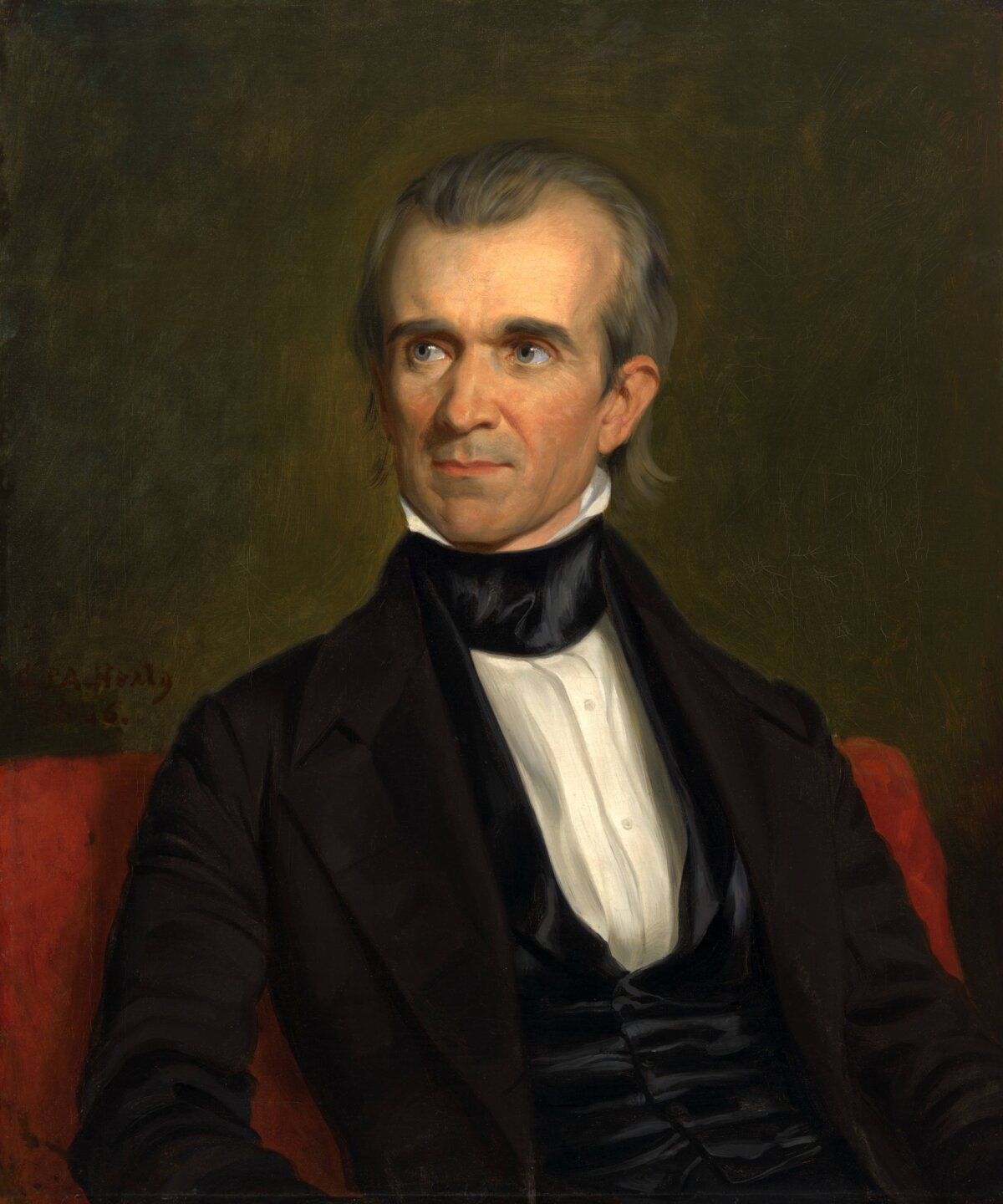
Besides quickly climbing a political ladder that included election to the U.S. House of Representatives and as Tennessee’s governor, he also experienced defeat. He lost his bid for speaker of the House in 1834 and for a second, and then third, gubernatorial term in 1841 and 1843. Along the way, he was mentored by and campaigned for Andrew Jackson. He also supported Martin Van Buren for president.
After showing us “The Man,” primarily Polk’s upbringing, character, and aspirations in Part I of the book, Borneman commits the first section of Part II to how some of the West was won. One of the most significant achievements during Polk’s administration was the admission of Texas to the Union in December 1845.
Also, during Polk’s administration, Iowa and Wisconsin were added to the Union and bills were signed to establish Oregon and Minnesota as territories. Plus, just before his presidency ended, Polk signed the bill creating the Department of the Interior.
As did early presidents Hayes and Taft, Polk vowed that upon election that he would serve faithfully for only one term. He did so, returning to his Tennessee home after his presidency to spend quality time with his wife, Sarah. Unfortunately, he contracted cholera shortly after leaving the White House. Borneman writes: “James Knox Polk was dead at fifty-three. His ex-presidency of 103 days remains the shortest in history. … Reportedly, his final words were ‘I love you Sarah, for all eternity.’” His wife wore black the rest of her life, another 42 years.
The author also recognizes Sarah’s role as a first lady, both during her husband’s presidency and for the many decades after he died, by dedicating the epilogue to her titled simply, “Sarah.”
On the Author
In the book’s acknowledgements, Borneman credits his grandfather for instilling in him as a young boy a passion for history, especially knowledge of American presidents. “By my third-grade year, my grandfather was tutoring me in the presidents of the United States. … Patiently, Grandpa repeated the names and had me recite them in a particular cadence.”
While Borneman has written a few American history books, including “1812: The War That Forged a Nation” and “American Spring: Lexington, Concord, and the Road to Revolution,” the Polk biography is his on focus on a president.
One of the author’s goals in providing a thorough view of Polk is to convey to readers that all men who have held the highest U.S. office are worthy of our attention. While the buildup to the Civil War may have shrouded Polk’s service to the country, “Polk: The Man Who Transformed the Presidency and America” offers “key reasons that James K. Polk deserves recognition as a significant and influential American president.”
To learn those reasons, consider adding Borneman’s book to your list of must-reads.
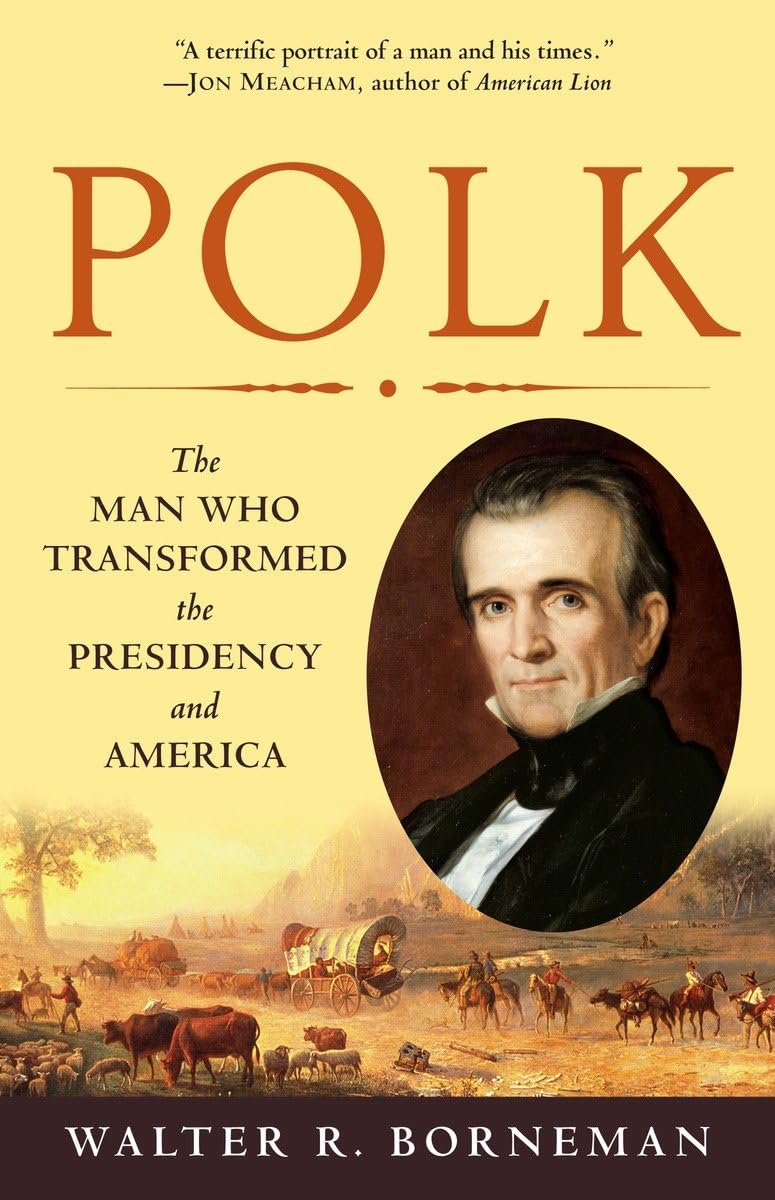
‘Polk: The Man Who Transformed the Presidency and America’
By Walter R. Borneman
Random House: April 14, 2009
Paperback, 464 pages
What arts and culture topics would you like us to cover? Please email ideas or feedback to features@epochtimes.nyc.
