



Frederick II, known as Frederick the Great (1712–1786), transformed Potsdam, Germany, from a minor suburb of Berlin to the seat of the Prussian monarchy. For the next 200 years, it was known as the “German Versailles.”
The city was heavily bombed during World War II. Now, thanks to decades of effort to reverse the damage, the city’s beauty and grandeur is reviving. The restoration of Potsdam is often regarded as one of the most remarkable restoration programs of the present day.
In one sense, the term “German Versailles” is faint praise. Versailles arose from Paris’s longstanding status as a center of high culture. Potsdam, originally a suburb of Berlin, played a key role in elevating Berlin to such status.
Frederick the Great’s father, Frederick William I (1688–1740), took the first steps. He built the Garrison Church, an exemplary work of German Baroque architecture.
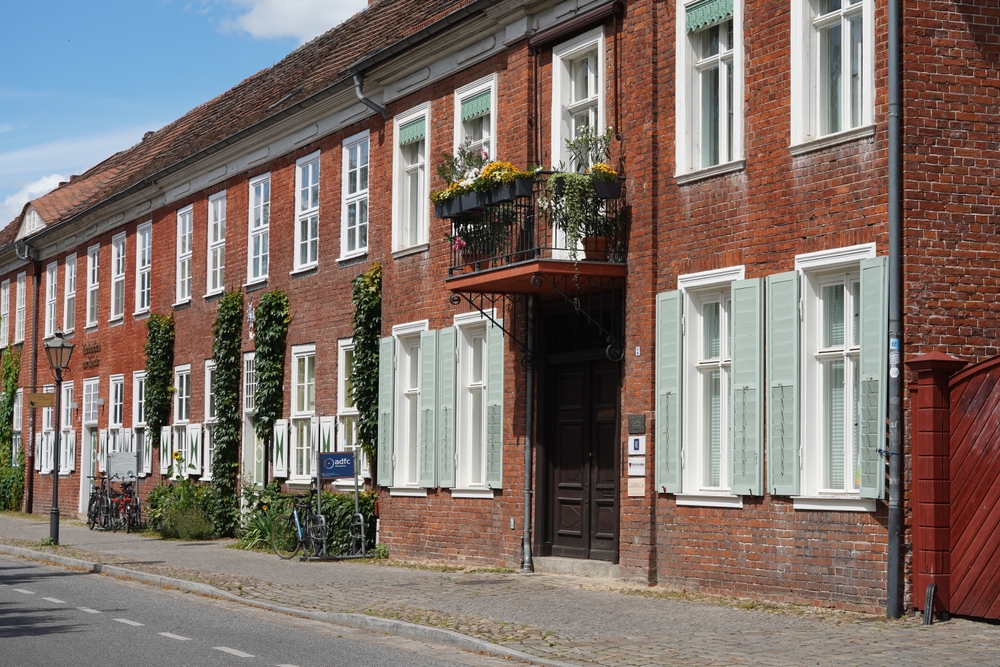
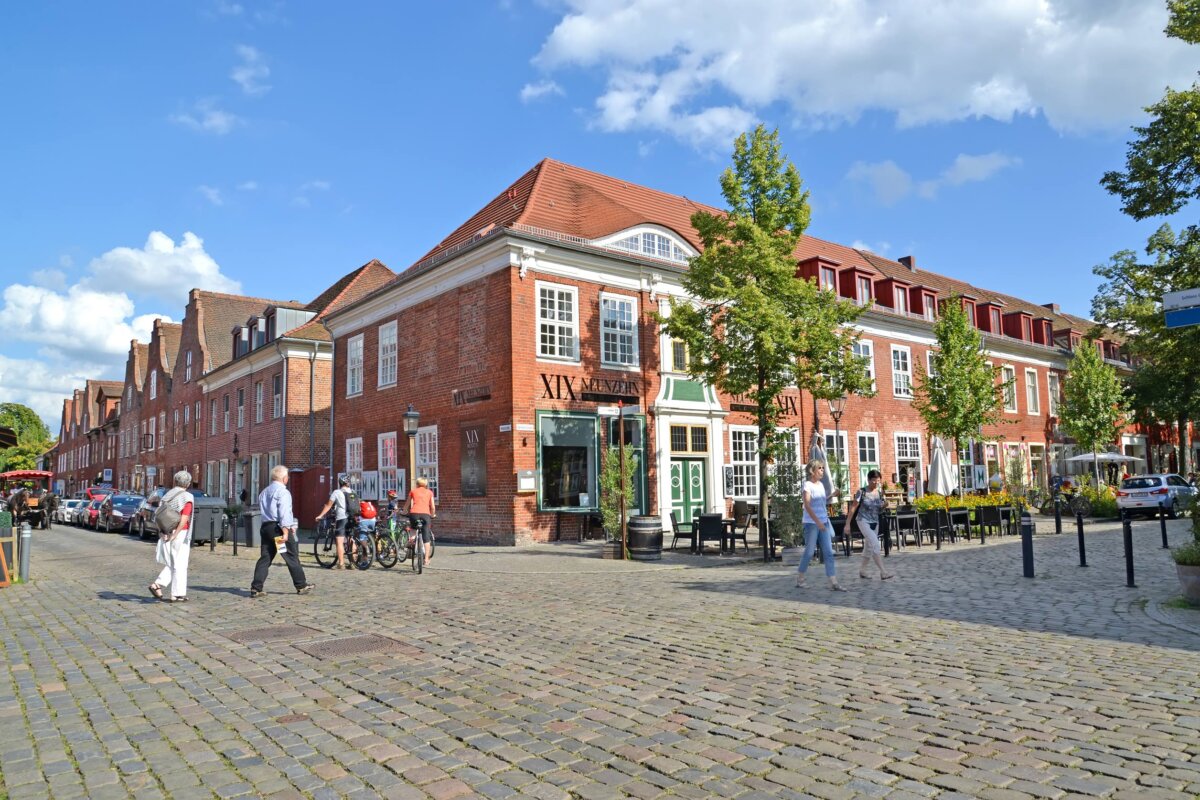
One of the most charming sections of Potsdam, the Dutch Quarter, also dates from his reign. Created in an effort to attract merchants and workers from the Netherlands, it was built using elements of Dutch vernacular styles. Steep gabled roofs were stepped (a step design at the gable end) or clock gabled (the top of the gable was in the shape of a church bell). So is the red brick with white trim. As in Dutch cities, many of the buildings are at least twice as deep as they are long.
Cultural Center
Rapid transformation progressed once Frederick William’s son, Frederick II, became king in 1740. In addition to the sheer number of projects he commissioned, two contributions were crucial.
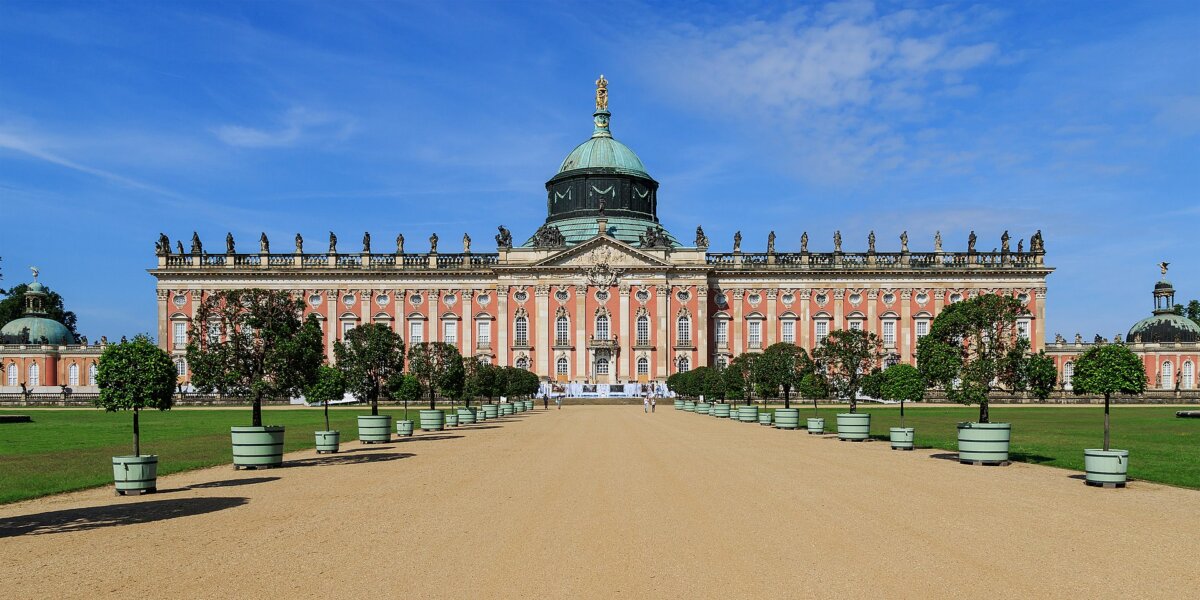
One was construction of some of the frederician rococo style’s most exemplary works: Sanssouci Palace and the City Palace. Developed largely by architect Georg Wenzeslaus von Knobelsdorff with input from the king, it drew from an unusual combination of sources.
In their basic design, exteriors had a relative simplicity but were enhanced by color in the frederician rococo style by shades of green, soft red, and pink. The palaces were grounded in the austere Palladian tradition, largely dominated by straight lines and with few architectural features as adornment.
Façades featured both baroque’s decorative theatrical style in harmony with rococo classical motifs and curves. Interior rooms varied between the two styles. The rooms in a rococo style used pastel colors to evoke a sense of playfulness. Baroque rooms were more grand and used bold ornamentation with a focus on drama and bold movement.
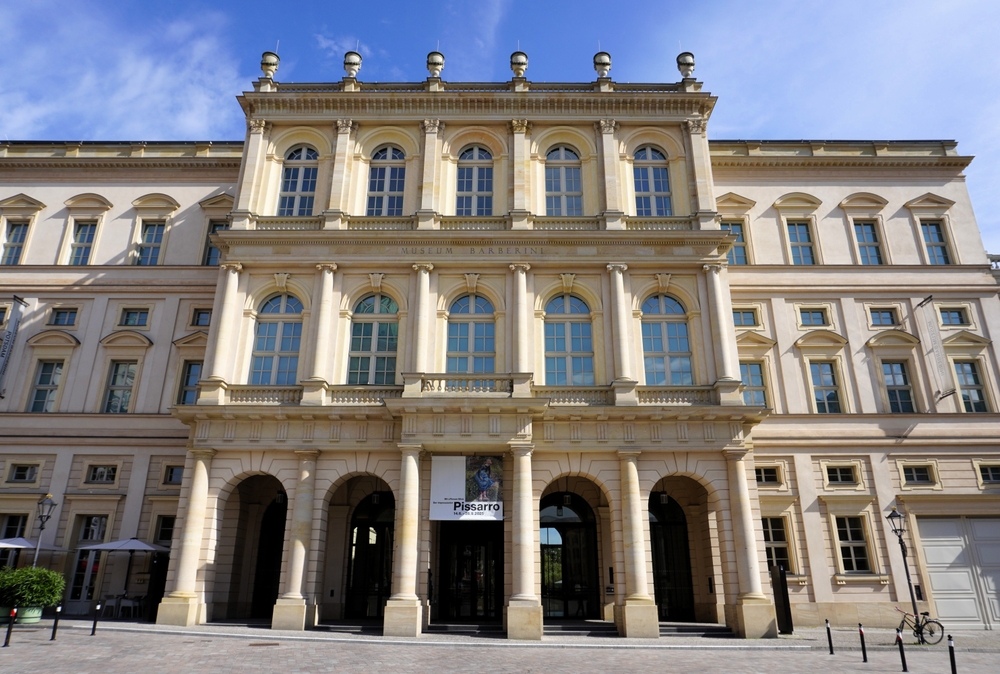
Frederick’s other crucial contribution was the transformation of the heart of Potsdam: Old Market Square. Already home to the Garrison Church, Frederick added the City Palace and Barberini Palace, which now houses a museum.
The Barberini’s exterior perfectly replicated Gian Lorenzo Bernini’s Palazzo Barberini in Rome. A central section made up slightly more than a third of its length. Advancing slightly forward of and rising slightly above the wings, the palace has five entrance doors on the ground floor topped by five windows on each of the two floors above it. Each wing had four windows on each floor.
The one significant difference from the original was the material—sandstone rather than travertine limestone. That was changed only to use local stone of a similar color.
In the late 18th to mid-19th century, the city built structures in the classical style. Among the most notable are St. Nicholas Church and Noack’s House (“Noacksche Haus”).
With a (proportionally) tremendous dome topping a small square building with small square corners, St. Nicholas Church has a particularly unique appearance. The main façade was modeled after St. Peter’s Basilica in Rome, and the south façade modeled after another church in Rome.
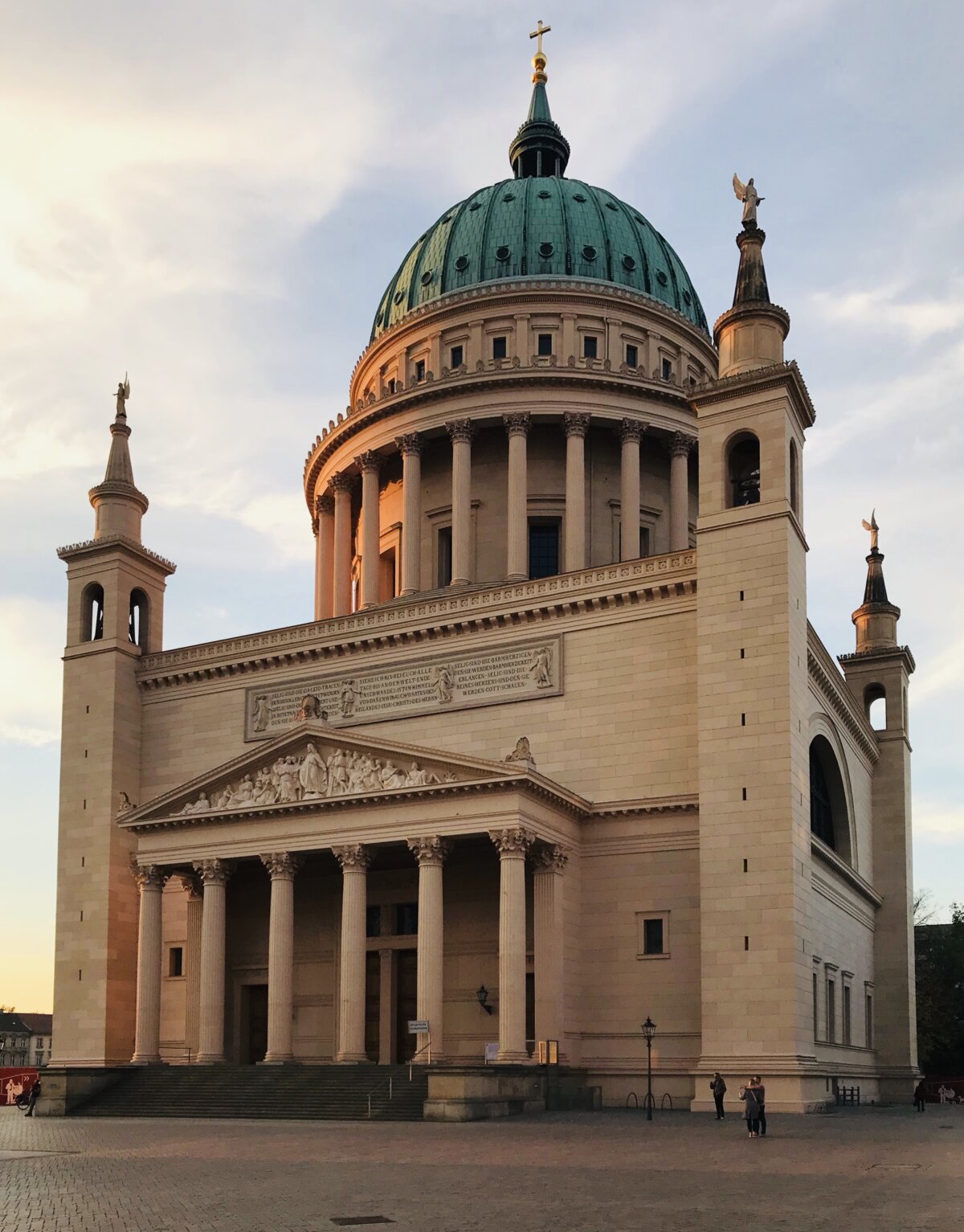
Three stories high, it has a small porch with six columns supporting an equally small balcony. Above the doorway at the center of the ground floor, French windows lead onto the balcony. Sculpted figures around the windows and a larger decorative arch distinguish them from the ordinary windows on either side. Four statues on each corner surround the impressive dome.
Old Market Square
With structural foundations to match its beauty, Old Market Square emerged from heavy bombing in the final weeks of WWII damaged but not demolished. Unfortunately, the communist government of East Germany destroyed much of what remained.
When Germany reunified on Oct. 3, 1990, Old Market Square and its immediate surroundings were in poor condition. Land once home to magnificent architecture was empty, used as parking lots or occupied by utilitarian structures.
Just three weeks after reunification, Potsdam’s government took the first steps to revitalization. Rebuilding major historical structures or replacing newer ones was not yet on the agenda. The city government insisted that historic architecture was to be preserved, vacant land built on, and traditional exteriors favored.
Efforts were soon being made to rebuild Old Market Square’s most notable structures on the basis of their original designs. Tech billionaires, television personalities, construction moguls, and even Britain’s future King Charles III supported the effort.
City Palace
In 1992, voters overwhelmingly voted to reconstruct the City Palace. Five years later, the German state of Brandenburg decided to move its parliament to the site.
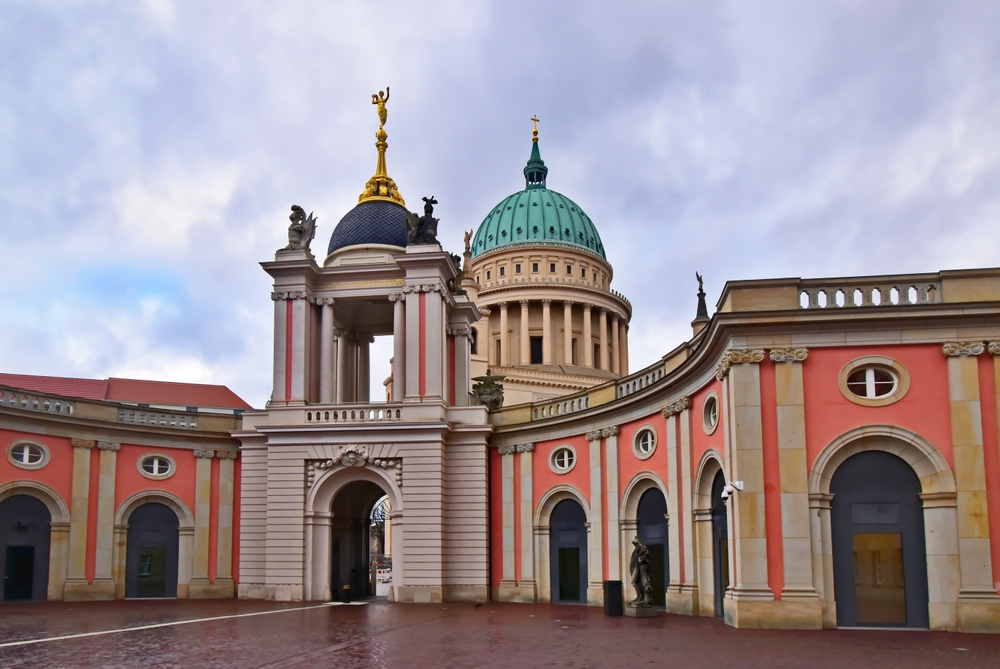
Completed in 2013, the entire exterior is faithful to the original. On three sides of the courtyard, the building is three stories high. White marble and classical columns grace the first story; the walls are primarily pinkish red as are the trim for the upper stories.
The reconstruction of City Palace’s Fortuna Gate began in 2000. The gate was two stories and with its center consisting of a convex semicircle; the structure’s original location enclosed one of the short sides of a rectangular courtyard.
White marble also covers the outer wall of the Fortuna Gate. Corner sections on the same side as the Fortuna Gate have sculpted tympanums, a semicircular section above the entrances. The roof is made of the same copper as the original.
Just across the road to the east of City Palace is the rebuilt Barberini Palace. Its central section’s exterior perfectly replicates the original. The palace’s outer walls are made of the same Elbe sandstone material. While other sections replicate only the original style, use of traditional handcrafting techniques in construction has assured a sense of authenticity. Today, the building serves as an art museum.
Other notable works have been rebuilt, or are in the process of being reconstructed, according to their original designs. These include the Garrison Church, the St. Nicholas Church, and Noack’s House.
Central as those accomplishments are, Potsdam’s restoration is not limited to major architectural works. Sections of Old Market Square once home to less notable structures now have new ones in traditional styles. These are often built to replace those dating from the decades of East Germany. In various parts of the city, most notably the Dutch Quarter, older lesser works have benefited from much needed repairs.
The improvements in Potsdam have done much to revitalize city life. Old Market Square, once largely abandoned by all but those who needed to be there, is again filled with activity, especially with City Palace becoming the home of the Brandenburg state parliament.
But it is the architectural revival that has made it a popular tourist attraction. The city now invites visitors with stores, restaurants, and open-air markets, as well as buildings with offices and residential apartments. Just a stone’s throw away, the Dutch Quarter has become locally renowned for its numerous small shops.
Frederick the Great’s city is once again flourishing in the modern age.
What arts and culture topics would you like us to cover? Please email ideas or feedback to features@epochtimes.nyc

