



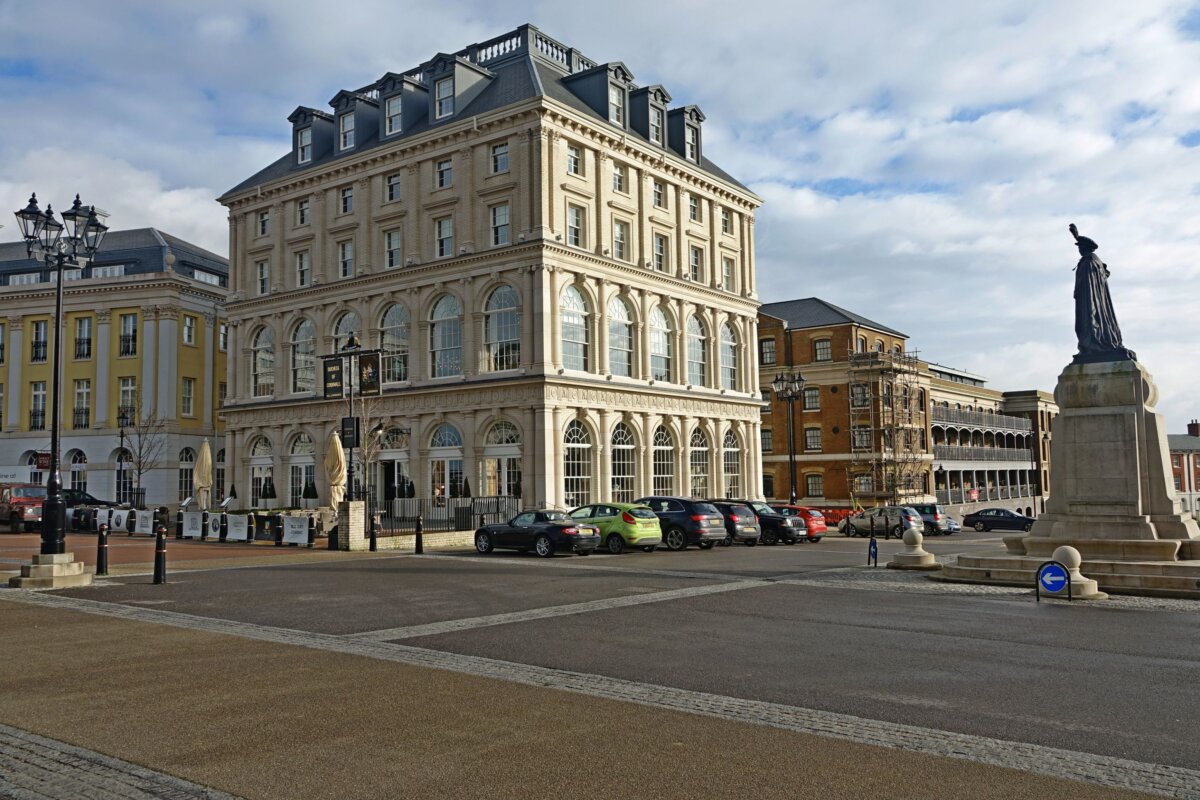
In 1988, the leading advocate of traditional architecture in Britain was the Prince of Wales, now King Charles III. With his support, the West Dorset District Council, in southwestern England, decided to expand the country capital of Dorchester based on his vision. The extension, known as Poundbury, was the largest and most influential late 20th-century building program based on traditional principles.
Over the previous four decades, urban planning in Britain had been dominated by sterile and bland architecture. Buildings were made, not to be beautiful, but to be primarily just useful.
Many people, particularly those with lower incomes, were forced to live and work in places whose appearance was depressing and whose arrangement impeded the development of local community life.
Using materials and building techniques which saved money in the short term often meant the new structures would need to be extensively repaired within 50 years. And, sadly, space had often been made for them by demolishing beautiful historic buildings.
A Princely Vision
During a celebration of the 150th anniversary of the Royal Institute of British Architects in 1984, Charles gave a speech in which he made a major and systematic case for traditional architecture. Significantly, the prince stressed that planners ignored the opinions of ordinary people. Many were encouraged by his justly famous criticisms of what was taking place all around them.
Comparing a proposed renovation of London to a “carbuncle,” the prince assured the death of the project. He pointed out that urban planners destroyed more buildings since World War II ended than German bombing raids had during the war. This drew attention to the scope of the damage.
But while he quickly became an architectural hero to many, publicity tended to be given to his justly famous critical comments rather than to the positive side of his position.

The BBC documentary, “HRH Prince of Wales: A Vision of Britain,” presented a summary of the prince’s positive principles, which he developed in greater depth in the similarly named book, “A Vision of Britain: A Personal View of Architecture,” published the following year. He believed that architecture should reflect, and be in accord with, the natural world, human nature included.
This naturalness takes many forms. Perhaps the most obvious is using locally sourced natural materials. Another is that the appearance of buildings should blend into the landscape. The proportions and geometry of buildings should match those seen in natural objects, from human bodies to trees to snowflakes.
People should instinctively see architectural works as beautiful in the same way they see flowers as beautiful. New buildings should harmonize with older buildings nearby, which have stood for centuries. Mixing homes, businesses, and places of recreation in close proximity helps build communities.
Two additional principles are key to the Prince of Wales’s architectural thinking. One is that architecture should contribute to cultural, communal, and spiritual, as well as physical, well-being. The other is that traditional architecture is not “old-fashioned” but timeless. Its continued use is not a matter of trying to recreate the past, but of building a better future.
A Traditional Plan
Located in the Duchy of Cornwall, the proposed site for Poundbury provided a perfect opportunity for putting the prince’s principles into practice. King Edward III founded the duchy to be ruled by princes of Wales with some autonomy from the national government. Today, the territory of the duchy is greatly reduced, but what remains is a private estate owned by whoever is the current prince.

By the time the West Dorset District Council decided to expand Dorchester in 1987, the prince’s speech to the Royal Institute was having an impact on the decisions of official planners and architects. Ordinarily, the Council would have arranged for the land to be purchased by a developer, who would have considerable freedom within broad guidelines.
Charles had other plans. Rather than sell the land, he would develop it himself. He would work jointly with the Council on an expansion project that would implement his vision by combining traditional aesthetics with modern functional needs. Plans were formalized in 1988. Leon Krier, who had rapidly become a leading traditional architect a decade earlier, was hired to oversee architectural design.
Poundbury
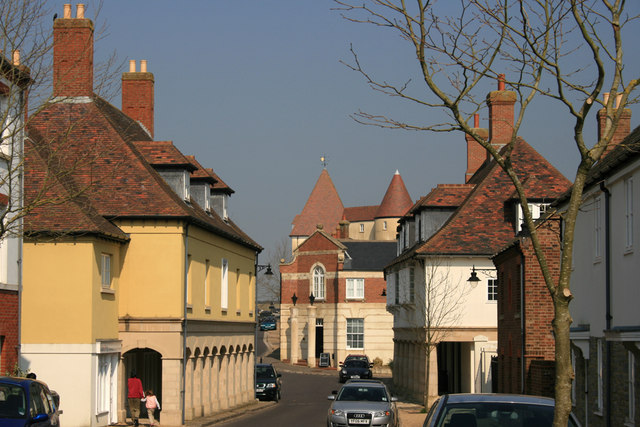
Construction began in 1993. After over three decades the project is finally nearing completion. Stylistically, Poundbury is a mixture of formal classicism and local architectural styles.
As is to be expected, formal classicism is most prevalent among public buildings, larger private dwellings, and those in central locations. Many of the most notable are found in or near Queen Mother Square: the Royal Pavilion, the Duchess of Cornwall Inn, King’s Point House (an office building), Strathmore House (an apartment building), Bowes Lyon Court (a retirement complex), and Gallery on the Square, which includes an art gallery and clothing store. Poundbury Farmhouse, home to the Duchy of Cornwall’s administrative offices, is set in the middle of a park a short distance away.
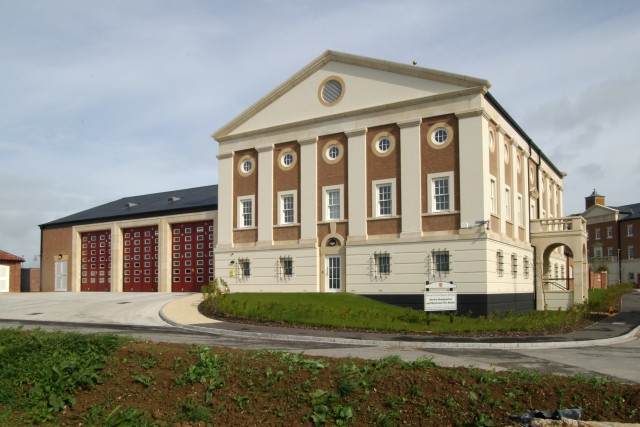
Other public buildings further from Queen Mother Square are built in the local historical style, largely influenced by the Tudor era. Among them is a complex known as Poundbury Village Stores and Brownsword Hall, an event venue. Many residential buildings, particularly the smaller ones, are also often built in local traditional styles.
Nearly 40 years since it was first conceived, and over 30 since construction began, Poundbury is finally nearing completion. Already, it is home to 5,000 people. Over 2,500 people are employed by businesses ranging from the most traditional pubs and butcher shops to the most modern computer technicians and medical specialists. This has increased the local economy by over $100 million per year.
Such success has inspired numerous similar urban development projects and convinced skeptics who once dismissed it as “archaic utopianism.” The Prince of Wales’s vision demonstrated how easily the needs and real advances of modern life can be blended with timeless beauty.
What arts and culture topics would you like us to cover? Please email ideas or feedback to features@epochtimes.nyc
