The iconic architect Frank Gehry once contemplated his profession by declaring, “Architecture should speak of its time and place, but yearn for timelessness.” But for many buildings, time is not an ally. Whether due to neglect, vandalism, or shifts within the wider neighborhood, older buildings too frequently fall into disrepair and dereliction.
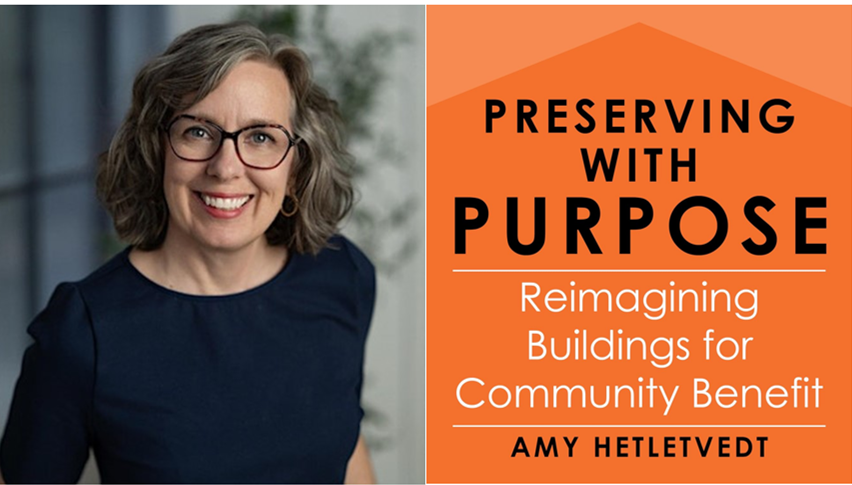
In her new book “Preserving With Purpose: Reimagining Buildings for Community Benefit,” architect Amy Hetletvedt makes a passionate argument that saving older buildings represents a victory at aesthetic, economic, and neighborhood pride levels.
In many cases, these structures are condemned to face the wrecking ball. For Hetletvedt, the loss of older buildings has a profoundly negative impact of communities. This is particularly true in lower-income neighborhoods where demolition is championed by elected officials and real estate developers as a victory against blight.
Hetletvedt admits that not every old building is a candidate for saving; preservation is often impractical due to myriad problems. However, she effectively uses case studies from across the United States and Europe to argue that new construction is not always the best approach.
Erasing the Past
Hetletvedt recalls that public awareness for the preservation of historically significant buildings began to percolate. Several celebrated urban structures that personified the glories of old-school architecture were demolished in the 1960s and early 1970s.
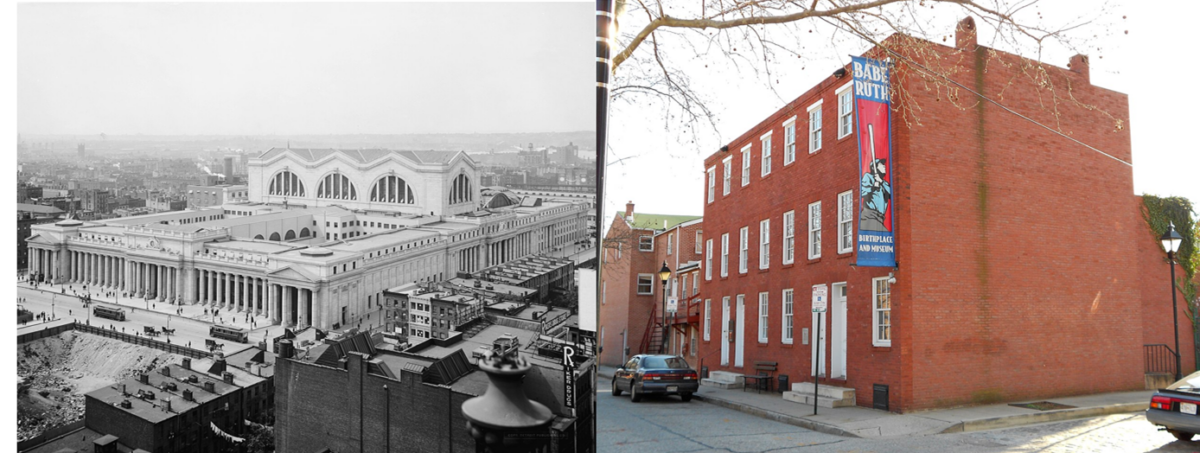
The most notable examples included New York City’s Penn Station, Detroit City Hall, and the Chicago Stock Exchange Building. These commercial properties were torn down due to developer pressure for new buildings with more modern and, quite frankly, much less interesting designs.
Hetletvedt complains that “demolition is often viewed as a way of making a blank slate and clearing away problems that the building represents.” The author defines this action as a problem rather than a solution, especially in “disinvested” areas.
In her view, this approach can result in vacant lots (which benefit no one) or neighborhood reinvention via gentrification where longtime residents are priced out of their communities.
Problems With Demolition
According to the book, there are multiple reasons why crumbling older buildings in disinvested areas are torn down rather than preserved. Hetletvedt acknowledges problems in securing financing and obtaining input from architects and engineering professionals for projects in less affluent environments.
Also, many of these buildings lack the historical stature enjoyed by prominent structures in commercial districts or upscale neighborhoods. After all, if a building is not labeled as a landmark, what is the reason to preserve it?
Hetletvedt is skeptical of a compromise solution involving dismantling and moving older buildings to a new location. She points to a 1960s controversy when Baltimore city leaders proposed relocating the rowhouse that was Babe Ruth’s birthplace.
That effort was publicly challenged by Ada Louise Huxtable, the architecture critic for the New York Times who argued, “Preservation is the saving of the essence and style of other eras.” The building was not moved, and Hetletvedt noted how its location “later proved symbiotic” when Oriole Park at Camden Yards was constructed in the 1990s.
The author makes an environmental argument that renovation is safer than demolition and new construction. She highlights a study in the Environmental Impact Assessment Review that finds that repairing and retrofitting a severely damaged building “incurs a lower economic and environmental impact.” She states it is more sustainable to renovate an existing building, citing health risks and expensive resources associated with new construction.
Making It Work
However, achieving the author’s goal is often difficult. Hetletvedt laments that residents of disinvested areas have no political or economic clout to lobby for renovations or restorations. As a result, buildings that once defined a community are torn down without public debate.
The author calls for collaboration between professionals and community members to consider the future of older buildings. Where a full restoration is not feasible, she advocates for repurposing the structures for either temporary occupancies or reinvention as cultural presentations.
One extreme example involves a pre-Civil War brick-and-brownstone building in Newburgh, New York, that fell into decay following a 1981 fire. The site became so derelict that trees began growing within its ruins.
This inspired Strongroom Inc., an art installation nonprofit, to create a “Plant Concert” at the site, creating a coordinated arboreal environment within the building’s long-empty walls.
Thus, what had been a source of blight and embarrassment became a work of beauty, with the remains of the glorious 1850s building framing nature’s bounty.
Hetletvedt’s thesis is provocative and her writing skills are considerable. “Preserving With Purpose” is the rare book that takes an academic consideration and serves it in a thoroughly engaging manner to readers who have little grounding in what could be seen as arcane subject matter.
The book is generously illustrated with examples of the before and after aspects of the projects Hetletvedt outlines.
“Preserving With Purpose” is a triumph of creativity. Hopefully, it can spark a new wave of imagination and innovation within the realm of community development.
‘Preserving with Purpose: Reimagining Buildings for Community Benefit’
By Amy Hetletvedt
Island Press: Nov. 4, 2025
Paperback; 288 pages
What arts and culture topics would you like us to cover? Please email ideas or feedback to features@epochtimes.nyc