



One of the biggest advantages of homeschooling is the ability to make learning meaningful for your children. You can do this by helping your kids to make connections between what they’re learning and the world around them by incorporating project-based learning (PBL).
So, let’s take a closer look at PBL, the benefits, and how to incorporate it into your homeschooling program, as well as some things to consider.
What Is PBL?
PBL is one of the most effective ways to fully engage your kids in the learning process because it is meaningful, child-centered, hands-on learning. Kids choose a topic of interest, and using essential resources such as books, podcasts, websites, images, music, artwork, charts, and graphs, they will work to solve a problem related to their topic.
Ideally, your kids will manage the entire project from start to finish, although younger children may need some help and guidance. When their project is completed, they will make a presentation.
How to Incorporate PBL Into Your Homeschool
PBL easily adapts to the different homeschool philosophies of learning and can serve as a supplement to your curriculum either short-term or long-term. If your state homeschool law is flexible, PBL can act as your main curriculum, as it typically includes the core subjects of language arts, mathematics, science, and social studies.
The process of PBL begins with a question. You can help get your kids started by helping them to identify specific interests that they can explore more deeply. For example, let’s say your son is a golfer and is passionate about caring for the planet. Combining these two interests could easily lead to a project centered on the effects of golf courses on the environment. Possible questions can be: What are the positive effects (or negative effects) of golf courses on the environment? How can golf courses be kept green during times of drought?
Once your kids have settled on a question, they can begin to gather their resources and dig in to research by reading books and articles on websites, listening to podcasts or audiobooks, interviewing people, watching videos, and studying charts and graphs.
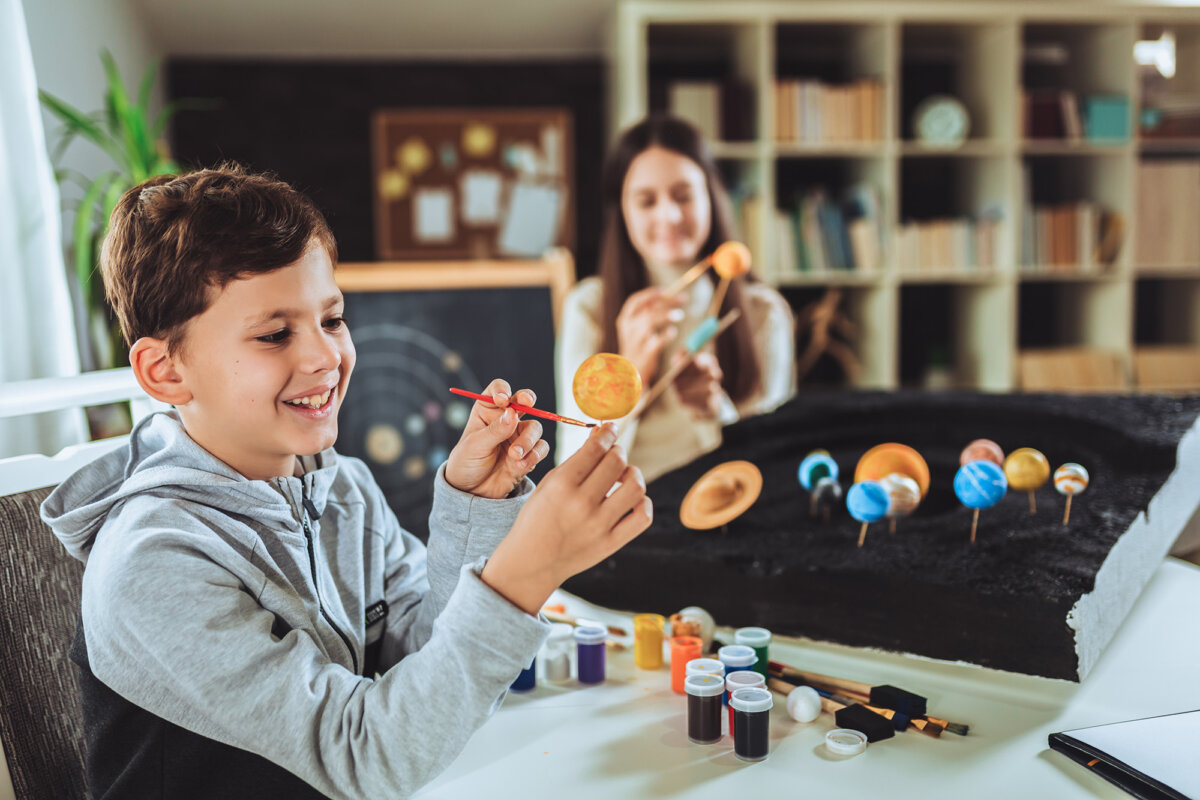
When your kids have completed their research, it’s time to organize all that information into a project. Possible projects include designing a website, creating a diorama, crafting a salt-dough scene or map, writing a skit or short play, or building something.
The last phase is presentation. Kids can present their projects at a family gathering, to the students in their co-op, to the church congregation, or to the fellow members of a club.
What Are the Benefits and Concerns of PBL?
Historically, PBL developed through the work of renowned educational thought leaders like Socrates, Maria Montessori, John Piaget, and John Dewey; they all believed children learn best through investigation and active, engaging, real-world experiences. In Socrates’s Socratic Method, for example, students learn by asking questions and seeking answers to help them better understand topics.
Hands-on, project-based learning is hands down one of the best motivational tools you can add to your homeschool program. PBL is flexible; use it throughout your homeschool year to help kids delve deeper into topics of interest. It is also well suited to the different learning styles and works well with children who have special needs.
PBL sparks curiosity, helps develop critical thinking and problem-solving skills, connects kids to real-world issues, incorporates multi-sensory learning, and, as a result, greatly strengthens retention. Additionally, students can practice and improve organizational, summarization, and analysis skills while learning to manage their time.
Conversely, consider that while PBL is quite beneficial for your kids, it can be challenging for you as parents and teachers to feel comfortable entrusting your kids with this extraordinary level of freedom.
Also, some kids may need regular check-ins to ensure they keep on track because, let’s face it, they’re kids. Some might be indifferent to the whole learning process in general or insist they have no interests and may dillydally the hours away. Other times, kids’ momentum just fizzles out. Your kids may accept this generous gift of freedom but turn in unacceptable, low-quality projects.
PBL may be one of the best gifts you give your kids. So, if you’re considering introducing it into your homeschool, visit Celebration Education on YouTube, and watch their video on everything project-based learning.
