



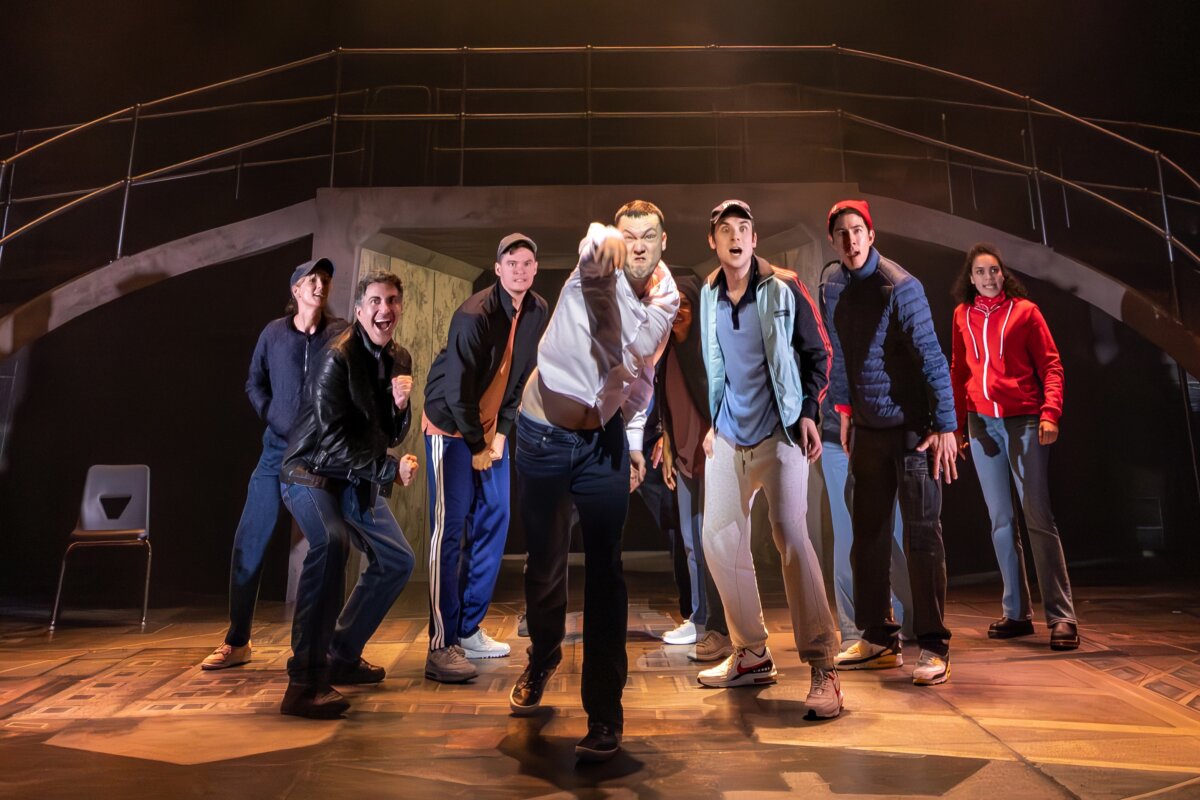
NEW YORK—A single unprovoked act can change lives forever. This truism is powerfully depicted in James Graham’s Broadway drama “Punch.” Based on the book “Right From Wrong” by Jacob Dunne, the play examines an actual incident and its repercussions.
On a hot summer evening in 2011, 19-year-old Jacob (Will Harrison), a self-assured tough from a working-class family in Nottingham, England, is enjoying a pub crawl with his friends. Fueling himself with booze and narcotics, Jacob can feel the energy bubbling up inside, just waiting to explode.
After getting separated from the rest of the group and collecting a phone number from a young woman named Clare (Camila Canó-Flaviá), Jacob gets a text from his mate Raf (Cody Kostro) telling him where to meet the others. Something is about to go down. Racing there, Jacob sees a man, whose name he later learns is James, who seems to be arguing with Raf.
Believing he must protect his friends no matter what, Jacob moves in. He swiftly punches James in the head. James immediately crumples to the ground, striking his head against the pavement. He dies a few days later.
 Jacob (Will Harrison) gets drunk and high and commits an act that changes the trajectory of his life, in “Punch.” (Matthew Murphy)
What the Play Is About
These events are punctuated by scenes set several years in the future. An older Jacob attempts to tell his story in a group setting some time after his release from prison. His flashbacks feature James’s parents Joan (Victoria Clark) and David (Sam Robards), both during and after the tragedy.
While the first act feels like the buildup to an inevitable train wreck as events move ever closer to a deadly encounter, Act 2 is all about trying to pick up the pieces. Joan and David, angry over the relatively light sentence Jacob received and the initial diagnosis from the doctors who said their son would be fine, are desperate to understand why Jacob threw that fatal punch.
Their search for answers eventually leads them to a process known as “restorative justice.” If all involved are willing, this method of healing allows them to speak to Jacob directly so they can finally ask questions only he can answer.
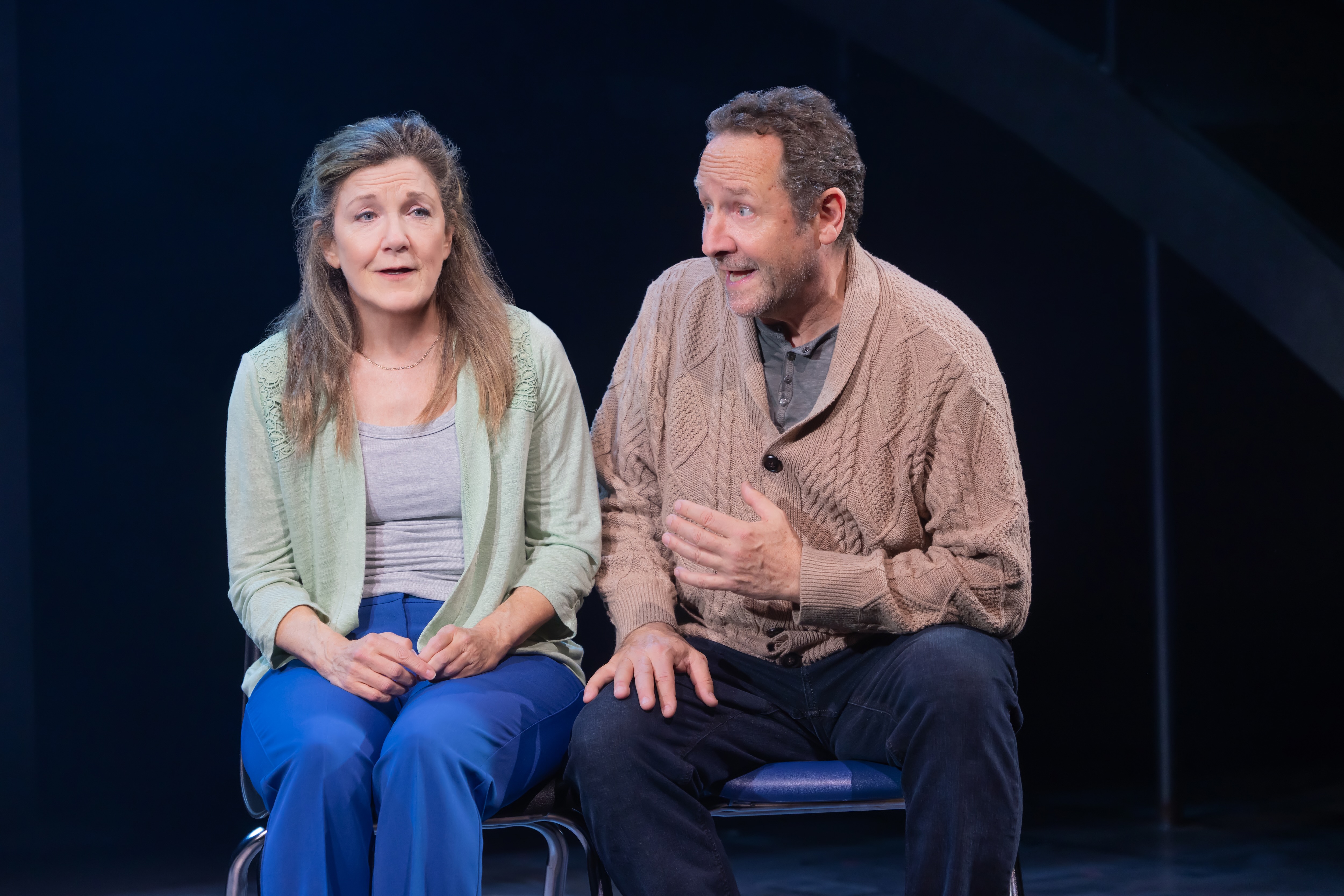 Joan (Victoria Clark) and David (Sam Robards) struggle with grief, in “Punch.” (Matthew Murphy)
Meanwhile, Jacob is trying to rebuild his life and repair relationships with his estranged mother (Clark) and younger brother (Kostro). Yet, he’s simultaneously dealing with deep inner rage and his friends’ ever-present urging to return to his old life. Loyalty to and betrayal of one’s roots are also explored. It all comes to a head when Jacob confronts the person he believes reported him to the authorities.
An Uneven Production
Despite the power of the show’s story, its delivery is somewhat uneven. The first act goes on too long, especially since it’s obvious almost from the beginning what is going to happen. Conversely, the second act is where the work really soars. The scene where Joan and David first sit down with Jacob is one of the most gut-wrenching seen onstage in years. The play shows that the grief process is ongoing. There are no quick endings. This point is clear when they discuss forgiveness.
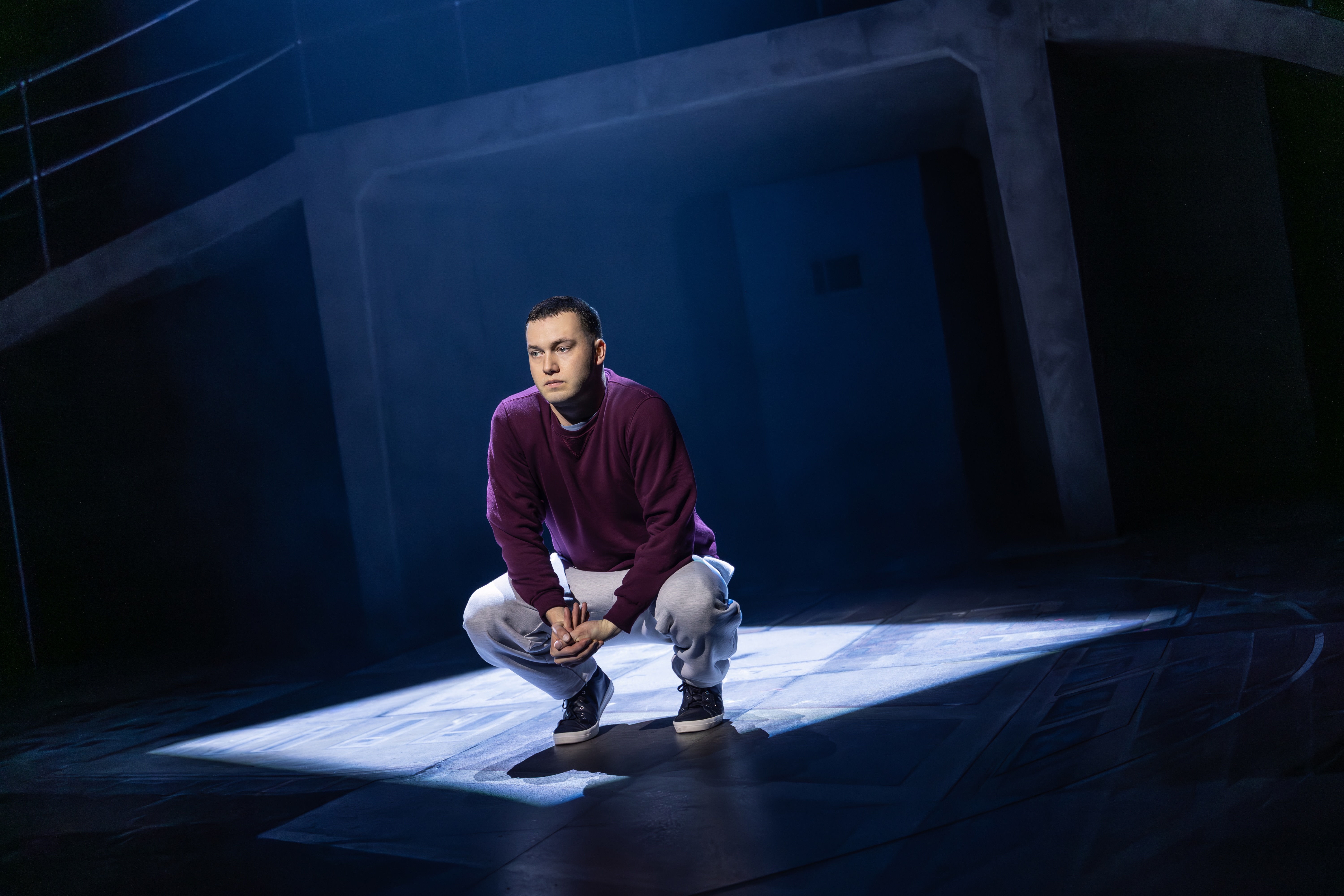 Jacob (Will Harrison) was sent to prison for unintentionally killing a man with a single blow, in “Punch.” (Matthew Murphy)
Harrison can be quite compelling as Jacob, who tries to become more than who he once was—both to himself and his family. However, he sometimes plays the role so closed off, it can be hard to emotionally connect with him.
Clark also cuts a poignant figure as Jacob’s put-upon mom, struggling to get by the best she can. Canó-Flaviá does a nice turn as Clare, though this character could have been expanded a bit so as to provide her viewpoint of the overall situation. It would have been nice to see more interactions between Jacob and his family.
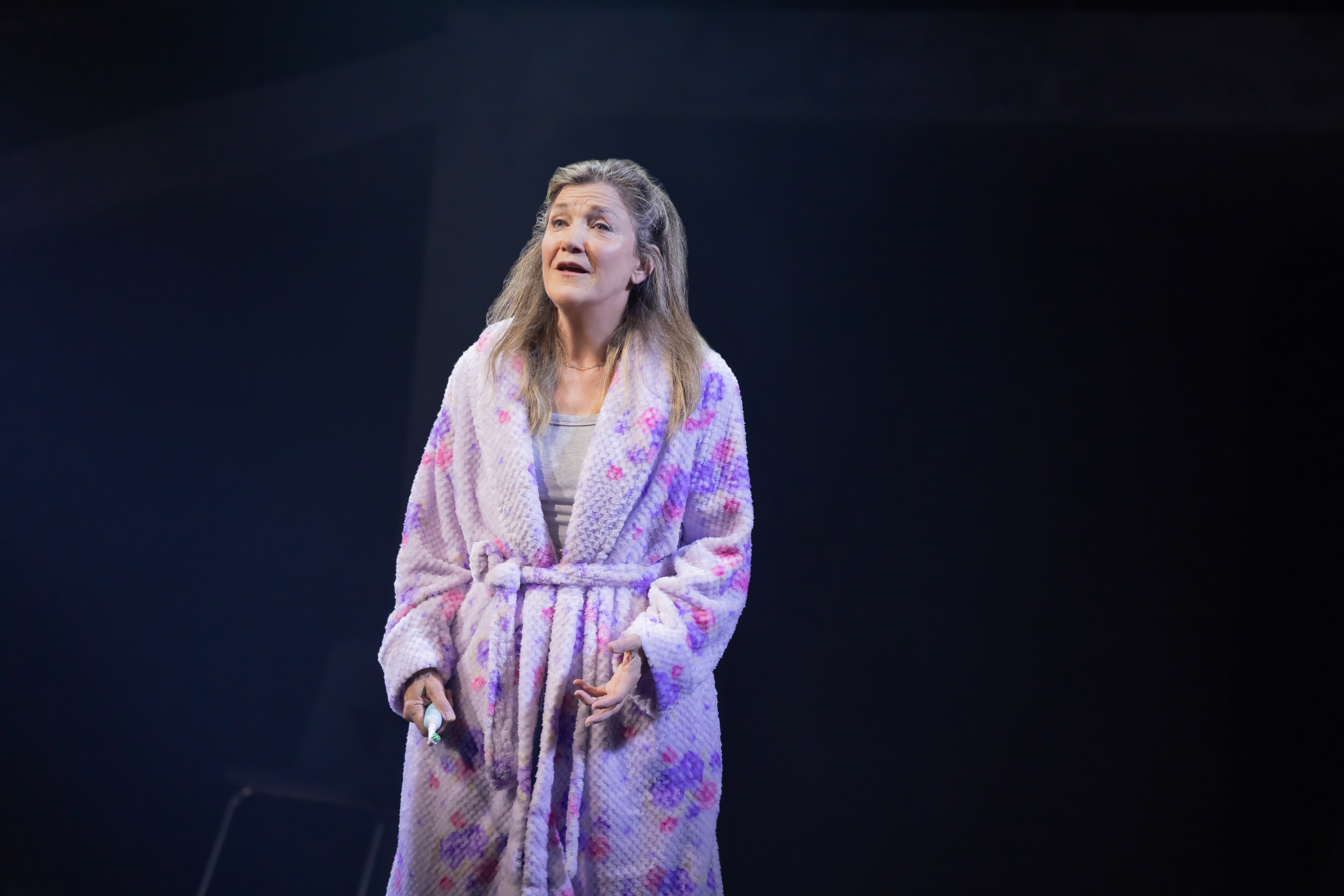 Victoria Clark in “Punch.” (Matthew Murphy)
This feeling is also conveyed via Robbie Butler’s lighting and Alexandra Faye Braithwaite’s sound design. Anna Fleischle’s sets work perfectly, with efforts ranging from a bridge overlooking Jacob’s stomping grounds to the more spartan moments showing Joan and David’s home and the meeting place where they and Jacob have their first sit-down. Also key is the work by movement director Leanne Pinder.
Alternatively painful and fascinating to watch, “Punch” is a stirring example of how while one may always be emotionally marked by the past, a person doesn’t have to be solely defined by it.
‘Punch’
Manhattan Theatre Club
Samuel J. Friedman Theatre
261 W. 47th St., New York City
Tickets: PunchBroadway.com
Running Time: 2 hours, 20 minutes (one intermission)
Closes: Nov. 2, 2025
What arts and culture topics would you like us to cover? Please email ideas or feedback to features@epochtimes.nyc
