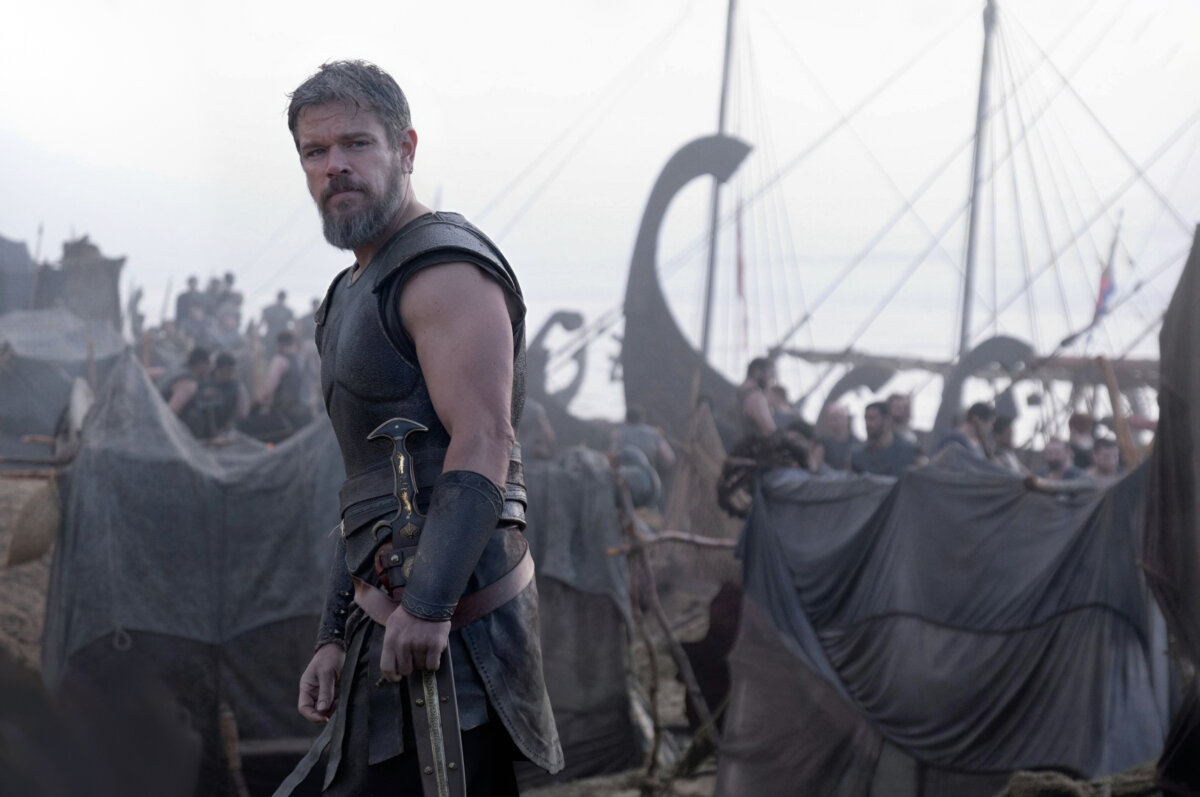
Next year, the long-awaited film “The Odyssey,” directed by Christopher Nolan and starring Matt Damon and a host of other stars, will hit the screen. Given Nolan’s peerless pedigree of epic films, this promises to be … well … epic! I can barely wait to see it because—aside from the director and stars—it’s based on, arguably, the greatest epic of all time: Homer’s “Odyssey.”
Film has a soundtrack, special effects, brilliant actors, and a host of wonderful contrivances that enable the director to enthrall and literally take audiences’ breath away. That is what epic does; it recreates the sublime, and we stand in awe of it. Director Peter Jackson did it with “The Lord of the Rings.” Can Nolan do it with “The Odyssey”?
Reading a book or poem is quite a different experience from watching a film. Obviously, it doesn’t have access to all special effects and visuals, but it does have one thing: words. In case you thought otherwise, words are more than adequate to recreate the sublime. That is why Homer’s work has endured for nearly 3,000 years. His words have enthralled readers over centuries. All the visuals notwithstanding, a key aspect of Nolan’s success will hang on the film’s language.
Tom Holland, who is co-starring, said, “It is the best script I’ve ever read.”
I hope so.
If this is true, the question is this: On what translation of the original does the script depend?
The Translations
No one is quite sure what translation will be used. Sadly, it will be not be by Michael Solot. His work is arriving on the market too late to have been considered. But remarkable, certainly, is Solot’s translation.
In the crowded field of Homeric translations, where the pendulum has long swung between literal fidelity and poetic freedom, Solot’s “Odyssey,” published by the Society of Classical Poets in 2025, emerges as something rare: a linguistically rich, metrical recreation that feels both ancient and alive. Solot’s verse moves with the pulse of the sea he describes—waves of rhythm breaking, retreating, returning—conveying not merely the meaning of Homer’s Greek but also its energy, its oral vitality, and its relentless forward motion.
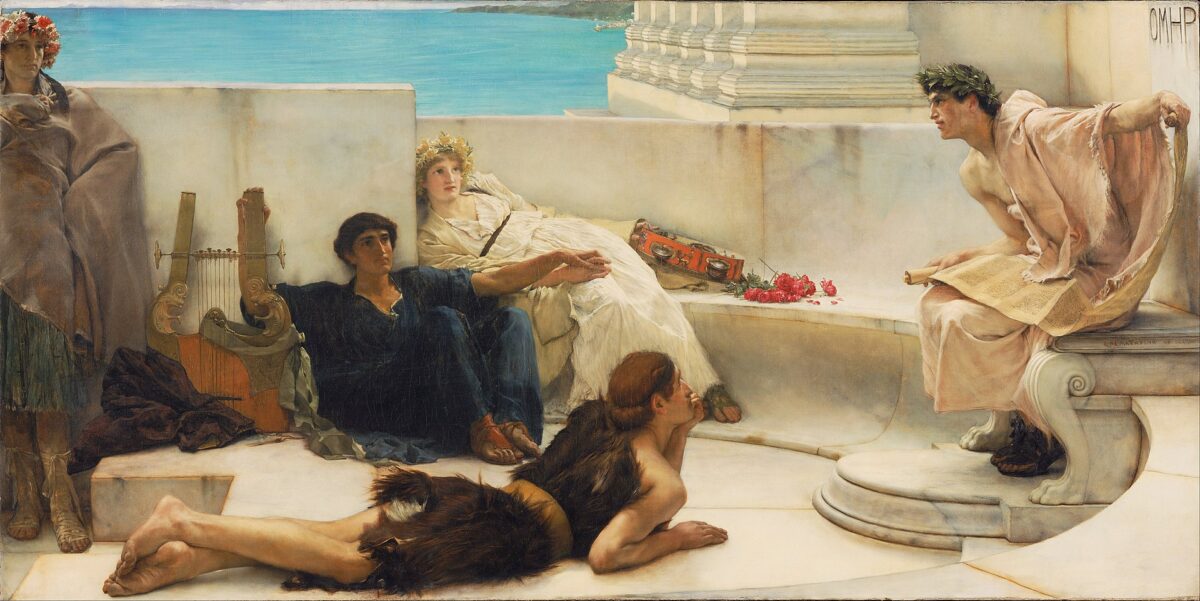
I first studied Homer at university in the early 1970s, where I was introduced to the wonderfully studied translation by the great American academic Richmond Lattimore. Let’s look at the first 10 lines from Book 1 of Lattimore (1965); Emily Wilson (2017), rumored to be the one used in the film; and Solot’s version (2025). How do they compare?
Below is Wilson’s translation:
Tell me about a complicated man.
Muse, tell me how he wandered and was lost
when he had wrecked the holy town of Troy,
and where he went, and who he met, the pain
he suffered in the storms at sea, and how
he worked to save his life and bring his men
back home. He failed to keep them safe; poor fools,
they ate the Sun God’s cattle, and the god
kept them from home. Now goddess, child of Zeus,
tell the old story for our modern times.
Lattimore’s translation:
Tell me, Muse, of the man of many ways, who was driven
far journeys, after he had sacked Troy’s sacred citadel.
Many were they whose cities he saw, whose minds he learned of,
many the pains he suffered in his spirit on the wide sea,
struggling for his own life and the homecoming of his companions.
Even so he could not save his companions, hard though
he strove to; they were destroyed by their own wild recklessness,
fools, who devoured the oxen of Helios, the Sun God,
and he took away the day
of their homecoming. From some point
here, goddess, daughter of Zeus, speak, and begin our story.
Solot’s translation is as follows:
The man, Muse, tell me the tale of that man
Who survived on his wits—driven afar in his wanderings
After he looted the citadel sacred to Troy.
So many cities he saw and minds he mastered,
So many heartbreaking sorrows he suffered at sea
As he struggled to save his own life and bring his men home;
But not even he could protect them, hard though he tried.
His shipmates were reckless—the fools!—dooming themselves
By gorging on cattle they stole from the pastures of Helios,
God of the Sun, who darkened their homecoming day.
The three translators represent not merely different styles, but fundamentally different theories of what Homer is and how English can or cannot embody epic. Their openings reveal at once the strengths and limits of their respective methods.
Wilson’s translation is driven by clarity, concision, and modern idiom. Her first line, “Tell me about a complicated man,” is instantly recognizable as her hallmark: colloquial, psychologically oriented, and unmistakably contemporary.
However, to my ear as a poet, the word “complicated” is dissonant—spoils the epic atmosphere—because it’s so modern. Calling Odysseus “a complicated man” feels less epic and more like saying Ross Geller from “Friends” is complicated. True enough, but it hardly captures the scale of the hero.
Her diction throughout these opening lines is intentionally muted—“pain,” “storms,” “lost,” “poor fools,” “modern times”—favoring short words, clean syntax, and semantic compression. This leanness produces admirable briskness but simultaneously drains the verse of epic resonance; it reads with the speed of spoken prose.
Her use of iambic pentameter, normally the prestige meter of English elevated poetry, here serves not to exalt but to neutralize. The lines avoid Miltonic solemnity into which English blank verse so easily slides; instead, she maintains a deliberate, unheroic lexis. The result, paradoxically, is that the form associated with “Paradise Lost” cannot feel “epic” here without a stylistic dissonance. Wilson solves the problem by making the idiom quotidian—but, in doing so, the texture of epic grandeur is necessarily diminished.
Lattimore’s method is the opposite. His translation is a monument to fidelity rather than to poetry. His “man of many ways” preserves the Greek “polytropos” (this is the key epithet applied to Odysseus in the first line of the “Odyssey,” and it’s notoriously difficult to translate because it has many meanings). His “Troy’s sacred citadel” renders Homer’s epithets with dutiful literalism. His syntax follows Homer’s with as much rigor as English allows: long, accumulating clauses; inverted constructions (“Many were they…”); and a steady, ceremonial march.
The meter is not English iambic but a loose, six-beat line designed to approximate the dactylic hexameter of the Greek original. It gives the verse a certain stateliness, but also a certain dryness—an uneven, slightly prosaic gait. If Wilson’s meter is too smooth to feel epic, Lattimore’s is too rigid to feel fully poetic. His is the voice of a scholar preserving rather than transforming, honorable in method but limited in musical effect. The verse carries authority, but rarely grandeur.
Solot stands between these poles yet avoids their weaknesses. His opening line—“The man, Muse, tell me the tale of that man”—strikes immediately by its sound: The alliteration of “m,” the answering echo of “man,” the sonorous lift of “tell me the tale.” This is not the polished blank verse Wilson employs nor the ersatz-hexameter of Lattimore; it is a flexible, rhythmic, stress-driven line shaped by ear rather than by mechanical scansion.
Solot’s lines rise and fall like the waves he explicitly evokes in his preface. They are not metrically regular in an academic sense, but they carry a musical intention: stresses cluster, dissipate, and return, creating a dynamic momentum closer to oral performance than to literary verse. English cannot reproduce Homer’s meter, but it can reproduce Homer’s movement, and Solot does exactly that.
His diction, too, helps sustain the epic mode without lapsing into either archaic grandiloquence or modern flatness. Words such as “survived on his wits,” “driven afar,” “heartbreaking sorrows,” “citadel sacred to Troy,” and “gorging on cattle” strike a balance between immediacy and elevation. The rhetoric is vigorous: alliteration (“so many sorrows he suffered”), anaphora (“So many … . So many … .”), dramatic punctuation (“—the fools!—”), and strong verbs (“looted,” “darkened”). This creates a verbal texture that is recognizably poetic without sounding archaic and recognizably modern without sounding demotic.
Against this background, the metrical question becomes central. English has no native epic meter. Iambic pentameter, when used for epic, inevitably awakens the ghost of Milton; its stately tread cannot help but invoke “Paradise Lost” (as John Keats discovered in his “Hyperion” attempt). To escape that echo, translators must employ deliberately level diction—Wilson’s strategy—or else abandon pentameter altogether.
Lattimore, for his part, attempts to approximate hexameter numerically, but English stress-timing simply cannot sustain Homeric quantitative rhythm. The result is neither Homeric nor fully English.
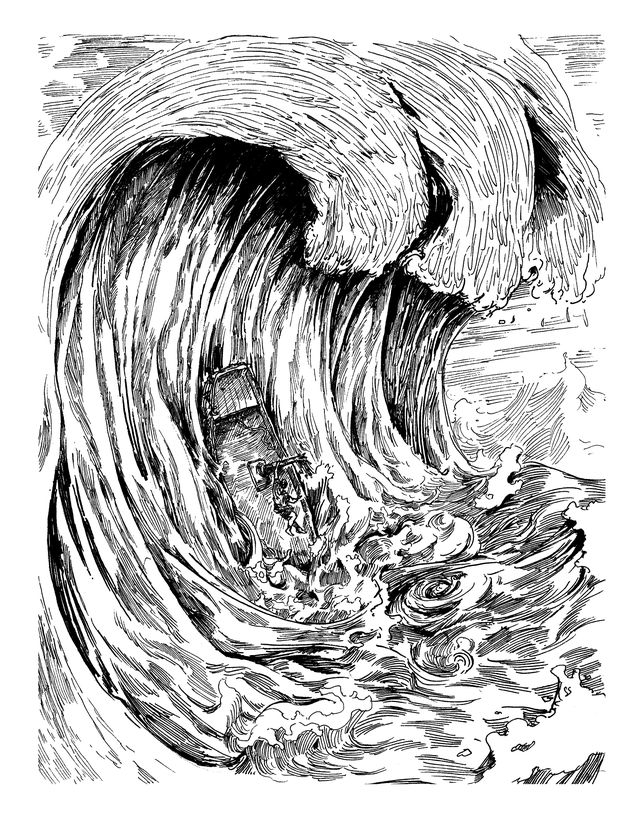
Solot’s solution—what one might call stress-guided rhythm—is arguably the most successful: It recognizes the futility of strict imitation while capturing the essential surge, flow, and recurrence of Homeric song. His lines have a forward-driving pulse without falling into the Miltonic echo chamber that haunts all iambic epic.
In short, I would argue that Wilson gives us an extremely clear story, but not an epic poem. Lattimore gives us a faithful record, but not quite a poem at all. But Solot gives us a poem that feels like an epic: musically alive, rhetorically rich, and emotionally forceful.
Solot’s Gem
In anticipation of the Nolan’s new film, you may want to be ahead of the curve. The translation to read is surely Solot’s. And Solot’s book, actually, offers a lot more than just the translation.
What distinguishes this “Odyssey” is not only Solot’s verse but the entire interpretative framework surrounding it. His 200 pages of commentary revive the poem as a living meditation on language, myth, and memory, challenging a century of inherited academic assumptions. Instead of treating Homer as a philological relic, Solot reads him as a dynamic artist, bringing insight, humor, and contemporary moral clarity to the text. There are many brilliant gems and insights in these notes.
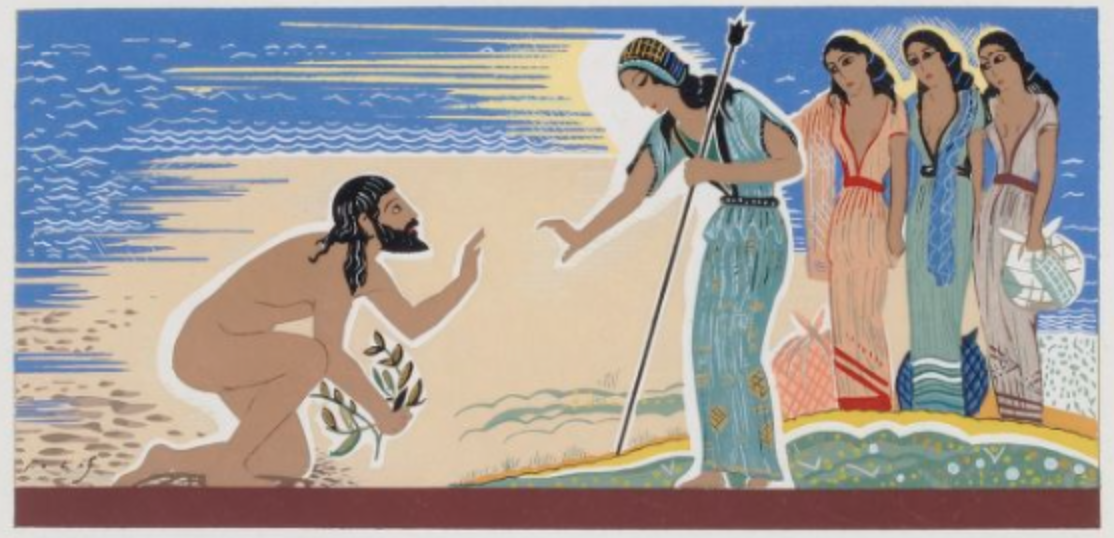
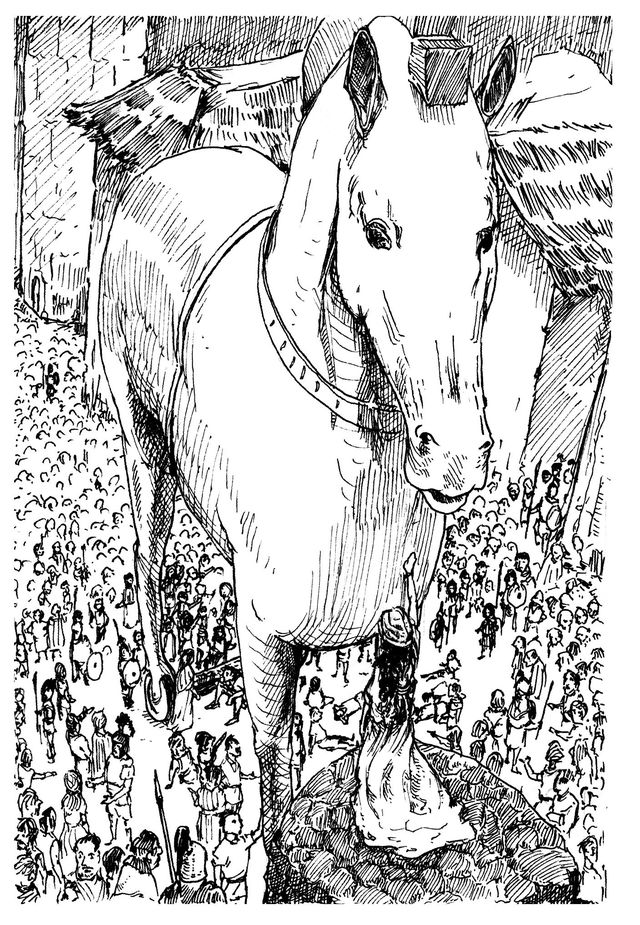
Alongside this, Aedan Kennedy’s illustrations offer a second major contribution. They are not embellishments but visual interpretations, echoing the energy and seriousness of the poem through an archaic yet expressive style reminiscent of black-figure pottery. Text, image, and commentary interact as a single, unified creation.
I think this is a must-have book for anyone who is serious about reading Homer in English; it is almost certainly the best single volume you can purchase on the “Odyssey.” So read the Solot translation, and then see what you think of Nolan’s new film. Is it as epic as Solot’s Homer?
‘The Odyssey’
By Homer
Illustrated Edition
Translated by Michael Solot
Society of Classical Poets: Dec. 10, 2025
Paperback, 445 pages
‘The Odyssey’
By Homer
Illustrated Edition with Commentary
Translated by Michael Solot
Society of Classical Poets: Dec. 10, 2025
Paperback, 672 pages
What arts and culture topics would you like us to cover? Please email ideas or feedback to features@epochtimes.nyc