How better to celebrate New Year’s than with a cosmic fireworks show?
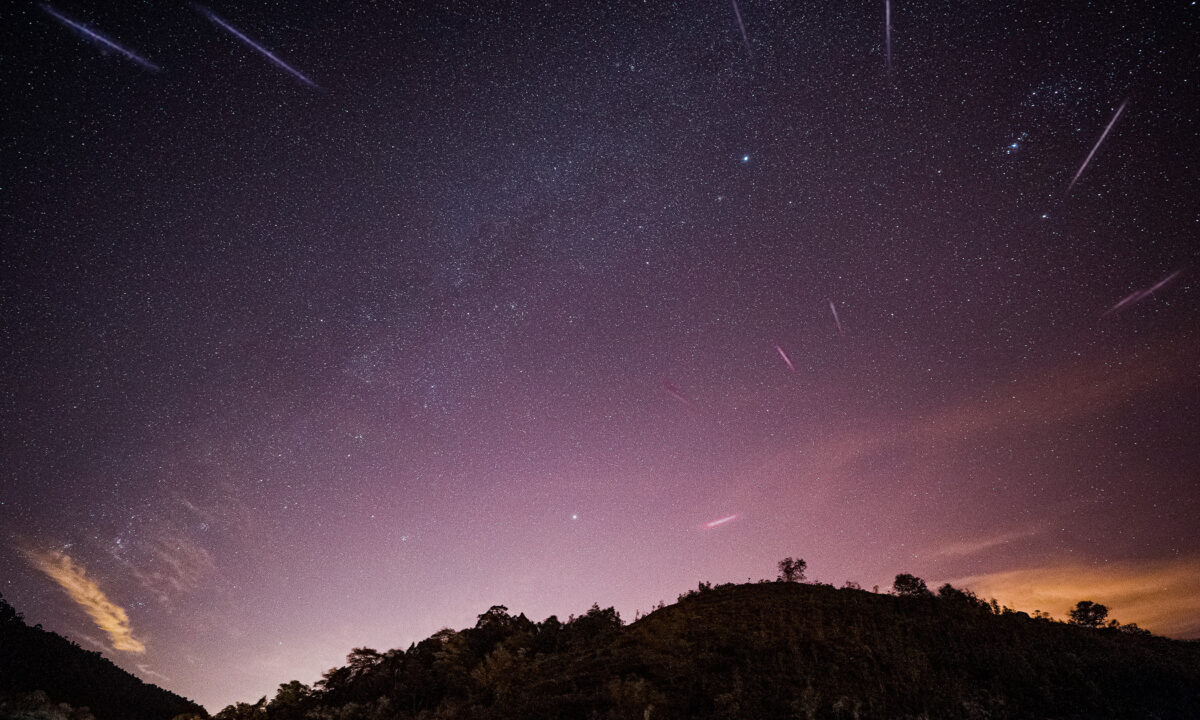
People will be setting off fireworks in spectacular fashion across the globe—from Tampa to Tokyo—ushering in 2022. But the heavens have a cosmic light show of their own in store—balls of fire shooting from the sky, called the Quadrantids, expected to peak early January. This celestial display also coincides with the new moon, making for darker skies and optimal meteor viewing.
What are the Quadrantids?
The Quadrantids are an annual shower of meteors—which, NASA explains, first form as an accumulation of cosmic dust from a comet, becoming a dusty trail around the comet, which falls from the sky in the form of meteors when Earth passes through along its orbit. These hunks of matter appear as colorful streaks as they burn up in our atmosphere, travelling at a blistering speed of 25.5 miles (41 kilometers) per second.
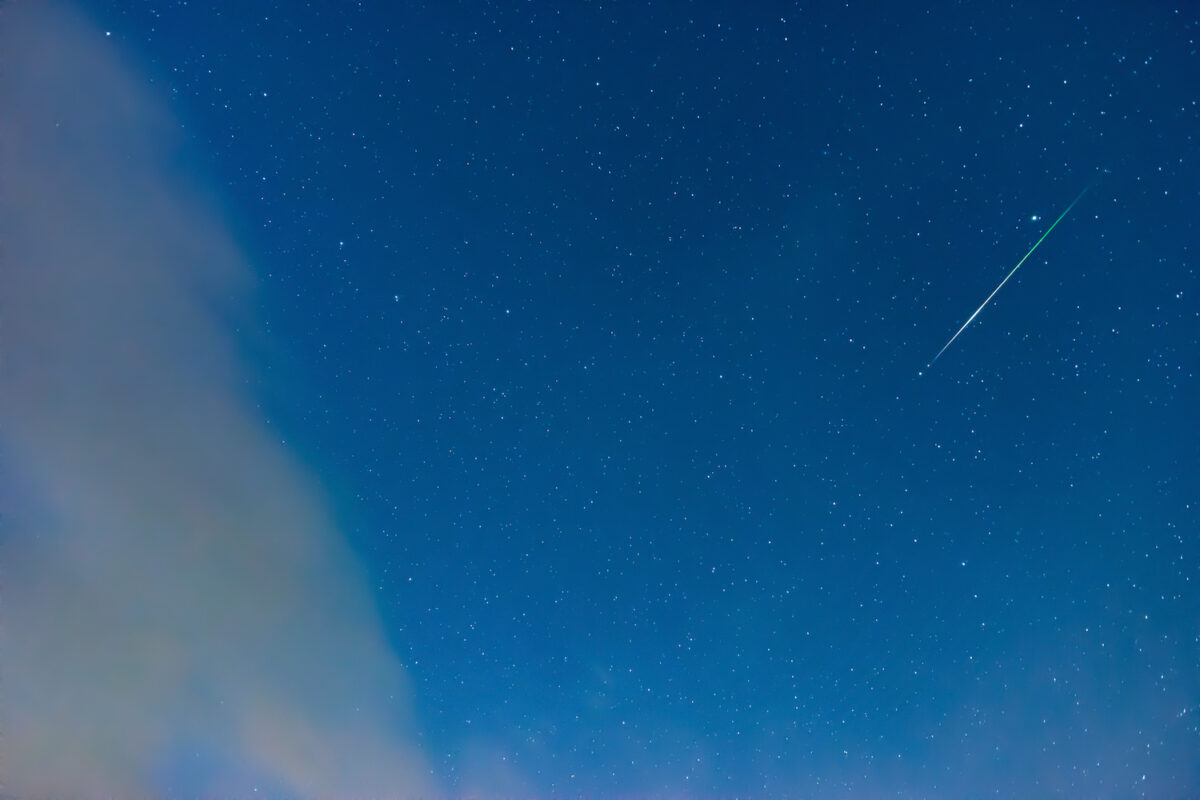
The Quadrantids, it’s believed, originated from an asteroid called “2003 EH1,” which orbits the sun once every 5.52 Earth years. While 2003 EH1 was discovered by the Lowell Observatory Near-Earth Objects Search (LONEOS) in 2003, almost two decades back, the meteor shower itself was first sighted in 1825, nearly two centuries ago.
How to watch the meteor shower
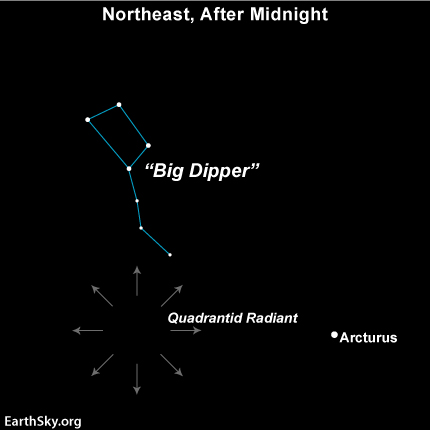
As for how to catch this cosmic display, the shower will appear directly over mid- to far-north latitudes in the northern hemisphere, though some meteors could conceivably be seen south of the equator near the horizon. More specifically, the Quadrantids will radiate out from a point located in the now-obsolete constellation Quadrans Muralis (from which the shower derives its name), between constellations Bootes and Draco, near the end of the handle of the Big Dipper.

The constellation Quadrans Muralis, created by French astronomer Jerome Lalande in 1795, was named after an early astronomical instrument, a quadrant, used to observe and plot star positions. But when the International Astronomical Union (IAU) compiled their list of official constellations in 1922, Lalande’s was left out.
The Quadrantids are considered one of the best annual meteor showers, but their peak will last just a few hours. Meteors may appear anytime between Dec. 28 and Jan. 12 during the shower, yet peak viewing will occur only overnight from Jan. 2 to Jan. 3, when viewers can expect anywhere from 60 to 200 meteors per hour under cloudless skies.
The reason for this narrow window? According to NASA, the shower’s thin stream of particles crosses the earth perpendicularly, minimizing its duration. Most meteor shower peaks last two days, making for convenient viewing.
Fireballs, you say?
Despite this short watching window, sky searchers can expect the Quadrantids to stand out particularly bright in the night sky. Not only will the new moon present ample darkness, enhancing visibility; the Quadrantids are known for their bright “fireballs”—meteors caused by larger clumps of material appearing as explosions of light and color that are brighter and can persist longer than typical meteor streaks.
One last tip for would-be meteor gazers: though the Quadrantids radiate out from the constellation Quadrans Muralis, they can appear anywhere in the sky over the northern hemisphere. So, for optimal viewing, get a lawn chair and a sleeping bag; cozy up lying flat on your back facing northeast; and, taking in as much sky as possible, look straight up—and enjoy a cosmic show that comes but once a year.
Share your stories with us at emg.inspired@epochtimes.com, and continue to get your daily dose of inspiration by signing up for the Epoch Inspired newsletter at TheEpochTimes.com/newsletter