



Anyone who has read the “Little House on the Prairie” book series or watched the 1970s television shows based on the books remembers a focal-point setting: Oleson’s Mercantile. It was the general store owned and operated by characters Harriet and Nels Oleson that served as a central hub for not only buying and selling goods, but to learn local, regional, and national news as well as meet community needs.
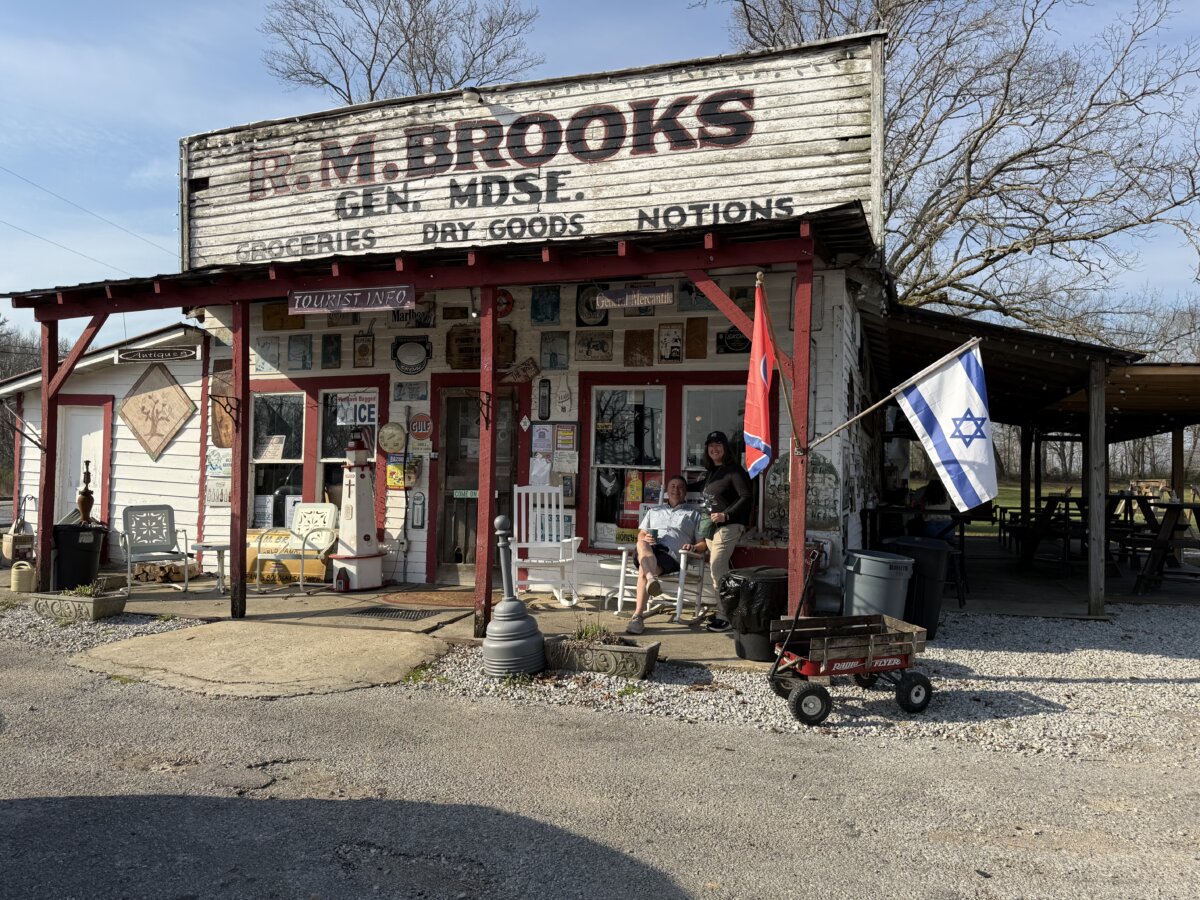
Very few historic general stores have survived modernity. As chain grocery stores and mega retailers emerged, they were demolished or turned into homes, museums, or event centers. R.M. Brooks in Rugby, Tennessee, is an exception. Since the 1920s, it has been continuously owned by the same family. And, its doors only closed temporarily after the third-generation operator’s sudden passing.
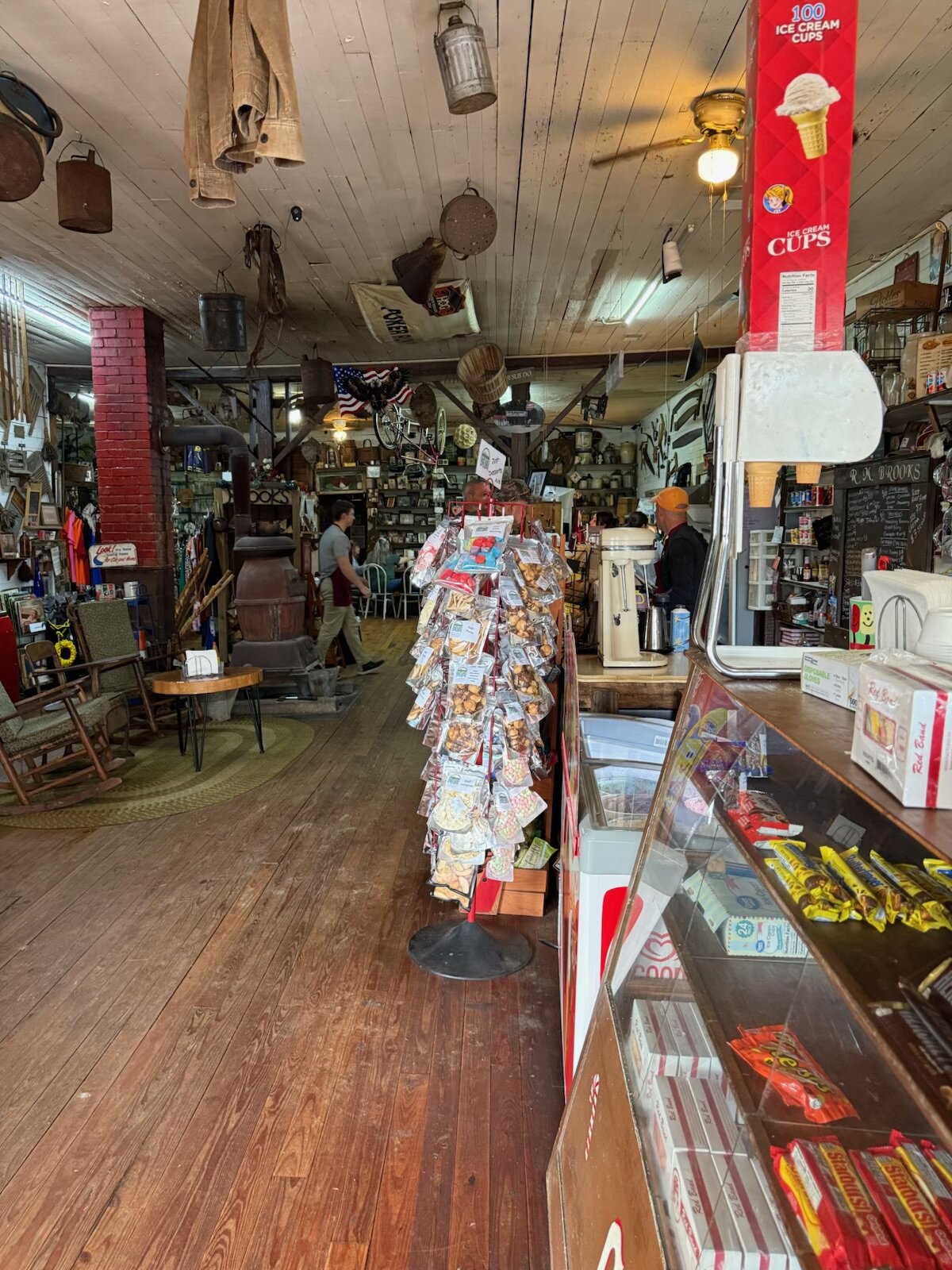 The interior of the R.M. Brooks general store is a treasure trove of antiques, gifts, and travel souvenirs. (Deena Bouknight)
For over a century, R.M. Brooks has been a hub of activity in rural Morgan County. A featured segment on YouTube’s The Appalachian Channel went viral and prompted countless travelers to veer off Interstate 75 and drive the country roads leading to R.M. Brooks General Store.
The YouTube video motivated Ted and Kathy Lilly of Texas to add R.M. Brooks to their almost four-week road trip through eight states. “My grandfather owned and operated a small country store in East Texas that was very similar to R.M. Brooks,” Ted said. “Watching the videos just made me feel good. When I saw the locals sit in the rockers, drink coffee, and visit in front of the U.S. Army Cannon Heater, I had to add [the store] to my bucket list.”
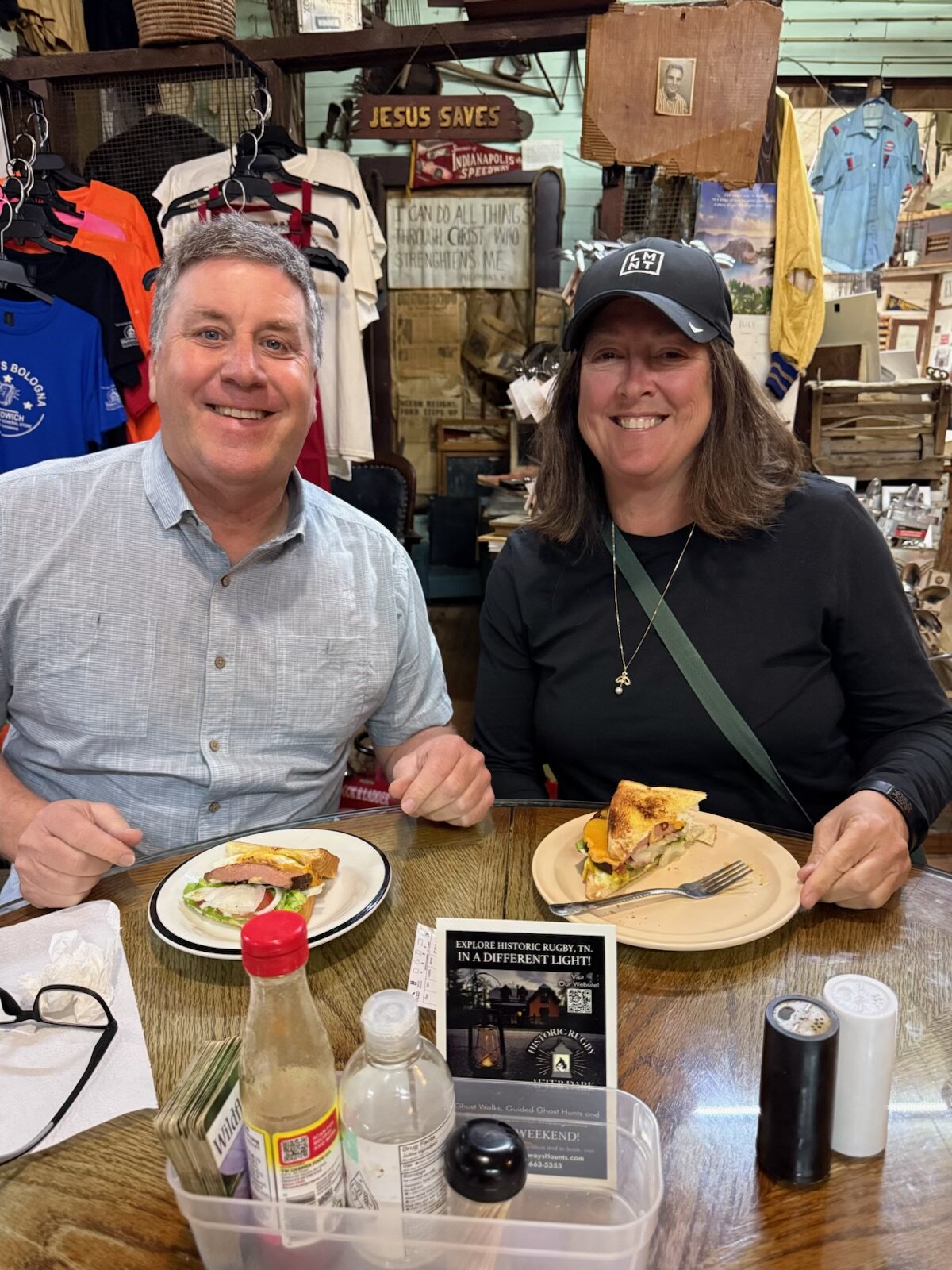 Ted and Kathy Lilly at the R.M. Brooks general store. (Deena Bouknight)
People from the United States and even other countries are drawn not only to the rockers and cast-iron pot-belly stove, but also to enjoy fried bologna sandwiches, old fashioned candies, hoop cheese, and homemade fried pies. They revel in the squeak of the 100-year-old floors. They marvel that the accoutrements of the post office, which once operated there, are still in place. They also enjoy perusing a plethora of handmade and manufactured goods in the densely merchandised store.
Ted added: “I loved looking at all the old store items, pictures, and articles [about the store], and just imagined what it would have been like on a Saturday morning 80 years ago. I’m a woodworker, so I studied the structure, wood floor, screen door, etc. and imagined what it would have been like to construct with limited manual tools.”
History at Work
Fourth generation family owner Tiffany Garrett and her husband Doug try to maintain the one-story, 2,000-square-foot R.M. Brooks store in as close to its original state as possible. It was her maternal great grandfather, R.M. Brooks, who first established himself as a businessman in 1917 and then built the store sometime in the early 1920s. It passed to Tiffany’s grandparents, R.O. and Verda Brooks. When R.O. fell ill, Tiffany’s father, Bill Jones, took over—along with his wife, Linda.
“My father passed away suddenly in January 2010,” Tiffany said. “We shut down the store in January 2012 for a few years while we determined who would run it. My mom was running her bed and breakfast, and I was helping her. She officially owned the store with my uncle but couldn’t manage the store also.” Her mother, 88, still runs the bed and breakfast.
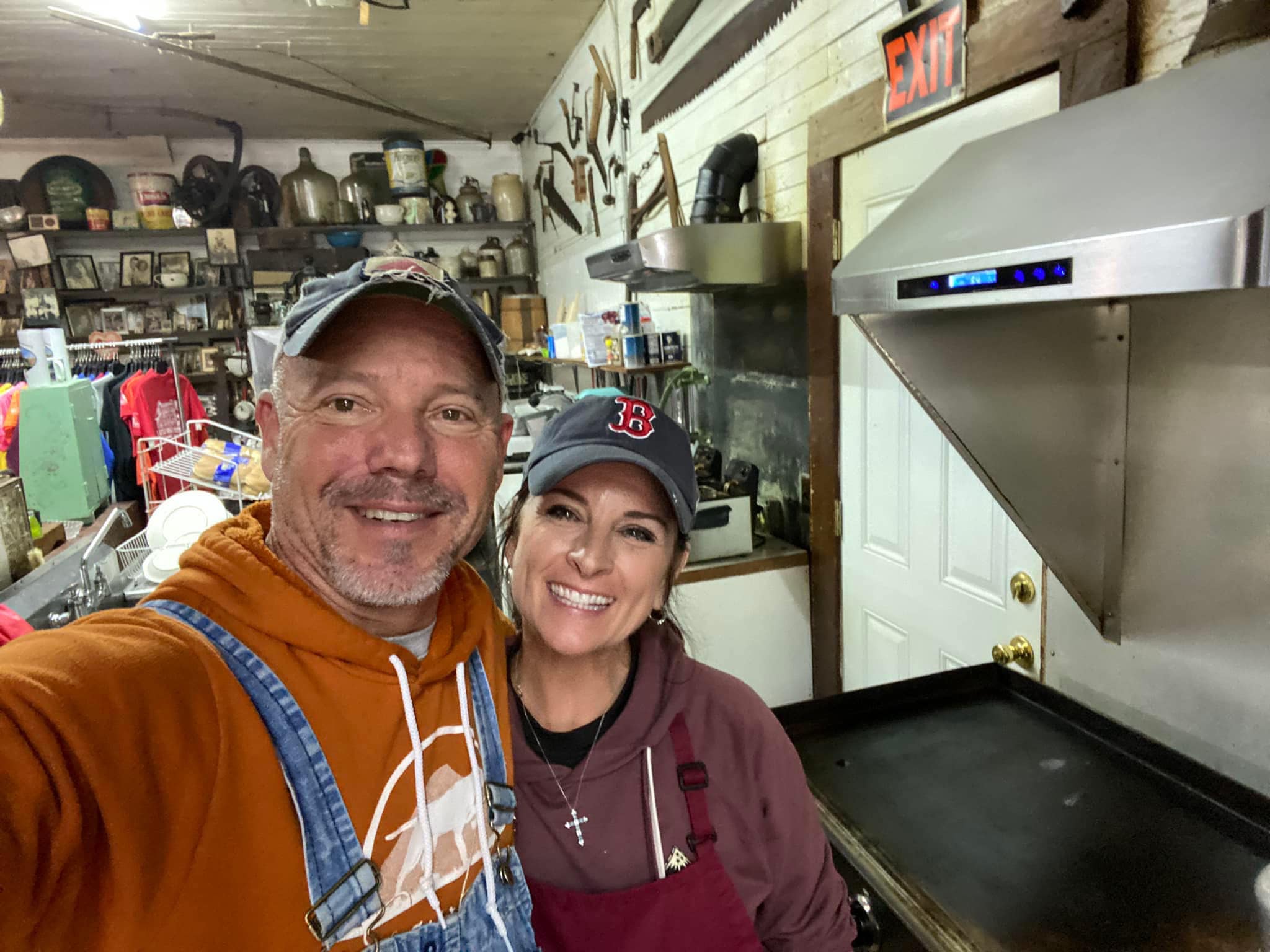 Doug and Tiffany Garrett in their store. (Deena Bouknight)
April 2014 was the official reopening of the R.M. Brooks store. Tiffany and Doug, who had retired from a career in law enforcement, were at the helm. They are helped by two employees and occasionally their adult children.
“We are very hands on,” said Tiffany, whose house is within walking distance. “We’re here every day but Sundays and Mondays stocking, greeting, cashiering, cooking, serving, cleaning bathrooms, washing dishes, and talking to people.”
Tiffany said she feels that the family business, which has also evolved into a sort of history museum, is a gift from God. She appreciates how the traditional general store environment gives her an opportunity to share scripture and pray with anyone in need.
Staying the Same
At one time in America, general stores were situated throughout farming communities and growing cities. Whether they were shed-like structures offering simple basics, or large buildings that housed owners upstairs or in a back section, they were ubiquitous across the United States. Although it’s hard to know how many general stores there were, they were imperative to communities. Seasonal produce and essentials, such as milk, flour, tools, fabric, and more, were readily available. Larger stores provided a lifetime’s worth of goods, from “cradle to casket.”
Additionally, holiday celebrations, music jams, and political stumping were commonplace at general stores. R.M. Brooks still hosts activities, and the store has welcomed politicians even in recent years.
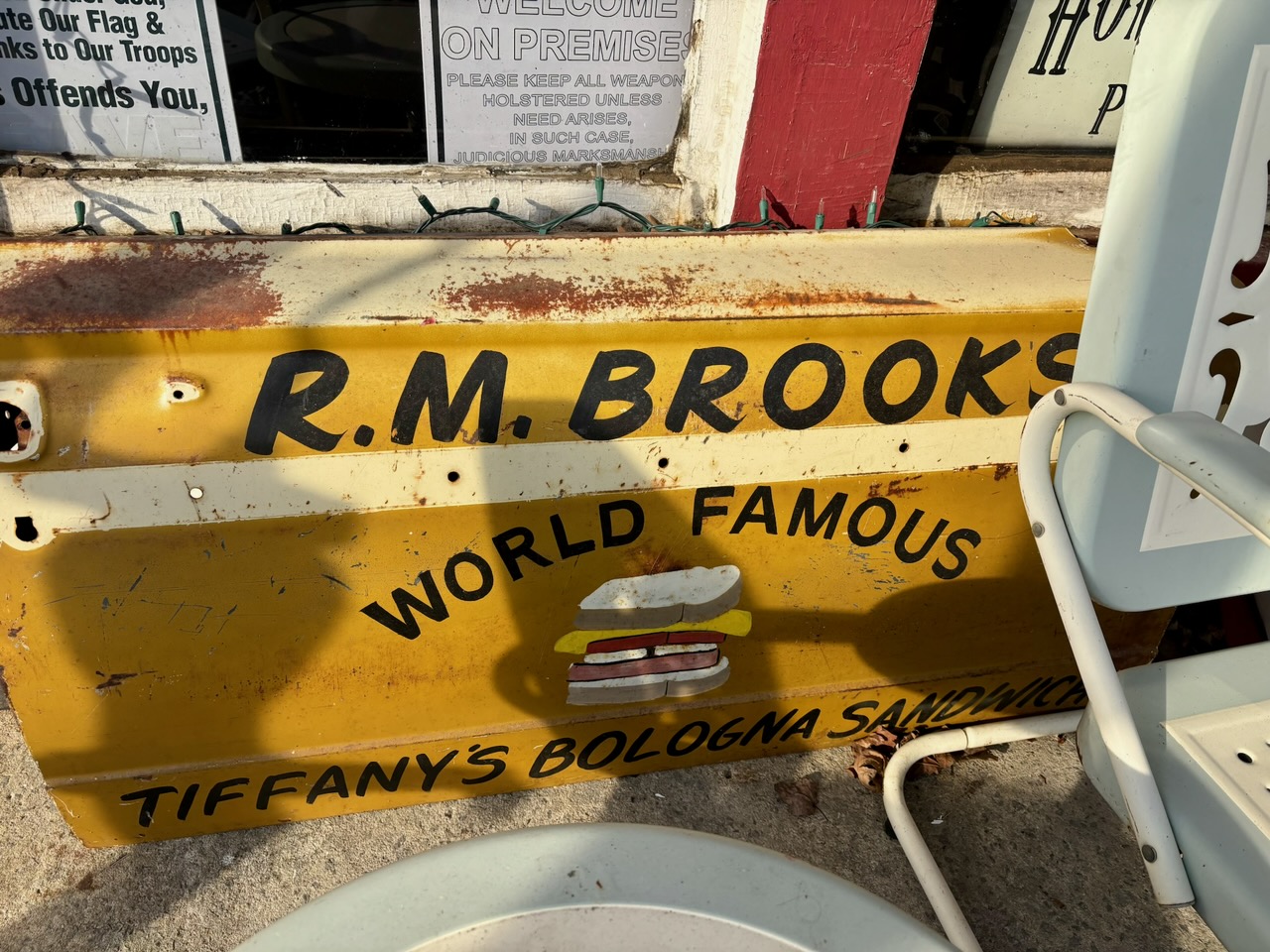 Antique signs for the general store are still around. (Deena Bouknight)
Visitors “are awed by the time lapse they feel when entering,” noted Tiffany’s mother, Linda, regarding why so many people gravitate to an establishment whose time should have passed. “They come and without exception say, ‘Stay the way you are. Don’t change. I’ll be back.’”
In three simple words, Ted explained another reason he and his wife and some friends added The National Register of Historic Places site to their travel plans: “It’s our history.”
What arts and culture topics would you like us to cover? Please email ideas or feedback to features@epochtimes.nyc.
