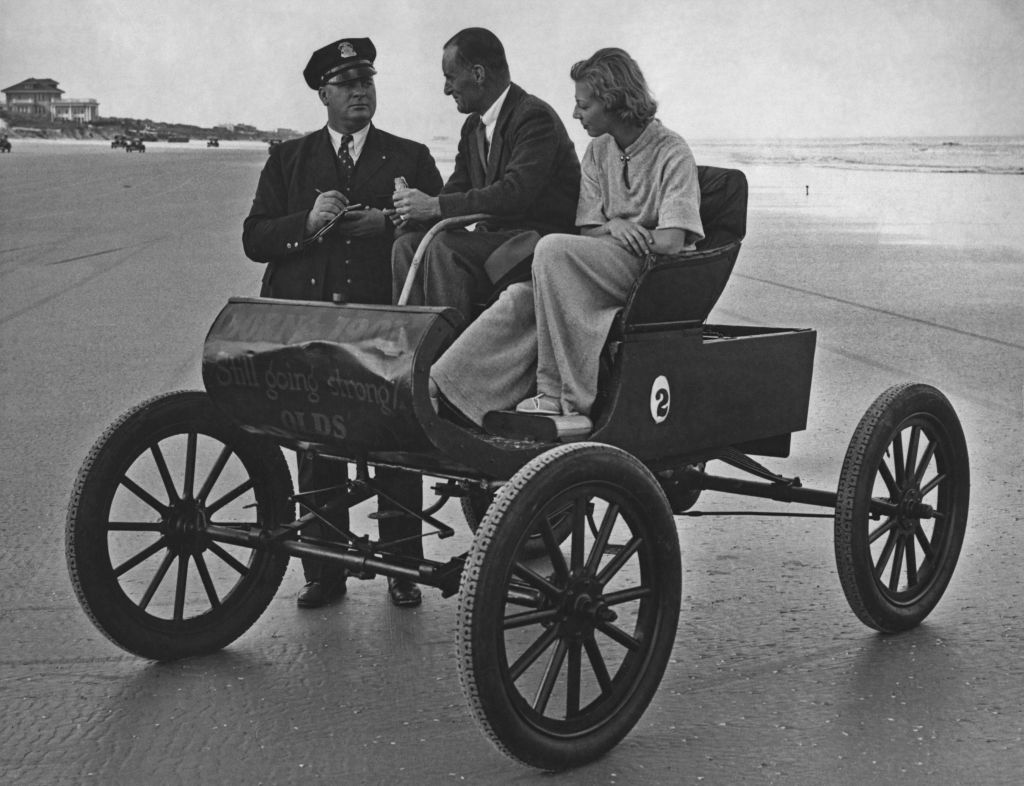
Ransom Eli Olds holds an essential, if sometimes understated, place in the story of early American motoring. Born in 1864 in Geneva, Ohio, and raised in Lansing, Michigan, he grew from a mechanically gifted tinkerer into an entrepreneur who proved that an automobile could be built in meaningful numbers and sold to an emerging public eager for mobility.
He became known—arguably with good reason—as both “the schoolmaster of motordom” and the “father of the popular-priced car.”
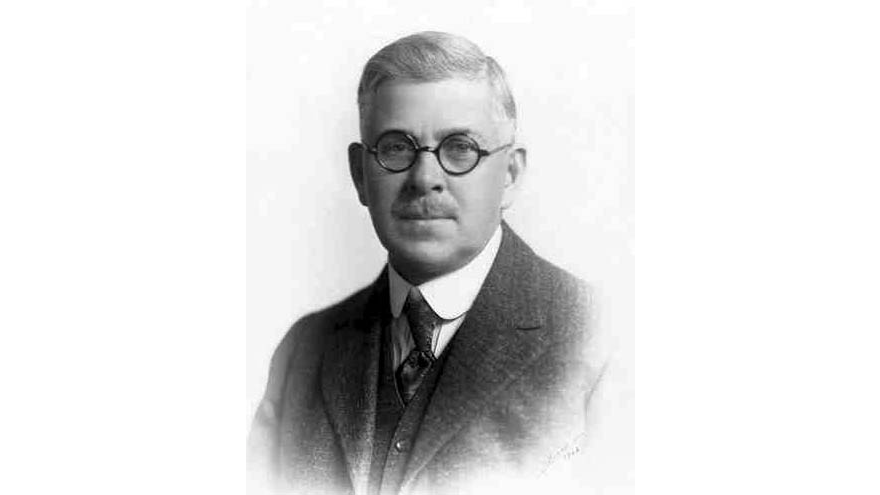
Olds learned by doing. His youth was spent in machine shops, where he absorbed engine mechanics through trial, error, and instinct. By the 1890s he had experimented with steam, electric, and gasoline power before choosing gasoline as the most promising path.
In 1897 he established the Olds Motor Vehicle Company, reorganized two years later as Olds Motor Works, the firm behind the Oldsmobile. Some accounts claim he produced perhaps Michigan’s first commercially successful gasoline automobile; the record is fragmentary, but his early presence in the race is undeniable.
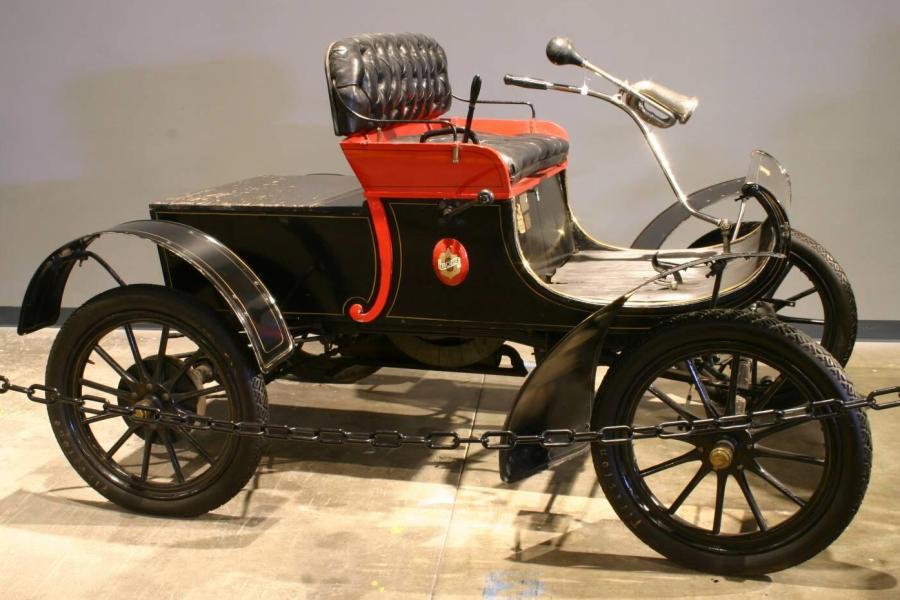
The Curved Dash Olds
The 1901 Curved Dash Oldsmobile was, by the standards of its day, a breakthrough. Often cited as America’s first “mass-produced” car, it introduced a new scale of production—hundreds or a few thousand annually—at a time when most automobiles were handcrafted novelties.
Olds implemented a manual, stationary, progressive assembly method: a sequence of workstations rather than a moving line. It was not the mechanized system Ford would later perfect, yet it was, in practice, an important conceptual leap toward organized automotive manufacturing.
Production numbers vary, reflecting the uneven record-keeping of the era. Most estimates place 1901 output around 400–500 units, rising to roughly 2,000–2,500 in 1902. Total Curved Dash production from 1901 to 1907 likely fell between 15,000 and 19,000. In truth, the precise figures matter less than the fact that Olds was building cars at a scale few competitors could approach.
Olds also became the first American automaker to attempt an overseas export. A British businessman ordered a car for delivery to India—only for the ship to sink en route. This is a small but telling reminder of how experimental the automobile business remained at the time.
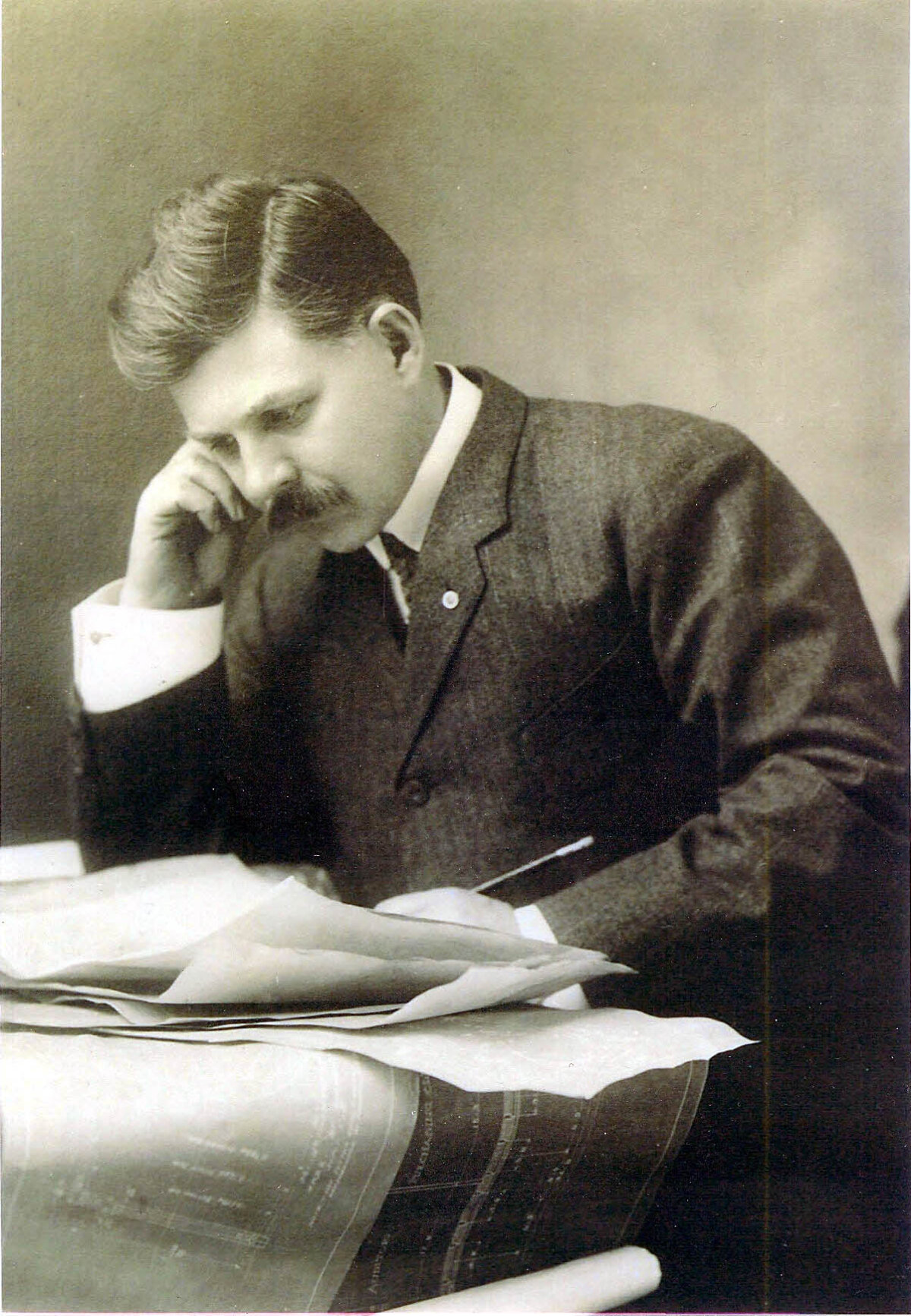
REO and Reinvention
After clashing with investors, Olds left Olds Motor Works in 1904 and promptly founded the R.E. Olds Motor Car Company—soon renamed REO. The firm produced both cars and trucks, and the REO Speed Wagon became, notably, one of the country’s most dependable commercial vehicles. To some extent, REO allowed Olds to operate free of the boardroom tensions that had defined his later years at Olds Motor Works.
By the 1920s he had stepped back from active manufacturing, but his influence was already sealed. Olds proved that cars could be built with a rhythm, order, and repeatable logic that made them reliable consumer products rather than luxuries. His system was not the mechanized mass production of later decades, but it pointed the way.
Though inimitable Henry Ford (1863–1947), Olds’s legacy rests more on his foundational quality. Though it is misleading to treat his methods as mechanically equivalent to later mass-production factories, his role is still influential.
Olds died in Lansing in 1950, remembered by one newspaper as an “inventor and production genius.” When the final Oldsmobile left the assembly line in April 2004, it quietly completed a lineage that originated with his early experiments.
His legacy rests not on mythmaking but on method: the belief that an automobile could be built with discipline, sequence, and consistency. That idea—simple, practical, and quietly radical—still underpins the global auto industry today.
What arts and culture topics would you like us to cover? Please email ideas or feedback to features@epochtimes.nyc