



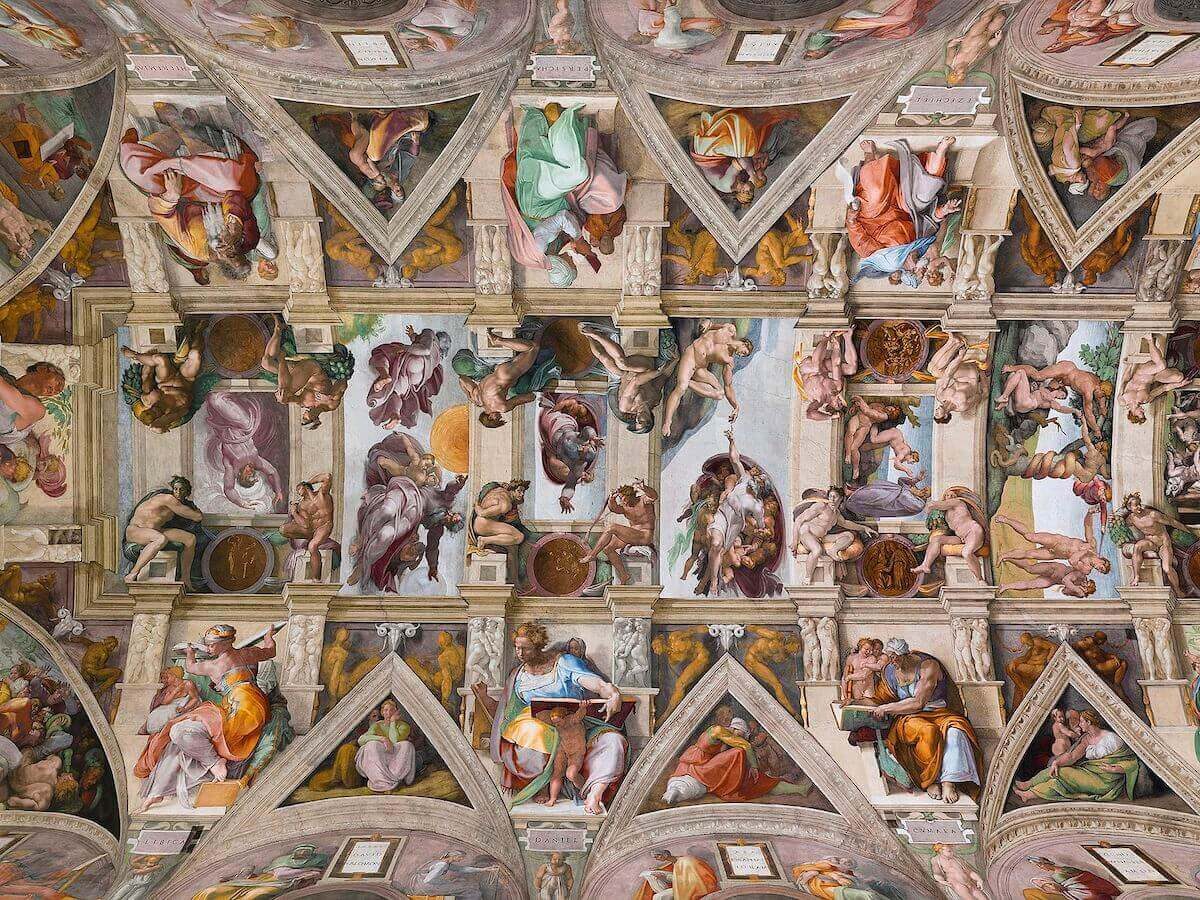
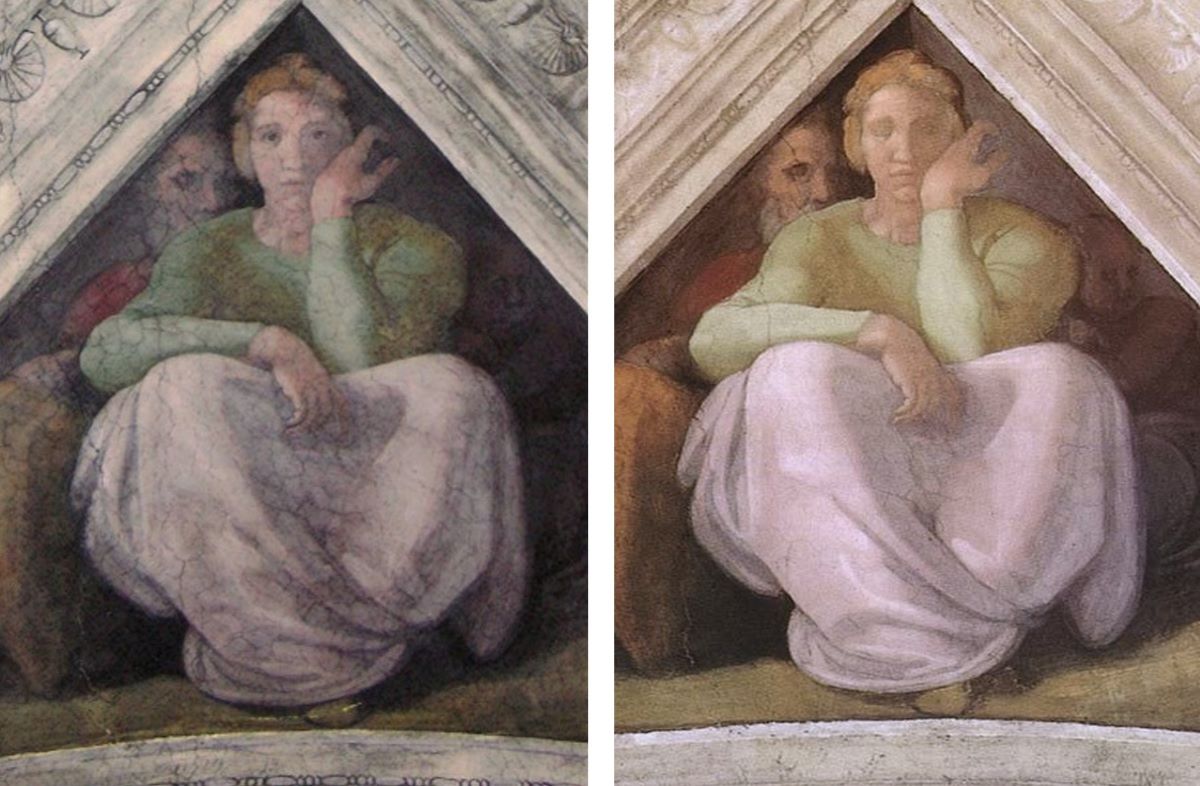
On April 8, 1994, the restored ceiling of the Sistine Chapel was unveiled after more than 12 years of meticulous work. Restorers removed centuries of candle smoke, wax, dust, and discolored varnish, revealing Michelangelo’s iconic Genesis scenes in an entirely new light. What viewers had known as muted, somber colors and heavy shading gave way to an intensely more colorful and less “sculpted” fresco. Reactions were understandably mixed between joyous surprise at the bright colors and academic outrage at the loss of dimensionality.
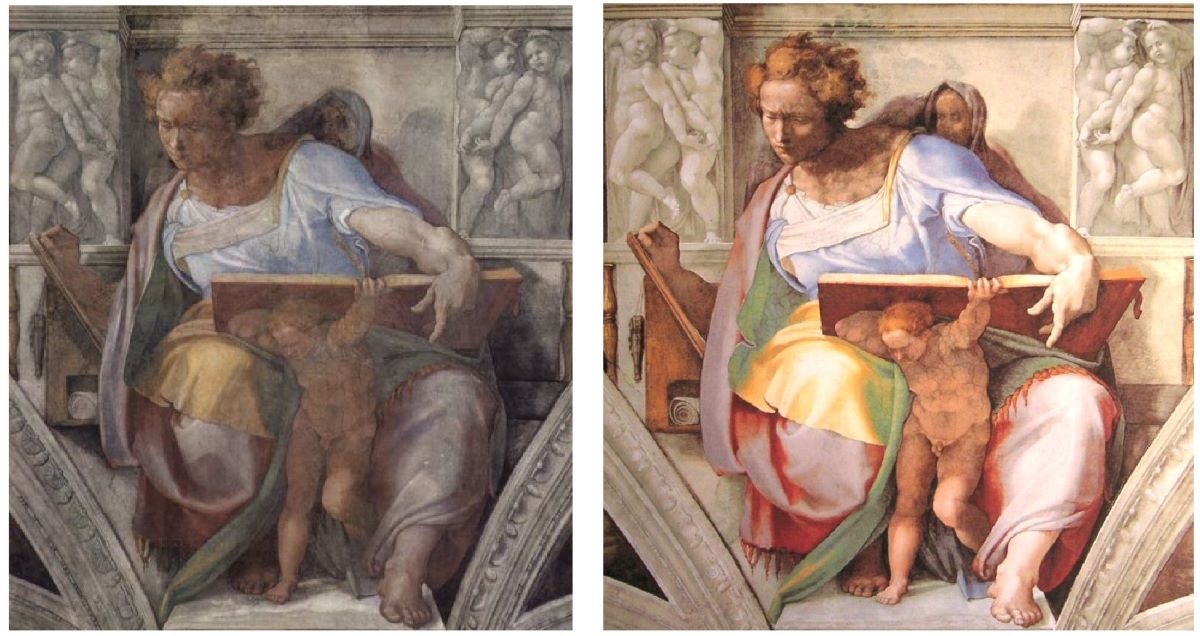
Some questioned whether the brighter look reflected Michelangelo’s intent and whether the restoration had erased fine details.
Secrets in the Ceiling
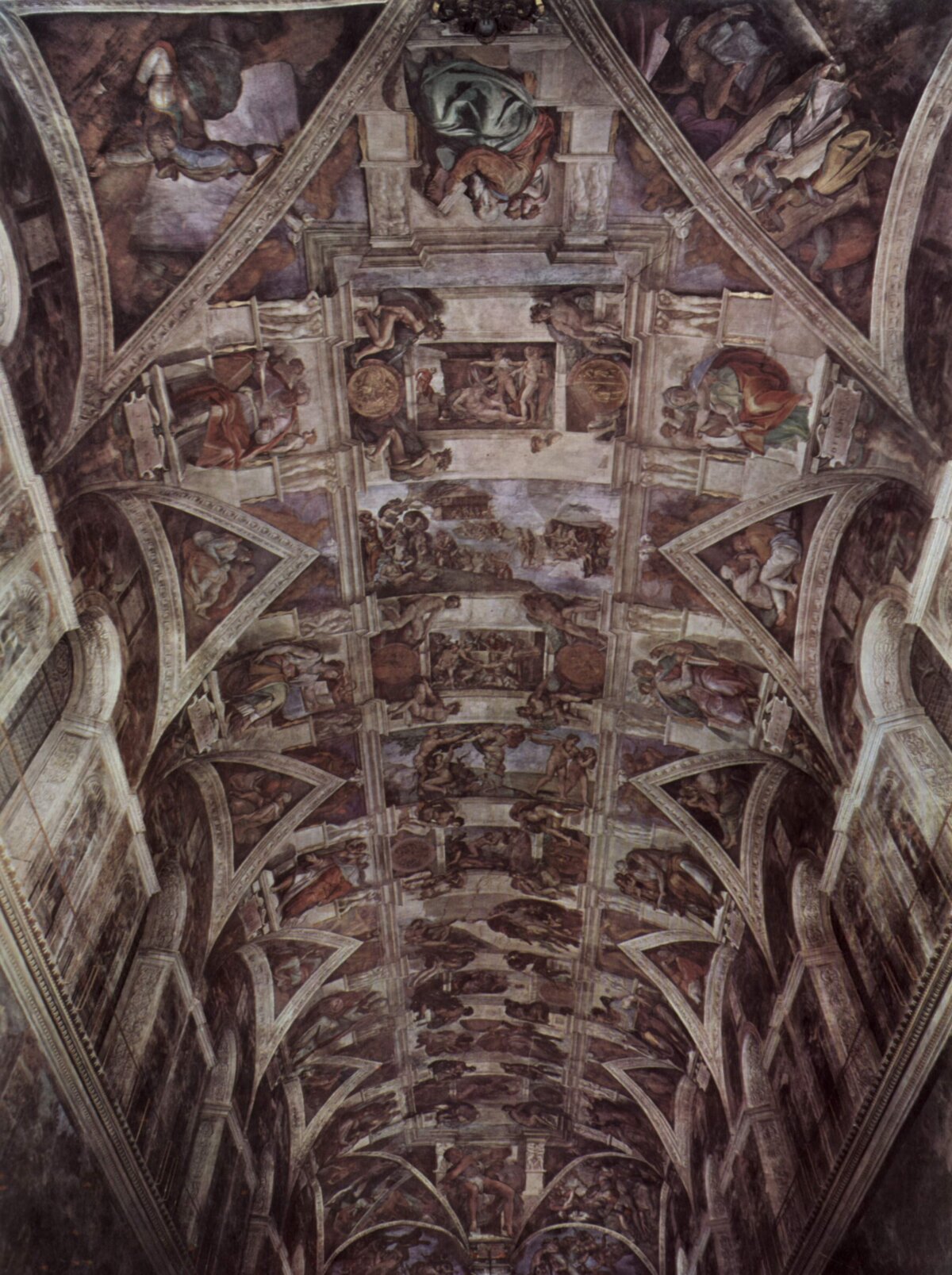
The debate challenged long-held views about the beloved genius. At the time of his death in 1564, Michelangelo Buonarroti was revered as a genius but also seen as arrogant and tormented. The chapel’s dark and somber ceiling had for centuries reinforced the image of a fierce and brooding artist. Yet by his death in 1564, he had amassed a fortune equivalent to more than $50 million today.
What then had been his vision from 1508 to 1512 during the agonizing process of painting the vaulted ceiling?
Contrary to popular belief, he spent the years not lying down but standing along an arrangement of scaffolding, craning his neck to the point of swelling, with paint dripping on his face—all while Pope Julius II constantly pressed him to finish quickly.
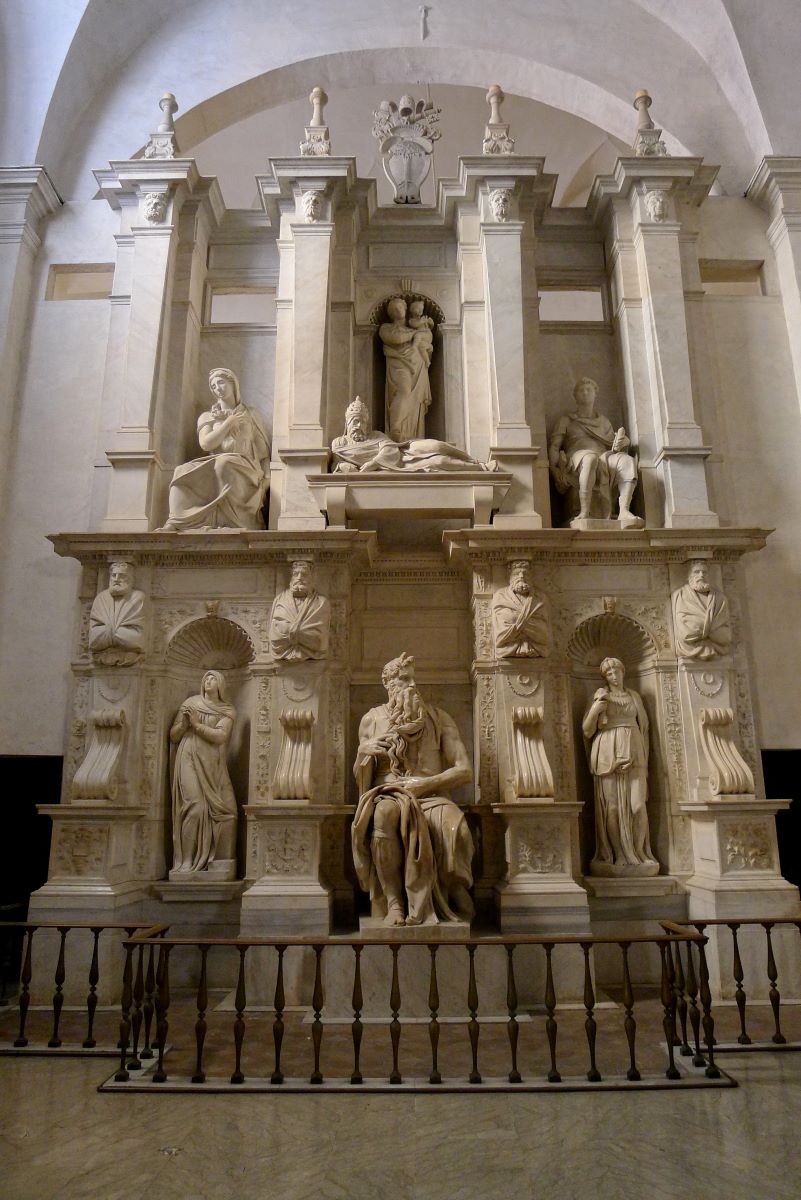
After the first year, he had received no pay. Initially, he refused the commission, suggesting that it go to Raphael instead and insisting that “painting was not his profession.” But Julius had seen Michelangelo’s brilliance in his sculptures—the Pietà (1500) and David (1504)—and insisted that he and no one else should take the assignment.
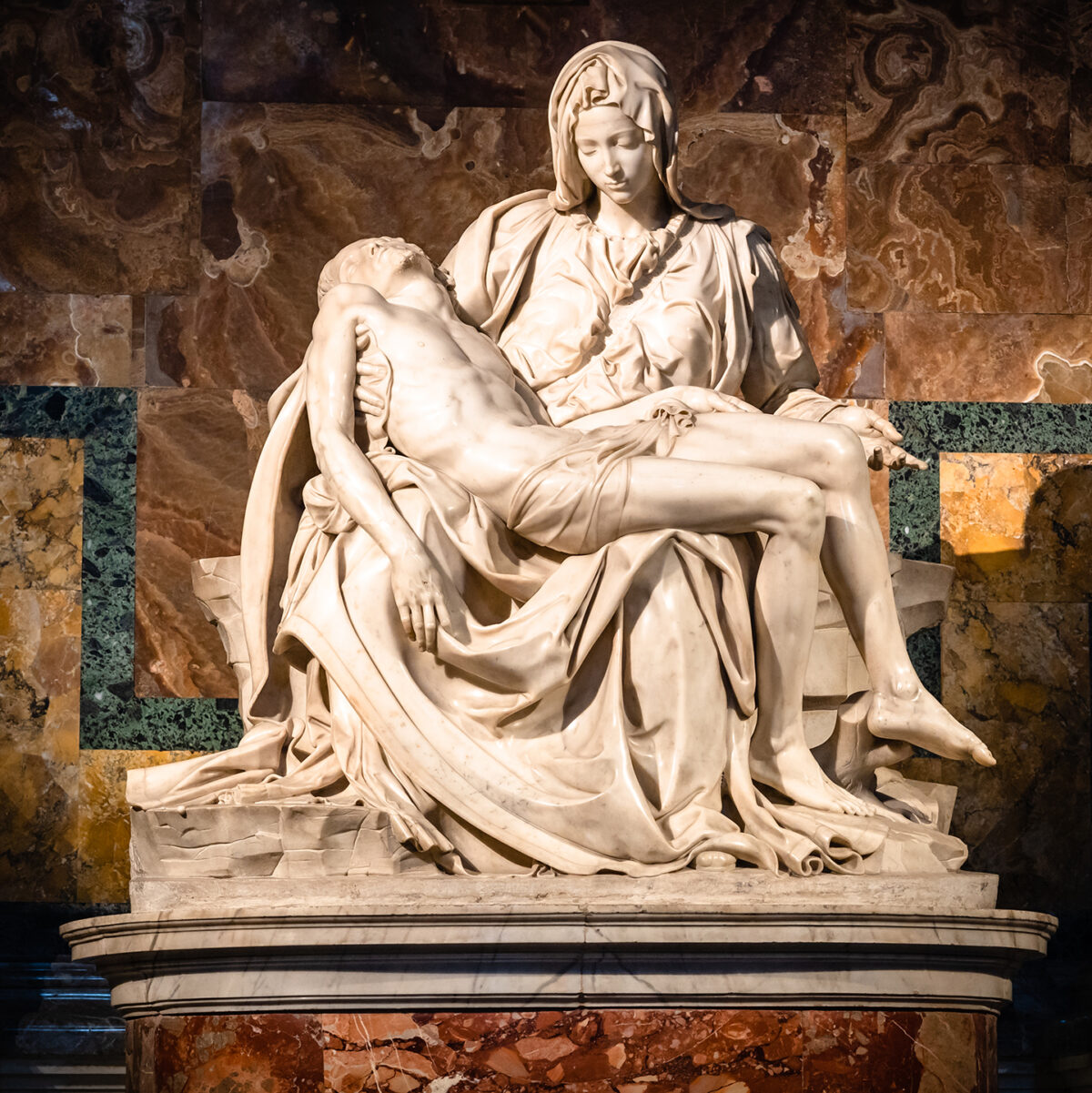
To assess which aspects of Michelangelo’s skills and priorities as a painter were present before and after the restoration, we must consider both the deepest roots of his artistic development and the standards of painting upheld by his rival masters.
Veins of Marble
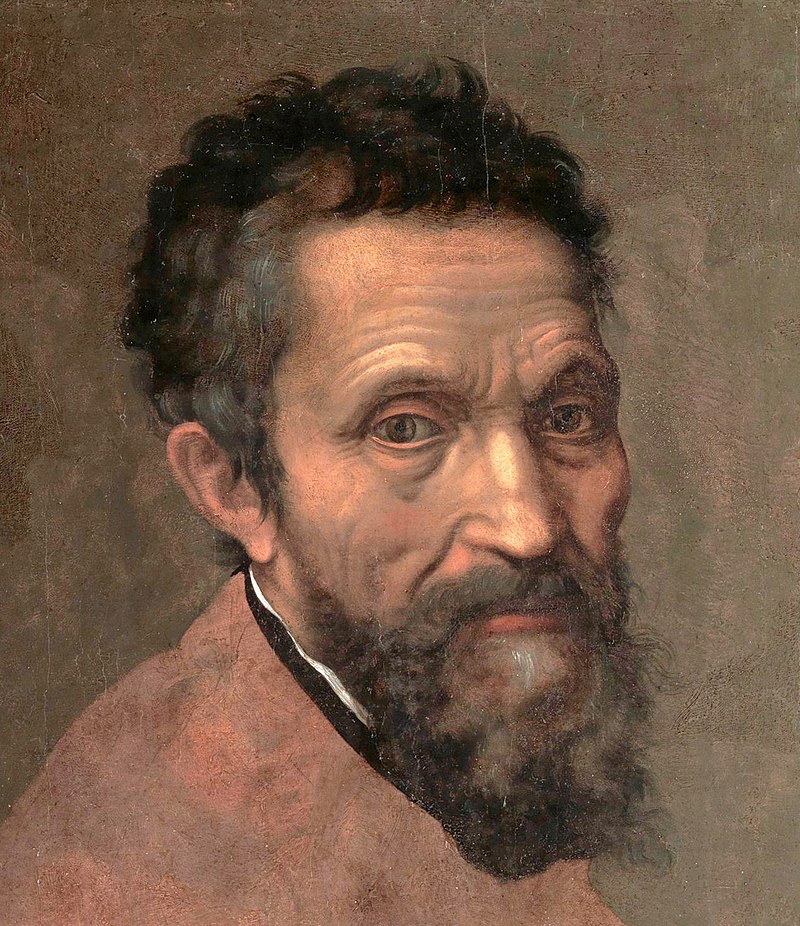
Michelangelo once joked that he was reared on breast milk and stone dust. Because of his mother’s failing health and early death, he spent much of his childhood living with his wet nurse and her husband, a stonecutter. Although he apprenticed for a year in the workshop of painter Domenico Ghirlandaio, this was the extent of his formal training, and he later denied having received it. He spent most of his teens training as a sculptor and, for much of his life, signed his name as Michelangelo, “scultore,” Italian for sculptor.
At the time that he was commissioned to paint the Sistine Chapel, he had never painted a fresco and first had to learn the proper method for applying the wet plaster.
From this shaky foundation came one of history’s most celebrated masterpieces. Yet Michelangelo’s contemporaries shared some common observations about his lack of experience and his resulting approach. Although many 19th-century scholars would later hail him as a master colorist, no one in Michelangelo’s day supported that claim. His mastery of light, shading, and foreshortening—creating depth and perspective around his figures—was not contested, but his use of color, or lack thereof, was frequently noted.
Rejecting what he described as the artificial, sentimental coloring of his peers, Michelangelo described oil painting as effeminate and the pursuit of lazy men. This comment pairs nicely alongside Leonardo da Vinci’s comments about sculpting as crude, messy, and inferior to painting.
Michelangelo’s perfectionism informed his painting exactly as it did his sculpting, reflected in his attention to anatomical detail and three-dimensional depth and movement. He spoke often of cultivating perfection in art as a divine calling and, in every effort, worked himself to exhaustion to capture the beauty of the human figure with more raw authenticity than aesthetic decoration.
Looking up at the 300 massive figures spread across the chapel’s ceiling, it isn’t hard to see the sculptor behind the painting.
Confidence or Compulsion?
Despite Michelangelo’s lack of experience and initial reluctance to accept the commission, the complexity and variety of the painting’s design were entirely his choice. Rejecting Pope Julius II’s initial proposal for a simple scene of the 12 disciples—and later rejecting and repainting much of the work done by his assistants—Michelangelo took no shortcuts in his approach. With the added challenge of the fresco’s drying process, he was forced to finish each section’s base layers quickly and later added “a secco,” or dry layer of detail and shading.
Michelangelo admitted in a letter to his father that his progress was so slow that he could not complain about receiving no payment after the first year. The pope frequently burst in to shout, “When will you finish?!” to which Michelangelo would shout back, “When I can!” This response once so infuriated the pope that he climbed onto the scaffolding and struck the painter with his staff. He later sent a servant to Michelangelo, offering his apology and a generous initial payment of 100 ducats.
The two ultimately developed mutual respect and friendship in spite of their equally demanding personalities. By Oct. 31, 1512, Michelangelo was still not satisfied and wanted to add more detail. The pope would wait no longer, however, and presented the work to thousands of Romans, who were left speechless and awestruck by the design’s magnitude, complexity, and originality.
A Question of Taste
Michelangelo’s obsession with artistic perfection and growth never faltered despite his ever-increasing fame, wealth, and age. Even in his final years, his last sculptures reflected consistent evolution and were completed with a speed and strength unmatched by sculptors half his age. With this in mind, it seems that neither the chapel’s excessively heavy, dark coloring before the restoration nor the bright, flat coloring that followed reflected Michelangelo’s original vision.
As described by his contemporaries, his use of color was likely minimal by the standards of the time, but his sense of perspective was anything but flat. His mastery of shading, scale, and depth consistently gave his figures a sense of movement and dimensionality.
It may be that in removing the discolored layers of glue varnish, some of Michelangelo’s “a secco” layers and refinements were lost, but the resulting brightening of the colors helps dispel the misconception of the brooding, tortured artist drowning his perfect figures in heavy shadow. The restoration inspires a refreshing look not only at Michelangelo’s work, but at Renaissance art as a whole. Although brighter colors may have dulled or darkened over the centuries, our impressions and interpretations need not succumb to the same fate.
What arts and culture topics would you like us to cover? Please email ideas or feedback to features@epochtimes.nyc
