“We’ve read your [electrocardiogram]. Do you have your house in order? You could probably die any day.”
Imagine hearing that from a cardiologist. It’s a sledgehammer to the brain.
You’re only 48. You’ve got a pregnant wife, a bunch of kids. What would you do?
If you’re Andy Pilskalns, you hit your knees and pray.
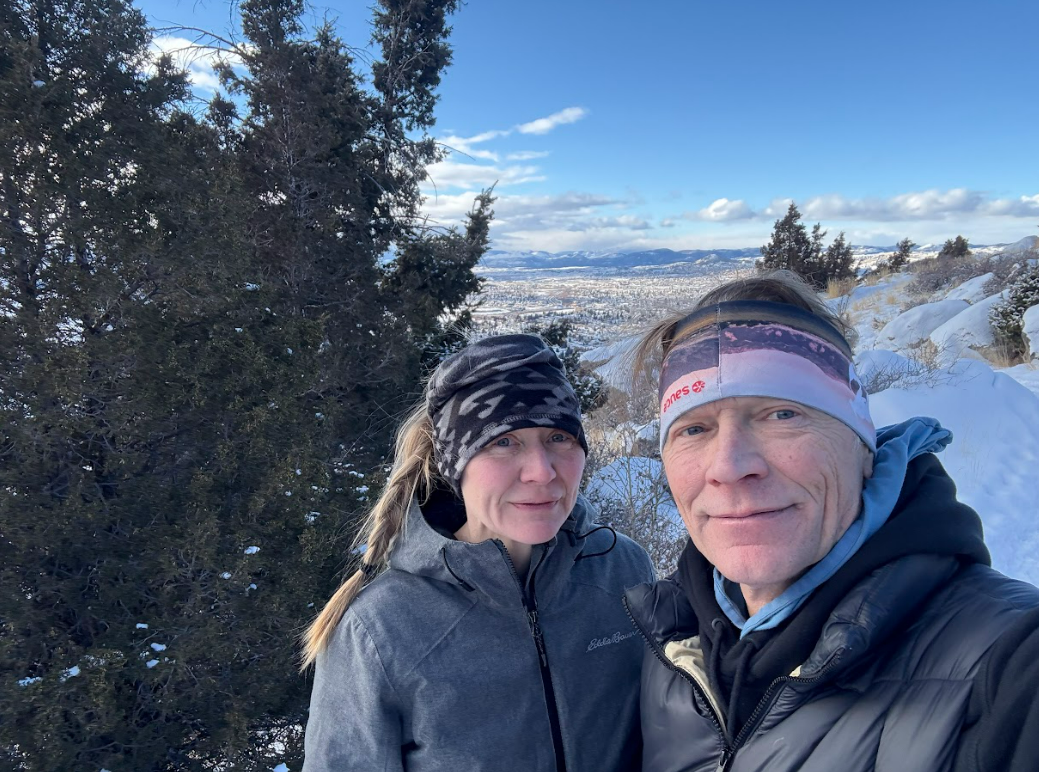
Fourteen years later, he’s doing 20-mile runs. With a new heart.
Pretty amazing story. But to understand how he got to this point, we have to go back to that gut-wrenching day.
Living With a Diagnosis
Devastated by the heart failure diagnosis, especially considering that he didn’t feel sick and thought that he had a simple sinus infection, Andy returned home with his wife, Elise.
“We came into the house. Elise is pregnant. We looked at each other, we were crying, and so we just gave each other a hug,” Andy told The Epoch Times. “Then Elise looked at me, and she said, ‘We’re not going to stand for this.’”
Deeply religious, they got down on their knees to pray.
“We spoke to God, holding each other, and said we are not going to allow this to overtake us,” Andy said. “And we are going to basically rely on God’s direction and what his will was, regardless of where it takes us.”
Where it took him was outdoors to run, because his body felt fine. He’d always been very active as a runner and a skier. Andy took running seriously, competing in the annual Bridger Ridge Run for 22 straight years. The trail snakes through nearly 20 miles of mountains in Montana. While many runners might listen to music along the way, Andy often prayed the rosary as he ran.
A handful of years after his diagnosis, he talked about competing in the Bridger Ridge Run—his favorite race—in a video about the event.
“The odds of winning are completely unfavorable and very unlikely,” he said in the video. “But to finish is to win.”
It sounds a lot like his fight for life.

There was nothing else to do but carry on. Andy returned to work, which was vigorous. If you think that being an engineer is a sedentary desk job, think again.
“I’m a geotechnical engineer, so basically, I deal with foundations and heavy earthwork construction,” he said. “So I have to be out in the field. I have to be carrying 65-pound buckets full of dirt, rocks. Jumping into 12-foot holes.”
For the next seven years, he kept this routine, living a normal life, still working and running the grueling races. His mind and body felt fine, but his heart grew progressively weaker. So much so that he needed a transplant. Andy ended up at Boston’s Massachusetts General Hospital. He could barely walk and had to use a wheelchair. Once again, doctors told him that he could die any day.
Wrong again.
2nd Chances
He was given a mechanical heart pump to keep him alive until a suitable donor was found. Fortunately, during the seven years since his first diagnosis, the technology of matching recipients with donor hearts had greatly improved.
His active lifestyle made him an excellent candidate for a transplant.
“The doctor basically said, ‘You waiting seven years and exercising is saving your life,’” he said. Saying countless rosaries didn’t hurt, either.
Then, another curveball: The mechanical heart stopped working properly. Andy had to stay at the hospital while waiting for a donor. The gravity of his condition began to sink in.
“There’s a lot of prayer,” he said. “You look at your family, your children. Am I going to say goodbye to these guys forever? Am I never going to see how they grow up? I actually started leaving notes and stuff for the kids, talking about what they should think of life, because I won’t be around.” The whole family prayed.
Their prayers were answered. A donor was found, and the transplant was a success. Andy had a new lease on life.
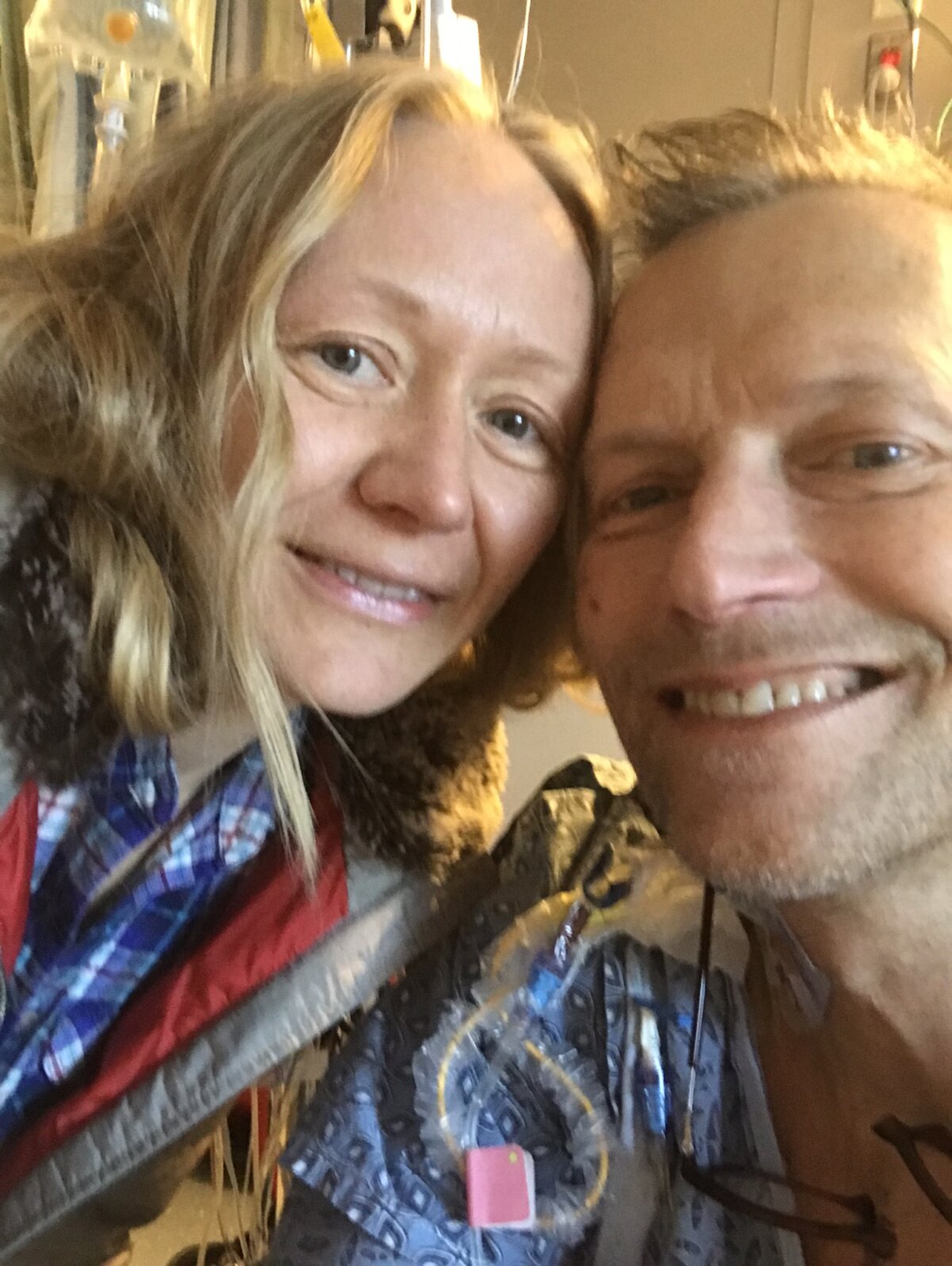
The family headed back home to Montana. Andy wanted to eventually run again, but first things first.
“I immediately started working, started being a dad,” he said. The whole experience reminded him of what was important.
“The family was important,” Andy said. “The kids were important. … I had been a changed man.”
As for the athletic stuff, it took time. Slowly, he built up his endurance. Now, at age 62, he’s back to those grueling runs.
Elise, who homeschools their nine children, said the experience has greatly affected all of them.
“You can’t go through something like that and not change,” she said. “We both have gained a lot more trust in God and patience and a deeper appreciation for the life God has given us.”
Andy said he sometimes thinks about the donor who gave him the heart.
“I don’t know who that person is,” he said. “But this heart that went to me, I’ll try to use it [to] the best of my ability, and I’m overjoyed at the gift.”