



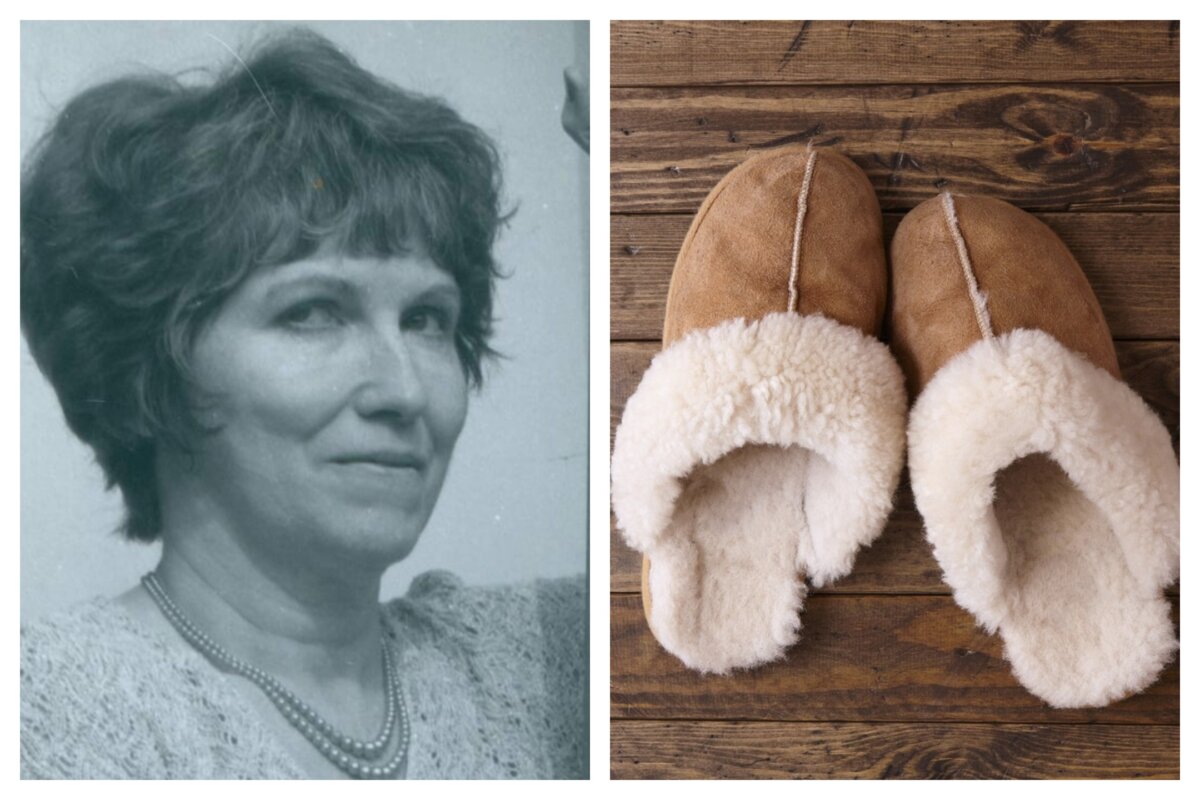
Sally Cook, a remarkable artist whose work spanned both painting and poetry, died in October 2025. She was 93.
A native of Buffalo, New York, Cook knew early on that she was destined for an unconventional path in life. Her maternal grandmother, a concert pianist, began giving her keyboard lessons when she was 4 years old. At the same time, her mother read poetry to her to instill a love of language.
As Cook explained, “Together these two women made it impossible for me to achieve the calm middle-class life other girls dreamed of, and were guaranteed. But that was just fine with me.”
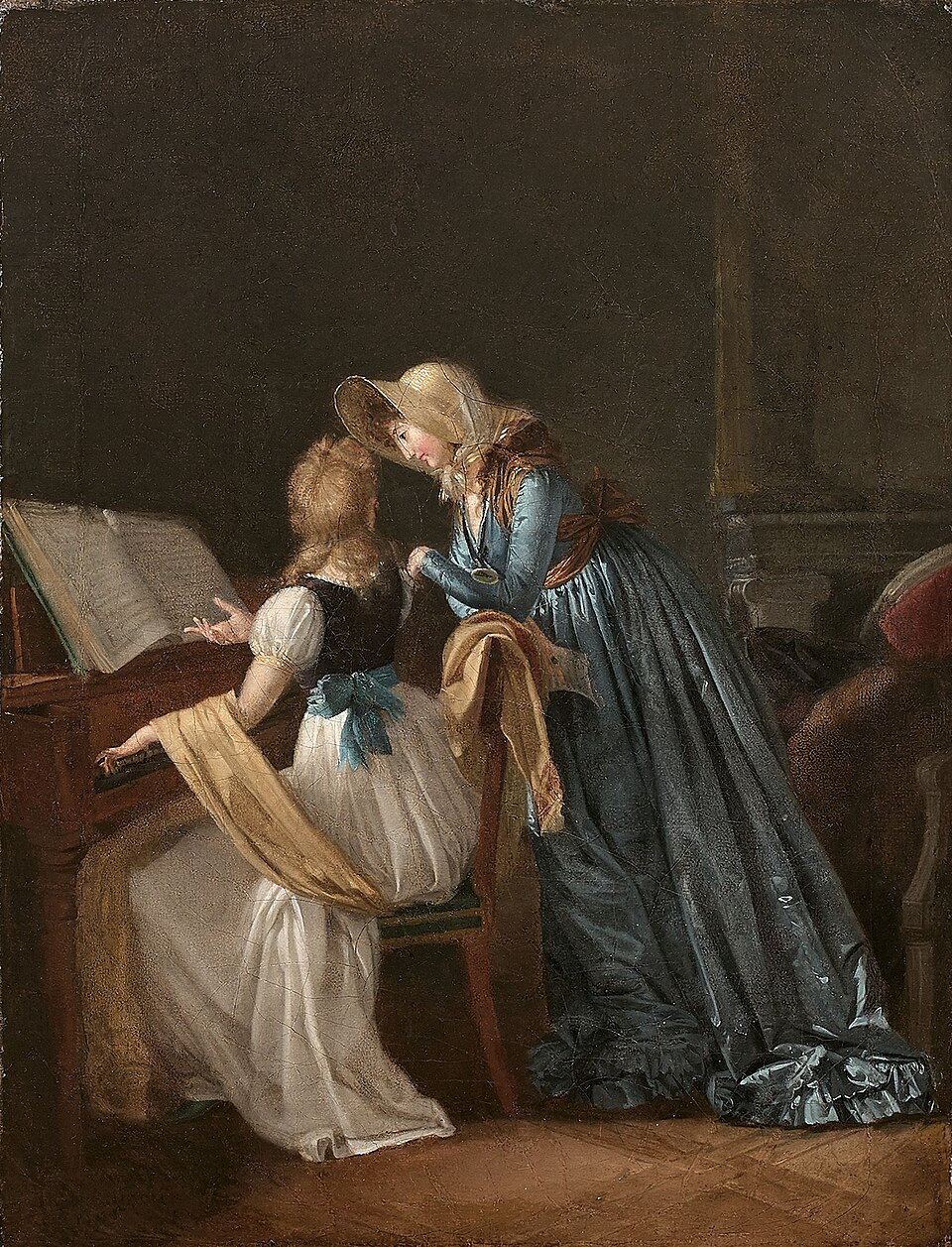 “The Piano Lesson,” 1790s to 1810s, by Pauline Auzou. Paris. Cook’s grandmother never expected her granddaughter to become a poet. (Public Domain)
The musical lessons didn’t take in the way her grandmother would have preferred. Cook had synesthesia, the neurological phenomenon where the brain reroutes perceptions from one sense towards the other senses. In her words, I “began to think of notes as syllables, and of each musical tone as a color.”
While this made her discipleship in two art forms confusing as a child, this crossover would serve her well later in life. According to Cook’s friend, the poet and scholar Joseph Salemi, “Her poems have a definite painterly feel to them, as if she were working in colors and shapes more than with mere words.”
Her verse, touching on nature and the mystical, bears comparison with that of Emily Dickinson. Here is her poem “Erasing Me,” which won first place in the 2022 International Poetry Competition sponsored by the Society of Classical Poets.
As I could not do things that had to be
The practical began dismantling me.
They started with my edges; I could see
Each greyed eraser scrubbing silently.
They kindly asked if I would choose from rare
Possessions, one from each pile jumbled there.
They boxed my fur-lined slippers up with care—
Red pumps, that tapping taradiddled pair.
Some searched to find more stuff; then one fine day
My mohair shaved soft silk just blew away
In plastic bags. There were no words to say.
I took the rump-sprung robe that thought to stay.
My mind lay limp and scoured; I was a mess
Until they scrubbed me clean and clipped each tress.
I did not care for work or diet, dress—
My mouth was hollow, mute. But I digress.
As outline faded into memory,
Those myriad things that wove a life for me,
Like moonlit shadows from a branched-out tree,
Could not be grasped by those erasing me.
The poem depicts a person struggling with people who think they know best. It’s a subject many older people can probably relate to who, as their health declines, may suffer relatives and neighbors, encroaching upon their lifestyles. The opening lines here are reminiscent of Dickinson’s lines “I’m Nobody! Who are you?/ Are you – Nobody – too?”
A Night at the Guggenheim
After graduating from Albright Art School as a young woman, Cook moved to downtown New York City. She knew many of the big artistic and literary personalities who were trendy in the 1960s but wasn’t impressed with their work.
In a piece published in The New Formalist in 2009, Cook described her experience attending the grand opening of the Guggenheim museum of modern art. “My husband Bob and I were elated,” she wrote upon receiving an invitation, “quite possibly because we had not yet seen the interior and contents of the place.”
Arriving at “the Gug,” they encountered the cream of the New York art world. There was William DeKooning, floating “slowly by on a cumulus cloud of importance, trailed by a straggling mare’s tails of admirers.” Next came Franz Kline, moving “easily from group to group in his Homburg and overalls.”
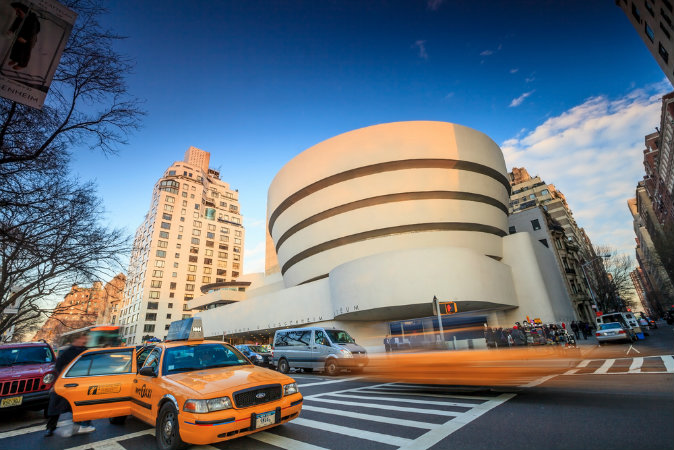 The Solomon R. Guggenheim Museum of modern and contemporary art in New York City, designed by Frank Lloyd Wright. (Shutterstock)
Speaking of these figures, she wrote “I found people who claimed to be artists but acted like junior executives … it seemed everybody wanted to be head of a department, and through that to control others by using influence, money and fear.”
No doubt Cook was thinking of these fashionable but empty figures when, long after leaving that scene, she wrote the Shakespearean sonnet “Invisibility”:
She used to think her sole and starring role
Was set within a sparkling social life
Gadding about from one new watering hole
To others, and so many of them rife
With famous folk, who’d often sink a knife
Into the next’s one’s bright ballooning talk.
She lived an arty and ambitious life
Exceeding pace, and walked the fastest walk,
Until her natal stars began to balk,
And planetary aspects swayed and bent.
Then, though she’d preen herself each time and stalk
All those on greater, higher planes who went
Floating on gilded feet upon the air,
Arrows rushed past her—she was unseen there.
Though the poem clearly has autobiographical elements, Cook chose to not directly identify herself with the speaker. She wrote in the third person. The woman in the poem gradually grows disillusioned with the fame and fortune that surrounds her, and the heavens themselves seem to decree she wasn’t born for that world.
“Political machinations, pretentious museums, and ugly art are always with us,” Cook wrote. “But their shelf life is short. All that artists can do is to trust in our vision, stretch to the stars, and do the best work we can.”
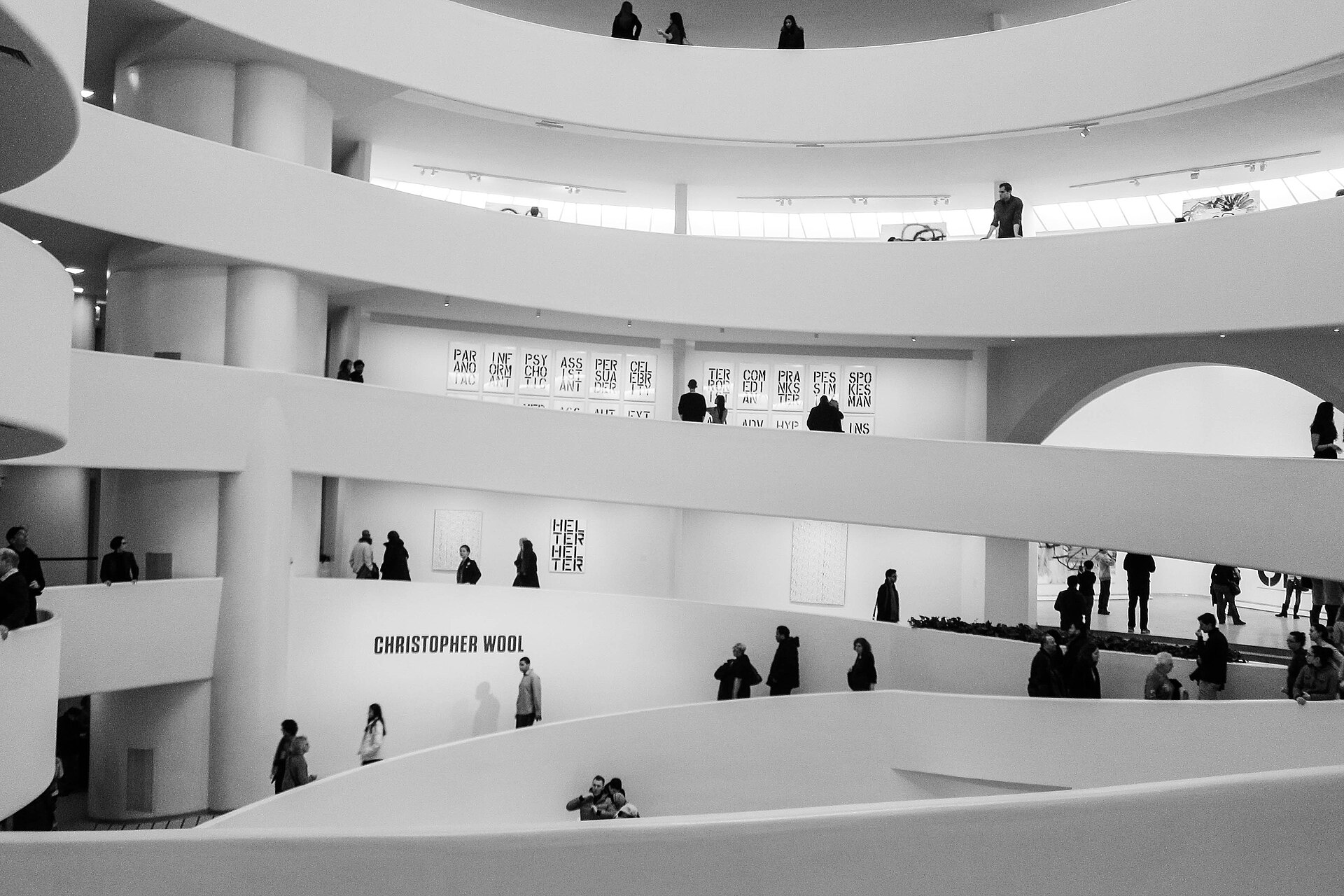 Cook took issue with the format, architecture, and themes of the Guggenheim. (Andrew Tupalev/CC BY 2.0)
Final Poetry
Cook continued writing poetry until the very end. One of her final published pieces was “Becoming an Artist.” Though written as a tribute to a mentor, it has a universal theme:
His rumpled jacket hid a threadbare shirt.
The thing about him was, his aura sang;
His shoes, well scuffed by New York pavement dirt,
Walked in a sure, slow tread. The bronze bell rang.
You had to leave, but sensed his secret, strong:
He held it to his heart, a mystery
That called you out to join, to sing his song—
A lilting, vagrant, saucy melody.
He was an artist. What he had to show
Said nothing to you of the lifelong pang
Of loss, bad luck and evil, creeping slow—
His fights for truth with snaggletooth and fang.
Not knowing this, you chose to laugh along
And hope someday to join this glorious throng.
The poem explores how a person’s outlook on life is crucial to their development and success. In the hopeful final lines, art triumphs over misfortune. I like to imagine, while reading this line, that Cook winking at us from beyond the grave.
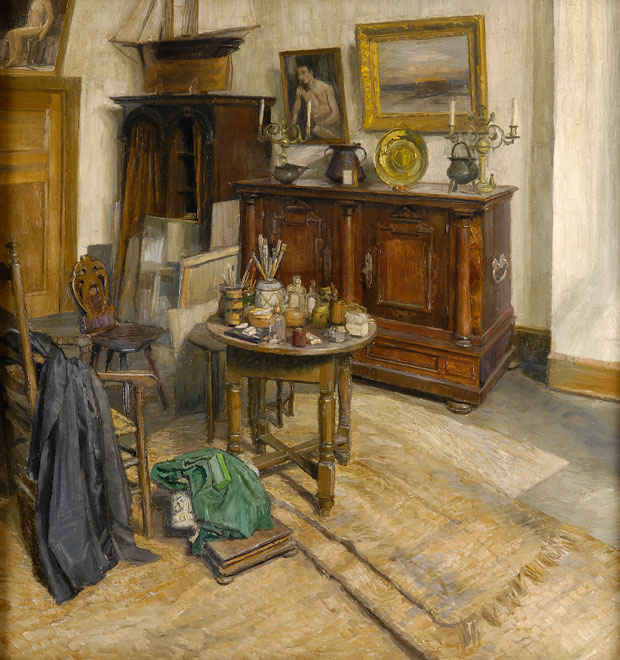 “Artist Studio,” 19th century, Anonymous. The artist’s studio is rarely organized. (Public Domain)
Shortly before her death, Salemi wrote, “There is something about Sally Cook’s poetry that is haunting and mysterious … I consider her one of the best formalist poets writing today, and the fact that she is ignored and neglected is just another sign that we are living in a dark and barbarous age.”
Though she may not have received the recognition she deserved in her lifetime, Sally Cook’s creative work will endure the test of time after trendier names are long forgotten.
What arts and culture topics would you like us to cover? Please email ideas or feedback to features@epochtimes.nyc
