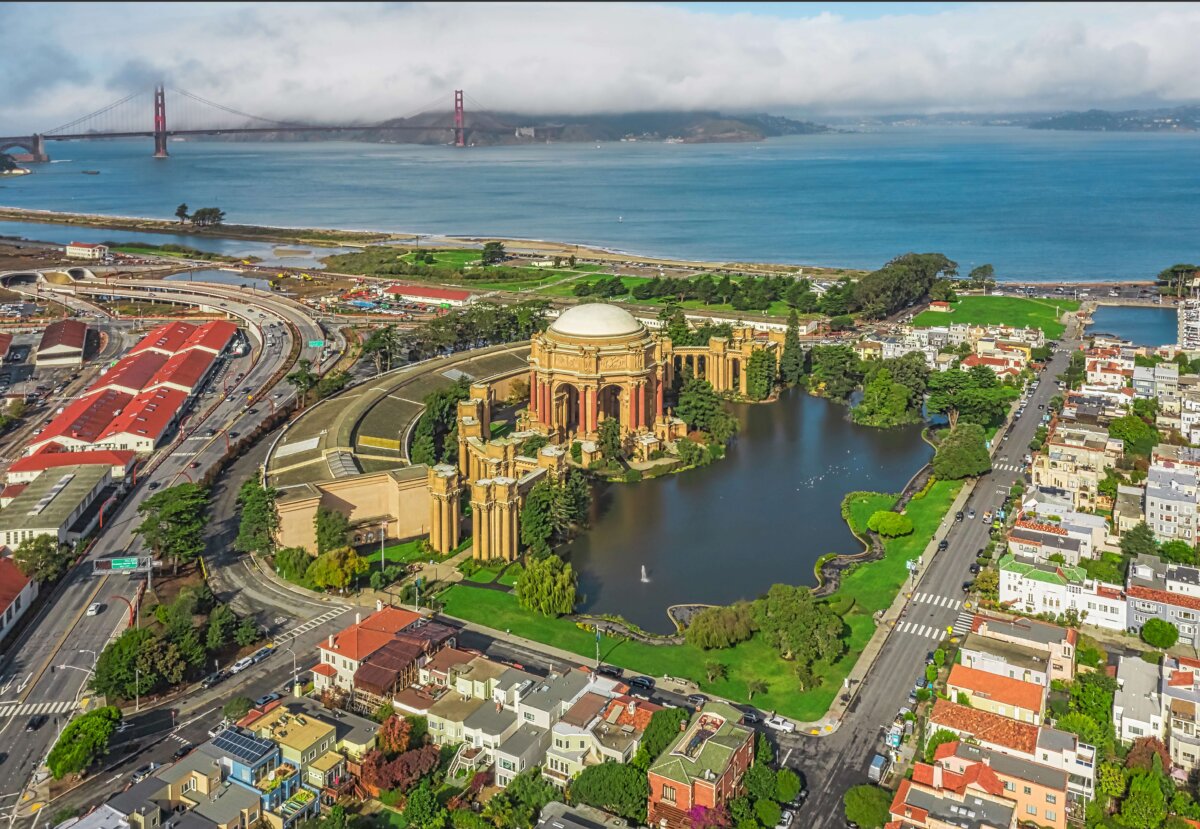
In an aerial view of the Palace of Fine Arts shows grounds of almost 17 acres that border an artificial lagoon. The Palace Park is near the Presidio, once an army base in San Francisco. The area surrounding the Palace is now called the Marina District in San Francisco. (Lebid Volodymyr/Shutterstock)
San Francisco’s Palace of Fine Arts was originally built for the 1915 Panama Pacific International Exposition, a world’s fair that celebrated the completion of the Panama Canal and the recovery of the city after the devastating earthquake of 1906. Inspired by Greek and Roman architecture, Bernard Maybeck designed the structure, intending to evoke a sense of timelessness and elegance with its classical columns, arches, and domes.
When the fair ended, only the Palace of Fine Arts building remained. It wasn’t maintained over the years and deteriorated. The city rallied to save it, and its reconstruction began in 1964, with the last phase completed in 2009.
The original structure was crumbling by the 1950s, and in 1964, it was completely demolished and rebuilt with longer-lasting modern materials. Builders used a combination of reinforced concrete, steel, and plaster on the dome, rotunda, and colonnades to retrofit the building to seismic-durability standards.
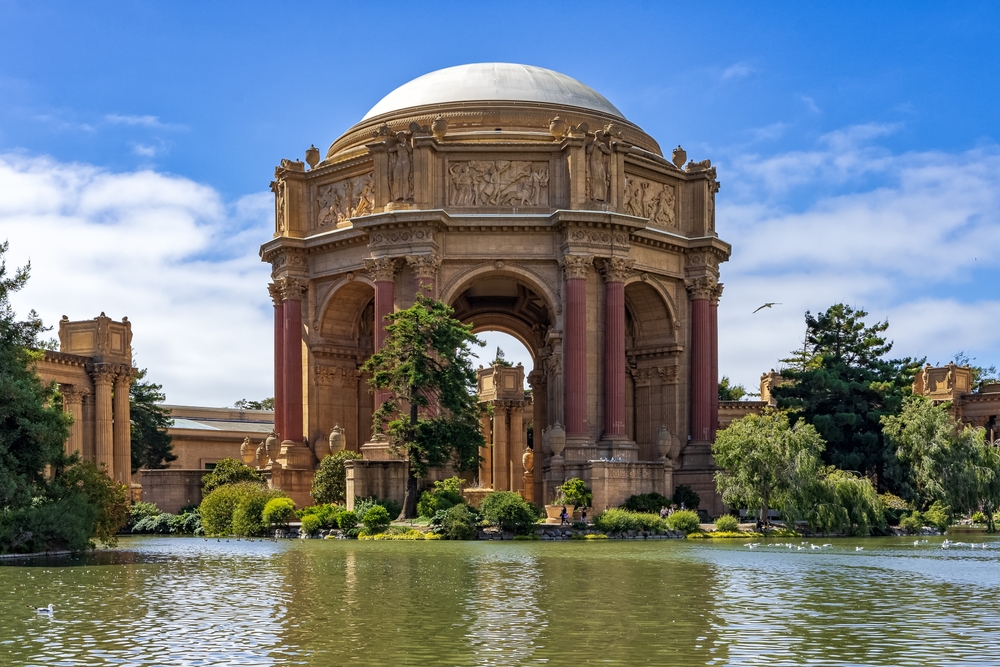
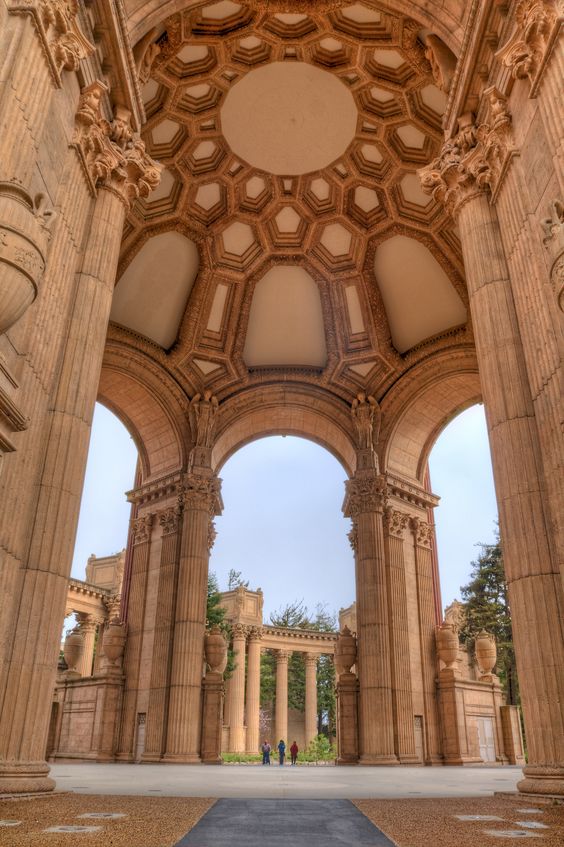
The site’s main structure is a massive dome whose apex is 162 feet above the floor of the rotunda, which is 160 feet in diameter. The dome is supported by columns, arches, and buttresses. Ornate reliefs and sculptures depicting scenes from classical mythology and history adorn the façade. Soaring ceilings and grand arches beautify the interior. Interior rooms showcase the arts, with a series of galleries, a theater, and exhibition spaces.
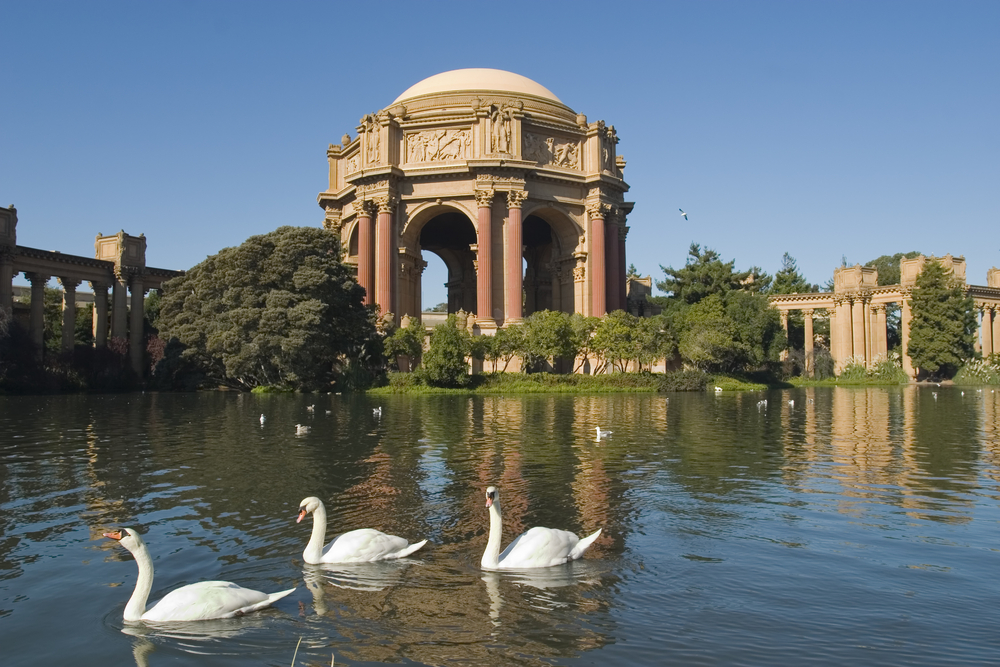
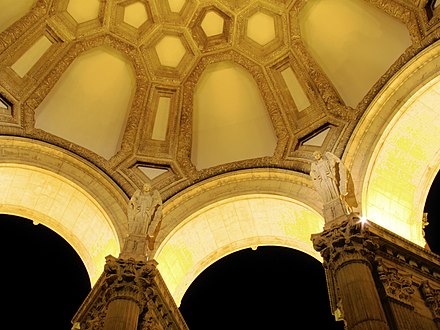
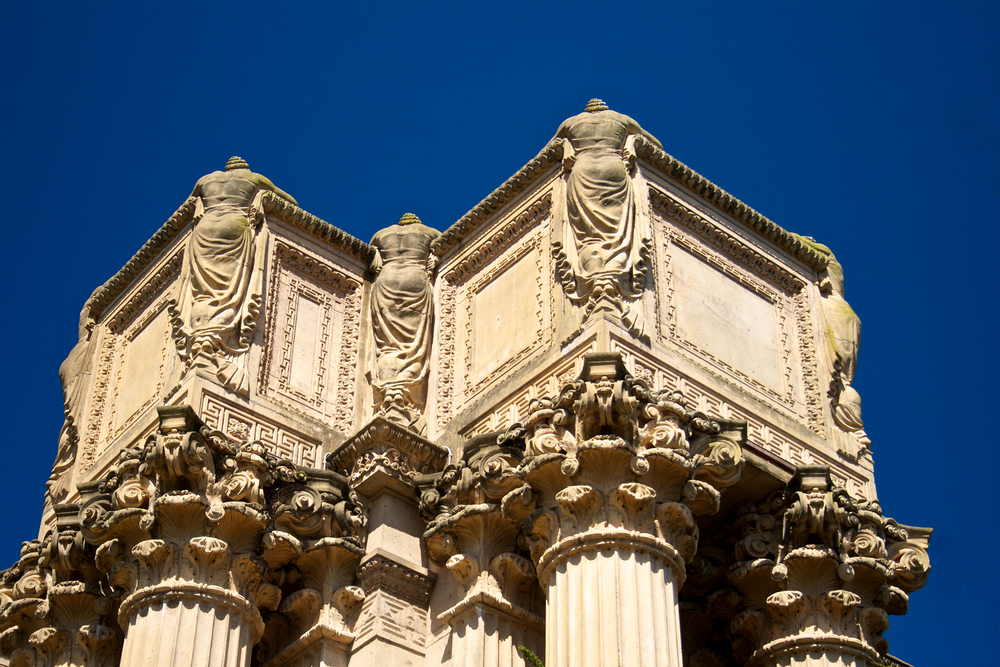
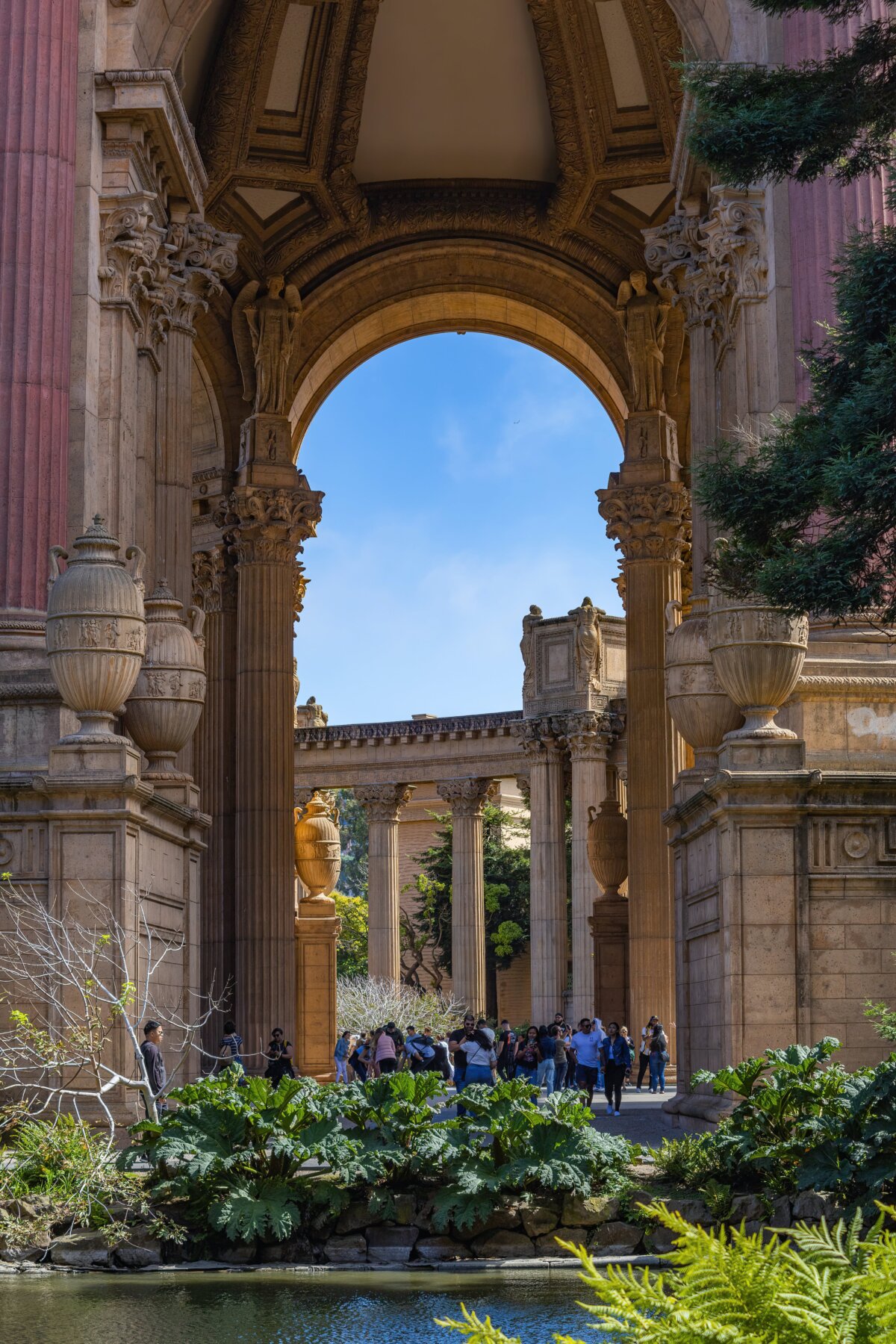
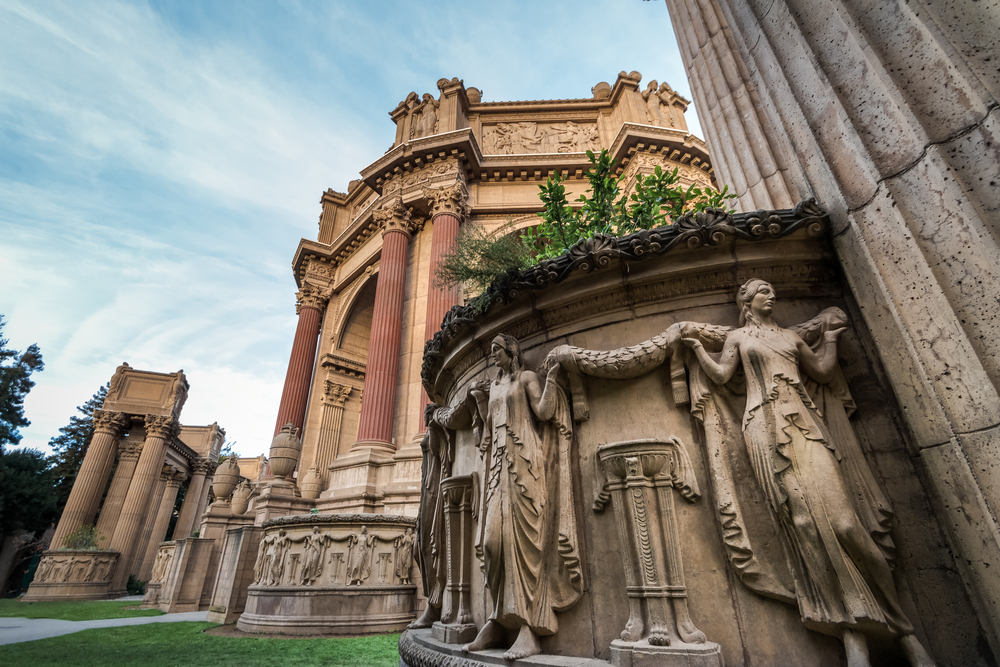
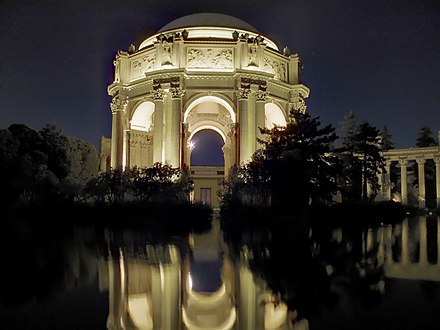
A stunning lagoon surrounds the structure, enhanced by gardens, walkways, and swans. Swans have made the Palace of Fine Arts their home for generations, adding to the structure’s sense of tranquility and beauty.(Rafael Ramirez Lee/Shutterstock) A view of the rotunda and pergola shows an ornamental façade and statues around the perimeter of the dome, above a series of arches balanced by pairs of Corinthian columns. Greenery at the base gives scale to the structure’s impressive size. (Gilberto Mesquita/Shutterstock) This view of the rotunda’s interior and the dome—made of eight large insets—originally contained murals by Robert Reid. Four depicted the conception and birth of Art. The other four depicted the four golds of California: poppies, wheat, citrus, and actual gold metal. Statues topping the colonnades on the rotunda’s interior were copied from the originals when reconstructed. The rotunda was intended to be a quiet place away from the fair’s busy activities. (Db7178/CC BY-SA 3.0) The rotunda’s dome features a circle of arched openings supported by sculpture-topped columns. The dome’s interior features sculpted arches and geometric designs in a circular pattern. (Db7178/CC BY-SA 3.0) The tops of the Corinthian columns along the walkways are planters, and on each corner are statues of the weeping women facing away from the viewer to symbolize the melancholy of life without art. Initially, the planters on top of the columns were intended to have vines planted in them that would hang over the women to provide more modesty.(Courtesy of Palace of Fine Arts) Colonnades topped with square planters intended for trees were never used due to the added expense. They still show the massive weight-supporting columns inspired by Greek and Roman architecture. The façade is evident on this portion of the pergola. (Robert So/Prexels) The rotunda and the walls surrounding it offer a beautiful view. The Palace’s façade features important statues and designs depicting a variety of mythological figures, all based on Greek and Roman influence. (Diego Grandi/Shutterstock) An exceptionally beautiful view of the Palace captures its reflection in the lagoon at dusk. The evening highlights the rotunda’s arches and colonnades. (Db7178/CC BY-SA 3.0)
Would you like to see other kinds of arts and culture articles? Please email us your story ideas or feedback at features@epochtimes.nyc
Debra Amundson has written about everything from food to fashion, discovered in her travels. After studies at FIT (Fashion Institute of Technology) and the Academy of Art, she settled on UCLA for her certificate in journalism. She focuses on historical architecture, leading us from castles to Victorian homes.