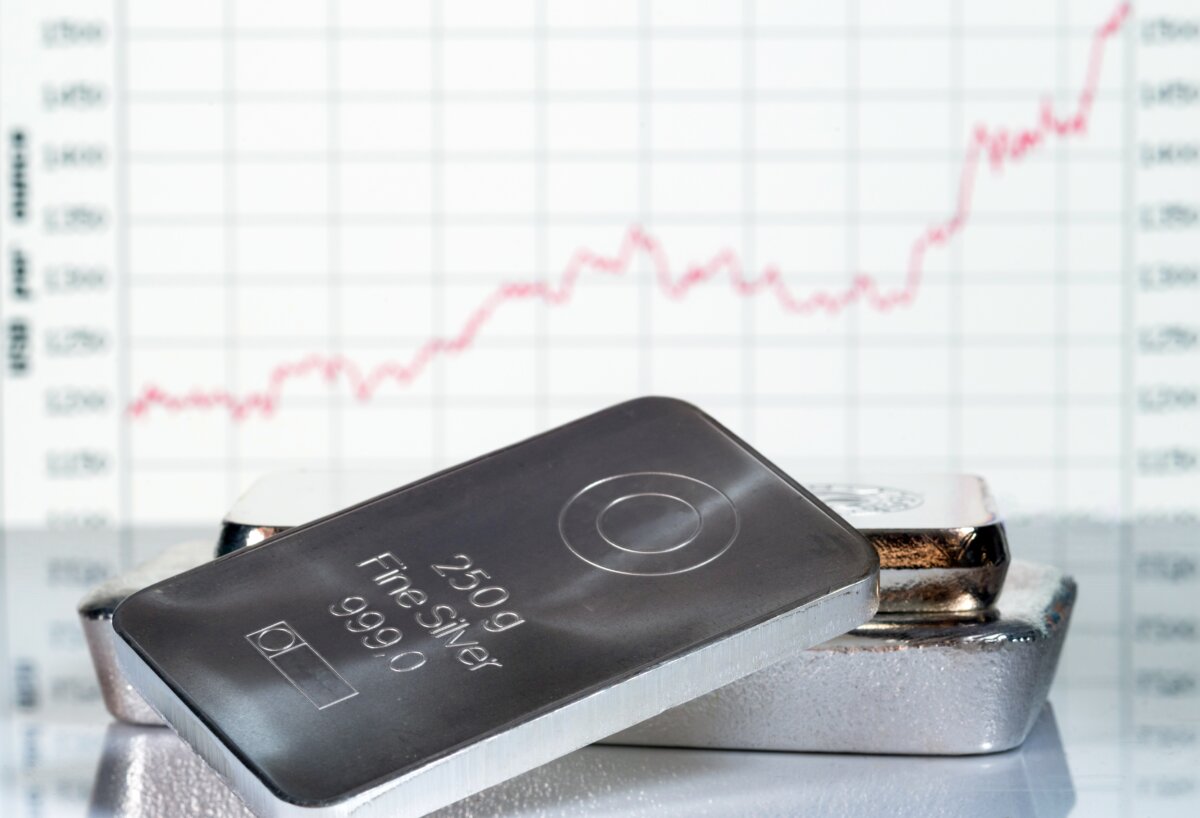
Silver has long been recognized as a store of value, a hedge against inflation, and a component of industrial applications around the world. In fact, industrial applications account for around 55 percent of global demand in silver, according to research by Sprott, a global asset manager.
Plus, silver has shone during tough times. During the 1980 recession, for example, the price of silver reached a near-record high of around $49.45 per ounce. Its current record high was reached in 2011, when the price rose to $49.51.
Despite recent setbacks, silver has had a notable year. Its price has increased by 15.09 percent since the beginning of 2025, according to research by Trading Economics. Today, the price of silver is around $32.70, as U.S. debt woes threaten manufacturing-sensitive commodities. Still, demand for silver could rise as the tech and green energy sectors—key consumers of silver—grow. Its current applications in electronics, solar panels, and electric vehicles continue to drive significant demand.
Moreover, silver could be a good way to diversify your portfolio and protect against market downturns as the precious metal tends to behave differently than stocks and bonds.
Overall, silver could be seen as a wise investment for those interested in devoting a portion of their portfolios to precious metals.
But there are many ways to invest in silver. So let’s take a closer look.
Physical Silver
One way to invest in silver is by purchasing the commodity itself. Most people investing in pure silver purchase silver bullion bars or government-minted coins.
However, there may be some hurdles when it comes to owning physical silver. You need to come up with your own method of storing and protecting it. This may involve storage and insurance fees.
You can purchase silver directly from dealers. But some brokerage firms also sell physical silver, and they may offer you their own options when it comes to storage and protection. However, you should pay close attention to any fees involved.
Silver Stocks
You can also purchase shares of companies that mine silver or are heavily involved in the silver markets.
Here are some of the top silver stocks:
- First Majestic Silver Corp (AG)
- Pan American Silver Corp (PAAS)
- Wheaton Precious Metals Corp (WPM)
- Fresnillo (FNLPF)
- Hecla Mining (HL)
But keep in mind that research is key here. You’d need to carefully analyze these companies. Look at their earnings, debt, historical performance, and other indicators.
Silver ETFs
You can remove the task of individually analyzing silver stocks by investing in an exchange-traded fund (ETF) that tracks the silver markets. ETFs are professionally managed and diversified with stocks from multiple companies. But your due diligence is still needed. For example, you may want to pay close attention to fees or expense ratios that could eat away at your returns.
Here are the top silver ETFs:
- iShares Silver Trust (SLV)
- Global X Silver Miners ETF (SIL)
- ProShares Ultra Silver (AGQ)
- The Sprott Physical Silver Trust (PSLV)
- abrdn Physical Silver Shares ETF (SIVR)
Risks of Investing in Silver
Despite the many benefits of investing in silver, this and other precious metals have their drawbacks. One is the potential for volatility. Silver tends to be more volatile than gold because of its industrial uses and its role as a speculative investment. So prices can swing dramatically, and you need to be able to stomach that.
Plus, storage and insurance fees may be more expensive than you may think. This is due partly to silver’s accessibility. Because it is cheaper than gold, it takes a larger amount of silver to equal that of gold. This means higher storage and protection demands.
Another potential downside to owning physical silver is liquidity. Selling your silver may not be as easy as you’d think. You would need to find a buyer willing to pay a price you’re comfortable with. And with that said, buy-sell margins could be exceptionally high. So you may end up selling for less than you were aiming for.
Like other precious metals such as gold, silver is sensitive to the strength of the U.S. dollar. When the dollar is strong, the price of silver tends to drop. So you need to pay attention to the dollar’s performance in the foreign exchange market in addition to supply and demand.
The Bottom Line
Investing in silver could be a good way to diversify your portfolio with a precious metal known for inflation hedging and vast industrial uses. Owning physical silver can come with storage and liquidity issues, so if you want to avoid these, you can explore the silver markets by investing in a silver ETF or mutual fund. It can also help to seek the guidance of a trusted financial adviser.
The Epoch Times copyright © 2025. The views and opinions expressed are those of the authors. They are meant for general informational purposes only and should not be construed or interpreted as a recommendation or solicitation. The Epoch Times does not provide investment, tax, legal, financial planning, estate planning, or any other personal finance advice. The Epoch Times holds no liability for the accuracy or timeliness of the information provided.