



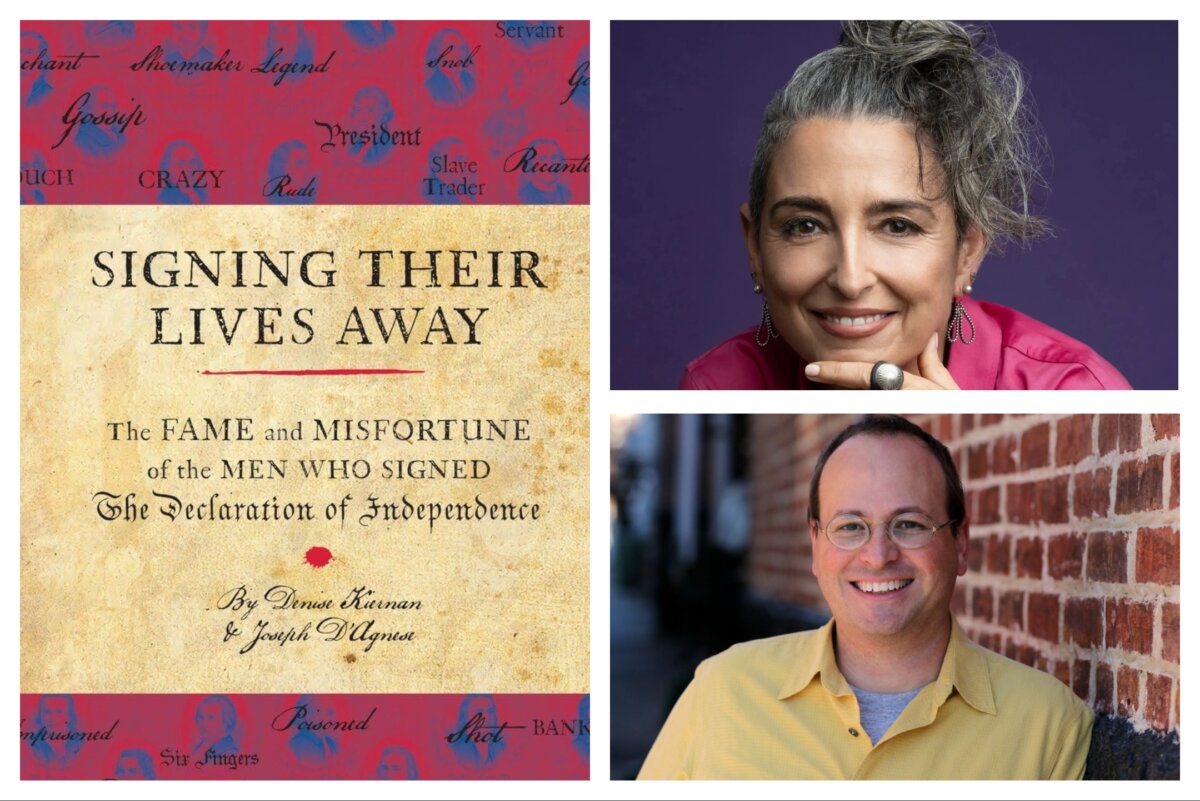
Lawyers, laborers, skilled craftsmen, farmers, and merchant traders were among the men who bravely and boldly signed their names to a document that could have been their death warrant. Yet those 56 signers of the Declaration of Independence, remarkably, did not face a traitor’s death by the hands of the British government. Instead, some of them fought as patriots, and all helped in some way to form a unique republic: the United States of America.
But who were these men? What were their lives before, during, and after the moment they dipped a quill into an inkwell and signed a letter of grievances to England’s King George III in 1776?
“Signing Their Lives Away: The Fame and Misfortune of the Men Who Signed the Declaration of Independence,” by Denise Kiernan and Joseph D’Agnese, provides an easy-to-digest but no less absorbing snapshot of each early American’s involvement in the revolution, contributions to the country’s new government, and tribulations at the hands of British and Loyalist soldiers. Readers are also treated to a brief look at the signers’ lives postwar.
An introduction aptly notes how general history primarily focuses on a handful of signers: John Hancock for the size of his signature, as well as Thomas Jefferson, Benjamin Franklin, and John Adams due to their prominence as America’s Founders. However, the country’s “birth certificate,” as the authors refer to the Declaration, was signed by dozens more men “who drew upon the best within themselves in the face of horrifyingly difficult circumstances.”
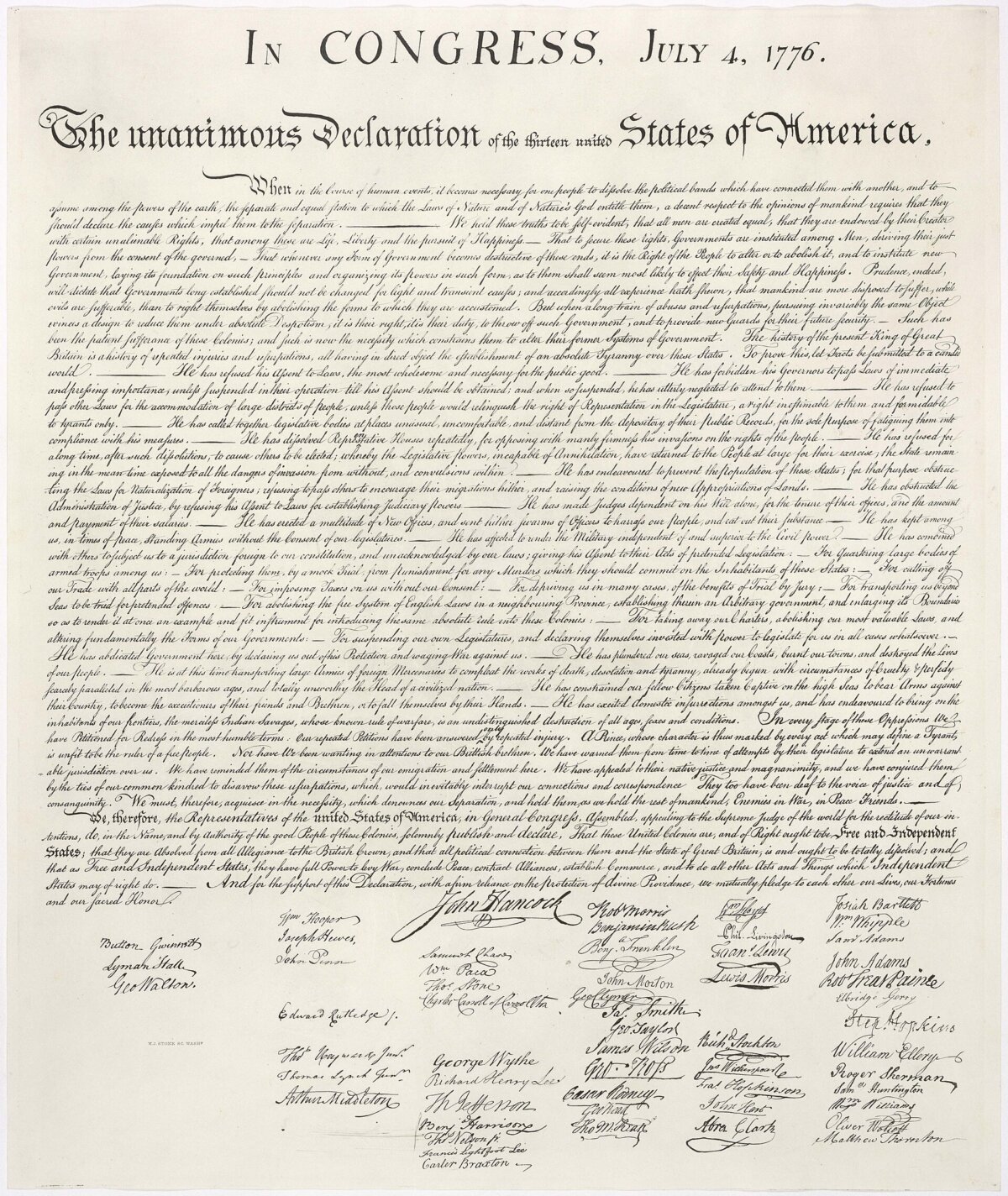
Interestingly, before the book delves into each of the signers—which are grouped in 13 sections under the colony they represent—it clarifies “The Real Independence Day.” Explained is why the official document includes the date of July 4, 1776, and what transpired before and after that date.
Readers will learn, perhaps for the first time, that it wasn’t until Aug. 2, 1776, that the majority of the men signed the document.
Getting to Know Them
“Signing Their Lives Away” includes just a few succinct pages of information, as well as a likeness of the signer, their signature, birth and death date, age at signing, profession, and place of burial.
Readers will discover that because of one signer’s actions, his name became a word we still use in politics today. One signer’s wife and another’s sons were imprisoned by the British. A signer from New Jersey is considered the official designer of the first American flag—the one Betsy Ross sewed.
Some signers began their lives poor and ended up wealthy. Some owned vast estates and were raised in privileged settings, yet spent their postwar years trying to rebuild or repair ransacked and destroyed homes and re-establish working estates.
Some tidbits of information in “Signing Their Lives Away” are humorous. For example, a signer from Maryland was nicknamed “Old Bacon Face” because he “rubbed people the wrong way.” The authors also include such oddities as Virginia’s Richard Henry Lee flourishing a black silk scarf wrapped around one of his hands when he gave a speech because a hunting accident had left him with only his thumb on that hand. Thus, he was known as the “Six-Fingered Signer.”
Enhanced Appreciation
When we think about or view a copy of the Declaration of Independence, surface-level information often taught in school or passingly read at a historic site is all that is remembered. “Signing Their Lives Away” goes beyond the visual paper and ink but without weighing readers down with the minutiae.
The book provides the highlights—details to share with family members, friends, and co-workers. Likely, readers will be prompted to ask “Did you know?” and, mostly, they will not.
Markedly, “Signing Their Lives Away” enables readers to glean more intimate knowledge of men who risked all. Thus, the ultimate takeaway is a better appreciation for lesser-known American “Founders.”
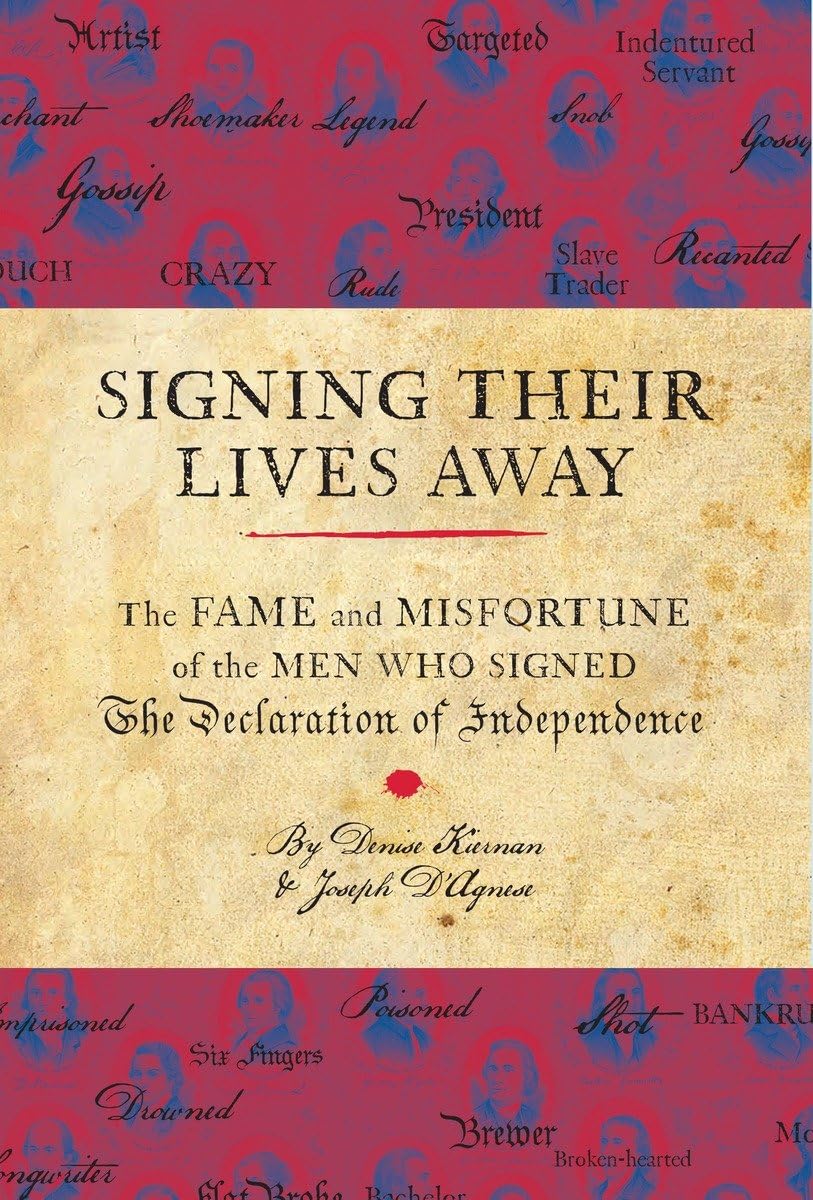
‘Signing Their Lives Away: The Fame and Misfortune of the Men Who Signed the Declaration of Independence’
By Denise Kiernan and Joseph D’Agnese
Quirk Books: May 1, 2009
Hardcover, 256 pages
What arts and culture topics would you like us to cover? Please email ideas or feedback to features@epochtimes.nyc
