



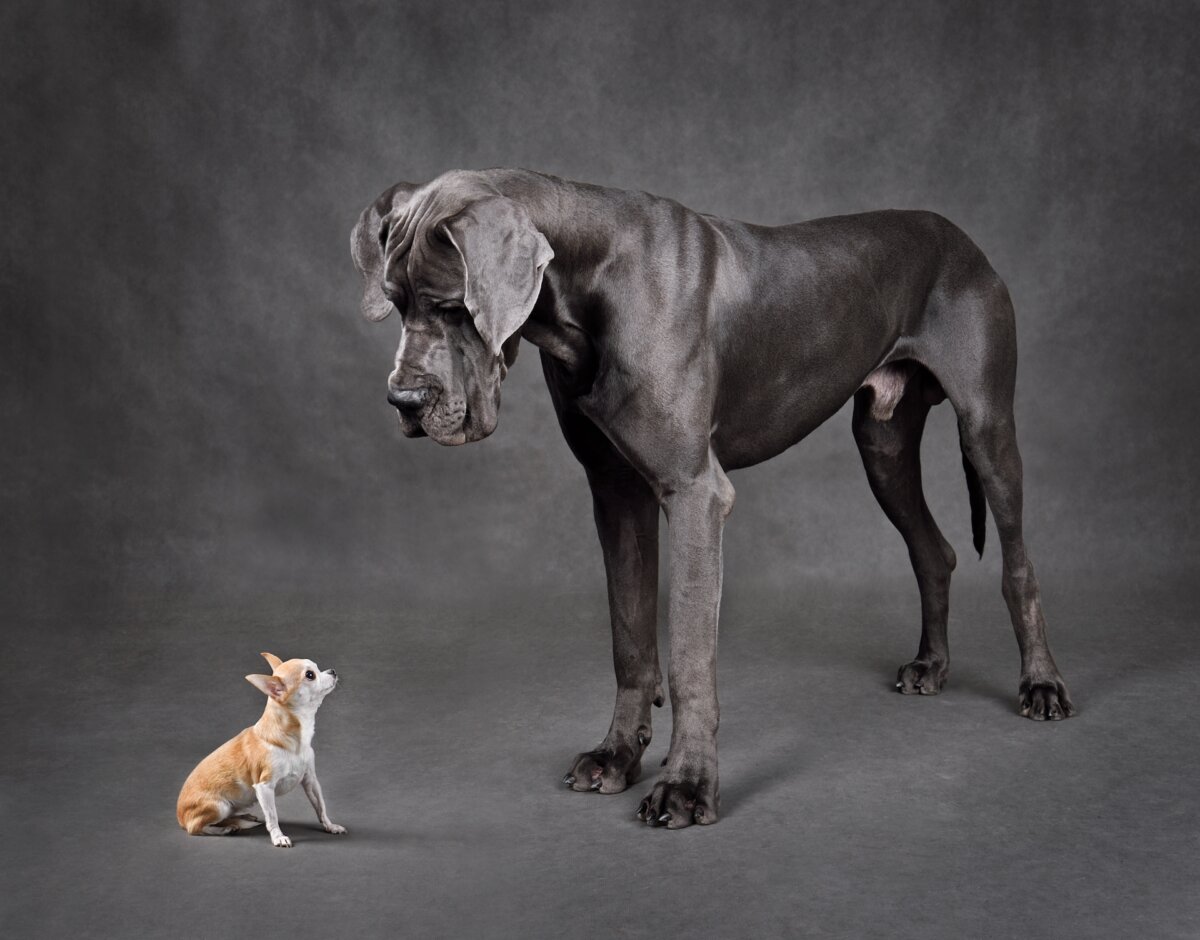
Q: Among the dogs I’ve had over the years, my small dogs lived longer than my large dogs. Is this generally true? If so, why?
A: Yes, it’s true, although no one is completely sure why.
When you think about the many species of mammals, you realize that large mammals live longer than small mammals. For example, elephants live much longer than mice.
However, within a given species, the smaller animals generally live longer than the larger ones. This has been documented in a number of species, but nowhere is it more pronounced than with dogs, probably because their size range—from the massive mastiff to the tiny Chihuahua—is so extreme.
Research has found that large dogs live about five to eight years, while small dogs average 10 to 14 years.
A study of more than 50,000 dogs including 74 breeds that examined size, age at death, and cause of death confirmed that this occurs because large dogs actually age faster than small dogs.
Large breeds of dogs also develop cancer and die of it more often than small breeds. Scientists note that the rapid cell growth and division needed for dogs to achieve their large size is also typical of cancer development and spread.
More research is being done to further explain why small dogs live longer than large dogs. In the meantime, enjoy every moment with each of your dogs, regardless of their expected longevity.
Q: My 20-year-old cat, Koshka, has long been my closest companion and greatest source of comfort. I know she won’t be with me forever and, to be honest, I wonder if I can go on without her. Do you know of any books or other resources to help me deal constructively with her inevitable death?
A: My heart is with you as you begin to grieve the loss of Koshka from your life. While she will live forever in a special place in your heart, I know from personal experience that the death of a beloved pet is an enormous loss.
Gather around you a group of friends who are pet lovers and will support you now and after Koshka dies. Consider connecting with other pet lovers through the Rainbow Bridge Pet Loss Grief Support Center at RainbowsBridge.com/grief_support_center/grief_support_home.htm.
Contact a pet photographer, portrait artist, or sculptor to commission a piece of art that will make you smile every time you gaze at it.
Consult online resources, such as the Association for Pet Loss and Bereavement at APLB.org/ and the Pet Loss Support Page at Pet-Loss.net/.
Read books such as “The Loss of a Pet: A Guide to Coping With the Grieving Process When a Pet Dies,” by Wallace Sife, and “When Your Pet Dies: How to Cope With Your Feelings,” by Jamie Quackenbush and Denise Graveline. Other good books are listed at Resources.BestFriends.org/article/pet-loss-and-grief-resources and PetLossResourceCenter.org/books-articles.
Think about whether you want to hold a memorial service after Koshka dies and, if so, start planning it. If you are active on social media, begin writing a tribute to her that you can post there.
When the time comes, plant a flowering shrub or tree at her burial site. If you have her body cremated, you may want to place some of her cremains in a pendant, paperweight, or other memento you can wear or touch whenever you wish. Other people scatter remains in the pet’s favorite places or keep them for burial with them when they themselves die.
If your heart is still not at peace, make an appointment with a therapist who can support you through your grief.
Dear Readers: We would love to hear from you. What topics would you like to read about? Please send your feedback and tips to features@epochtimes.nyc
