



Lilly Golden is a nice person. She was the editor assigned to one of my previous books that became a success. Her domestic responsibilities and an upstate New York house meant that she was allowed to work from home. Reaching her became difficult. She never once, in all the times that I called her, answered her phone. She rarely answered her emails promptly. Eventually she returned to work for Tony Lyons, one of her previous bosses, in New York City.
Lilly continued to work from home. I submitted a book proposal to her for Tony’s SkyHorse Publishing on May 20, 2011. Lilly sat on it. After numerous prompts Lilly wanted the book rewritten into a different style. If that was the case, I insisted on a contract. I was wise to the editor that requests major revisions only to blithely say no afterwards.
Lilly said she wanted it revised and insisted on getting more photographs to illustrate the book to take it to the sales person. I agreed, without a contract, to revise the introduction of the book to her format and style, 64 photos were sent. Lilly could not find some of them. She wanted still more. Nothing was done with the book up to that point in time from what I could gather from her. There was no communication back from her. On March 8, 2012, two photo CDs were sent to her.
Numerous queries were made to little avail until the last query met with a two liner back from Lilly Golden on June 27, 2012, saying that they couldn’t make enough money on books about horses and to try self-publishing. She could have told me that from the beginning without wasting my time, effort, money and more than a year keeping my book in limbo.
The publishing world is full of Lilly Goldens. Stay away from editors that work at home unless you have a firm contract with a publisher and they assign a freelance editor to work with you. Contract? Oh yes, something you think is engraved in stone and irrefutable. Nothing from a publisher is solid until their check clears the bank.
A major publisher contracted one of my books. It was to be part of a twelve book series published in cooperation with the Audubon Society. Audubon withdrew funding after two books in the series were published and my book never appeared. I had a written contract, didn’t I? It was not worth the paper it was printed on. By insisting, however, the publisher reluctantly paid me my contracted for advance but the objective was to have the book published.
So you want to write a book? Almost without fail, as soon as someone learns, even in casual social conversation, that I write books, the remark surfaces: “I’ve always wanted to write a book. I have a great story to tell…”
They do have great stories to tell. There is a book to every life and most life experiences. The project may not be commercially viable and the person may not have the requisite skills or perseverance to write the book therefore the next comment they make is almost as prevalent as the first: “I just need somebody to help me write it.”
I have read countless book projects, articles, fictional short stories and reports. Some as an editor, some as work, some as a favor to a friend. Most of us have had the experience of being asked to criticize someone else. “Do you like my hair? Tell me honestly what you think.” The question has many permutations and some become even more personal.
Making personal criticism is a mine field. It requires great skill and finesse to prevent exploding a mine and thus destroying the relationship. I’ve had dozens explode on me. The subject should have been grateful but egotism often rears an ugly disposition and self-defense makes the person angry or hurt.
I do not read friend’s books or stories any more if I can avoid it. I try to find cogent excuses or delay the inevitable. I do edit as part of my work. A lot of what I see falls into categories. Great ideas and material that is poorly written or poor material that is over written. Put style and grammar aside. It is the stuff itself that cannot be published in the form I received it.
Stick with books, lay aside the short stuff which is easier to deal with. Try to figure an editor’s handle. My mother was a talented artist. Her advice to me when I started writing books was something she learned after years of selling her paintings. “Always leave an obvious error. Something a critic can discover but something that you can easily fix without having to redo the entire painting.”
Editors are like art buyers and critics. They want to find something to justify their existence. Make it easy for yourself to correct. A newspaper I work for took on a German Swiss editor. Her English was fair and she could communicate in English. Her written skills in English were not up to the job. The woman took her new position seriously and went about editing articles. I had to re-edit them into proper English to make up for her lack of fluency in American English. It took me twice as long as it did to write the article originally.
Self-publishing is a modern day alternative to using book publishers. This is a perfect opportunity for someone writing a family chronicle, war memoir or specialized book. If you can market it yourself or have one hundred family members that will buy it, the e-book route may be for you. That you have full control does not mean that the end product should be sloppy. If you do not feel you have the requisite skills to edit the book, hire someone or get someone to do it for you. Some e-book producers provide editorial help for a fee.
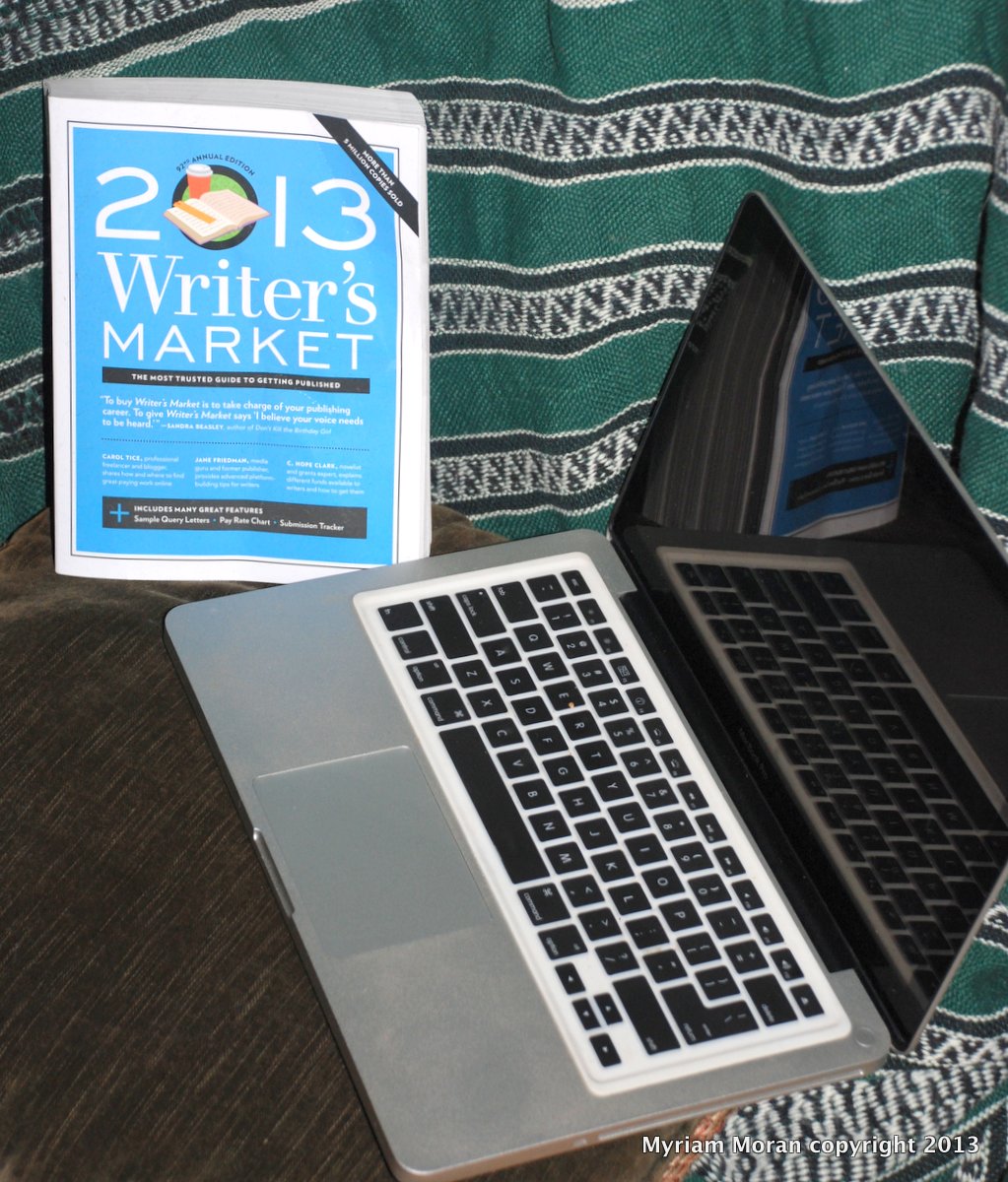
Trade book publishers are listed in various aides for writers. ‘Writer’s Market’ and several other books are available in any library. Study them. Publishers are listed by category and individual listings describe submission guidelines. Go to a bookstore and review what is being published. Copy down the publisher’s website. Visit the website for more information on the list of books that the publisher has done and review their guidelines for submissions.
Bypass entirely the literary agent. There are many listed in ‘Writer’s Market.’ Agent’s trade associations list many more. It is harder to get a good literary agent than it is to get a publisher to buy your book. Figure it out in practical terms. Literary agents only get paid when you get paid. They have overhead and expenses. They also have a lot of clients. If you are famous, literary agents will knock at your door. If you are not and do not already have a proven track record selling books to major publishers most will slam the door in your face. For the beginning author, don’t waste time with literary agents. Do not use literary agents that demand fees up front.
While New York City has been emptying out because of exorbitant rents, union wages and lack of parking, it remains the publishing capitol of the U.S. Recognize the fact that publishers receive hundreds of submissions every week. Some absolutely refuse to look at them. They will not accept them and manuscripts are turned back at the door. Some have requirements to pre-screen over the transom submissions. A few still permit submissions. The term over the transom and slush pile mean that an unsolicited book manuscript comes in by mail and is put in a pile somewhere.
It may or may not get attention. Summer interns and unpaid school interns are used to comb through the slush pile and get rid of manuscripts. Only occasionally does an over the transom book get saved from a slush pile. Chances are very poor, something akin to lottery odds.
Research a publisher’s website to find an editor specific to your book’s slant and subject. Contact the editor via mail or by email if that procedure is permitted by the publisher’s guidelines. Make the first contact short and to the point. Get the thing said in a page or less. Wait a while to give the editor a chance to read your letter. If you do not receive a reply in two weeks, send it again. If you really think the editor is the one for your book, make a telephone call. Organize what you have to say beforehand and be brief. Editors do not like to be interrupted and many refuse to take calls entirely. If you leave a message make it brief and to the point.
So you want to write a book? Do it. Don’t look for others to come in and throw you a life ring. No one will do it for you—unless you pay them and that is not a feasible solution for most people although ghost writers for hire are prevalent in the trade. Before you put the first character to the page recognize the market. If you can’t sell your final product and do not necessarily want to, then the book will be a worthwhile project anyway as a personal memoir.
Writing is not for the faint hearted. Rejection, rudeness and inability to get up to bat is the rule rather than the exception. If you feel strongly about your subject, if you have the gumption to say it aloud and want others to read it, if you have thick skin to handle the pitfalls of publishing, go for it. Nobody else has your insight, enthusiasm or talent.