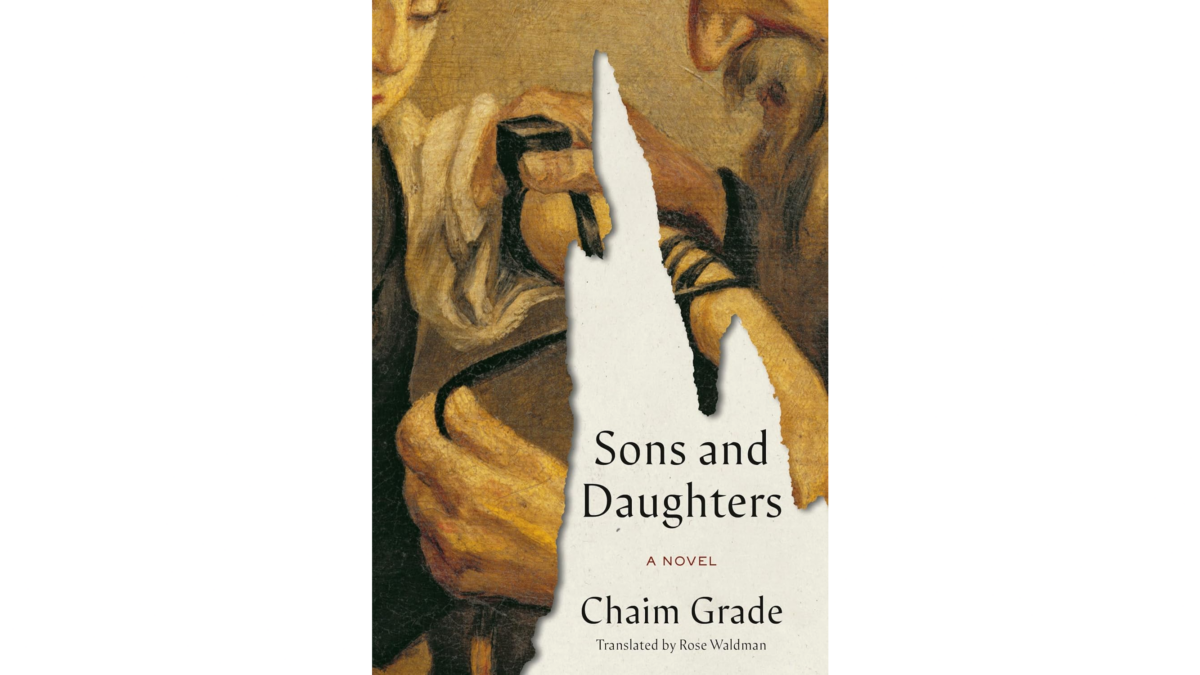
“Sons and Daughters” offers us a unique glimpse into the lost culture of Yiddish-speaking Jews who once lived near Vilna, Lithuania, in a town called Morehdalye during the 1930s. Chaim Grade’s novel can be described as a tale about the struggle between tradition and the influences of the modern world.
However, the heart of the novel is a family drama and an elegy for Grade’s homeland. The author portrays a fragmenting world. He searches for greater meaning while holding back the tides of hate and politics.
This novel is actually a compilation of serial shorts written in Yiddish by Grade between the mid-1960s and 1970s. They first appeared in two New York-based Yiddish newspapers, but have now been compiled into this volume for the first time.
Yiddish Fiction
When these stories first appeared, Yiddish fiction was already becoming a somewhat endangered language. By modern standards, it’s now almost non-existent. Today, the language is spoken by only about 150,000 ultra-Orthodox Jews across the United States, Europe, and Israel. Often viewed as “jargon,” it isn’t typically considered a first choice for literature.
As Grade himself remarked in a 1978 interview, publishing in Yiddish meant you had to print “a thousand copies of your own book.” Selling 500 copies meant the book was a bestseller. It’s easy to imagine why a translation of these stories took so long.

Rabbi Sholem Shachne Katzenellenbogen is the spiritual patriarch of Morehdalye and at the core of the book. He is a man deeply rooted in Judaism and driven by a vision of religious continuity. Every major character in “Sons and Daughters” is defined, in part, by their relationship to him, either through loyalty, rebellion, or uneasy negotiation. Grade portrays him as a man of profound conscience and devotion, yet tragically he is unable to comprehend the forces that threaten to tear his community and family apart.
The troubled Rabbi has three sons and two daughters. Through each one, Grade explores the fragmentation of Jewish identity in a world that no longer speaks with one voice. All the younger members of the Katzenellenbogen family, in their own way, question the viability of their forebears’ religious lifestyle in an increasingly hostile land newly occupied by Poland. How they navigate a path through that doubt and frustration yields mixed results, including bitter disappointments.
The Children
His oldest son, Naftali Hertz, turned his back on Morehdalye to move to Switzerland and marry a Christian woman. However, when we first encounter Naftali, he is morose and brooding about his decision. Was he merely enamored by the idea of a Christian woman wanting to marry him, coupled with an idyllic fantasy of a mountain life where he would be a famous scholar? None of this panned out like he’d hoped, and he finds himself spending less and less time with his wife.
Sholem’s oldest daughter, Tilza, is married to another rabbi but unhappy in her role as a rebbetzin (a rabbi’s wife). Her days are filled with dreams of what could be and regrets about what she has. She even flirts with Ezra Morgenstern, a Hebrew teacher from out of town. Ezra admires the new Zionist pioneering movement and criticizes traditional Jewish life, which unsettles Tilza, but also makes him attractive to her.
Bluma Rivtcha, the Rabbi’s younger daughter, is betrothed to a young man named Zindel, who is expected to eventually become a rabbi as well. However, neither Sholem nor Bluma is fully confident of Zindel’s sincerity and devoutness. Zindel confesses to Bluma that he’s more interested in moving to America, a choice that seems more pragmatic than spiritual.
Bluma fears what her life could be like in a foreign land. A rabbi’s wife in a small, familiar town is preferable to being isolated in an alien culture. What’s more, Zindel’s dismissive attitude and assumptions about her father’s possible approval trouble her greatly.
The Holocaust is never directly mentioned, but the shadows frequently reveal themselves. Grade, whose first wife and mother were murdered in Vilna, survived by fleeing to Central Asia. He returned in 1945 to find his community annihilated, a loss that reshaped his literary mission. His early work rebelled against religious authority, but his postwar fiction became a memorial to what had been lost. He passed away before completing the second volume of this work.
On the surface, “Sons and Daughters” might seem like a depressing read, especially knowing how major events will eventually play out. But the sheer talent and verisimilitude in Grade’s writing allow us to walk along with Sholem and his family like spirits at their elbows. It may be a somewhat melancholy journey, but there can be great beauty in an old tragedy.
The doubts and fears of the Katzenellenbogens are easily recognizable and relatable. Perhaps their struggles are also a gentle reminder that the future is unknowable, our time is limited, and that peace and happiness should be sought out wherever they can be found.
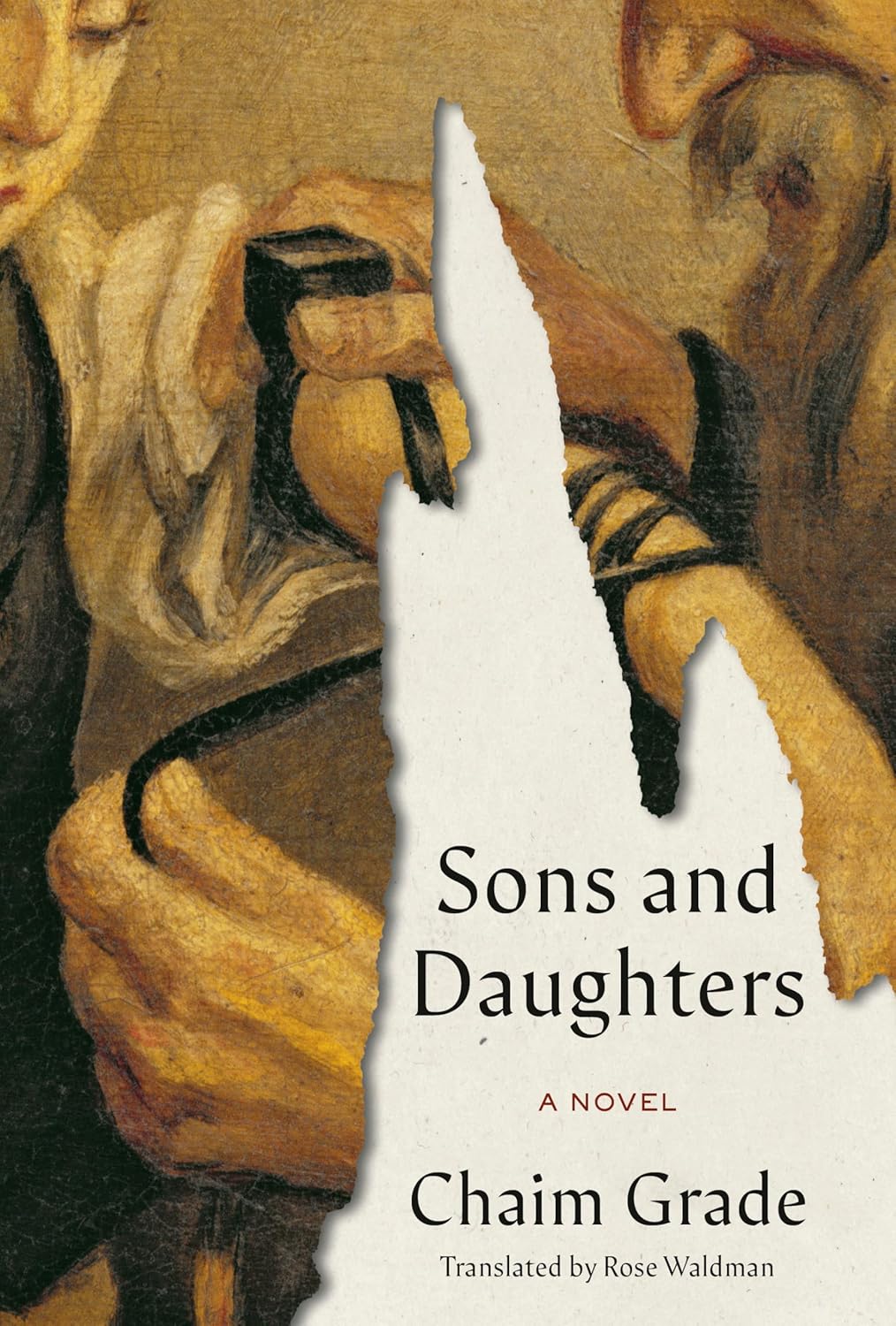
‘Sons and Daughters’
By Chaim Grade
Knopf, March 25, 2025
Hardcover: 704 pages
What arts and culture topics would you like us to cover? Please email ideas or feedback to features@epochtimes.nyc