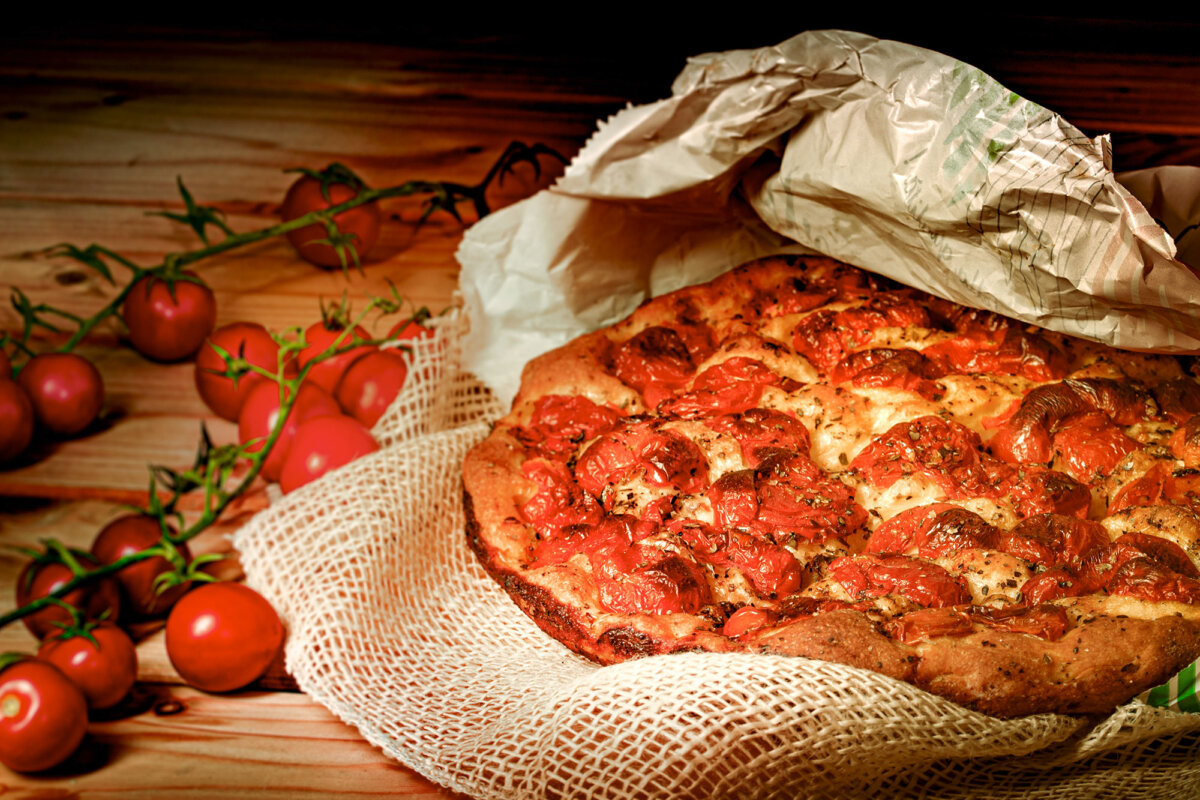
One night on a recent trip, I stood in the narrow, labyrinthine streets of the old southern Italian city of Bari, Puglia, in the heel of Italy’s boot. A crowd had gathered with an air of anticipation outside a shop. Concert tickets about to go on sale? A celebrity sighting? Flash mob in wait? Nope, they were waiting outside Panificio Santa Rita, a local bakery, to purchase fresh focaccia.
I’m not talking slices or even a single baking sheet’s worth of it: People emerged from the doors with their arms filled with stacked waxed-paper bags of the stuff, presumably for a large family meal. The day before, I witnessed the same sort of crowd at lunchtime in front of Panificio Fiore, not far away. I’ve eaten my share of focaccia, and I like it well enough, but this was something next-level.
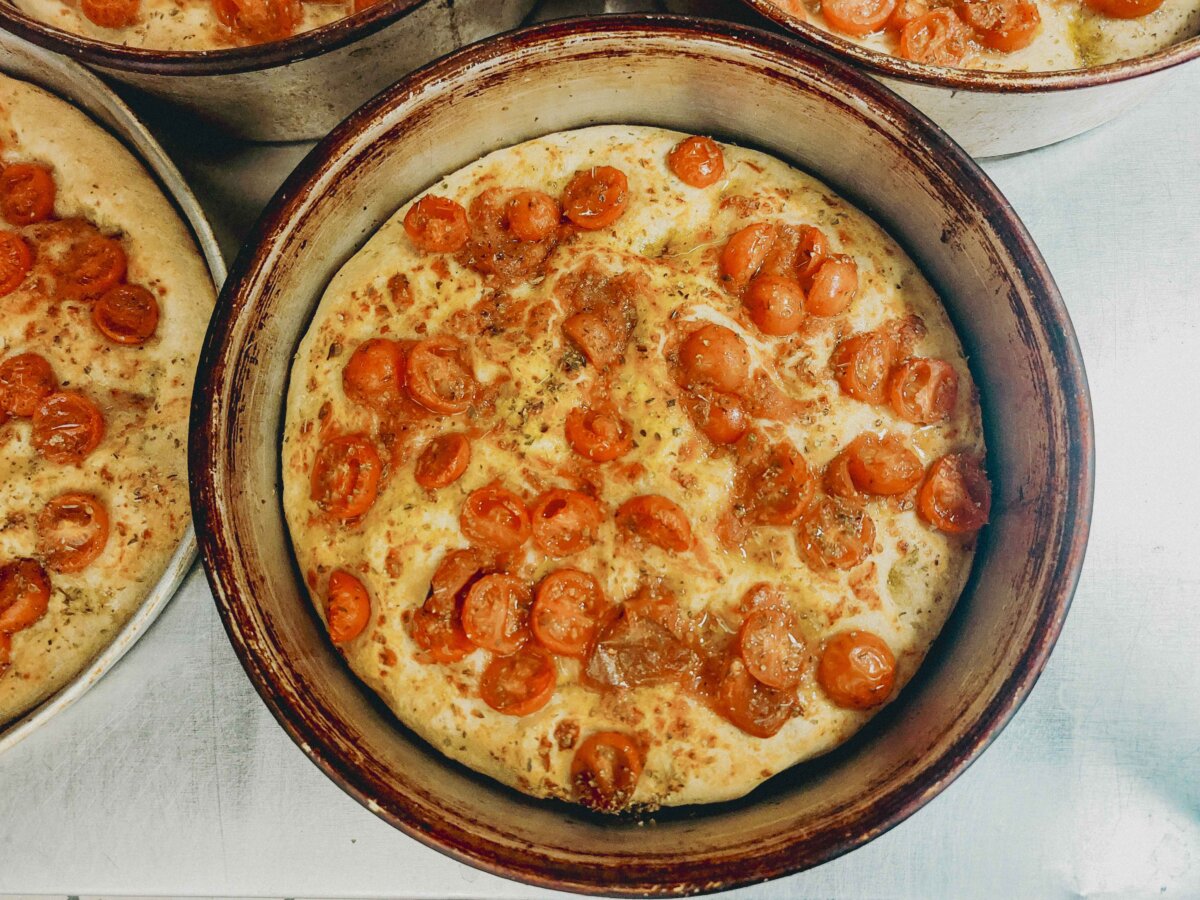
When I think “focaccia,” I think of the Italian bread full of pillowy pockets about a little over two inches thick. But this was Bari-style, focaccia barese, about half that heft. It’s denser, typically topped with baked tomatoes, and a bit more olive oil stains the paper bags.
I felt foolish as the only person buying a small amount, and more so when I made it disappear in a shamelessly ravenous attack right there in the street. Focaccia barese had a new fan, and my mission was to bring it to my own oven at home. I needed an adviser.
Ask an Italian
As luck would have it, Francesco Mangano, a James Beard Award-nominated chef in my hometown of Madison, Wisconsin, hailed from Italy. While he grew up in the northern city of Bologna, his father was born and raised in Puglia, not far from Bari.
Mangano tells me that there are “dozens” of styles of focaccia, in the same way that types of pastas are myriad throughout Italy. At his restaurant, he was making a Tuscan-style focaccia. “Which is more like a schiacciata,” which is a similar but “thinner and lighter bread, more delicate,” he said. I’ve had some that are thicker and puffier. Barese took me by surprise, I told him.
“There are some things I miss from home,” he admitted. “My dad loves this focaccia.” His father travels south to visit family in Puglia, and “what he brings back in his trunk is all this cheese—burrata, scamorza—focaccia barese, figs, almonds—all things that are better down there.”
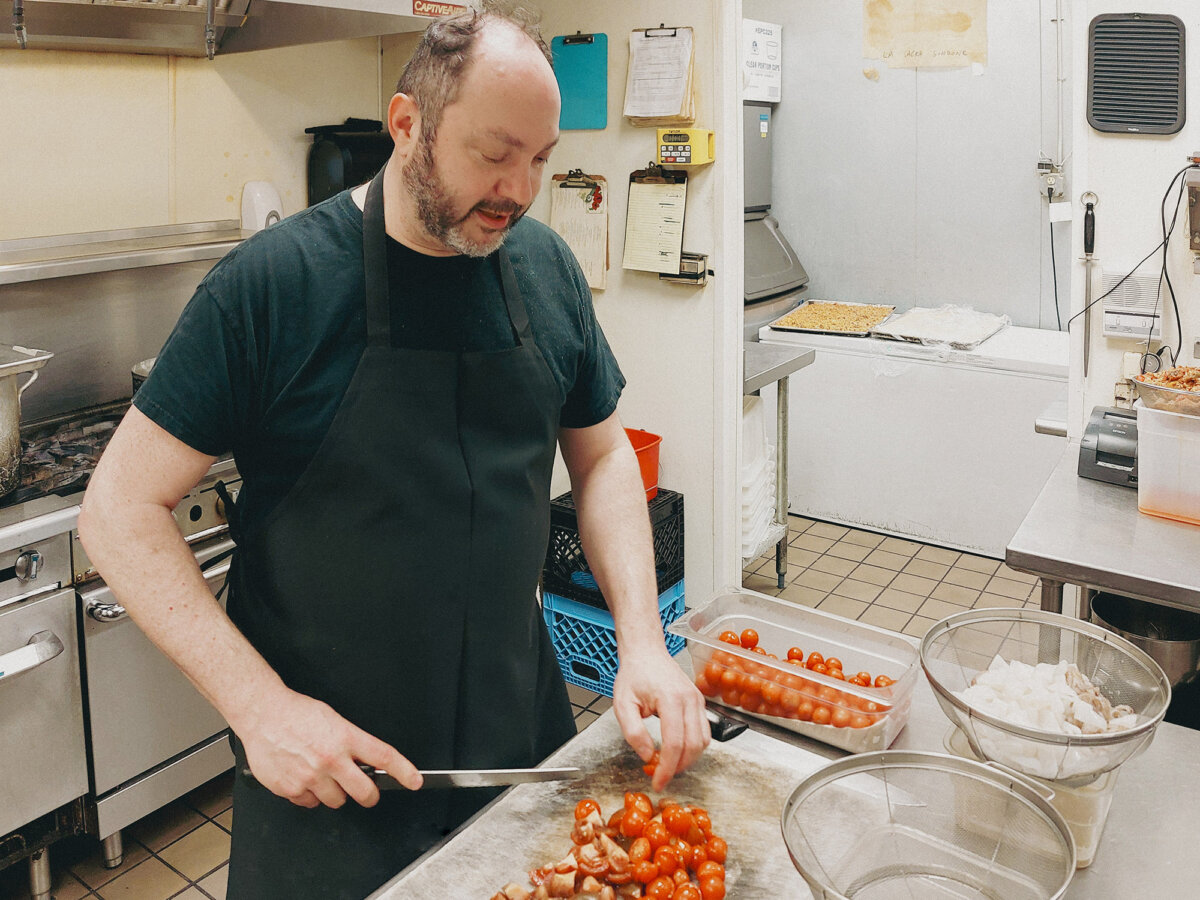
His grandmother lived in a poor area and didn’t have the oven required for bread making. “They would knead the dough at home, but then they would go to the central bakery” and pay a few lire for some oven time, Mangano said.
“That was very normal back in Puglia in the ’50s and the ’60s,” he said. Mangano looked through recipes and contacted his aunt back in Italy, who still makes it at home, for pointers, before he landed on a recipe that worked for him.
The Poor Man’s Secret
The central difference in Barese-style as compared with other regional recipes was inspired by the poverty of generations past: riced potatoes. “Because people don’t have enough money to buy flour, so they use potatoes that are cheaper,” Mangano said. They cut the amount of flour by using potato, which made the focaccia softer.
Traditionally, the flour was all semolina, a coarsely ground durum wheat used to make hard pasta such as spaghetti, penne, and others. “That’s why usually the focaccia looks almost a little yellowish in color,” he said. His recipe, however, blends semolina with all-purpose flour.
For precooking the potatoes, you can use a microwave, he said, but he usually boils them on the stovetop so that the skin comes off easily without a peeler. He then processes them with a potato ricer. While most home cooks don’t have one, the handy device is useful, and he also recommends it over a blender for processing tomatoes for tomato soup. “Tomato emulsified turns pink when you blend it. You should always use [the potato ricer],” he said.
The Dough
While dishes with yeast doughs often require the baker to plan ahead to allow for the rising time, Mangano doesn’t start his dough until the morning he’s baking it. He uses a starter he keeps on hand and instant yeast. “I use both. It just makes the dough fluffier, with those little nicer pockets,” he said.
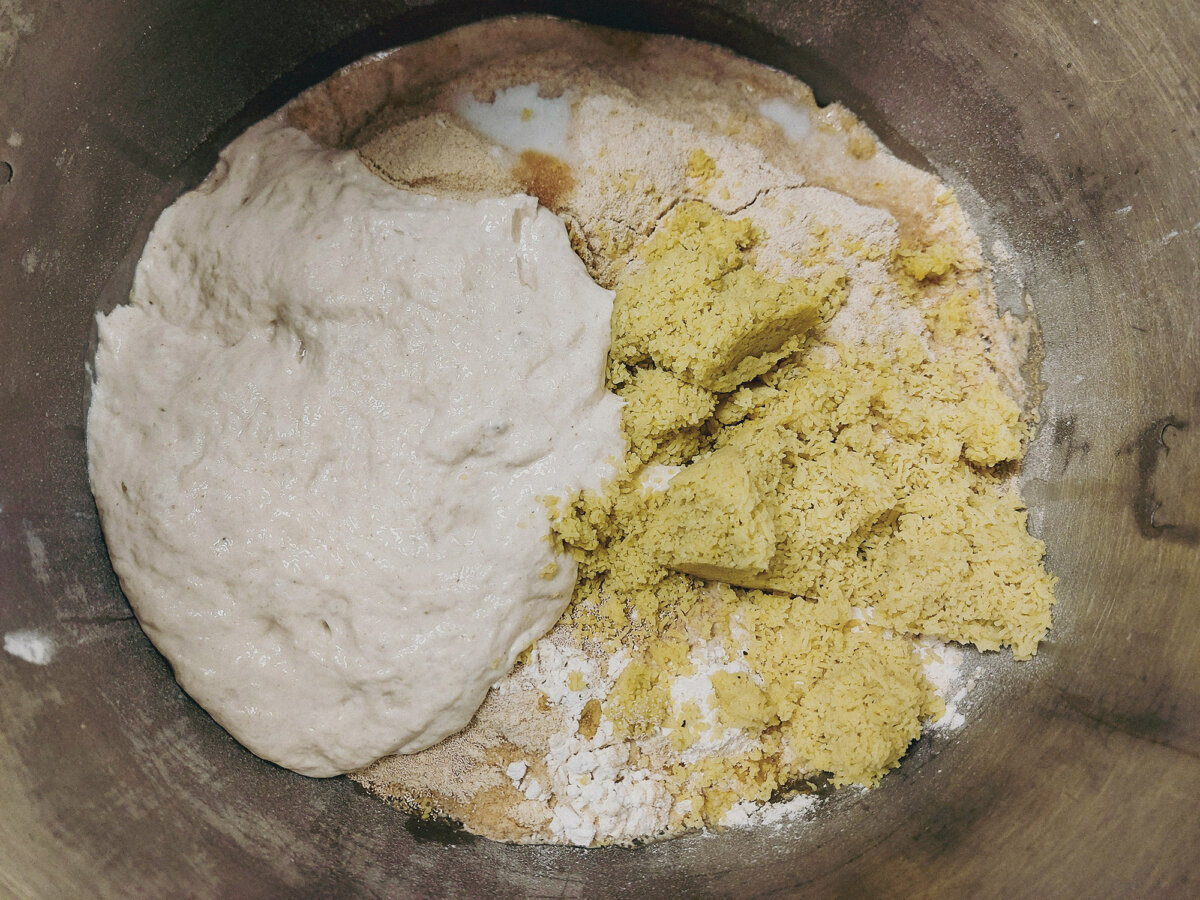
The bakers of Bari aren’t working with a dough that fermented overnight, either. “Instant yeast is nice,” he said. “You can throw it in a mix like this with everything else without needing to bloom it first.” While you don’t need to test instant yeast, just make sure that it isn’t expired.
To feed the yeast, he prefers barley malt, but you can use granulated sugar instead. Where the recipe calls for salt, he means fine sea salt. Mangano warns that coarse sea salt and fine sea salt measure differently by weight. Getting the amount wrong can affect the final outcome.
The Kneading
If you have a dough hook attachment for your stand mixer, put the dough in the mixer and mix it for at least 12 to 13 minutes. If the dough is too dry, you can always add a little water. “You want the dough to be a little supple after those 12 to 13 minutes,” he said.
Getting the perfect dough is a matter of experience, he said. You don’t want it too dry or too sticky. If the mixer struggles or freezes up, the dough is too dry and you’ll need to add tiny bits of water. If it’s too sticky, you’ll need a light dusting of flour.
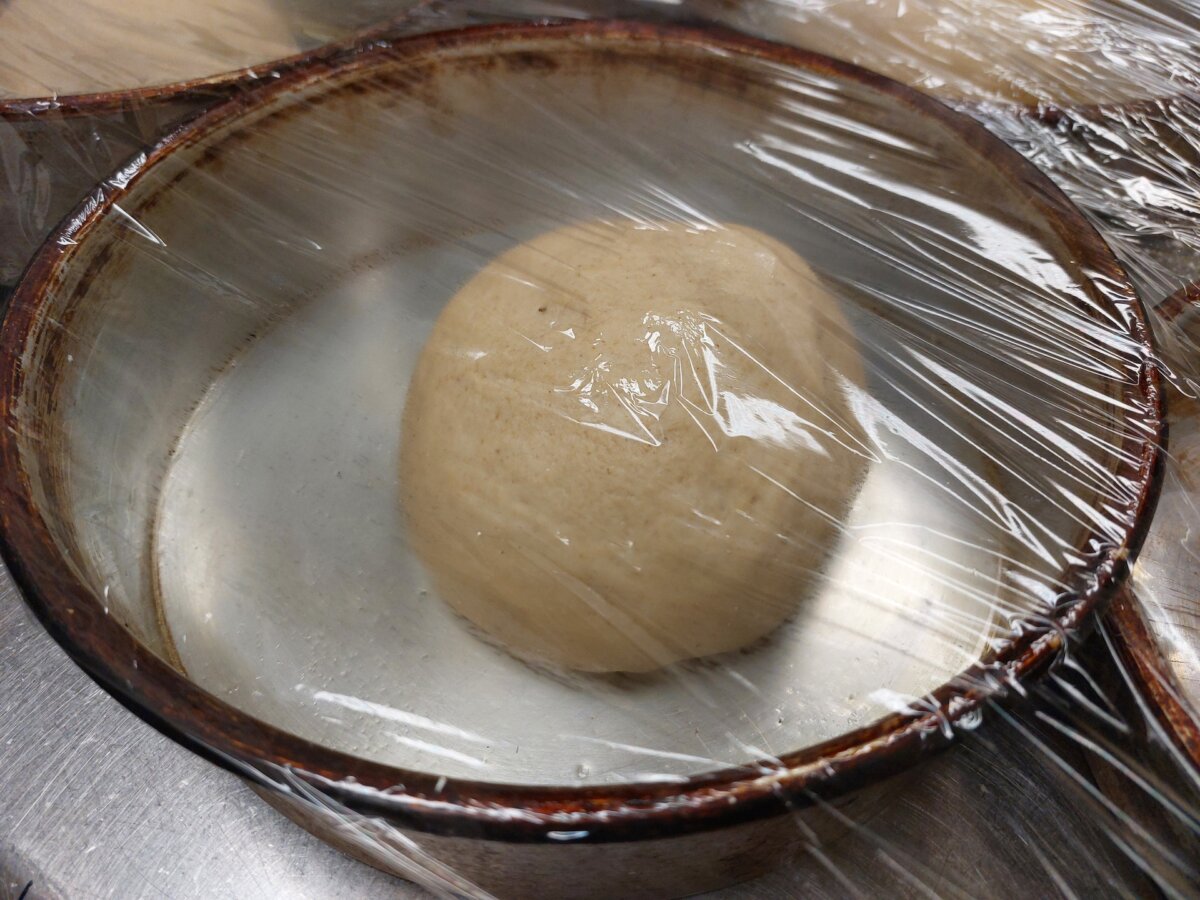
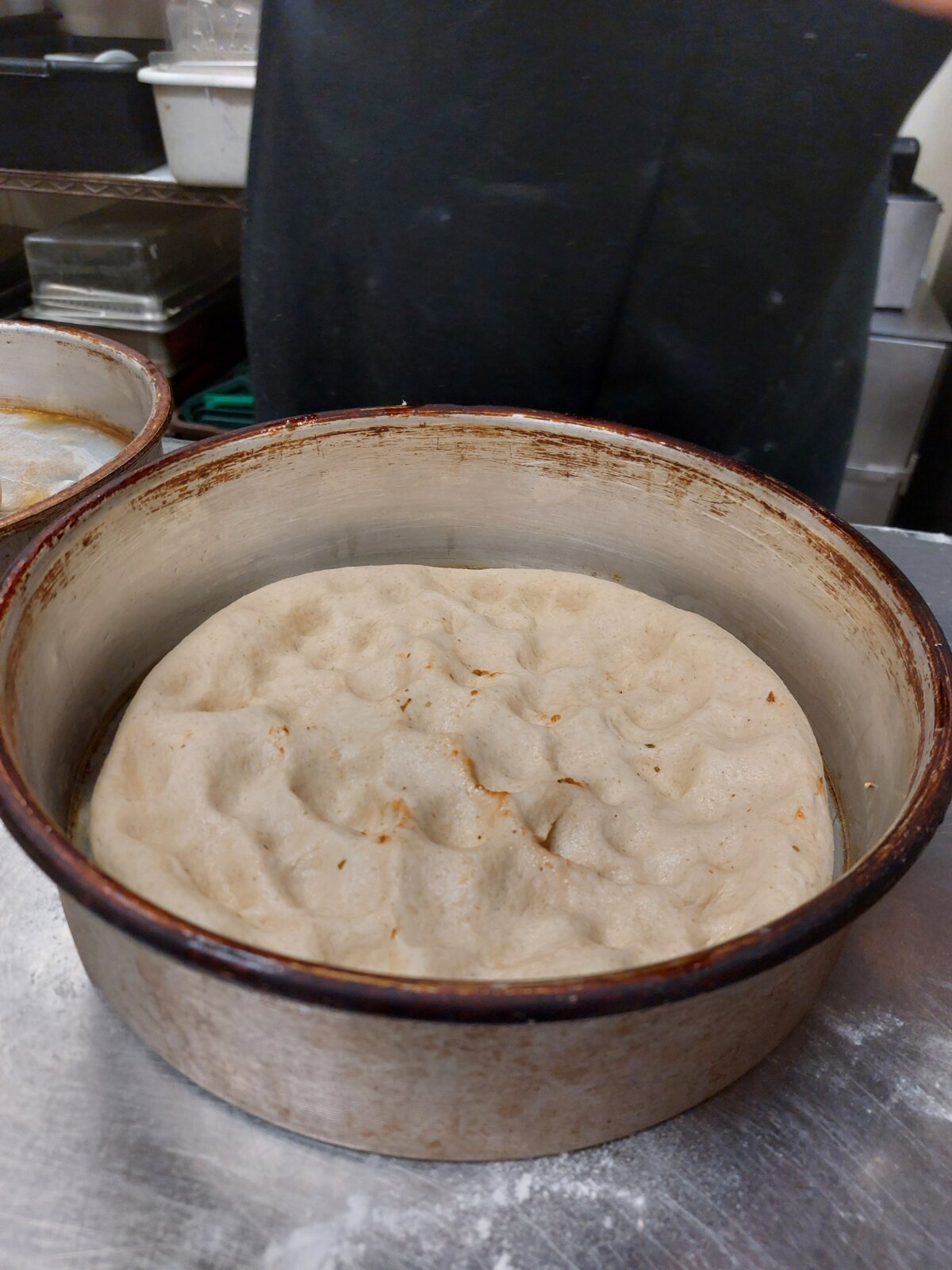
Once it’s kneaded, shape it into a ball and cover it with plastic wrap. Let it rest and rise for 20 minutes, after which “it will be softer, more malleable, and then you can add your topping at that point,” he said. Then use olive oil to grease the pan, and work the dough into it, at which point you can add the topping.
The Topping
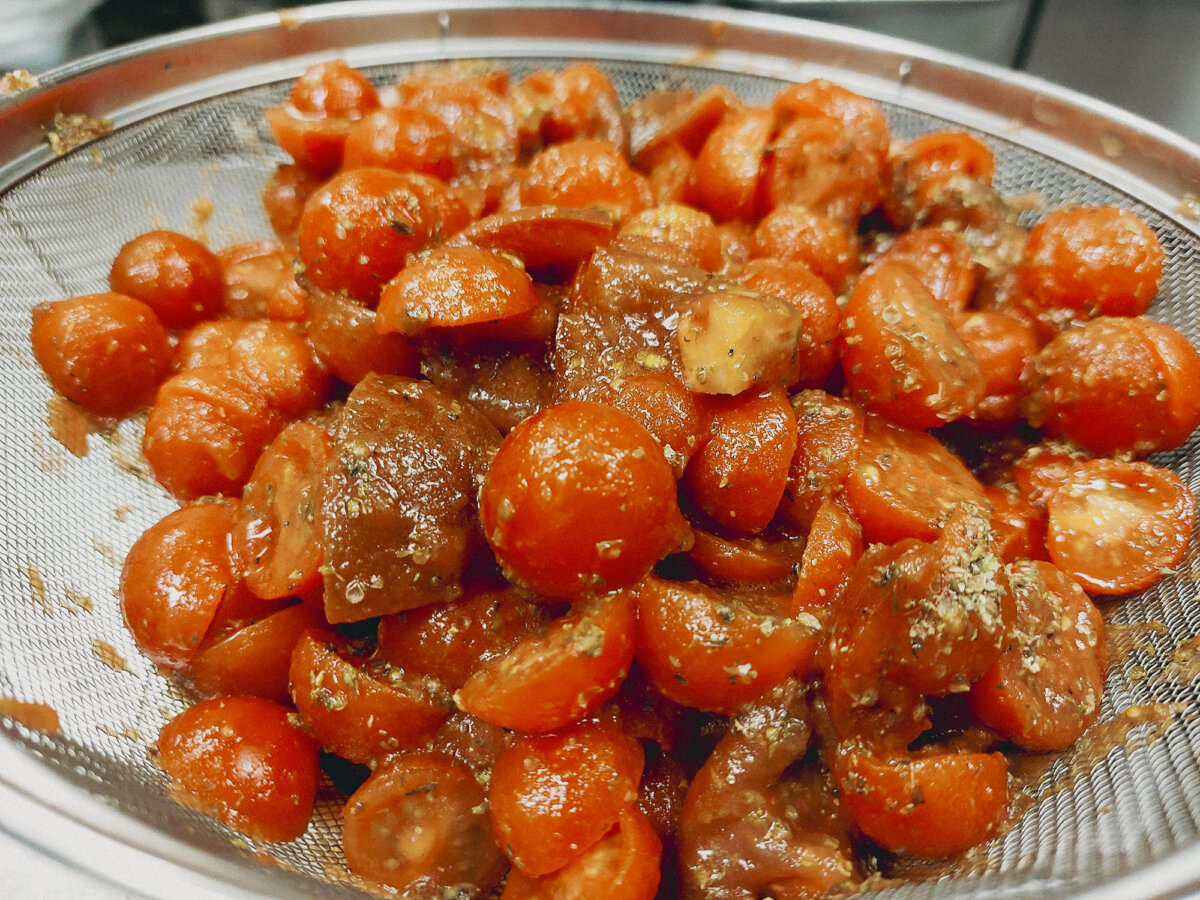
“For the barese, we do the tomato,” Mangano said. Start with fresh cherry tomatoes cut in half, with oregano, salt, garlic, and olive oil.
“If I don’t have enough [cherry tomatoes], sometimes I just mix [in] regular tomatoes,” he said, and he cuts those into cherry-sized pieces. Don’t like tomatoes? “Just make a mix of herbs in olive oil. That’s fine, too.”
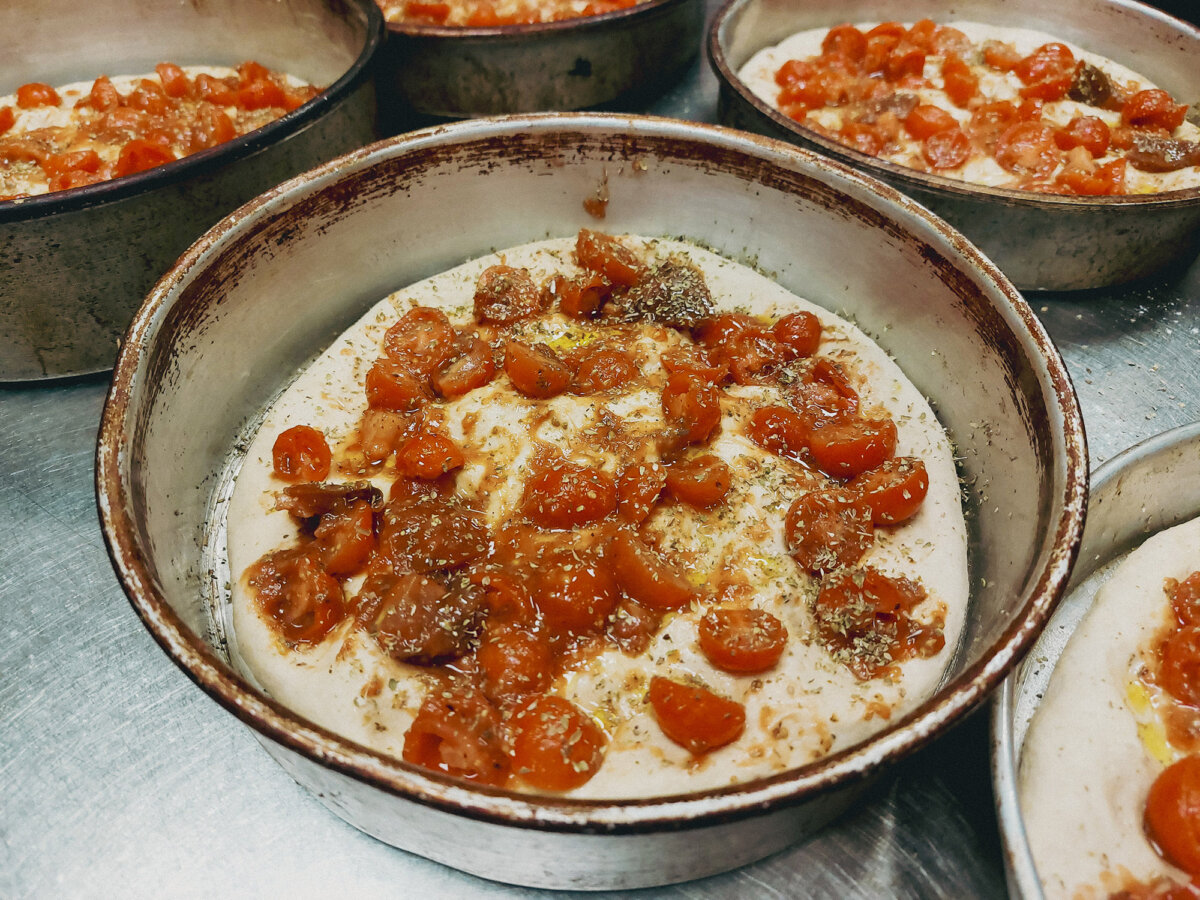
Spread the topping over the dough and press it down into the focaccia dough without breaking it. Then the dough needs to rise until it doubles in size, which should take about an hour. At that point, you sprinkle your olive oil, and it’s off to the oven.
About 20 minutes later, the bread will have turned golden and pulled away from the edge of the pan. As hard as it might be, you should wait until it’s cool enough to touch before you devour it.