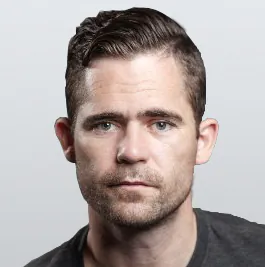
Gennadi Zakharov found himself face down on a subway platform. His hands were placed behind his back as iron cuffs clicked into place around his wrists. The Soviet physicist, who had arrived in New York City nearly four years prior to work for the United Nations, was under arrest for espionage. For Zakharov, his efforts must have felt like a complete waste of time.
The Soviet physicist had spent several years trying to recruit spies. He finally found a young student from Guyana and a defense contractor who was willing to retrieve military secrets regarding U.S. Air Force jet engines. On Aug. 23, 1986, Zakharov’s contact came through with an envelope full of classified documents. What Zakharov did not know was that his contact also worked for the FBI.
Using U.N. positions as spy covers was not a new Soviet tactic. They had been doing it for about as long as the United Nations had been around. What made Zakharov’s case rare was that he did not have diplomatic immunity and therefore faced life imprisonment.
The Soviets called the arrest a sham and an undermining of diplomatic relations. The Soviets looked to settle the score.
An American in Moscow
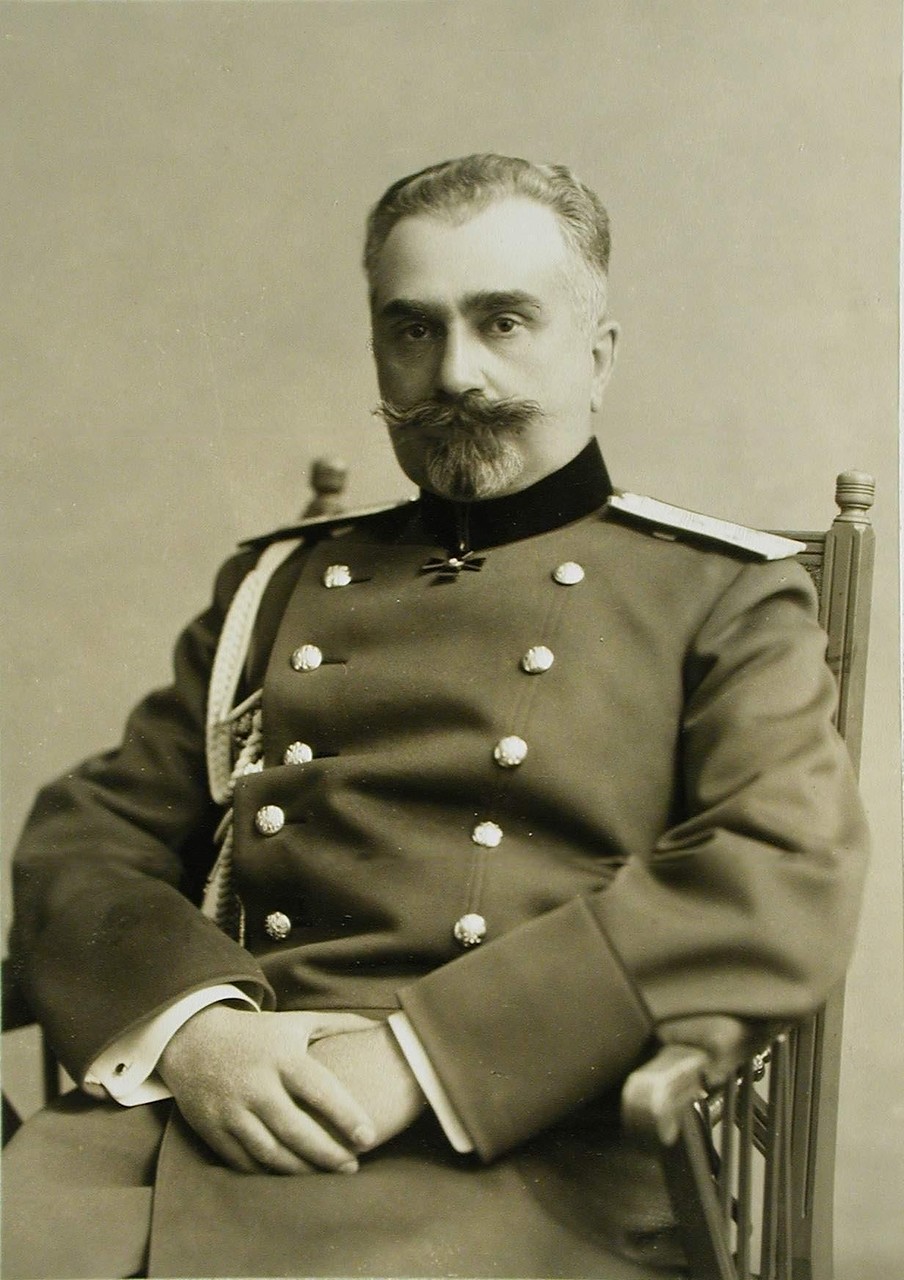
Nicholas Daniloff had been the Moscow bureau chief for weekly magazine U.S. News and World Report (USNWR) for six years. But his Russian ties went back several generations. His great-great-grandfather had been a Decembrist revolutionary in the early 19th century. His grandfather, Yuri Danilov, had been quartermaster-general of the Imperial Russian Army and a troop commander during World War I, assisted in negotiations of the Brest-Litovsk Treaty, joined the Bolsheviks momentarily during the Russian Revolution, joined the White Army against the Bolsheviks during the Russian Civil War, and finally immigrated to France. Daniloff’s father, Serge, altered the last name. The bureau chief had grown up in France, Argentina, and America; learned Russian, French, and English and graduated from Harvard University in 1956.
He was first stationed in Moscow in the 1960s with United Press International (UPI), where he covered some of the Cold War’s biggest moments, including the Berlin Crisis, the Cuban Missile Crisis, and the fall of Soviet leader Nikita Khrushchev. In the 1970s, UPI stationed him in Washington, where he covered Watergate and the end of the Vietnam War. He returned to Moscow in 1980 with USNWR.
Daniloff’s tenure as bureau chief began in 1981. Over the following four years, he witnessed four changes in Soviet leadership with the deaths of Leonid Brezhnev (1982), Yuri Andropov (1984), and Konstantin Chernenko (1985). On March 11, 1985, Mikhail Gorbachev became general secretary of the Communist Party.
A Soviet Setup
Daniloff’s tenure as bureau chief was coming to an end, and he was scheduled to leave Moscow, and the Soviet Union altogether, in October; but one of his friends and contacts, Mikhail Luzin, wished to tell him goodbye in person. Luzin told Daniloff to meet him in Moscow’s Lenin Hills on the morning of Aug. 30. Daniloff brought his own parting gifts for Luzin: Stephen King novels. Luzin had a package of newspaper clippings from Frunze, the capital of Kirghizia (now Kyrgyzstan).
After giving Daniloff the package, Luzin rushed off. Daniloff had not walked very far before a van pulled up, several men got out, grabbed him, cuffed him, and tossed him inside the van. One of the men rifled through his pockets and pulled out his wallet. Looking at his press credentials, he exclaimed, “My God! A foreigner!”
As the van sped toward Lefortovo Prison, Daniloff, well aware of Zakharov’s arrest the week prior, understood that he was the pawn to be used to demand the Soviet spy’s release. He was brought before Col. Valery Dmitrovich Sergadeyev of the KGB for interrogation. He was told he was arrested on “suspicion of espionage.” Two witnesses were brought into the interrogation room. Sergadeyev opened the package Luzin had given Daniloff. Instead of newspaper clippings, there were photos of tanks and soldiers, as well as two maps stamped “Secret.”
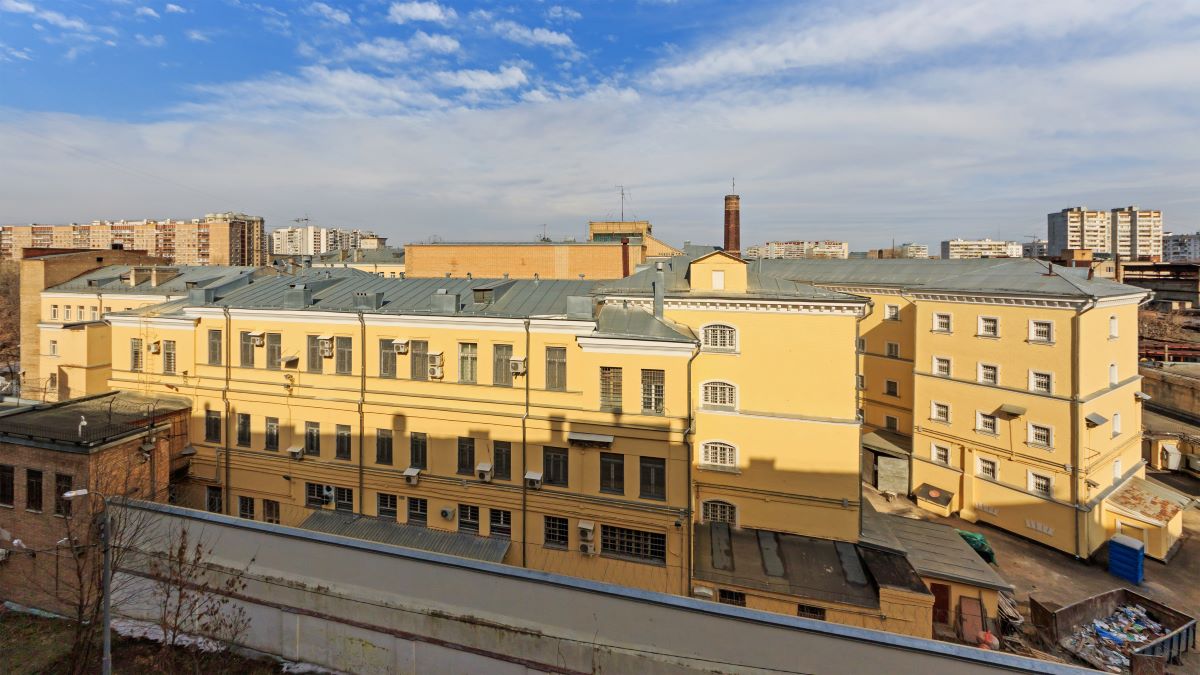
In typical Soviet style, the arrest and interrogation was all a show. Despite the flimsy evidence behind the trumped-up charges, Daniloff was in a very dangerous situation. Russian citizens had been sent to labor camps or executed for far less. Though he was an American citizen, it was still the KGB, and the Cold War was very much alive. Daniloff was given permission to contact his office. He spoke to Jeff Trimble, who was set to replace him as bureau chief.
The U.S. Embassy in Moscow was contacted, which immediately contacted the State Department and issued a message of protest to the Soviet authorities. A consular officer was refused access to Daniloff and was told to speak to KGB headquarters. The political standoff had begun.
Charged With Spying
The political standoff, however, was extremely untimely. President Ronald Reagan and Secretary Gorbachev had been planning to meet for a summit in the fall to discuss nuclear arms reduction. The two eyed eliminating nuclear weapons altogether, but if the Zakharov-Daniloff affair could not be resolved, discussing such measures would be nearly impossible.
Daniloff’s arrest, which some in Congress condemned as kidnapping, became front-page news in newspapers and magazines across the country. At a time when Gorbachev’s emergence as the leader of the Soviet Communist Party was welcomed as a thawing of the Cold War, the retaliation against Zakharov’s arrest and denial of bail looked to freeze U.S.-Soviet relations.
On Sept. 4, President Reagan wrote directly to Secretary Gorbachev, informing him that Daniloff was not a spy and had no connection with the U.S. government. Reagan iterated how critical Gorbachev’s handling of the situation was, stating, “If [Daniloff] is not freed promptly, it can only have the most serious and far-reaching consequences for the relationship between our two countries.”
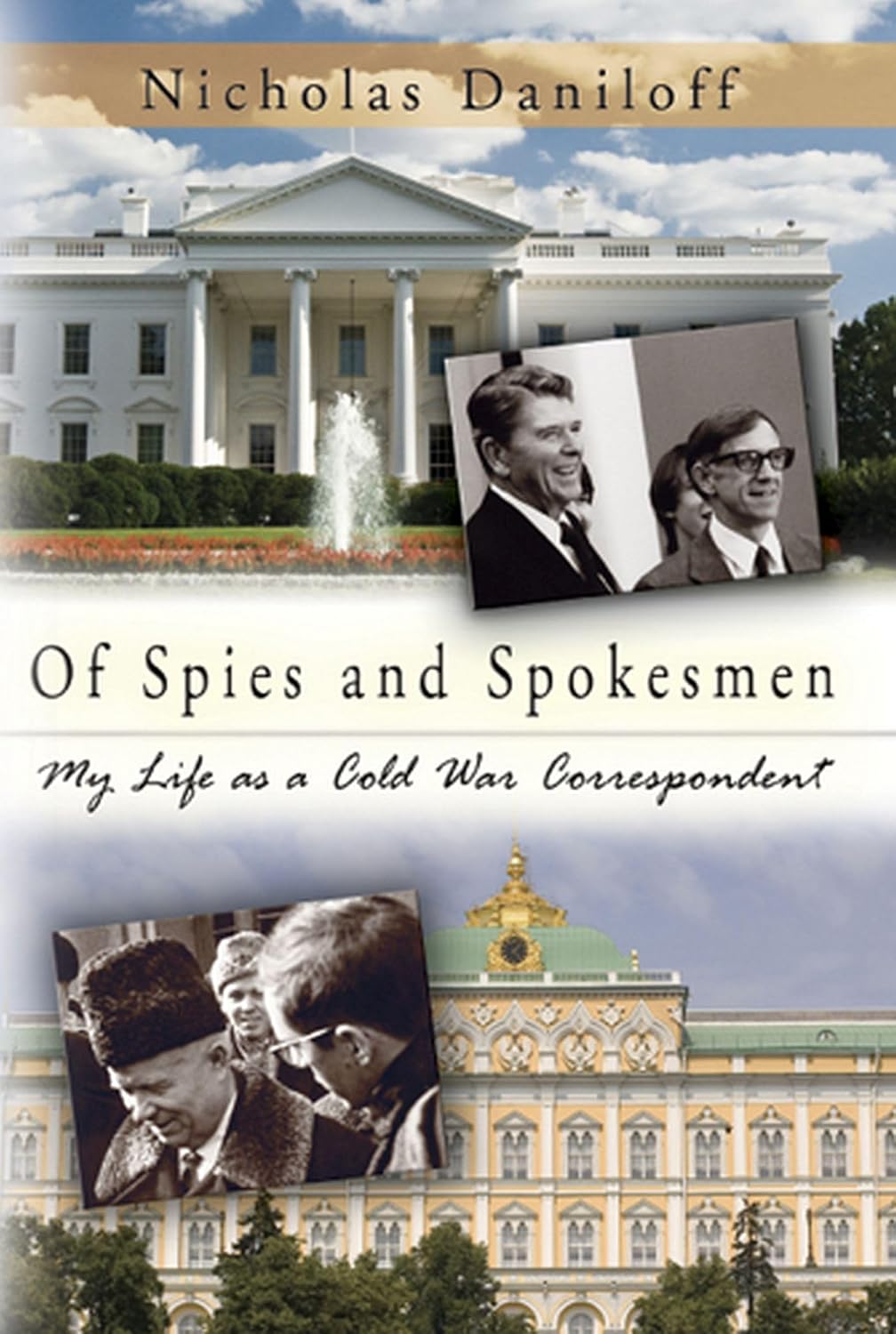
Reagan’s words seemed to have fallen on deaf ears. It was during this week in history, on Sept. 7, 1986, that Daniloff was officially charged by the Soviet government on the grounds of espionage. The filing not only escalated the situation but was also unexpected. White House spokesman, Larry Speakes, notified the press that the White House had not been officially notified of the Soviets’ plan to charge Daniloff.
Hitting Back
The day after the filing against Daniloff, National Security Advisor John Poindexter began making preparations for his meeting with President Reagan. He assessed how the United States should approach the delicate situation. He maintained that not punishing the Soviets for the Daniloff arrest could “jeopardize all U.S. journalists working in Moscow” but shared Secretary of State George Shultz’s concern about hitting the Soviets so hard it would “derail other important negotiations.” Weighing the options, Poindexter noted that a weak response would not only damage future negotiations, but would damage the president’s “public credibility—as well as [his] private credibility with Gorbachev.”
There was a pathway to punish the Soviets while not seriously jeopardizing relations. The White House ordered a directive to address the disparity in the number of Soviet-U.S. diplomats. At the time, there were more than 900 Soviet personnel in Washington and San Francisco, and at the American-based U.N. missions, with approximately 600 enjoying diplomatic protections. Conversely, there were only 200 U.S. personnel in Moscow and Leningrad. The directive called for a drawdown of those Soviet numbers. The Soviets had pushed back against the reduction, but now the Daniloff Affair offered the opportunity to follow through.
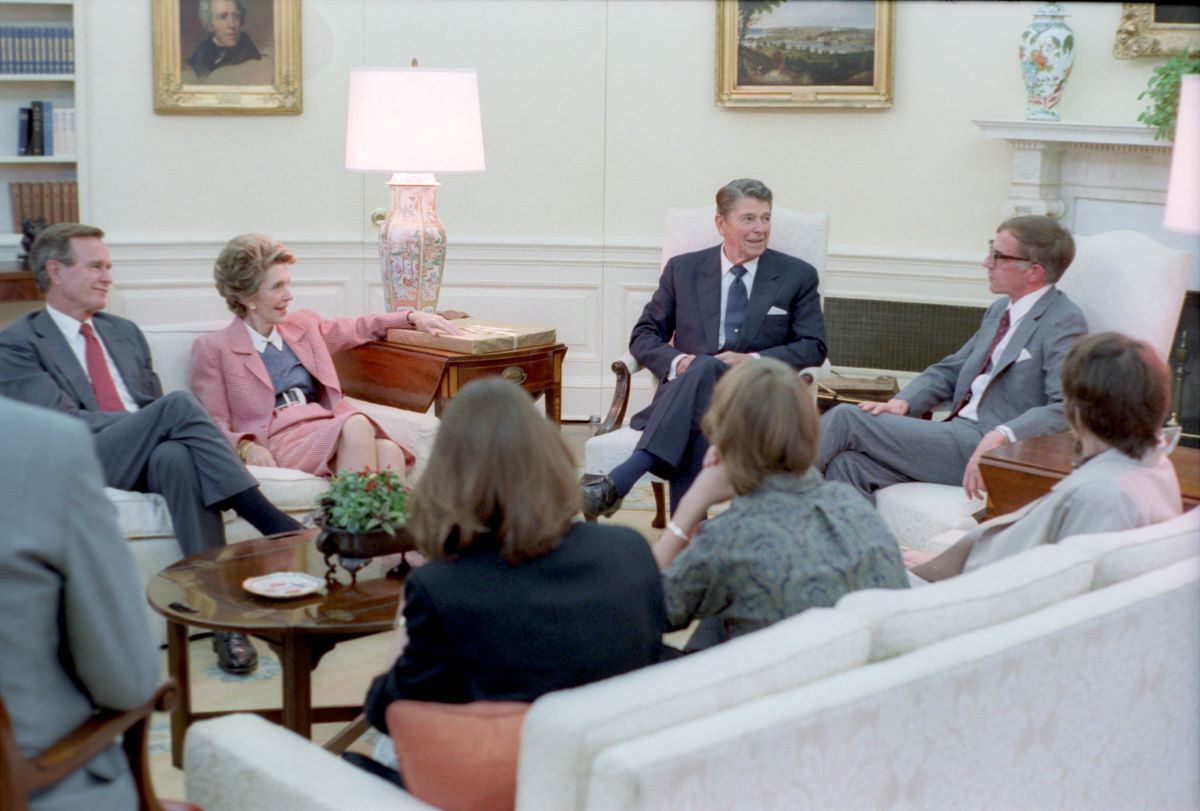
Reagan had an idea for how to get Daniloff back. The day after his meeting with Poindexter and Shultz, he wrote in his diary that if Daniloff would be released to the ambassador, they could offer the same courtesy to Zahkarov. Following that, Reagan thought an exchange might be possible, “but only if they’ll release some [Soviet] dissidents.” He added that once the Americans retrieved Daniloff, “I propose that we kick a half hundred of their U.N. KGB agents out of the country so there can’t be a repeat of this hostage taking.”
‘I’m Not a Spy’
“I’m not a spy.” That became Daniloff’s primary defense in the face of daily interrogation at Lefortovo Prison. The American journalist held on to hope that the Americans and Soviets could formulate some plan of action for his release.
The interrogations were not violent or bombastic, but they were consistent—about three hours per day. They had become part of what Daniloff called his “dead routine,” which consisted of breakfast at 8 a.m., lunch at 1 p.m. and dinner at 5 p.m.; staring at books to avoid conversation with his cellmate; and doctor visits to ensure his health was maintained. He recalled that his only pleasantries were the visits from his wife and son, Ruth and Caleb, and his editor, Mortimer Zuckerman.
“They were my lifeline,” he recalled. “Through them I learned of the extraordinary reaction on my behalf. Ruth told me that President Reagan had mentioned my case publicly and had written General Secretary Gorbachev that I was not a spy. That cheered me. I told myself something was going to give.”
Indeed something did give. After two weeks in Lefortovo Prison, Daniloff was released to the U.S. Embassy in Moscow on Sept. 13. On the same day, Zahkarov was released to his embassy. With Daniloff still scheduled to stand trial, the development was not what the Reagan Administration had hoped.
Necessary Compromises
On Sept. 15, Gorbachev wrote to Reagan, recommending “that, in the very near future and setting aside all other matters, [they] have a quick one-on-one meeting … say in Iceland or in London.” It was a tall ask considering the current situation. The following day, Speakes told the press, “The longer Nick Daniloff is held in the Soviet Union, the more it will affect our relationship with the Soviets.”
On Sept. 22, Soviet minister of foreign affairs Eduard Shevardnadze informed the Politburo that Secretary Shultz had relayed Reagan’s message that he would attend a meeting in Reykjavik [Iceland] “if [Nicholas] Daniloff issue was resolved and if there was a positive response to the list [of names of dissidents] with [Andrei Sakharov] at the top of the list.”
The dissident list was apparently a bridge too far, but Gorbachev was willing to release one dissident, Yuriy Orlov, a physicist and chairman of the Moscow Helsinki Group, who had been held in a Soviet prison since 1977. On Sept. 29, the two countries finally came to an agreement: Daniloff and Zahkarov were freed to their respective nations, with Orlov and his wife thrown in.
Despite coming to this agreement, the Reagan Administration followed through with the expulsion of suspected KGB spies. By the end of the year, 80 had been expelled.
The summit meeting between Reagan and Gorbachev took place in Reykjavik on Oct. 11 and 12, which significantly de-escalated the U.S.-Soviet tensions. According to Ret. Gen. Lee Denson, who had led the Pentagon’s arms control staff, “Reykjavik effectively became the beginning of the end of the Cold War.”
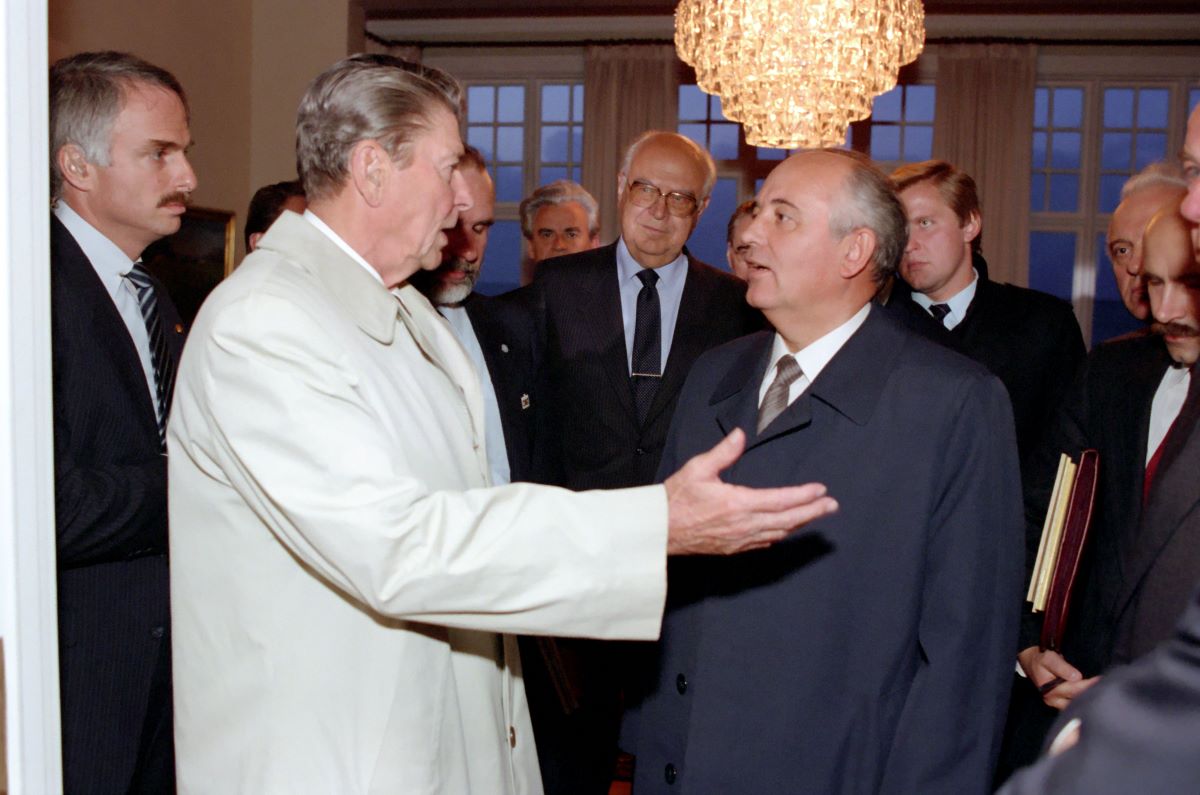
“The release of Daniloff made the meeting possible,” Reagan told reporters. “I could not have accepted and held that meeting if he was still being held.”
Never miss a This Week in History story! Sign up for the American History newsletter here.
What arts and culture topics would you like us to cover? Please email ideas or feedback to features@epochtimes.nyc.