
When a gifted person plays an important role in an artistic endeavor, his work requires careful cultivation, development, and refinement for it to reach its full potential.
Claudio Monteverdi is considered the father of opera, and Franz Joseph Haydn is called the father of the symphony and of the string quartet. In America’s cultural landscape, one man is considered the father of all music in the United States, not just one musical form.
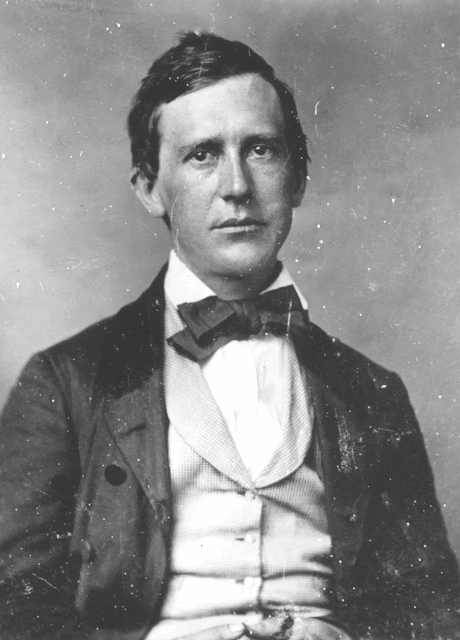
Although he was born 200 years ago, the songs he wrote are still popular tunes that the average American will instantly recognize. This man is Stephen Foster (1826–1864), the father of American music.
American Roots
It’s only fitting that the man who would define the United States’s musical scene was born on our nation’s 50th birthday—July 4, 1826, in Lawrenceville, Pennsylvania, a town near Pittsburgh.
With parents of English and Ulster Scots descent, Foster was the youngest surviving child in a family of 10 children, six of whom lived to adulthood. His father, William, founded Lawrenceville and was a prominent politician and successful merchant in Pittsburgh.
Because of his father’s influence and means, Stephen had a rich liberal education in classic literature, mathematics, English grammar, Latin, Greek, and diction; he attended several private academies throughout Pennsylvania.
Early letters from Foster and his family indicate that the lad had a propensity for music in his first year of life. His family encouraged him to view music as a hobby rather than a vocation.
He taught himself to play the piano, guitar, clarinet, and the flute, which became his main instrument.
Foster never formally studied composition, but it’s believed he learned songwriting from German music teacher Henry Kleber. His greatest influences, however, were the styles of folk music that he heard in his youth from immigrants in Philadelphia.
His first song was published in December 1844. “Open Thy Lattice, Love” was set to a poem by George P. Morris. Although the sentimental tune didn’t earn the 18-year-old Foster instant fame, it was an early indication of his future success.
When “Oh, Susannah!” was published in 1848, Foster became a household name, as the song was popularized by minstrel troupes. With both words and music by Foster, this Southern-themed song became the anthem of prospectors as they headed west to make their fortune during the 1849 Gold Rush.
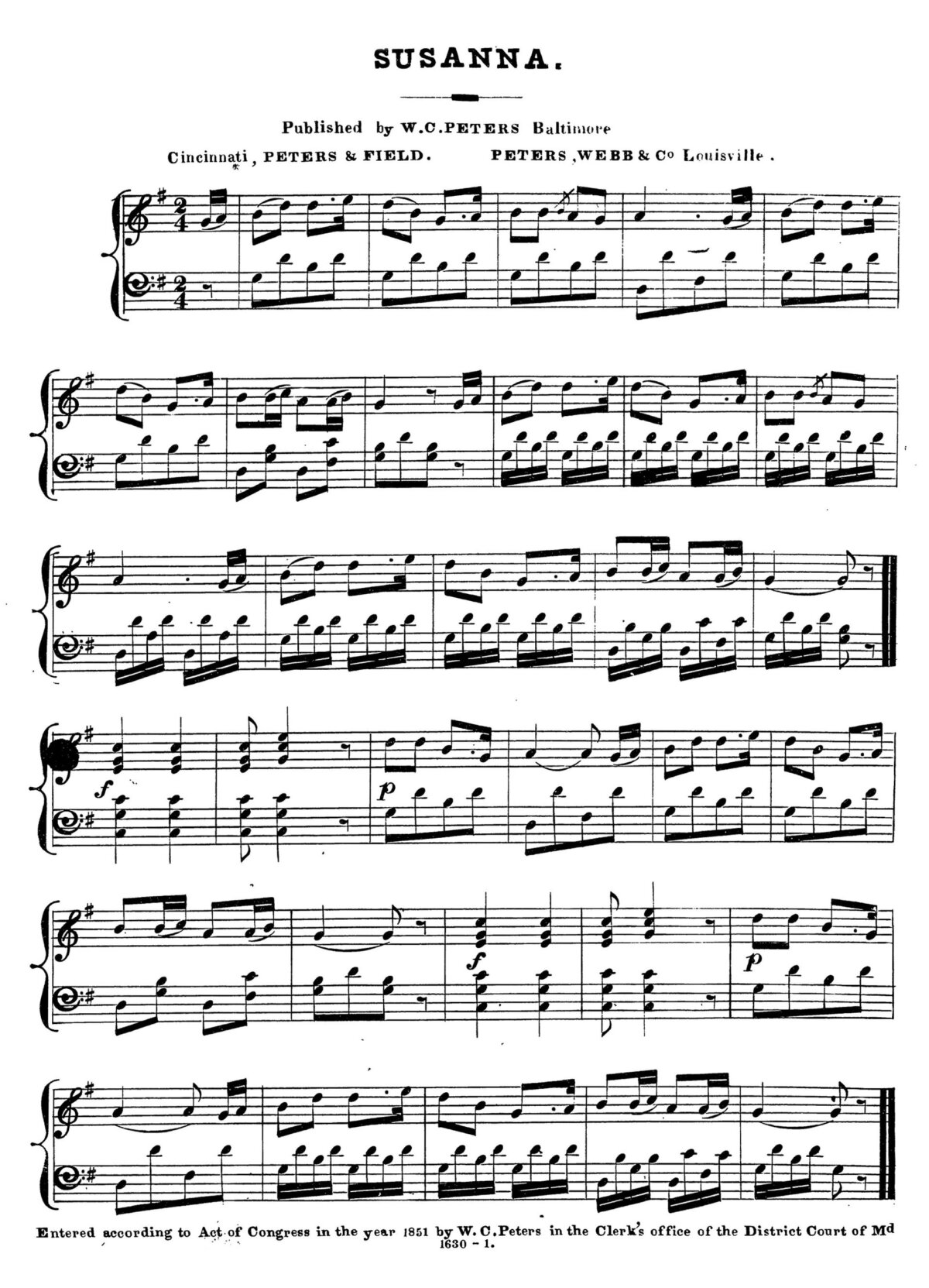
Foster only earned around $100 for the actual publication of the song. However, the royalties he earned and the selling of its performance rights were enough to make him the first professional songwriter in the United States.
The Southerner From Pennsylvania
Foster’s songs are inseparably linked with the Old South. His music reflects Southern themes and the lyrics describe plantation life before the Civil War.
In the days before recordings, live performances, either by professional entertainers or simple renderings by common folks around the family piano or the campfire, were the only way to enjoy and share music. Many of his most famous tunes were performed and popularized by the top minstrel performers of the day, including E.P. Christy and his Christy Minstrels.
Minstrel shows were common in Foster’s youth. They usually featured white performers in blackface who sang songs inspired by the music of slaves. Young Foster didn’t like the vulgar parodies of black people, which were common in the low-tone lyrics of most minstrel songs.
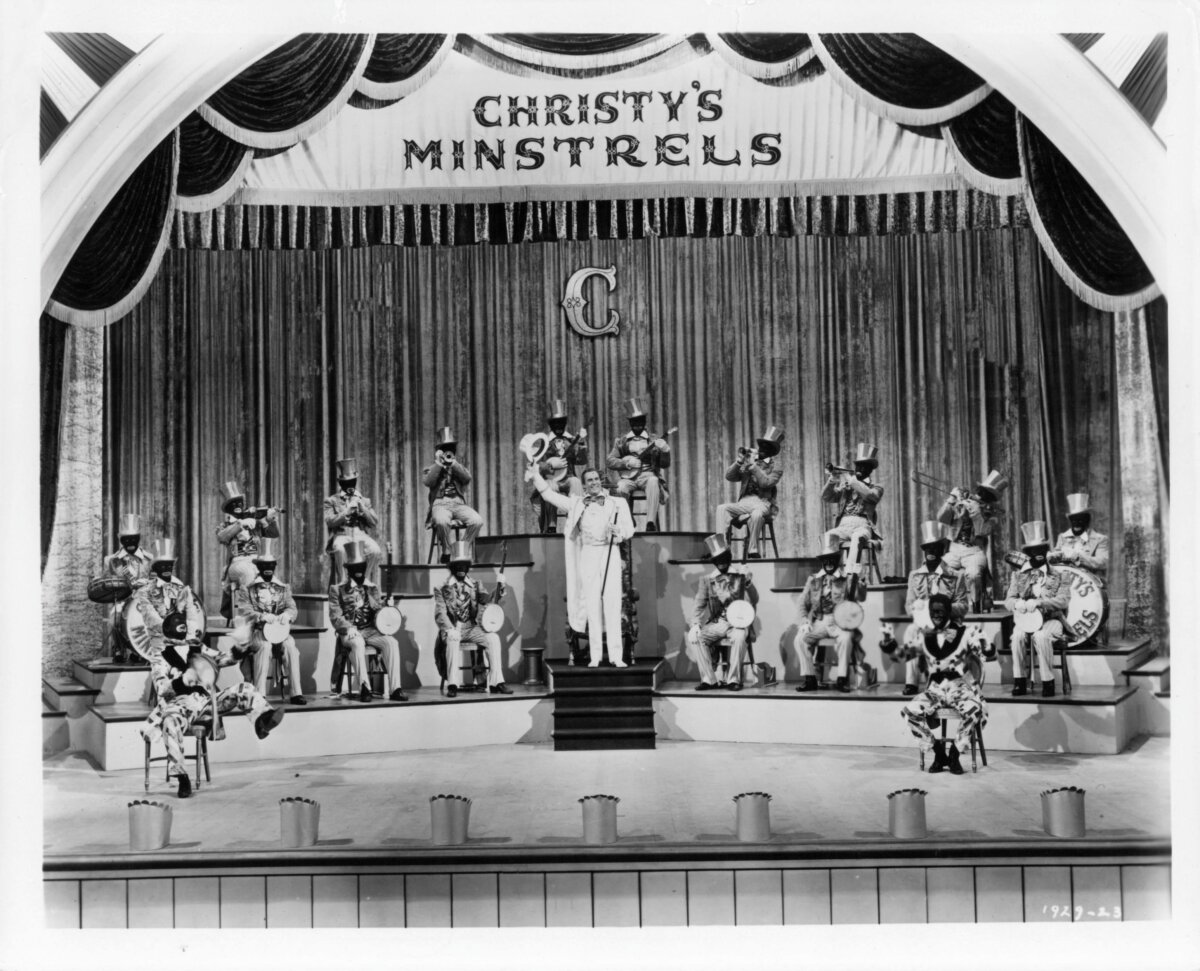
Although in recent years his music has been accused of perpetuating racist stereotypes, Foster was insistent that the songs should be performed “in a pathetic, not a comic style.”
In a letter penned in 1852, Foster wrote: “I find that by my efforts I have done a great deal to build up a taste for the Ethiopian songs among refined people by making the words suitable to their taste, instead of the trashy and really offensive words which belong to some songs of that order.”
Besides omitting these “trashy” words, Foster respected the enslaved subjects of his songs by characterizing their human emotions of love for family and longing for home. Although a few of his songs used common racial epithets for blacks, the sheet music for Foster tunes didn’t feature the often popular offensive caricatures. Because of these combined qualities, his music was praised by abolitionists for years after his death.
A Short but Brilliant Life
Despite his brilliance, Stephen Foster’s life was short and marked by personal struggles. His meager earnings from compositions weren’t enough to pay his debts. He also dealt with waning creative drive, alcoholism, and frequent separations from his wife.
The death of his parents kept him from writing for a while, and he endured poor health during the Civil War. Foster ended up selling the rights to his future compositions, which furthered his debt.

In 1864, he died at the age of 37 in his New York hotel room due to complications from a fall.
His death wasn’t the end of his compositional legacy. Two months after he died, his tender parlor song “Beautiful Dreamer” was published with the inscription that it was “the last song ever written by Stephen C. Foster, composed but a few days prior to his death.”
Although several of Foster’s compositions lay claim to this title, this sentimental waltz is the perfect elegy for the composer to have left himself. With its poetic and beautifully vague lyrics about a dreamer, the listener doesn’t know whether his beautiful beloved sleeps only in earthly slumber or in the eternal rest of death.
As the 200th anniversary year of Stephen Foster’s birth, 2026 is a fitting time to rediscover the simple Americana beauty of his compositions. From comical folk tunes like “Camptown Races” to emotional ballads like “Jeannie With the Light Brown Hair,” Foster’s music continues to earn him the title of “America’s troubadour,” “America’s first songwriter,” and, ultimately, “The Father of American Music.”
What arts and culture topics would you like us to cover? Please email ideas or feedback to features@epochtimes.nyc