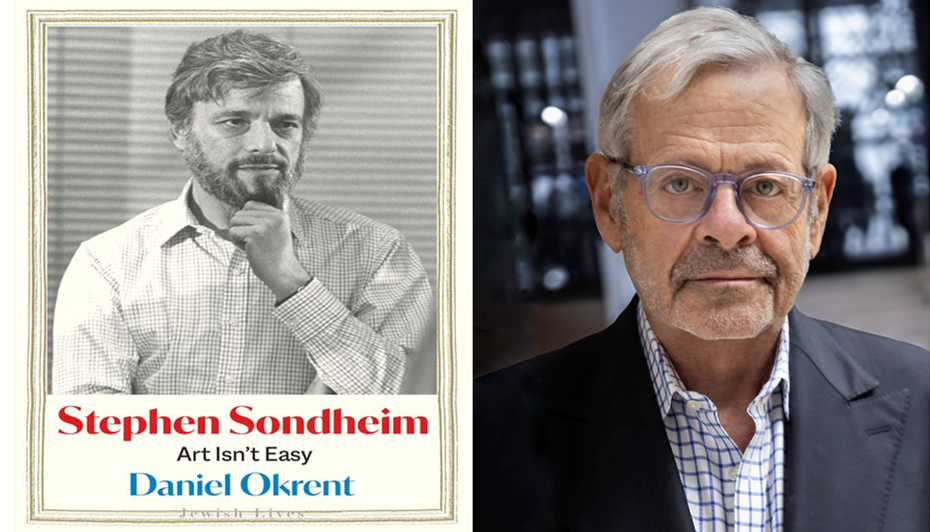
According to Daniel Okrent’s new biography of Stephen Sondheim, nearly every achievement by the musical theater talent came with an unpleasant glitch. His Broadway debut as a lyricist for the landmark “West Side Story” (1957) was burdened with endless production arguments with his creative collaborators.
Sondheim was frustrated at snagging the lyricist’s job for “Gypsy” (1959). Ethel Merman refused to consider him a composer because of his newcomer status. He was a lyricist and composer for “A Funny Thing Happened on the Way to the Forum” (1962). This time, he was snubbed in the Tony Awards nominations and not acknowledged by the show’s producers when they accepted the Best Musical Award.
His innovative musical “Company” (1970) received snide reviews but was a box-office success, while his equally innovative “Follies” (1971) and “Pacific Overtures” (1976) were critically praised yet failed at the box office.
The producers of “Sunday in the Park With George” (1984) didn’t nominate the work for the Pulitzer Prize in Drama. An acquaintance not connected to the show paid for the nomination and the show won. But Sondheim was angry when the show lost the Tony for Best Musical to “La Cage Aux Folles.” That show’s composer, Jerry Herman, made a barely veiled insult about Sondheim in his acceptance speech.

Coming of Age
Okrent’s biography is part of Yale University Press’s “Jewish Lives” series, which is curious since religion played almost no role in Sondheim’s life. Adherence to faith was absent during his formative years. When he attended the Quaker-run George School in Pennsylvania, he self-identified as a Quaker. He never attended a Passover seder until his “West Side Story” collaborator Leonard Bernstein invited him to his home’s celebration.
Sondheim’s parents divorced when he was 10. He loved his father, Herbert, but was required to live with his physically and emotionally abusive mother, Etta James Fox, who preferred to be called “Foxy.” He would later refer to her in language that good manners prevent us from reprinting.
Still, his mother helped launch his career by purchasing a summer home near Doylestown, Pennsylvania, that was close to the residence of composer Oscar Hammerstein II. Hammerstein would mentor his young neighbor and direct him into a show business career.
Sondheim’s initial work included screenwriting gigs for the television sitcom “Topper.” He also wrote an arrangement for a national touring company of “I Know My Love” starring Alfred Lunt and Lynn Fontanne. Alas, the show’s Playbill identified him as “Clifford Sondheim,” one of many name misspellings he would endure.
Sondheim’s unhappy childhood and his homosexuality fueled an alcohol addiction and the pursuit of psychotherapy. Okrent details the artist’s difficult personal issues with sensitivity, but makes no excuses for how Sondheim’s self-destructive actions hurt friends and colleagues.
Putting It Together
The most interesting aspect of the book occurs when Okrent highlights some of Sondheim’s more obscure works. The author calls the flop 1964 musical “Anyone Can Whistle” (which closed after nine performances) “the first forging of the style he would expand, refine, and strive to perfect for the rest of his life.” Strangely, there has yet to be a Broadway revival of this work.
Attention is also devoted to “The Frogs,” sourced from the ancient Greek comedy by Aristophanes; it was originally staged in 1974 at (of all places) the Yale University gymnasium swimming pool. Yale students Meryl Streep and Sigourney Weaver were part of that ensemble.
Sondheim was hypersensitive to negative reviews and bore lifelong grudges against unsympathetic critics, most notably Robert Brustein of The New Republic. Yet he also recognized what didn’t work in his commercial flops and tinkered endlessly until he got it right.
The most notable overhaul involved his 1981 “Merrily We Roll Along,” which closed after 16 performances and 40 previews. Sondheim added new songs while George Furth’s book was repeatedly reconceived. Updated productions played across the United States and in London for years before the heavily revised version came to Broadway in 2023. Okrent notes it was “received by audiences both emotionally engaged and wildly enthusiastic.”
Okrent’s book has some conspicuous omissions. He ignores the 1966 film of “A Funny Thing Happened on the Way to the Forum” (which cut nine of the show’s 13 songs) and gives only one sentence to the 1966 “Evening Primrose,” a strange “Twilight Zone”-style made-for-television musical.
Sondheim’s vigorous advocacy for the unsuccessful 1977 film of “A Little Night Music” and his too-generous praise for Elizabeth Taylor’s rendition of “Send in the Clowns” go uncited.
At the end of the book, Okrent states that Sondheim “remained close over the decades” to his half-brother Walter, but he only gets blink-and-you-miss-them mentions. Another half-brother, Herbert Jr., is acknowledged by name once. Whatever these men did with their lives is never mentioned, for no clear reason.
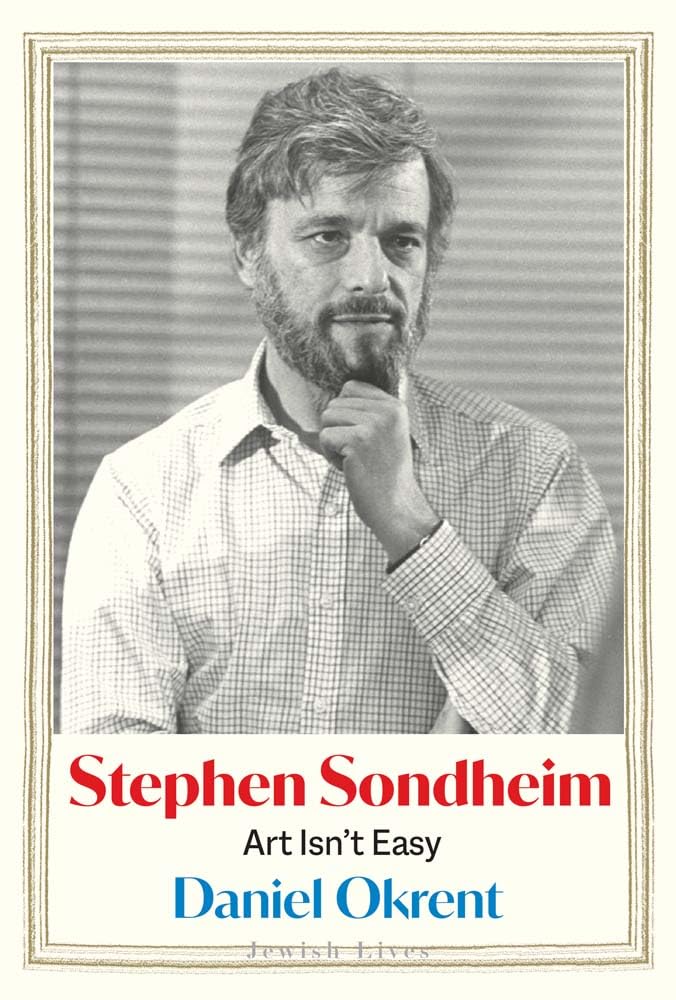
‘Stephen Sondheim: Art Isn’t Easy‘
By Daniel Okrent
Yale University Press; March 17, 2026
Hardcover, 320 pages
What arts and culture topics would you like us to cover? Please email ideas or feedback to features@epochtimes.nyc.