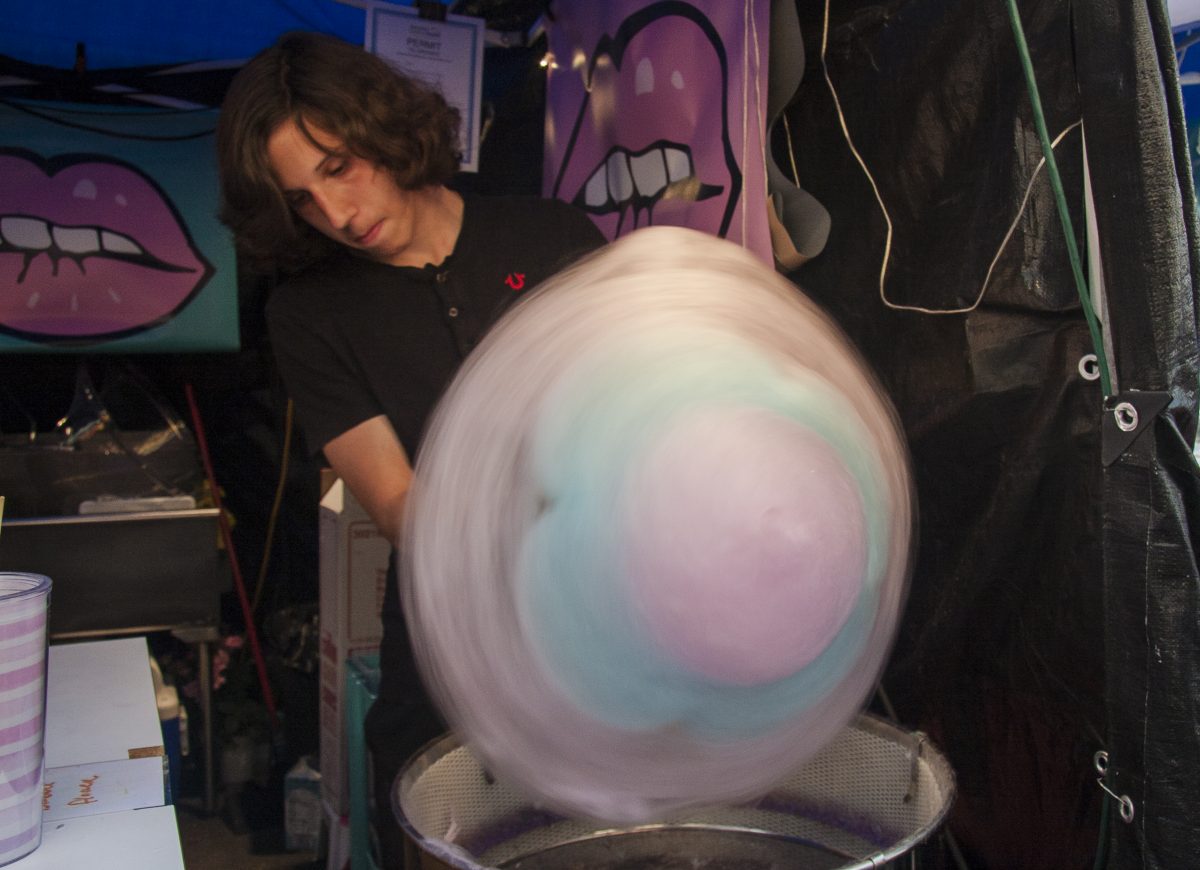
You know you’re getting older when your first thought upon hearing the words “state fair” or “county fair” is all the tasty foods those venues offer.
Funnel cakes, taffy apples, snow cones, turkey drumsticks, soft pretzels, fried pickles; just typing those words makes my stomach grumble a calliope tune. As popular as those foods are, perhaps no treat is more synonymous with summer fairs than cotton candy.
Cotton candy first became associated with fairs at the 1904 Louisiana Purchase Exposition, popularly known as the St. Louis World’s Fair. Entrepreneurs William Morrison and John C. Wharton didn’t invent cotton candy, but like Henry Ford and his Model T, their patented electric candy machine helped introduce it to the masses.
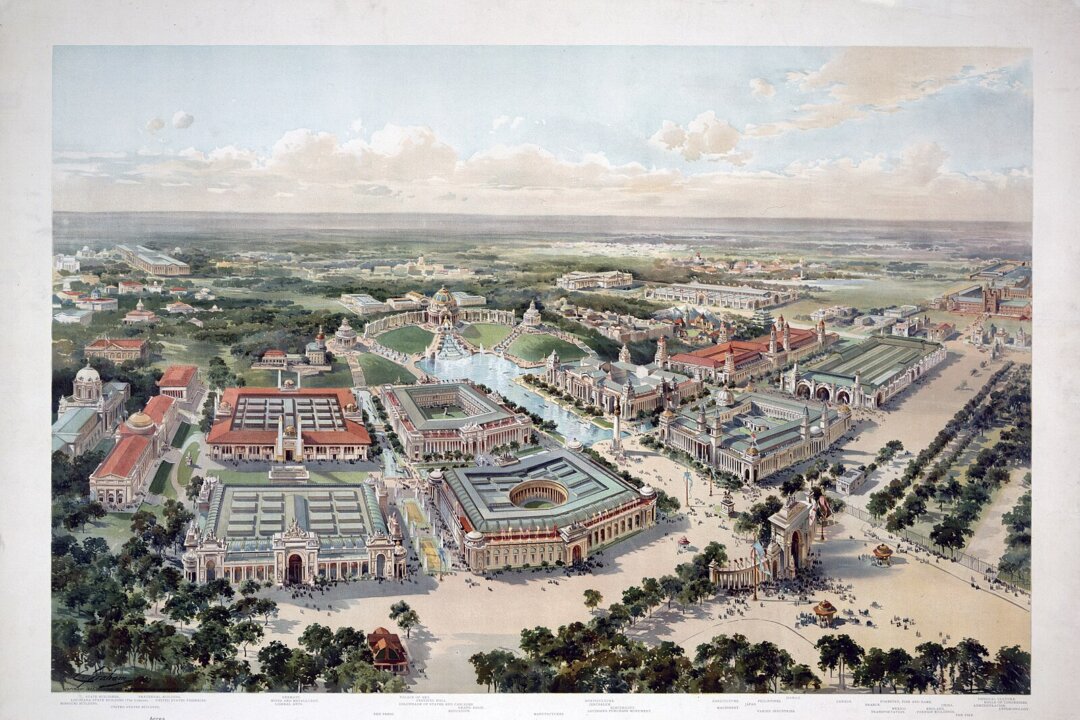 A postcard with a bird’s eye view of the 1904 St. Louis World’s Fair. (Public Domain)
Before you dismiss this bit of trivia as mere fluff, consider this: 68,655 boxes were sold at the 1904 fair for $0.25 each, or half the price of admission. Today, that translates into $8.75 each. The St. Louis fair ran for seven months, and over that time sales totaled $17,163.75, or $619,948.86 today.
You might say that Morrison and Wharton’s right stuff was their fluff.
Only the Rich
Once upon a time the sweet confection known simply as spun sugar was enjoyed only by the rich. In 15th-century Italy, Renaissance-era chefs melted large pans of sugar. Using forks or other utensils, they created strands to place on sticks or as adornments on sweetmeats (candies without chocolate). Centuries later, European chefs made Easter eggs from spun sugar, or use the strands as webs of gold and silver to decorate assorted artistic designs.
Much skill was needed to serve spun sugar as a dessert. Making it was also expensive and labor intensive so only the wealthy were able to enjoy it. Enter two Tennessee inventors and candy lovers, Morrison and Wharton.
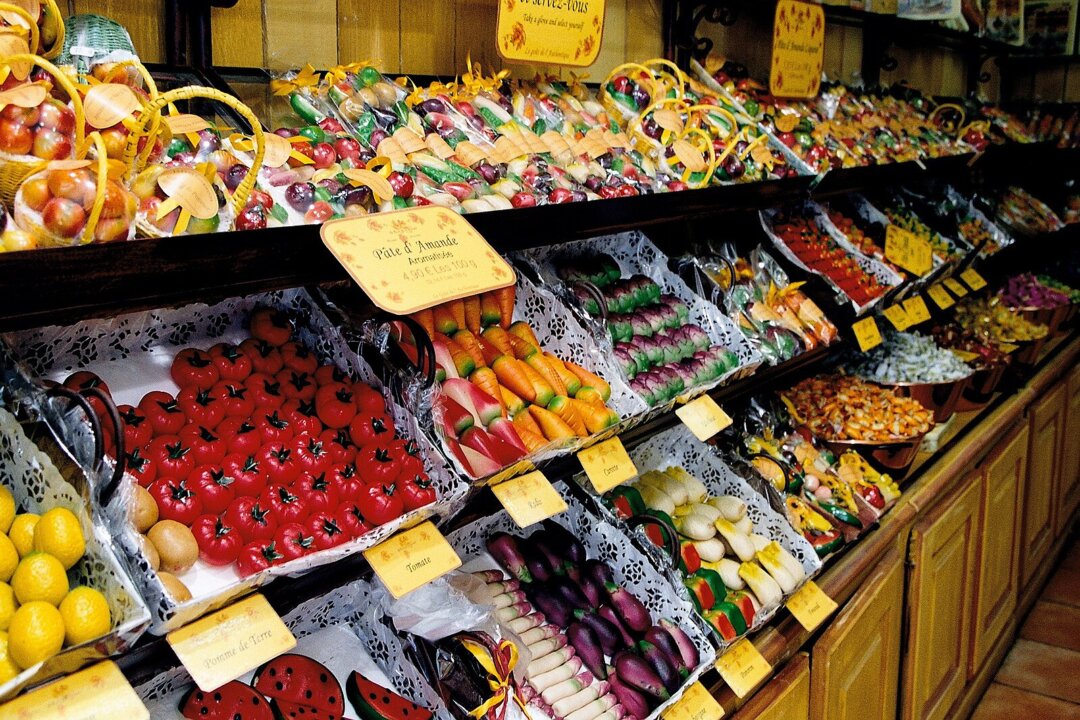 Sweetmeats are another name for non-chocolate treats. (Public Domain)
An Unlikely Collaboration
Morrison was an inventor, author, and local leader in civic and political affairs. During his career, he was associated with William Jennings Bryan and President Woodrow Wilson. He also liked to write children’s books along with his primary profession as a dentist. He graduated from the University of Tennessee Dental College in 1890 and served as president of the Tennessee Dental Association in 1894.
Not as much is known about Wharton other than he was a Nashville candy maker and inventor. As a candy maker, Wharton knew that sugar was the key ingredient. Who better for a candy maker to team with in creating a new type of sweet dessert than a dentist? Both men loved sweets. That’s why they began experimenting with an electric machine that could spin sugar.
They finished their electric candy machine in 1897 and patented it in 1899. Their device melted crystalized sugar into a liquid and then it was spun around a central ceramic bowl using centrifugal force and injected into tiny holes by compressed air. As the sweet syrup sprayed through the holes, it solidified almost instantly into long skinny strands two-thousandths of an inch in diameter. The result was a feathery, sticky concoction they named Fairy Floss.
Before the St. Louis World’s Fair, Morrison and Wharton sold their patent rights to their invention to the Electric Candy Company of Nashville. The company immediately saw the confection’s potential. They knew the main ingredient was inexpensive and now that sugar could be spun electronically, it offered a large profit margin but an affordable price for consumers. What better way to introduce the masses to the cloud-like culinary sensation than offering it where the masses gathered?
 A girl enjoys her cotton candy. (Max4e Photo/Shutterstock)
Fairy Floss’s Debut
Large fairs and expositions were a popular way to introduce new products and inventions to a large number of people in the late 19th and early 20th centuries. Twenty million people attended the seven-month long St. Louis World’s Fair in 1904, and it was there Fairy Floss made its debut. For $.25 customers got Fairy Floss in a wooden box decorated with colorful lithographs of the fairgrounds. Many fairgoers purchased boxes as souvenirs and as gifts to be mailed to friends, expanding exposure of the new confection and the machine that made it.
In addition to their massive sales, Morrison and Wharton’s electric candy machine won a prize for “novelty of invention” at the same 1904 fair where Alexander Graham Bell’s Radiophone (wireless telephone) and an early electric typewriter also debuted. Capitalizing on that success, after the fair’s conclusion the Electric Candy Machine Company began leasing their machines nationwide for $25 a month.
The popularity of Fairy Floss quickly became a mainstay at fairs, carnivals and circuses, but the name cotton candy didn’t come about for another few decades. Ironically, it was another dentist, Dr. Josef Lascaux of Louisiana, who came up with its current name. After the original patent expired in 1921, Lascaux worked to redesign the machine that often rattled, overheated, and randomly shut down.
In an effort to differentiate his product from Morrison and Wharton’s, Lascaux renamed the product cotton candy because it reminded him of Louisiana’s fluffy white cotton. After his modifications didn’t work out, Lascaux let his patent expire but the name cotton candy stuck, at least in the United States. Australia and Finland still call the feathery treat fairy floss, while the United Kingdom and India call it candy floss.
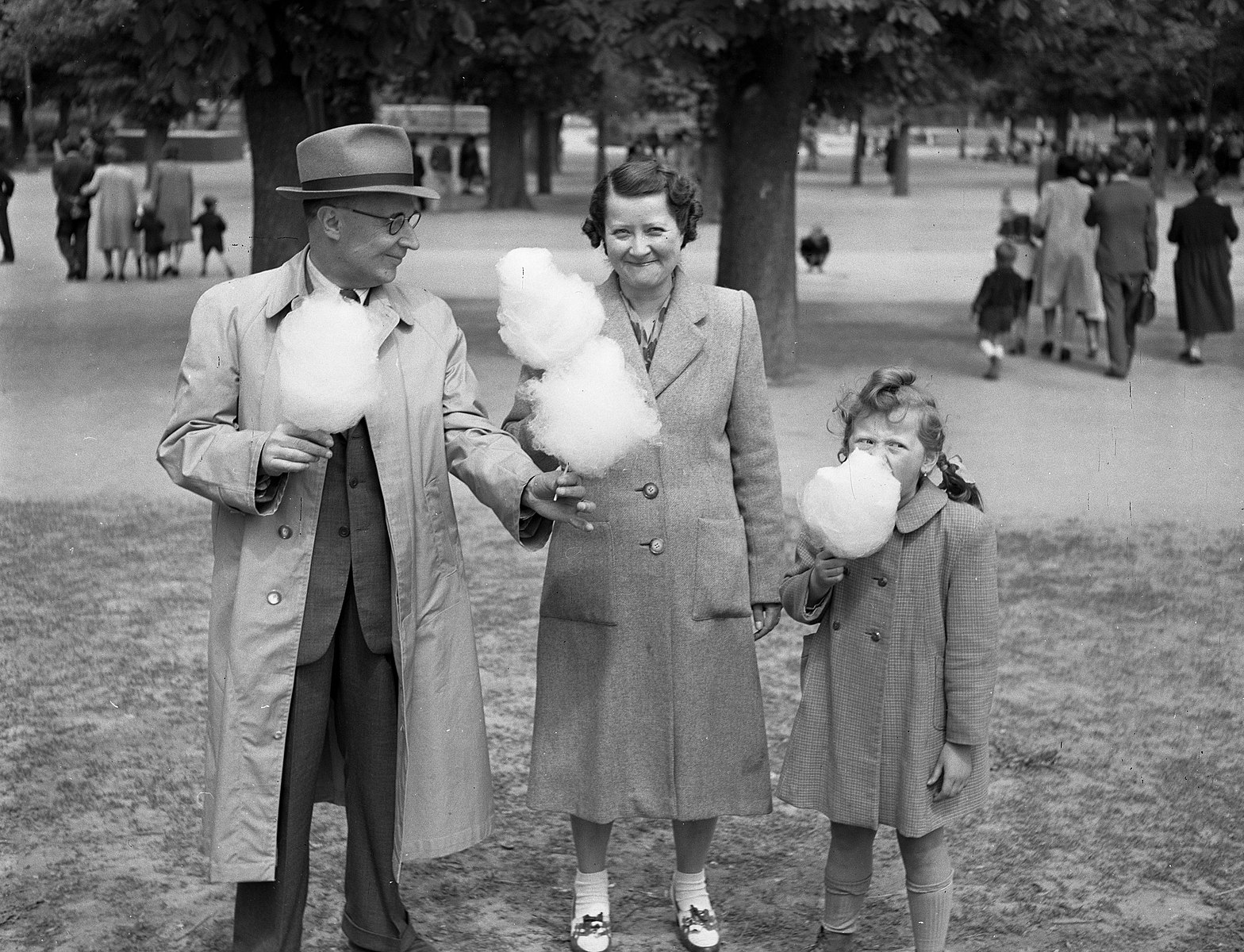 A family enjoys cotton candy in 1946. (Lissák Tivadar/CC BY-SA 3.0)
Cotton Candy Facts
Much has been made of the fact that two dentists played a significant role in cotton candy’s evolution, but in their defense, cotton candy is primarily non-caloric air. Though sugar is the main ingredient, cotton candy contains less sugar than many soft drinks. It also lacks fat, sodium, and cholesterol. A one-ounce serving of cotton candy contains a mere 105 calories, fewer than other popular fair foods.
Traditionally, cotton candy came in just two flavors and colors: cherry pink and raspberry blue. Today the fleecy fun fluff is available in multiple colors, flavors ,and even sugar-free options. Nor is it only found at fairs and amusement parks. It has transcended those traditional venues and is often found at birthday parties, holidays, and other celebratory gatherings.
Sugar may be the essential ingredient in traditional cotton candy, but for many candy lovers it remains popular because it’s sprinkled with nostalgia, whimsy, and fond childhood memories.
Correction: A previous version of this article misstated the era of U.S. expositions. The Epoch Times regrets the error.
What arts and culture topics would you like us to cover? Please email ideas or feedback to features@epochtimes.nyc