



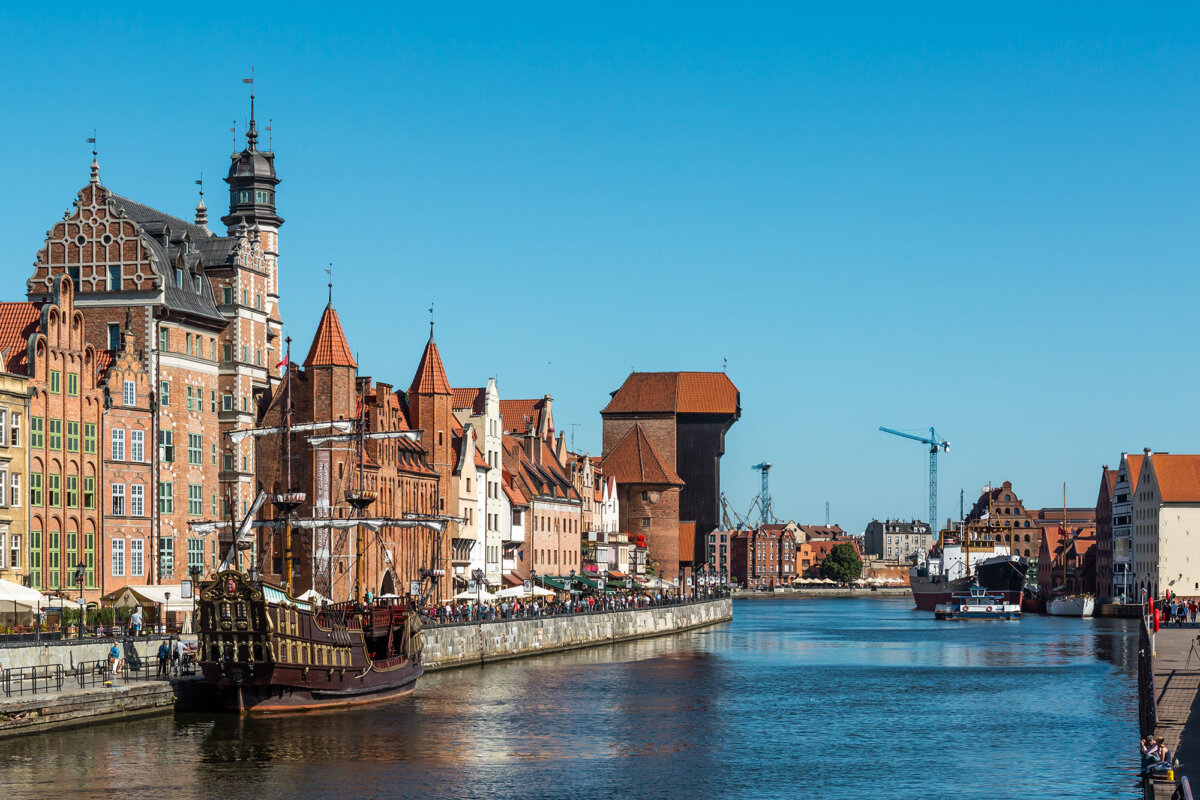
Plenty of good stories start with a boat ride—including this one. The small, unpretty tourist vessel, perhaps a repurposed 1980s passenger ferry, cast lines and pushed back from the wharf. I sat on the breezy, open upper deck on a sunny, early-summer day, the fun of the Dlugie Pobrzeze (Long Embankment) along the Motlawa River in full swing.
Dating back to the 14th century, this was once a hardworking place. Part of the Hanseatic League, a network of international traders, it was here that goods bought and sold across Europe flowed in and out of Gdansk, Poland. But on this day, it was all tourists and happy locals walking the cobblestones of Old Town, eating and drinking at restaurants and cafes that were once warehouses, marveling at the Great Crane (once the largest port crane in the world), and riding the carousel and AmberSky Ferris wheel.
But this day was not about the river. Our destination was the sea.
On the Edge of Poland
Although the heart of Gdansk sits just inland, this historic city has long been defined by the Baltic. For decades, the bountiful beaches there have attracted the rich and royal—a Polish Riviera that is only increasing in popularity.
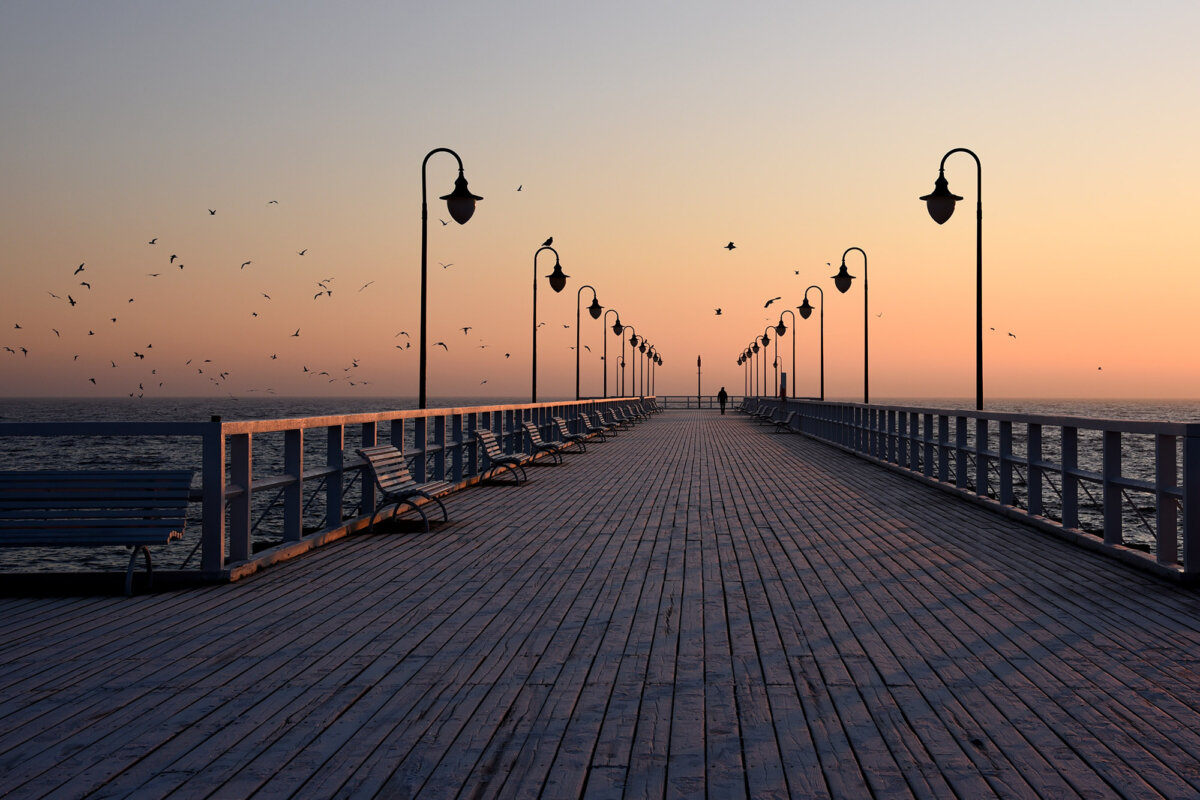
Our target today was the longest wooden wharf in Europe and the salty waves that spread out in either direction from it, with hotels and cafes and so much more all along the coast. But just a few minutes from the Old Town, we would need to navigate a solidly blue-collar zone to get there—a fascinating voyage in itself.
Gdansk is still Poland’s main port and was once a major power in the shipbuilding industry. Solidarity, the trade union that shook communism across Poland and eventually all of the Eastern Bloc, was born out of the strikes here. Its leader, Lech Walesa, who became president and won the Nobel Peace Prize, still lives locally.
The city has now become a tech hub, and its rapid transformation and gentrification were literally visible from the decks of the boat. Those historic warehouses gave way to glassy condos and office complexes, many still in the construction process. But within about 10 minutes, we motored into the industrial zone and got a glimpse of the Gdansk of the 1970s and 1980s.
Moving to the bow for a view of both sides, I listened, without any comprehension, to the commentary emanating from the speakers. It was all in Polish and German. We passed striped smokestacks, a sugar terminal, and old, hulking Soviet apartment blocks. There were also plenty of cargo vessels—tankers, car carriers, and container ships. Some were being loaded, others repaired. A select few were in the midst of being built.
Although it may be dwindling, this was a testament to Gdansk’s enduring shipbuilding legacy.
‘Pearl of the Baltic’
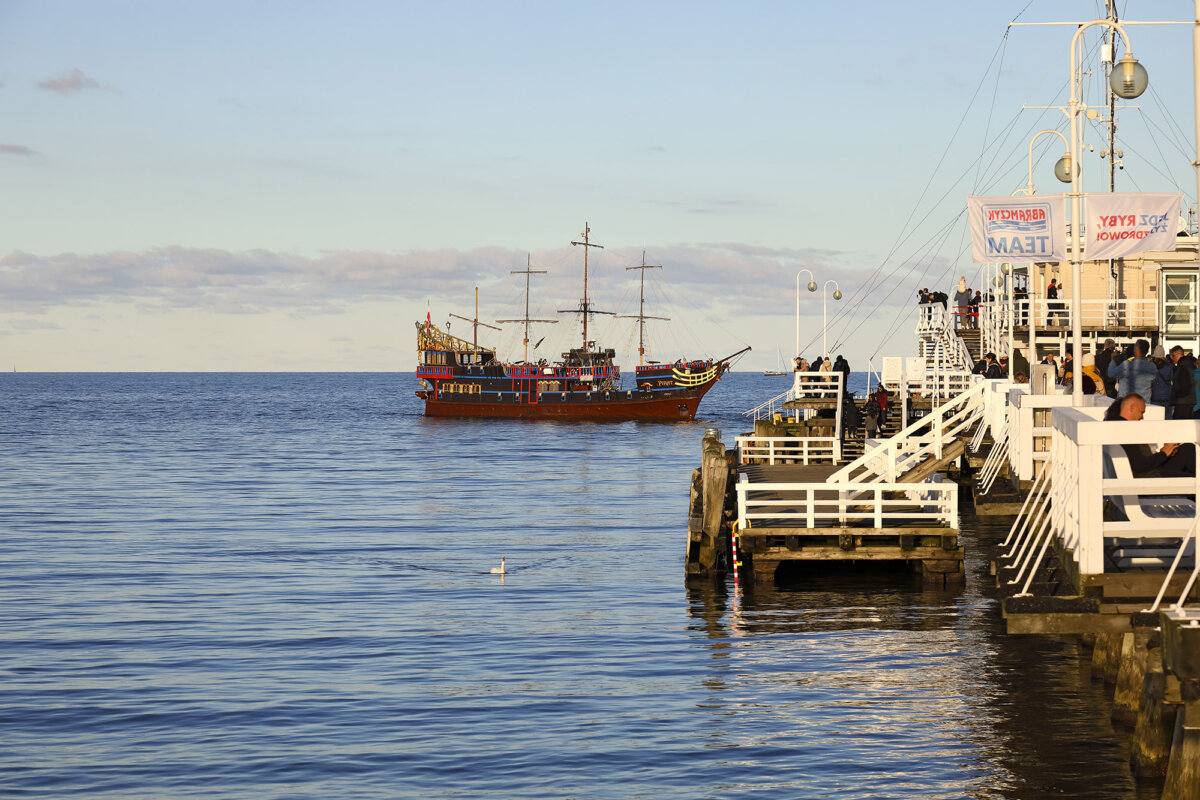
As we turned a corner at the Westerplatte peninsula, everything changed again. The summer heat was swept away in fresh Baltic breezes. Soon enough, our old boat was chugging out on the open sea. Beaches stretched out of sight, off both port and starboard. From the latter, the sand disappeared into a vibrant green forest.
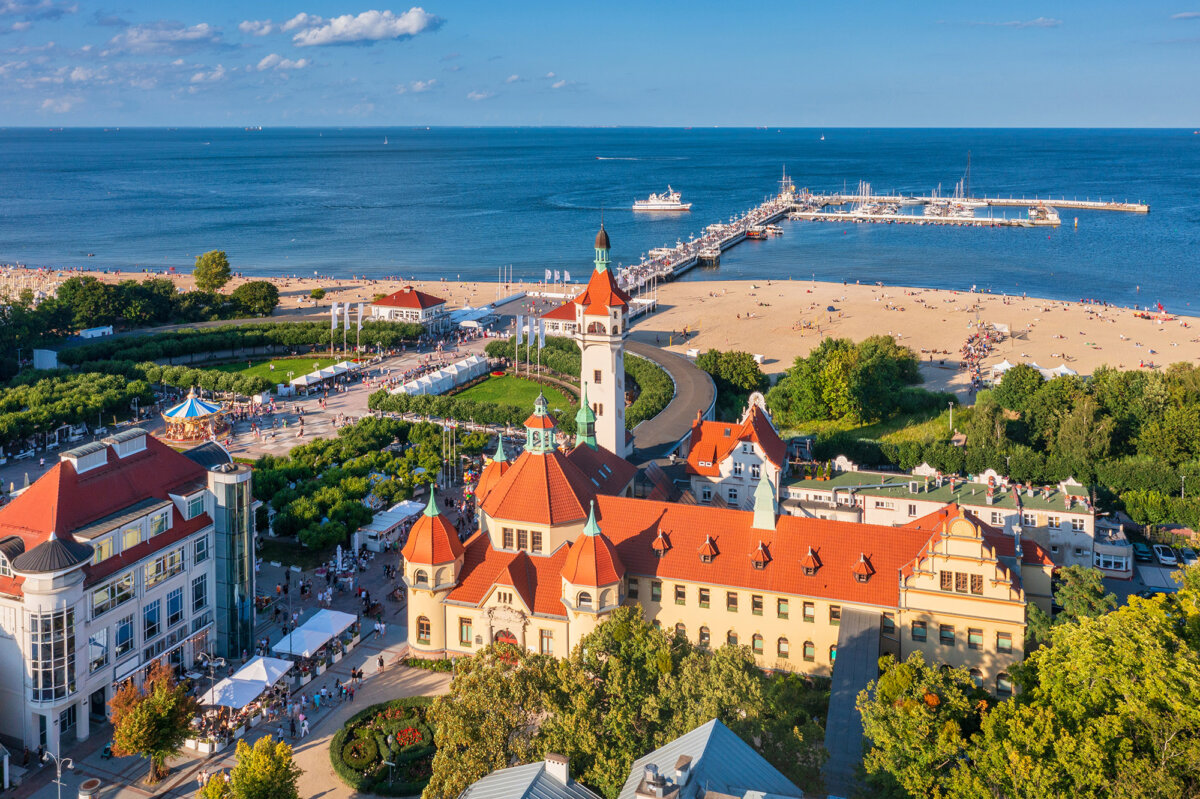
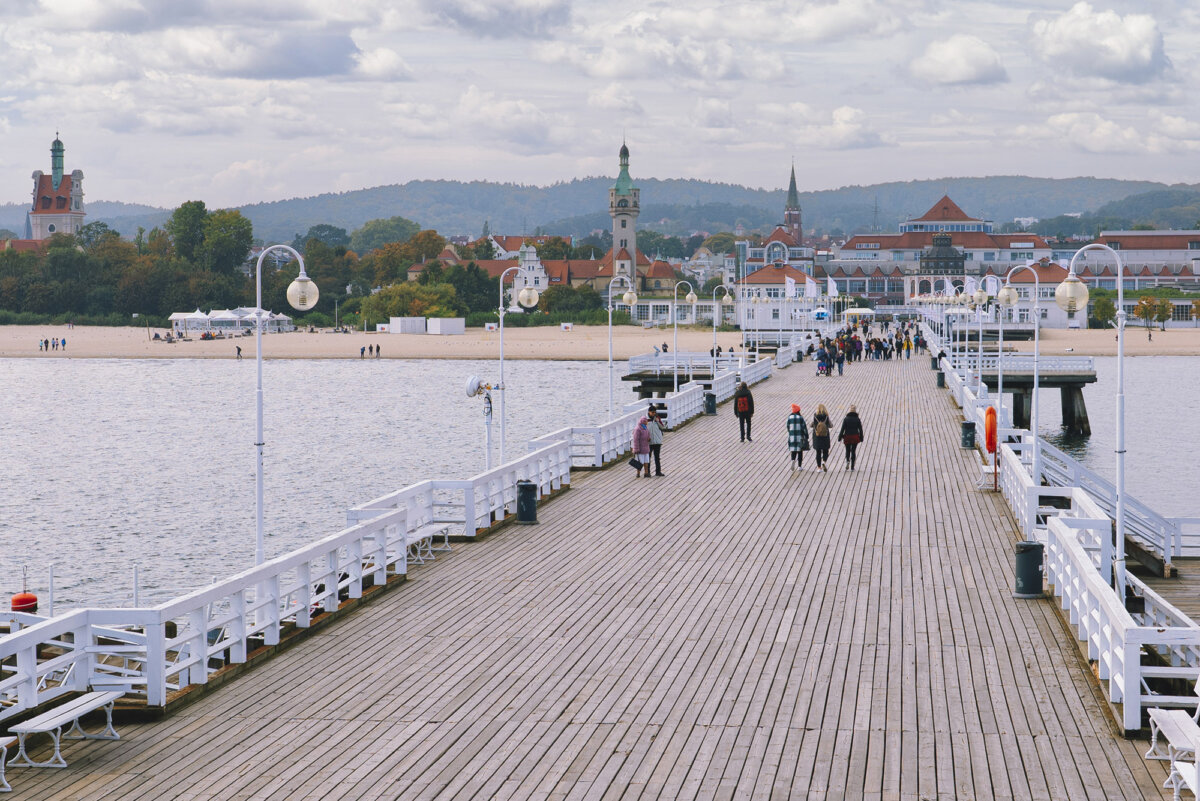
Arriving at the town of Sopot (which forms the Tricity area with Gdansk and Gdynia), we pulled alongside the Molo w Sopocie. Disembarking, I walked the full length of the pier, almost 1,700 feet. Reaching dry land, I was surrounded by history.
Sopot is sometimes known as the “pearl of the Baltic.” Now a bustling place, it was transformed from a sleepy, 12th-century fishing village. In the 16th century, the wealthy started coming here for rest and relaxation, the pleasures of the sea coupled with natural mineral springs. They built manor homes for summer getaways. Its most prominent place to stay, the belle epoque Grand Hotel, rose right next to the pier in the 19th century and still stands today.
The beaches here are easily as beautiful as anything I’ve seen on the Mediterranean—broad, white sands, backed by dunes. But on this day, they were blessedly uncrowded, even on a Friday afternoon in late June. Perhaps it was clear evidence that people can’t quite believe that Poland, of all places, can be a paradisiacal sun destination.
Stepping off the wooden pier is like striding back in time, and feels a little like a fairytale. Colonnaded walkways are lined by tiny shops and food stalls and symmetrical gardens planted with bright flowers, pink and white and purple. There’s a carousel in the middle. Grand, gabled towers rising over everything.
The boardwalk, curving and shaded by mature sycamores and oaks, was fairly busy. Bicyclists steered around rollerbladers and slow strollers. Older couples held hands and ate ice cream cones on the benches. An accordion player in a straw hat added an appropriate soundtrack to the whole scene.
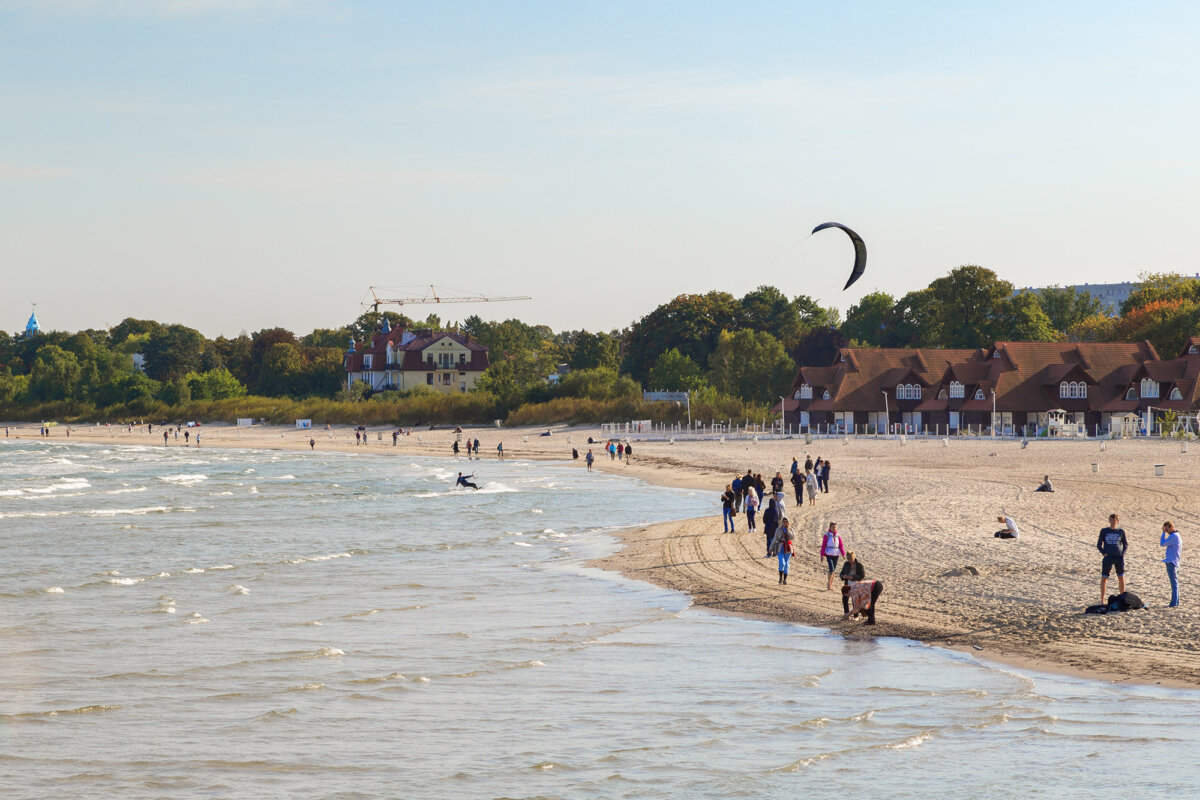
Beach Life
Like most beach towns, the pursuits here are mostly pleasurable and move at an unhurried pace. After stretching my legs on the boardwalk, I browsed the stores lining Ulica Bohaterow Monte Cassino, the main pedestrian street, as well as the menus at the many patio cafes there.
I ended up back at the beach for a simple, very late lunch: a plate of really excellent fish and chips with a view of the cabanas and beach volleyball players. On the way back toward the middle of town, I ducked into the Grand Hotel, now part of Sofitel.
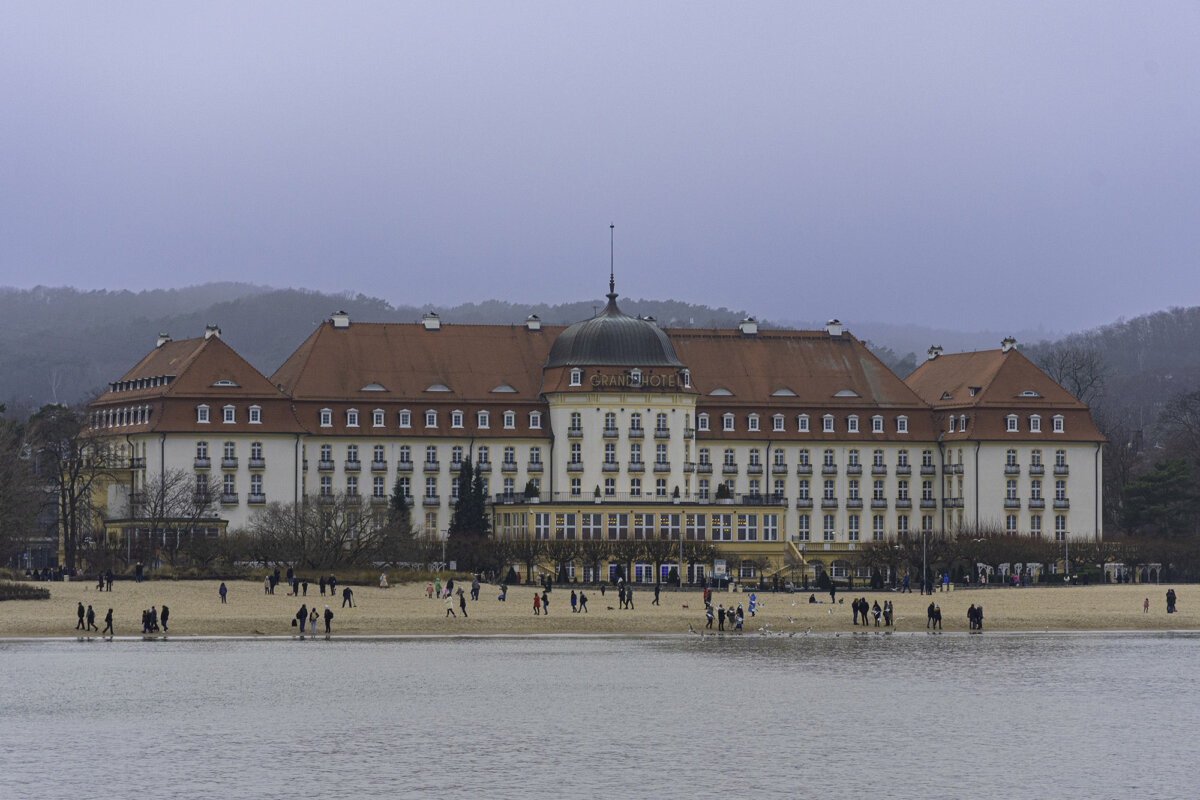
I was greeted by hushed luxury and a wall of photos of the luminaries who had laid their heads here. They included heads of state, actors, singers, and soccer players. Also greeting me was a very friendly bellman, who led me over to a table and flipped through the glossy pages of a tome about the history of the hotel, pointing out the highlights.
But I wouldn’t join the ranks of the guests—not that they would put my photo on the wall, anyway. I had to head back to Gdansk. And not on a fun and fascinating boat ride, but rather on a hot, crowded, rush-hour train.
But as I made my way to the station, back along Bohaterow Monte Cassino, the crowds thickening with those retreating from the beach and seeking an early dinner, I made a vow. Next time I came to Sopot, I would definitely stay a few days, perhaps in Grand Hotel style, and spend more time along the Baltic. Sun and sand in the Polish Riviera.
_________________
When You Go
Getting there: The main airport in the Tricity area is Gdansk Lech Walesa Airport, only about 7 1/2 miles from Sopot. Most flights land here from other European airports, so your trip from North America will probably include a connection in a place such as Amsterdam; Zurich; Frankfurt, Germany; or Warsaw, Poland.
Where to stay: In addition to all the history, the Sofitel Grand Sopot offers sea vistas, manicured gardens, and a bright pool and spa with water views.
If you choose to make the beach a day trip from Gdansk, the rooms at the towering Mercure Gdansk Stare Miasto offer sweeping views of the city, within steps of the Old Town and the main train station.
Getting around: Getting from Gdansk to Sopot is easy. If you don’t have time for a boat ride, the train between the main stations in the two cities takes between 10 and 20 minutes. The ticket costs as little as a couple of bucks. In Sopot, you’ll probably get around on foot or on bicycles, which can be rented there.
Take note: Although Poland is a full member of the European Union, it has not adopted the euro, which is a good thing; in general, this helps keep prices lower than prices in many other European countries. You can exchange U.S. dollars for Polish zloty at a currency exchange ($1 converts to about 3.70 zloty) or simply use an ATM that allows for international transactions (most of them will).
