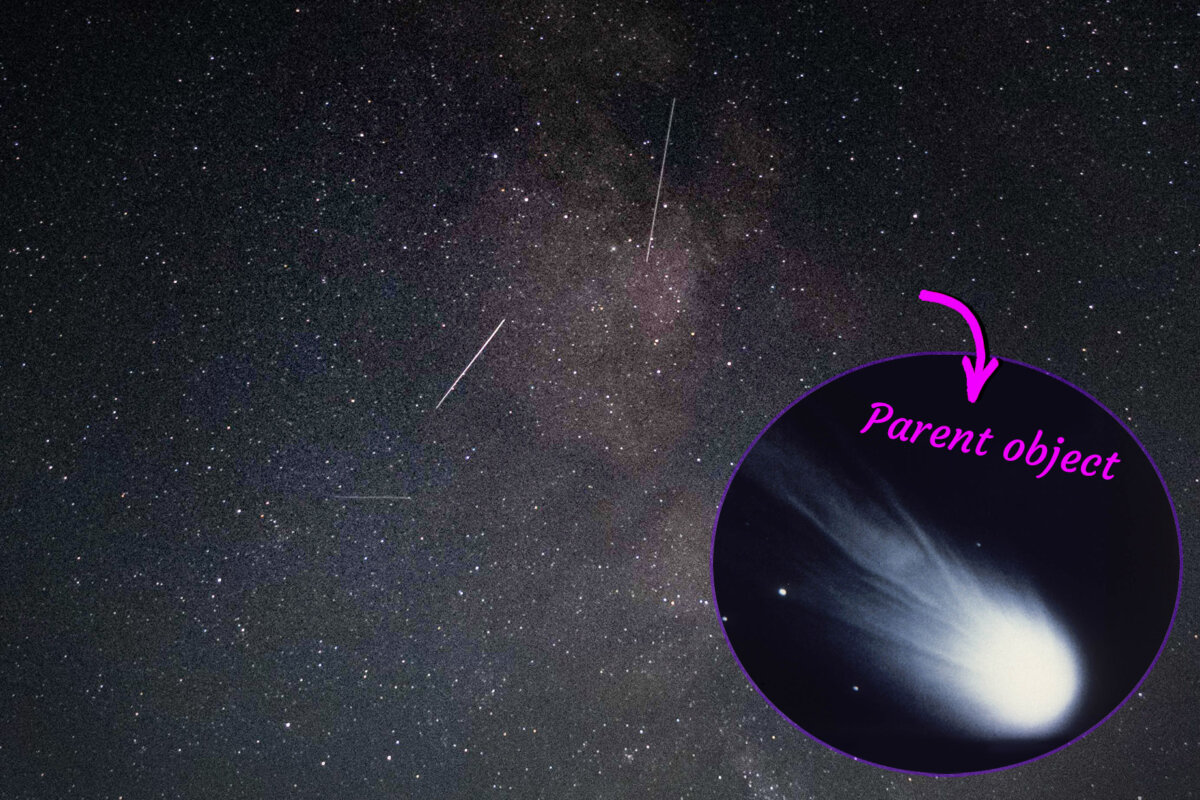
When it reaches its peak later this month, a shower of unusually swift meteors will be observable streaking through dark and moonless skies—ideal lighting conditions for meteor spotting.
The Orionids, a meteor shower named after the constellation Orion where they seem to come from but don’t, will have no moonlight to contend with when they reach their thickest on Oct. 21. The new moon occurs the very same day, offering stargazers optimal darkness.
It may be possible to spot the Orionids as early as Sept. 26, albeit in lesser numbers. They’ll die out entirely by Nov. 22.
Meteor showers appear faithfully around the same time each year. That’s because they occupy a spot in space where Earth plows through annually along its orbit round the sun. They flare up due to friction when they enter our atmosphere.
What Are Meteor Showers?
Beginning their lives as ancient debris, meteors are bits of space rock and frozen gas—the detritus of orbiting comets—that flow through our solar system in vast cosmic streams. Whenever our planet hits them, meteors appear.
They look like shots of light streaking through the sky as they burn up. They’re subtle, though, hardly a fireworks show. Shooting through space at dozens of miles per second, meteors often disintegrate completely.
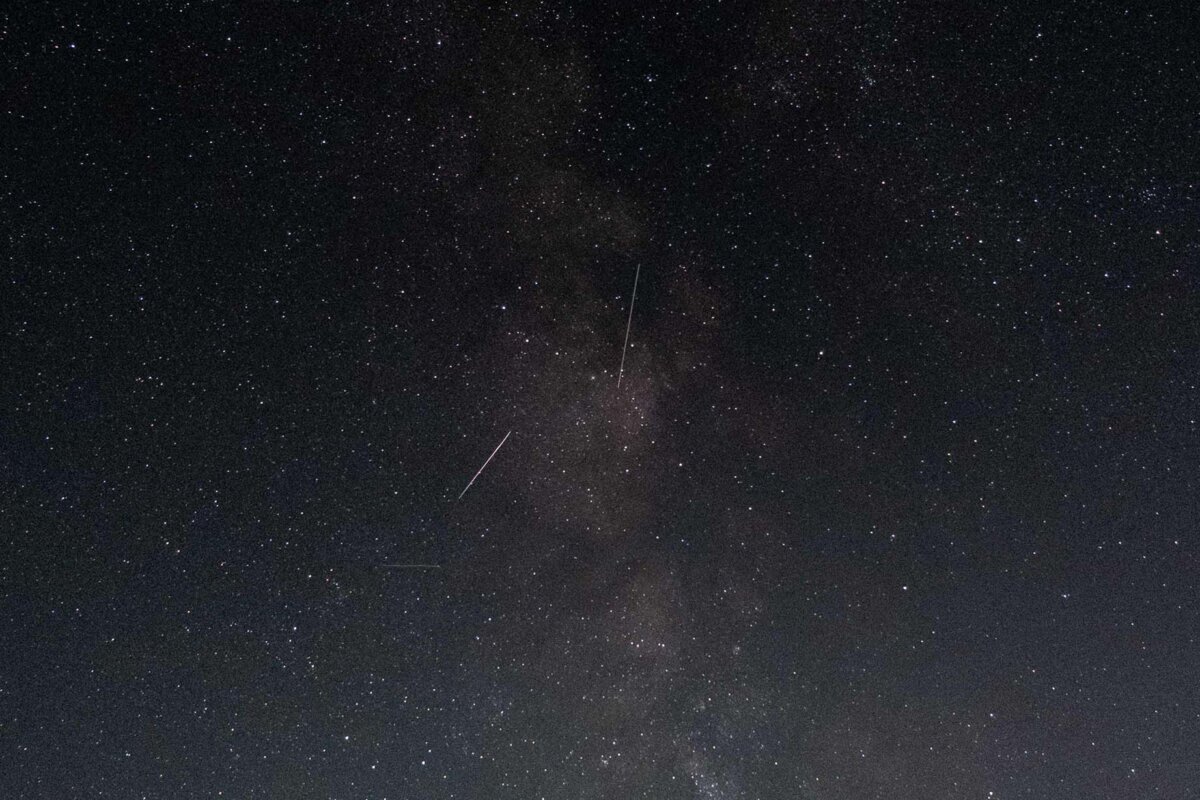
But the Orionids travel even faster than most meteors, as they follow a retrograde orbit, meaning they loop the sun the opposite way as Earth does. They don’t float in daintily but come crashing in head-on. Orionid meteors can reach speeds of 41 miles per second.
Though fast, the Orionids aren’t famous for being bright. They’re fainter than most meteors. Yet what they lack in brightness they make up for with their long trails of light, called persistent trains, which can linger for a few seconds after a meteor passes. This glowing ionized gas lingers in the wake of a shooting star.
How To View the Orionids
The name Orionids may be misleading to hopeful meteor spotters. Since they seem to radiant from the constellation Orion, an observer might think to look there. The point from which meteors seem to emanate is called the radiant, and the Orion’s radiant is just north of Orion’s club, near the bright, ruddy star Betelgeuse. When meteor spotting, it’s wise to wait until the radiant rises high in the sky, but you shouldn’t look there to find them.
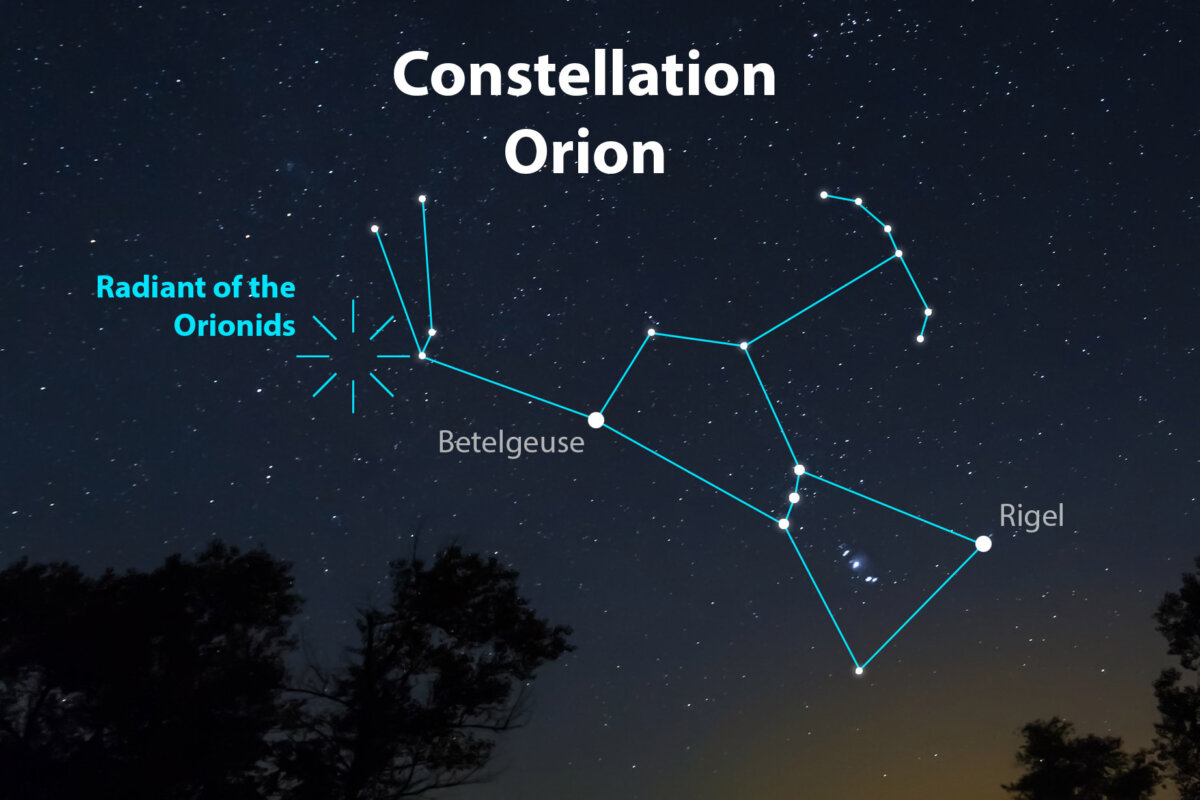
Since meteors fan out from the radiant, they’ll appear anywhere above the horizon. It’s best to lay back, perhaps in a lawn chair or on a blanket, and take in as much open sky as possible to seek meteors all around the radiant. The hours between midnight and dawn are best for spotting the Orionids.
Under moonless skies, one can expect to see 10–20 Orionids per hour. Fortunately, the new moon also occurs on Oct. 21, so it won’t wash out any of the show.
Where Do The Orionids Come From?
Tracing the meteors backward to the bright star Betelgeuse in the constellation Orion, one would be forgiven for thinking they come from there. But that star is well over 500 light-years away while the Orionids are practically on our doorstep, orbiting our sun, literally colliding with Earth. They couldn’t have flown from Orion.
The reason they seem to radiate from Orion is due to a simple trick of perspective. The same as train tracks that seem to converge on the horizon due to one-point perspective, meteors seem to meet at their radiant. They’re all travelling parallel along the same vector—also like train tracks—and follow a fixed orbit in space. The point where they cross paths with Earth also never changes, so their radiant is fixed, forever aiming at Orion the Hunter of ancient Greek lore.
Since they don’t come from Orion, where do the Orionids originate from? The answer is Halley’s Comet.
Officially called 1P/Halley, this comet is one of the few not named after its discoverer but by the man who first predicted its return, Edmond Halley. It was initially spotted over a millennium earlier, in 240 A.D.
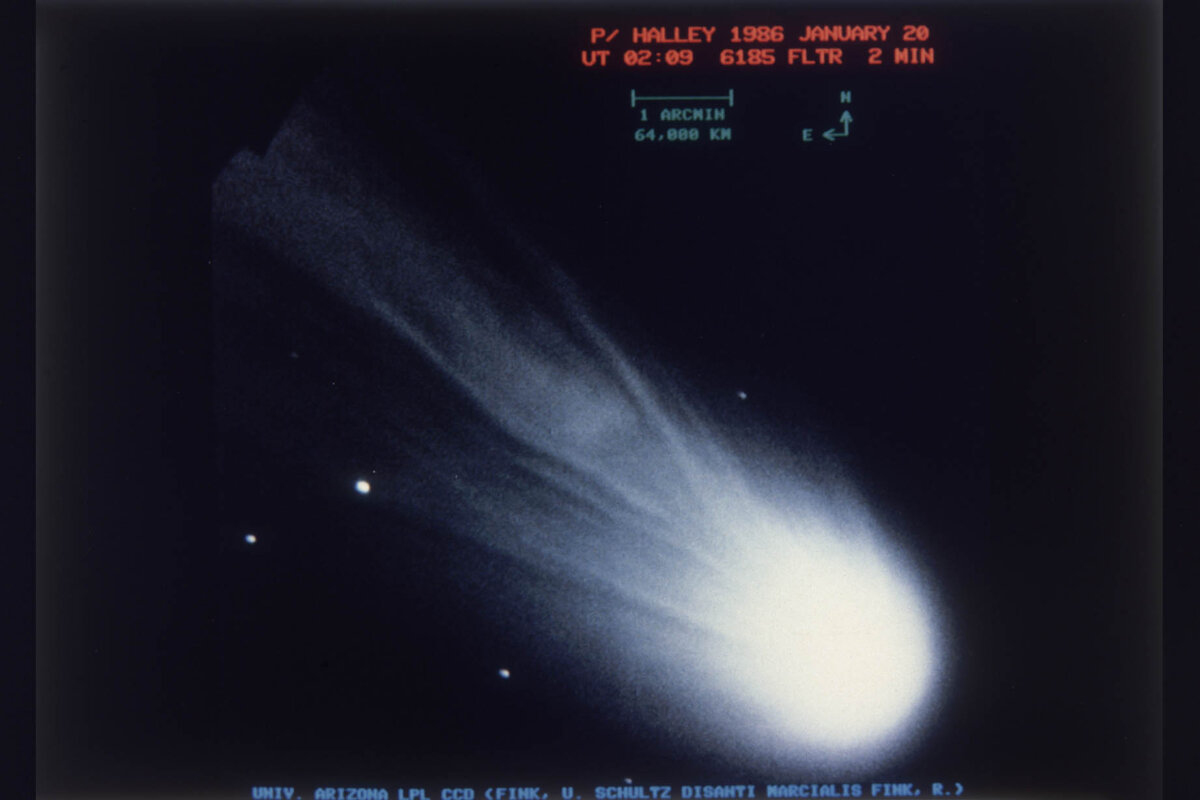
While it orbits the sun like our planets do, this comet takes some 76 years to complete one circuit. Whenever it flies close by, the sun’s radiation causes its frozen surface to sublimate into gas. The comet then releases matter like steam coming from a locomotive, leaving streams of debris in its wake. Earth intercepts Halley’s trail every fall.
And since this comet essentially does a slingshot around the sun before departing for another seven-plus decades, its second leg offers an encore every May; Halley is also responsible for the Eta Aquariids.
The last time Halley’s Comet visited the solar system was in 1986. But while it’s currently in the far reaches of its orbit—somewhere near the constellation Hydra—and won’t return until 2061, its offspring, the Orionids, are here to stay. They’ll remind us of their parent comet every October.