After attending a secret school, Susie King Taylor used her knowledge to teach her fellow freed slaves to read and write. Furthermore, she used her skills to help care for the wounded during Civil War battles. Then once the war was over, she wrote the first memoir of its kind to tell her story of bravery.
On Aug. 6, 1848, Taylor was born into slavery on a plantation in Liberty County, Georgia. When she turned 7 years old, Taylor’s owners allowed her to go live with her grandmother Dolly Reed in Savannah, Georgia. Reed was a free African American who did laundry and traded herbal remedies when she traveled between Liberty County and Savannah.
Even though it was illegal for African Americans to attend school at that time, Taylor’s grandmother hired a private teacher who broke the law to teach her in a secret school. Taylor and her fellow students left the house where the school was located one at a time to stay inconspicuous. They even hid their books by covering them with paper.
At age 12, Taylor knew how to read and write well enough that she began forging travel passports to allow freed slaves to travel legally after 9 p.m. Things went well for another two years. But in April 1862, Taylor’s grandmother was arrested for suspected abolitionist activities forcing Taylor to move back to the plantation with her mother. Then just 10 days later, the Battle of Fort Pulaski between the Confederate and Union Armies put her entire family in danger.
 Battle scars from the Union takeover of Fort Pulaski are still visible on the fort’s brick walls. (Bubba73/CC BY-SA 3.0)
Taylor’s uncle decided to board a ship with his family and escape to St. Catherine’s Island where they could seek protection from the Union Army. Taylor opted to go with him. After two weeks there, the family was then sent to live on St. Simon’s Island, which was under control by the Union Army.
While onboard a ship heading to their new home, Taylor was questioned by the ship’s commander, Captain Whitmore. He asked the 14-year-old if she could read and write. She told him she could. Being skeptical, the captain took out a pencil and notebook and told her to write her name and where she was from.
After Taylor passed the test, Whitmore offered to supply her with materials and books if she would teach. Taylor soon opened a school and started teaching African American children in the daytime and adults at night.
A Fearless Woman
Because the area was an active war zone, Confederate soldiers often attacked St. Simon’s. The freedmen on the island soon formed a militia to protect themselves. Once the Union Army caught wind of the militia, they recruited the men to join the 1st South Carolina Volunteers, which later became known as the 33rd United States Colored Infantry Regiment.
The same year she began the school, Taylor married an officer in the regiment named Edward King. She then left to go to battle with her husband and his fellow soldiers. Her official duties were to take care of the men’s laundry, but she didn’t let that limit her.
While out with the troop, Taylor started cooking and cleaning guns. She even learned how to shoot efficiently. She also taught the soldiers how to read and write during their off-hours. Once the battles started wounding several soldiers in the regiment, Taylor gained new responsibilities. When an epidemic of smallpox broke out, Taylor took charge of caring for sick or wounded soldiers.
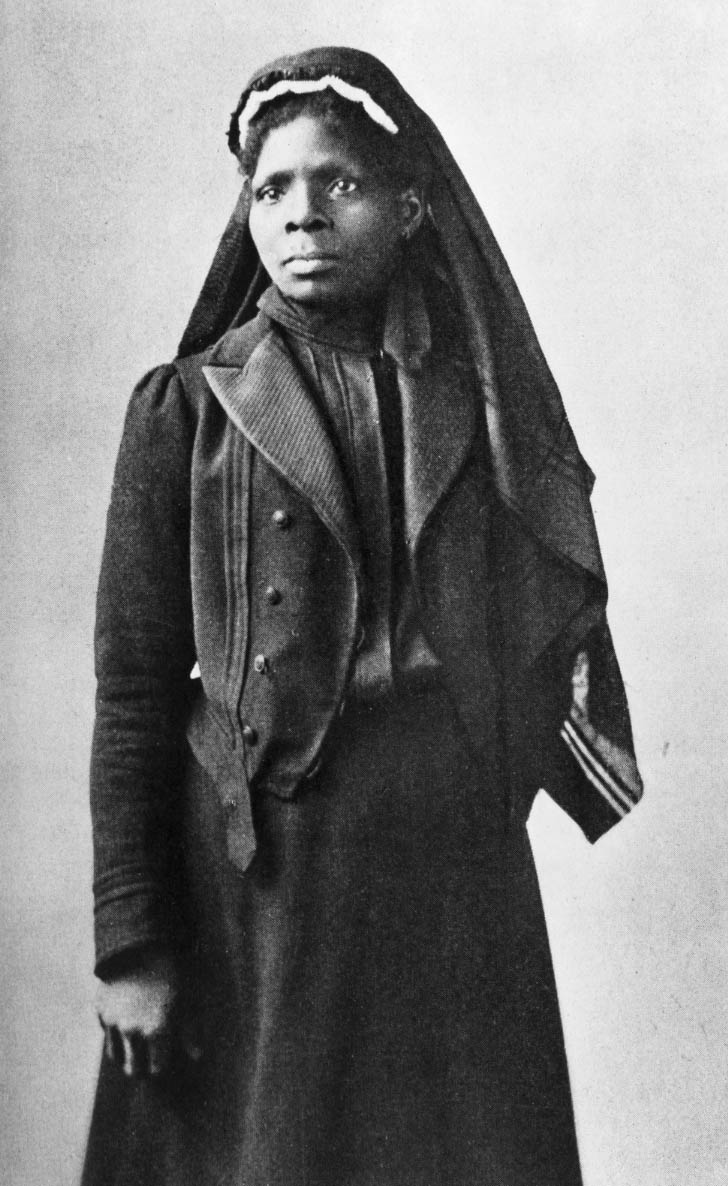 Susie King Taylor in 1902. (Public Domain)
“I was not in the least afraid of the small-pox,” Taylor wrote in her 1902 memoir titled “Reminiscences of My Life in Camp with the 33d United States Colored Troops Late 1st S. C. Volunteers.” She continued:
“I had been vaccinated, and I drank sassafras tea constantly, which kept my blood purged and prevented me from contracting this dread scourge, and no one need fear getting it if they will only keep their blood in good condition with this sassafras tea, and take it before going where the patient is.”
A Dedicated Advocate
Taylor served in the Union Army without pay for just over four years before the war ended. She and her husband returned to Savannah in 1866. She then opened a private school for African American students. She charged just $1 per month for tuition.
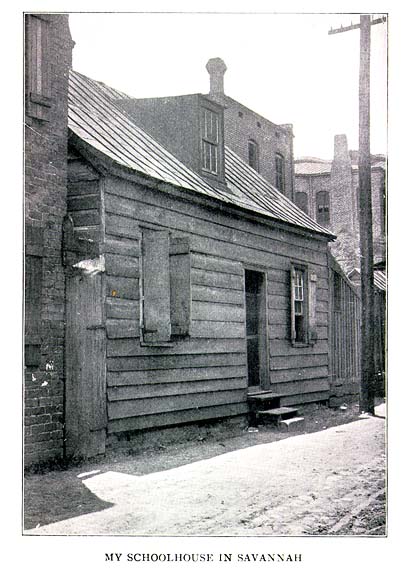 Susie King Taylor’s Savannah, Ga. schoolhouse. (Public Domain)
But tragedy struck. Taylor’s husband passed away from a work-related accident, leaving the pregnant Taylor alone to fend for herself. She scraped by for a while as a teacher, but philanthropists founded public schools that took in African Americans for free, putting her private schools out of business. She then got a job as a servant for a wealthy family and relocated to Boston in 1872. She married Russell Taylor in 1879 and was able to dedicate the rest of her life to helping others.
While in Boston, Taylor became an activist and a high-ranking member of the Women’s Relief Corps, which gave aid to Civil War veterans. She held a variety of positions with Corps 67, the founding chapter of the WRC. In 1893, she became president of her chapter.
Then in the 1890s, Taylor travelled to Louisiana to visit her ill son. After seeing how things were different for African Americans in the south than they were in Boston, she decided to write her memoir detailing her experiences. Her book was eventually published in 1902. Taylor died 10 years later at age 64.
In 2018, Taylor was posthumously inducted into the Georgia Women of Achievement Hall of Fame for all of her lifetime achievements. Since her death, several schools have been opened in her name.
What arts and culture topics would you like us to cover? Please email ideas or feedback to features@epochtimes.nyc