



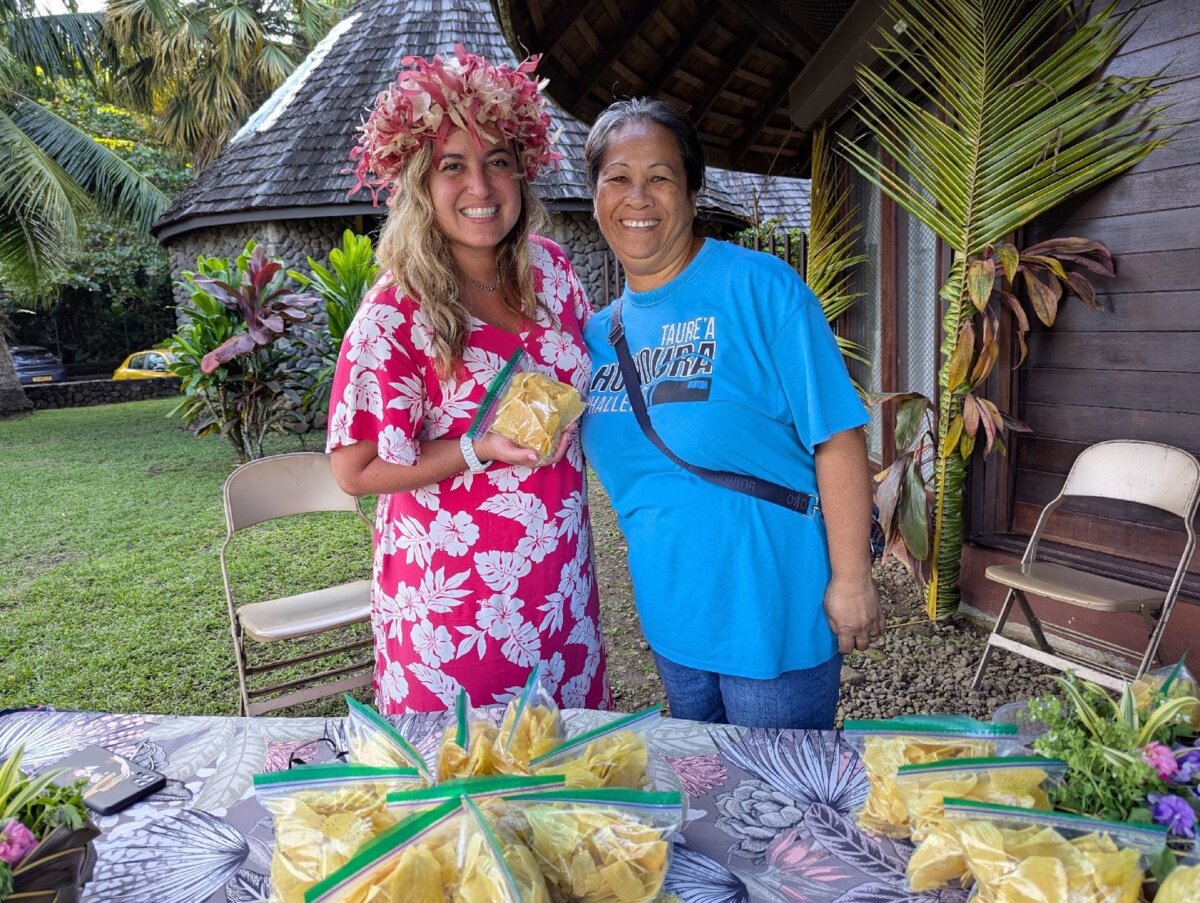
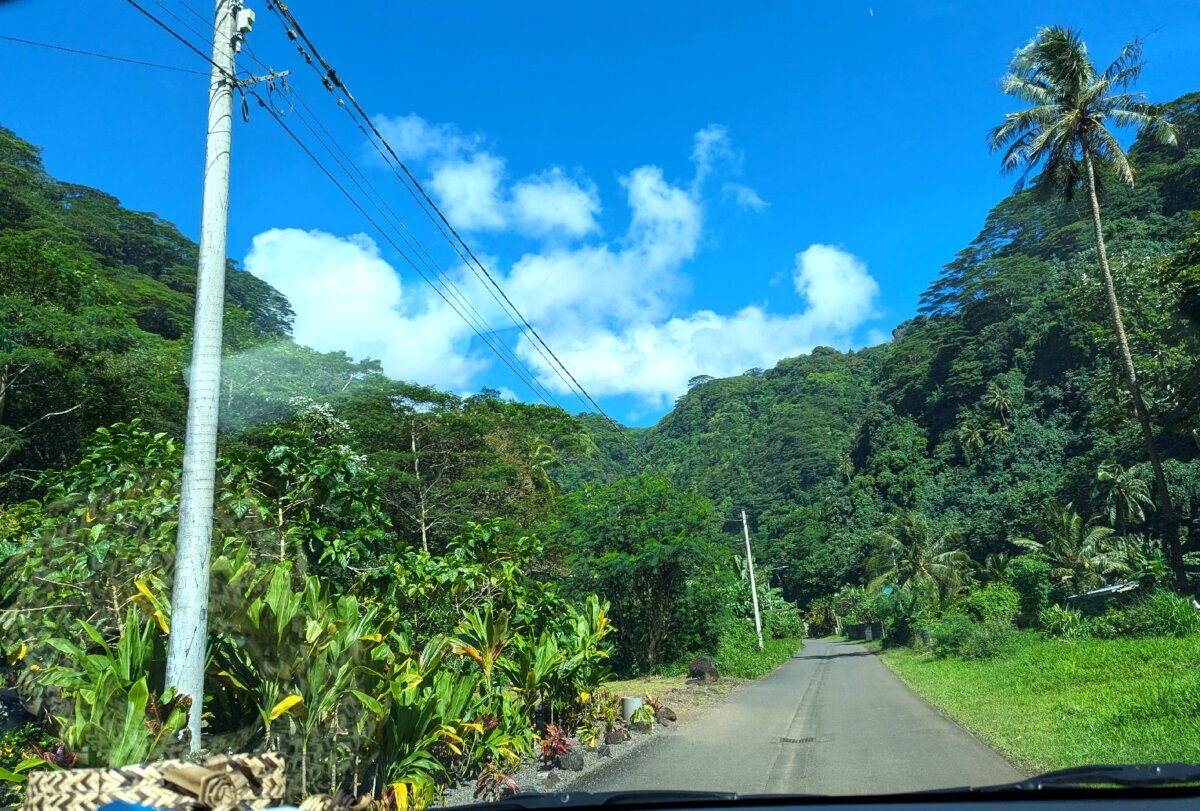
Views from the passenger seat of an SUV transported me to a world far from the traffic and concrete of Los Angeles. On an extraordinary road tour around Tahiti’s coastline, it was clear that the skyscrapers here are not manufactured but are sacred ancient mountain peaks.
Tahiti is the largest island in French Polynesia, a collection of five archipelagos in the South Pacific Ocean below the equator. It is barely a speck on the map, but its 118 islands and atolls, including the water, make it the size of Europe.
Tahiti is two volcanic islands—Tahiti Nui and Tahiti Iti—connected by a natural isthmus. On my day journey with fourth-generation Tahitian Marie-Jean Nordhoff of Nordhoff Adventure, we circled the larger Tahiti Nui on its only two-lane highway surrounding a mountainous interior. At its southernmost point, the road stretches onto Tahiti Iti, but not for long because its rocky plateau with steep cliffs dropping to the sea is impossible to navigate by car—earning it the moniker “end of the road.”
Towering palms and dense vegetation lined the road as we sat in traffic waiting to get out of Papeete, the capital of Tahiti. Congestion being relative, nothing could frazzle this city girl. The sea was never far, and the romance of this venerable land was ever-present.
Skylines are nonexistent here because local codes limit building heights. It’s no wonder those in search of calm and unspoiled natural beauty find their way to this magical spot.
Could this be paradise?
The approximately 72-mile drive around Tahiti, called the Circle Tour, can be done in a day. Think of the island as a gigantic botanical garden with sights and cultural experiences found only here.
Take, for example, the mystical Grottes de Mara’a, an archeological site on the west coast. It is a trio of connected caves naturally shaped by erosion over thousands of years. It is free to the public, and a well-marked path led us through the jungle-like park until we reached the ancient caves’ opening. Lush ferns dangling from spores in the rocks never die of thirst because they are perpetually fed by clear groundwater flowing from the hillside above. The largest of the caves, Te-ana-pape-o-Vai-poiri, is visible from the sea and serves as a navigational landmark for seafarers.
As European explorers were deep in the throes of discovering the world, a celestial event happened in 1769 that put Tahiti on the map. From the black sandy beach at Matavai Bay on the north shore, Capt. James Cook observed the transit of Venus—when Venus passes directly between Earth and the sun. The transit happens in pairs every 243 years.
A British naval officer, oceanographer, and mapmaker, Cook traveled to Tahiti to build an observatory for this purpose. His telescope accurately measured the size of the solar system—an astronomical game changer in more ways than one. He named the peninsula Point Venus.
Almost a century later, the Point Venus Lighthouse, the only lighthouse in Tahiti, was constructed on that beach. The navigational beacon is a public park and historic landmark that commemorates Cook. The eight-story-high four-sided tower was built with coral rubble and stone. As families picnicked and frolicked, I couldn’t resist kneeling to grab a handful of the velvety soft sand while contemplating the scientific feat that changed the world.
Yet there’s more along this never-ending road.
Just off the highway, we walked a dirt path to a waterfall cascading from 100 feet above. It is one of multiple waterfall sites in Tahiti, including the 980-foot-high Cascade de Fautaua, which is among the tallest in the world.
That day we shared a wonderful lunch of homemade dishes with a local family in their backyard—the beach.
“Welcome to the countryside,” chimed Marie-Jean as we rolled onto the small farm’s dirt driveway, where handsome roosters strutted freely. In the shade of a leafy tree and with gentle waves washing onto the shore, we broke bread (a French baguette) at a picnic table. The gorgeous spread included divine Poisson Cru, or i’a ota, the national dish of French Polynesia—a refreshing salad of raw sushi-grade fish, lime juice, diced vegetables, and coconut milk that locals eat every day. I could get used to this.
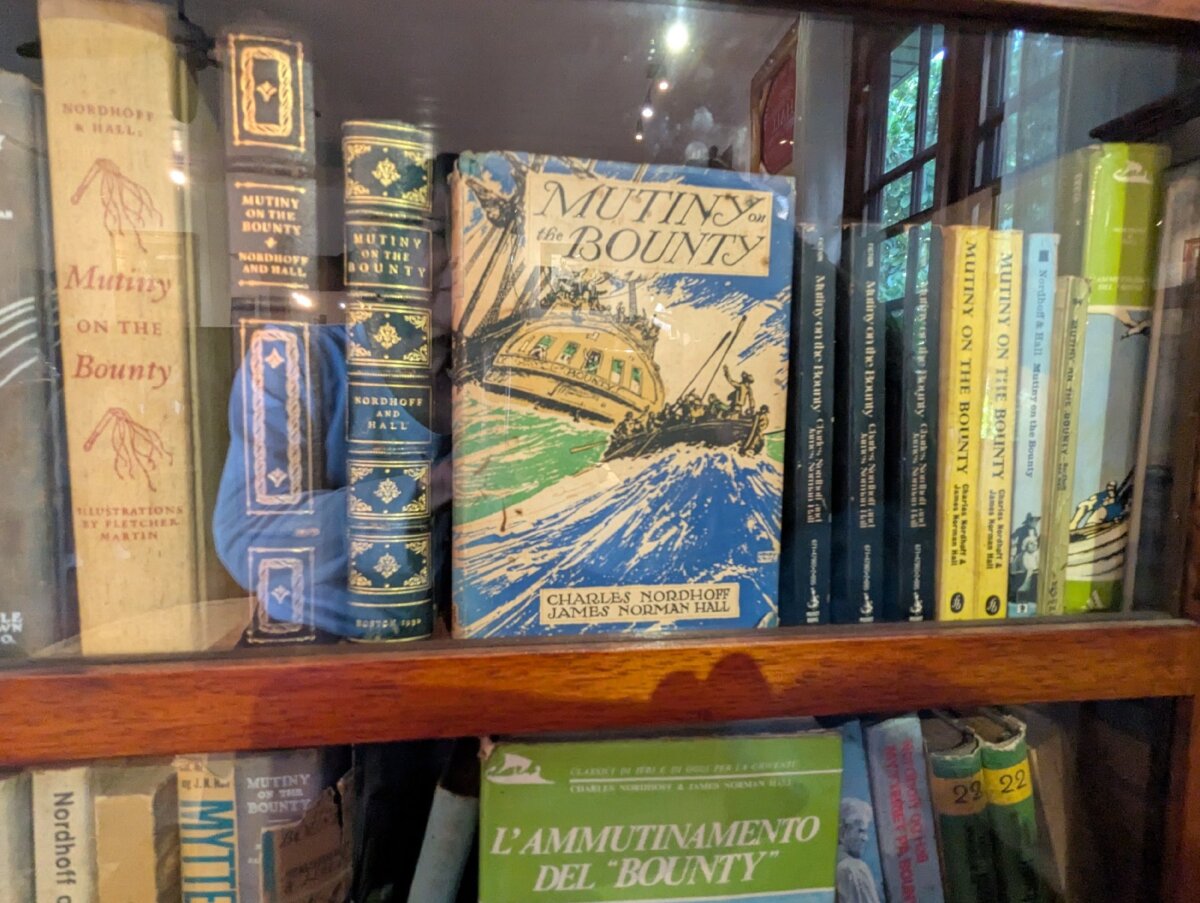
We went back in time inside the preserved tropical home of American writer James Norman Hall. Here, after World War I, he cowrote the true story of “Mutiny on the Bounty” with fellow American Charles Nordhoff, bringing the famous mutiny on the HMS Bounty—a major event in maritime history—to life. The home was designated a historic monument by the French Polynesian government and a historic landmark by Tahiti.
An overseas collective of France, Tahiti and her sister islands makes for an extraordinary blend of cultures. From ancient Polynesian traditions defined by the sea have come vibrant music, dance, arts, practices of sourcing food from marine life and the land, and the Tahitian language to French culture, language, and sophisticated cuisine, the best of both worlds come together.
This road trip was the introduction I needed to learn the island’s lay of the land before diving deeper and beyond. The most beautiful takeaway was seeing—with my own eyes—the generous and happy people of Tahiti in their island paradise.
When You Go
Learn more about Tahiti and Nordhoff Adventure: TahitiTourisme.com
Point Venus Lighthouse: TahitiTourisme.com
James Norman Hall Museum: JamesNormanHall.com
Restaurants and lodgings are also available along the Circle Tour: TahitiTourisme.com
Where I stayed in Papeete: Hilton Hotel Tahiti: Hilton.com
Air Tahiti Nui: My eight-hour nonstop midnight flight from Los Angeles delivered me to Tahiti just before sunrise: AirTahitiNui.com
Athena Lucero is a freelance writer. To read features by other Creators Syndicate writers and cartoonists, visit the Creators Syndicate website at www.creators.com. Copyright 2025 Creators.com
Dear Readers: We would love to hear from you. What topics would you like to read about? Please send your feedback and tips to features@epochtimes.nyc.
