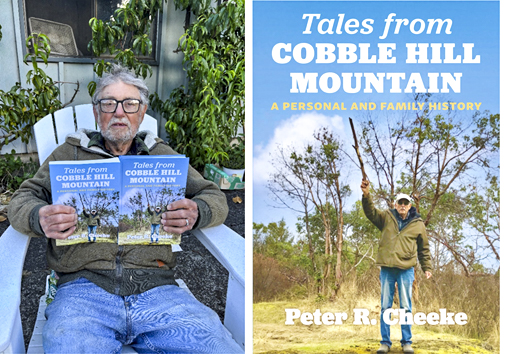
Peter R. Cheeke might not be among the more instantly recognizable people to have an autobiography published this year. A longtime professor of animal science at Oregon State University who’s authored 15 college textbooks, he is best known in his academic field.
But don’t pass him by due to his lack of celebrity. Cheeke’s autobiography, “Tales From Cobble Hill Mountain,” is an uncommonly charming and delightful work. The author, who turns 85 next month, hosts an enchanting tour through his formative years in rural British Columbia, with detours across the eclectic branches of his family tree.
An English Heritage
Cheeke begins his family’s history in Tudor England with Sir John Cheke, a 16th-century professor at Cambridge University who served as the tutor to King Henry VIII’s only son, Prince Edward, the future Edward VI. This ancestor perished amid the internecine religious conflicts during the reign of Queen Mary I when he refused to renounce his Protestant faith. The family later added the extra “e” to Cheke to avoid confusion with nonaristocrats who shared their surname.
As the British Empire expanded globally, the Cheeke family spread from the mother country to Australia, New Zealand, South Africa, and Canada. Despite being born far from England, the Cheekes considered themselves English.
Indeed, the author’s grandmother would ask him if he wanted to go home, meaning England, to which he had to patiently explain that he was already home in his native Canada.
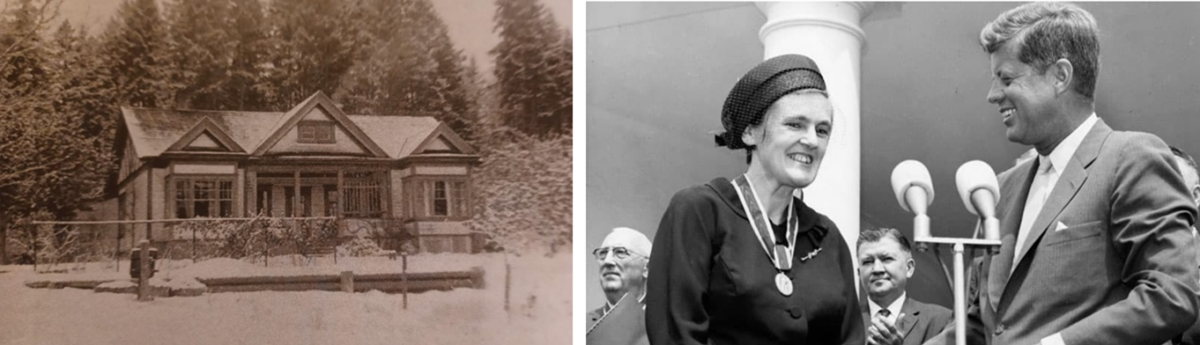
His mother was the daughter and granddaughter of Irish Anglican ministers. She is recalled as being a “bundle of energy” who took multitasking to new levels. She simultaneously ran the family farm while attending night school courses on carpentry; she also maintained her own sweater business. She provided the stability missing from his life as his father careened through several jobs.
The Formative Years
Cheeke goes into loving detail about his childhood in Cobble Hill, a rural community on Vancouver Island. There were no school buses, so the young Cheeke joined his classmates in walking about two miles to attend classes. His days began with chores that needed to be completed before leaving for school.
“I got up first, started the fire in the wood-burning kitchen stove, and put on a kettle of water,” he writes. “After it boiled, I made a pot of tea for my parents. Then I fed the chickens. We usually had a couple dozen layers plus a rooster. I had daily kicking matches with a succession of roosters. Fortunately, I always won, but sometimes it was quite a fight.”
Cheeke re-creates a bucolic world with winters of frozen ponds that accommodated hockey and ice skating, to be followed by the summertime collecting of wild berries that his mother made into jam. Both of his parents carried tins of tobacco and rolling paper to make their own cigarettes, and the young Cheeke and his brothers would mischievously swipe these materials to emulate their elders.
In his teen years, Cheeke built a pair of log structures for the farm’s small flock of sheep. This memory is wonderfully recalled through invigorating descriptions of how he cut logs with a chainsaw and carefully assembled shelters for his sheep, which he entered in 4-H competitions.
The Scientific World
Cheeke’s closest neighbors were the Oldham family. One of their daughters, Frances, received a medical degree from McGill University in Montreal and then moved to the U.S. capital, Washington, to work for the Food and Drug Administration (FDA).
In the early 1960s, Dr. Frances Oldham Kelsey was hailed as a hero for refusing to grant FDA approval for the tranquilizer thalidomide; the drug was discovered to cause birth defects when used by pregnant women. Dr. Kelsey would visit the area every summer for a monthlong vacation.
Cheeke’s childhood love of farming and animal husbandry evolved into academic studies as an agricultural scientist. This culminated in a doctorate from Oregon State University that led to a lifelong career on the school’s faculty.
Cheeke shares the research areas that he pursued, with particular emphasis on rabbit nutrition. This was a previously obscure niche that he eagerly plumbed because, as he admits, “there was almost no information on the nutritional requirements of rabbits” and he felt he could stand out given the lack of research by competitors.
Cheeke cofounded the university’s Rabbit Research Center and began publishing a journal devoted to the topic. He participated in the quadrennial World Rabbit Congress, though during the 1992 iteration in Rome, he declined an invitation to meet with the Pope. The author later explains he became skeptical of religion at age 5 and never outgrew that feeling.
“Tales From Cobble Hill Mountain” is unusual in having fairly extensive appendixes in which Cheeke offers information that didn’t fit into his memoir. The most poignant section features previously unpublished short stories written by his father, an aspiring writer who never saw his work in print.
He also offers an articulate essay supporting veganism, which was inspired by his son, Robert Cheeke, a vegan lifestyle advocate and author.
Cheeke’s cheerful personality fuels this pleasantly invigorating look back at a well-lived life. This captivating book will keep the reader smiling throughout its pages.
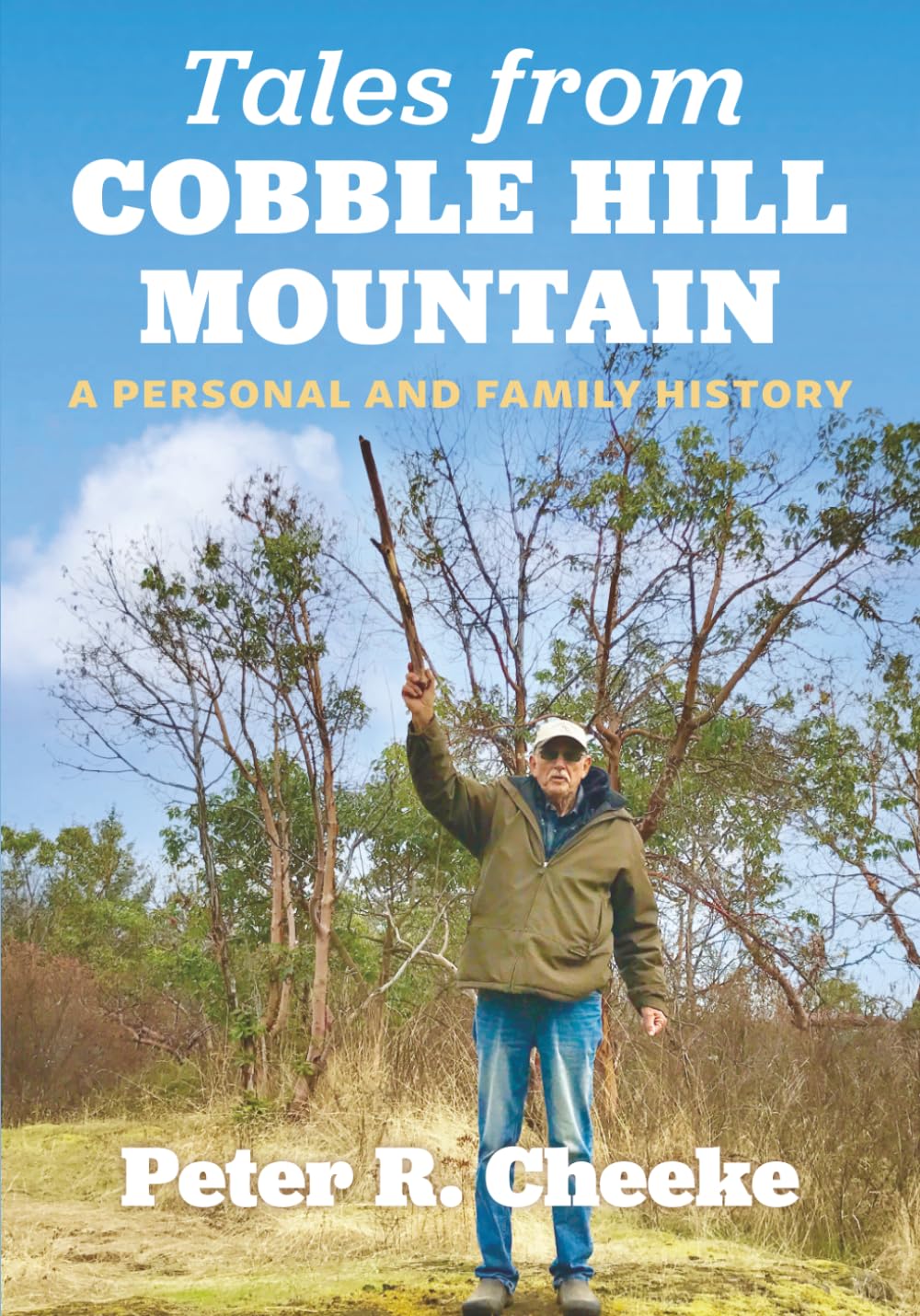
‘Tales From Cobble Hill Mountain: A Personal and Family History’
By Peter R. Cheeke
Gaven Press: June 24, 2026
Hardcover, 266 pages
What arts and culture topics would you like us to cover? Please email ideas or feedback to features@epochtimes.nyc.