



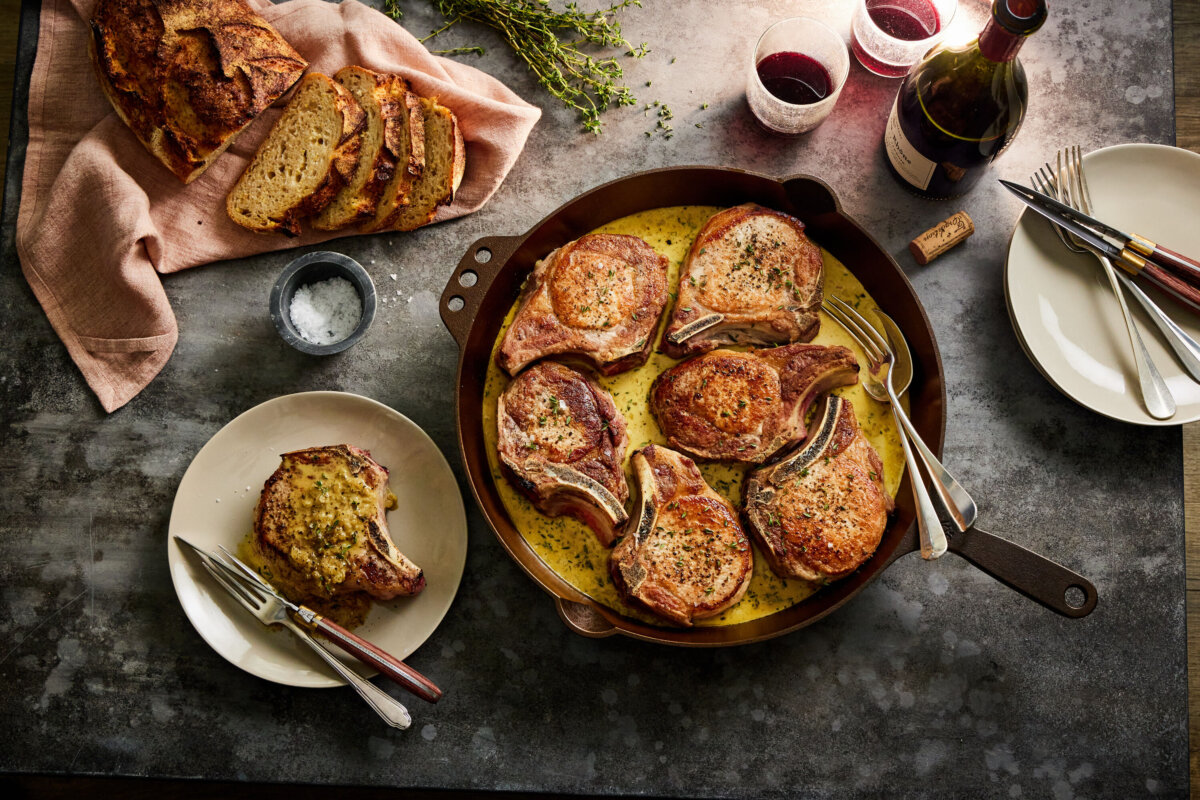
After Matthew Griswold and the Selden brothers began making cast iron pans in Erie, Pennsylvania, in 1865, they went on to enjoy decades of soaring success. Stovetops became a standard fixture in kitchens across the United States, and the flat-bottomed cast iron skillet was an essential.
But with the arrival of aluminum and stainless steel in the early 20th century, the writing was on the wall. The golden age of cast iron cookware came to an end, and original Griswold pans and their like became coveted collectors’ items. Only in recent years have modern cooks embraced cast iron once again—with one Charleston, South Carolina, company at the forefront of the movement.
Vintage-Inspired
If Matthew Griswold were alive now, he might’ve taken his hat off to Isaac Morton. In 2015, Morton founded Smithey Ironware, now one of a handful of American companies helping to spearhead a cast iron cookware revival.
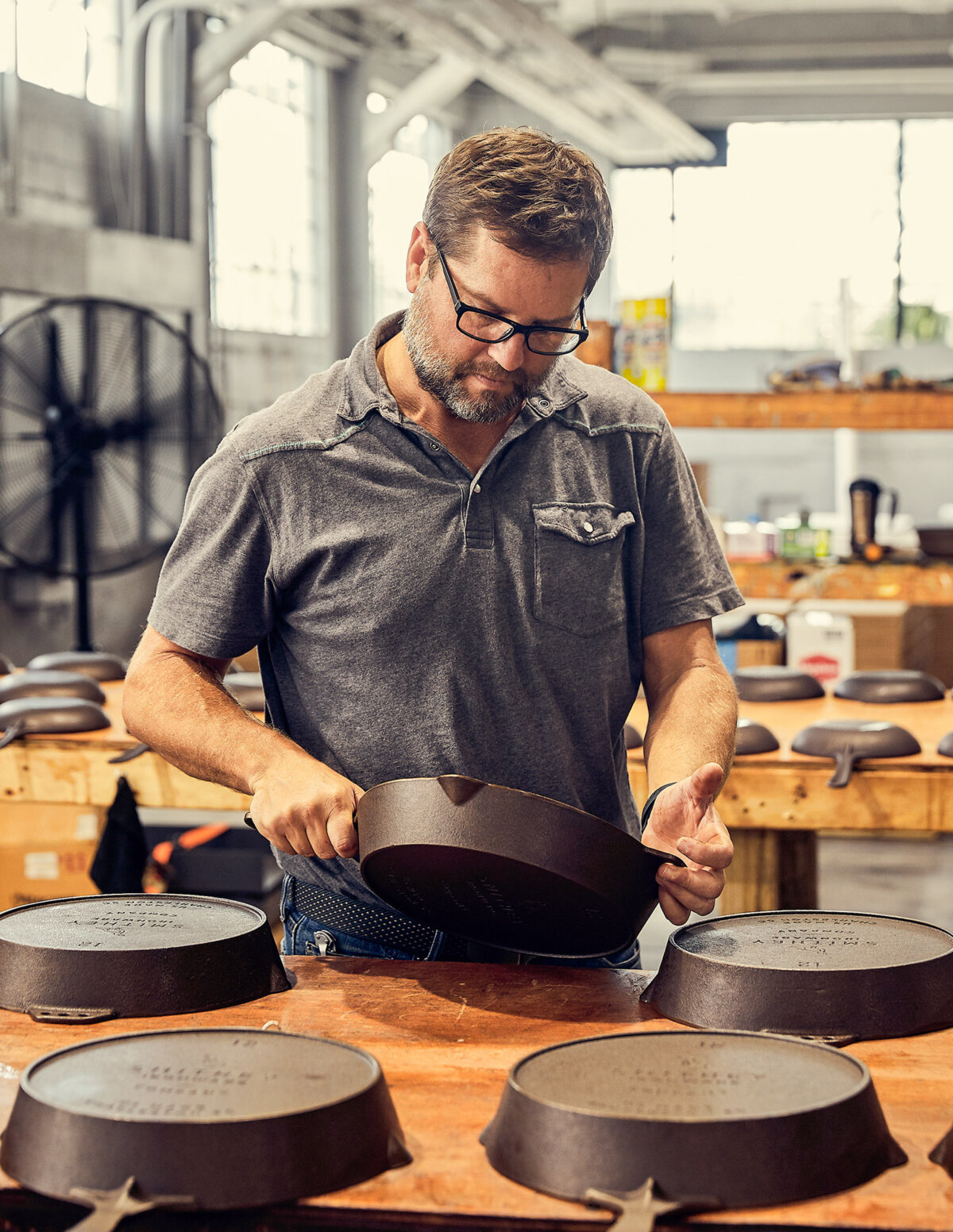
Morton, a former real estate investor, became obsessed with hunting down and restoring old cast iron pans after a family member gifted him a vintage Griswold. He began dreaming of building his own line. Instead of the often rough, cheaply made pans of today, his would bring back the qualities of vintage cast iron he so admired: smooth as glass and made to last forever.
What started as a backyard operation evolved into an heirloom-worthy American brand. And in homage to Morton’s first love of reclaiming old, rusty pans, Smithey also offers a restoration service.
Crafted in America
Smithey’s foundry partner in the Midwest pours the cast iron cookware before sending the pieces to Charleston HQ to be polished and seasoned. The raw castings are sanded down and smoothed, a pneumatic brush is used for further polish, and finally, the skillet is given a sandpaper bath in a machine before layers of seasoning are added.
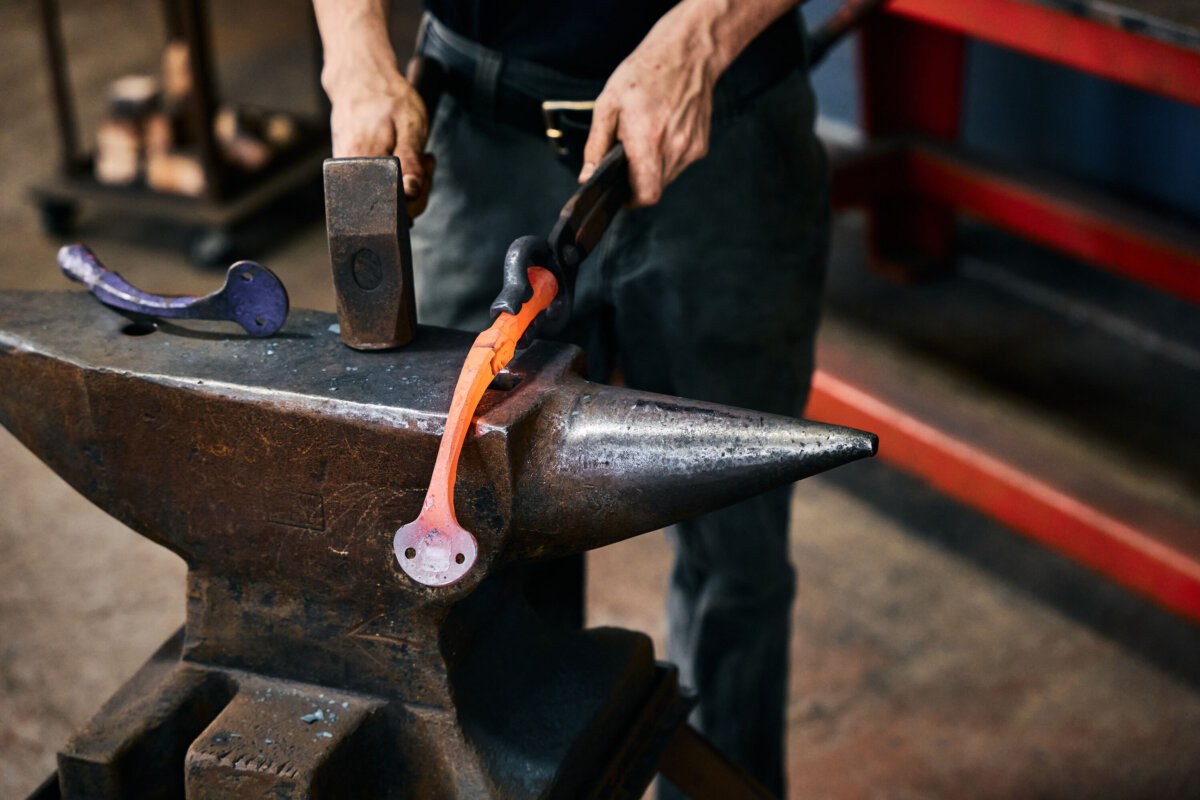
In 2018, the company introduced a line of carbon steel cookware that is hand-forged, pressed, and hammered into shape entirely on site in Charleston.
Editor’s Pick
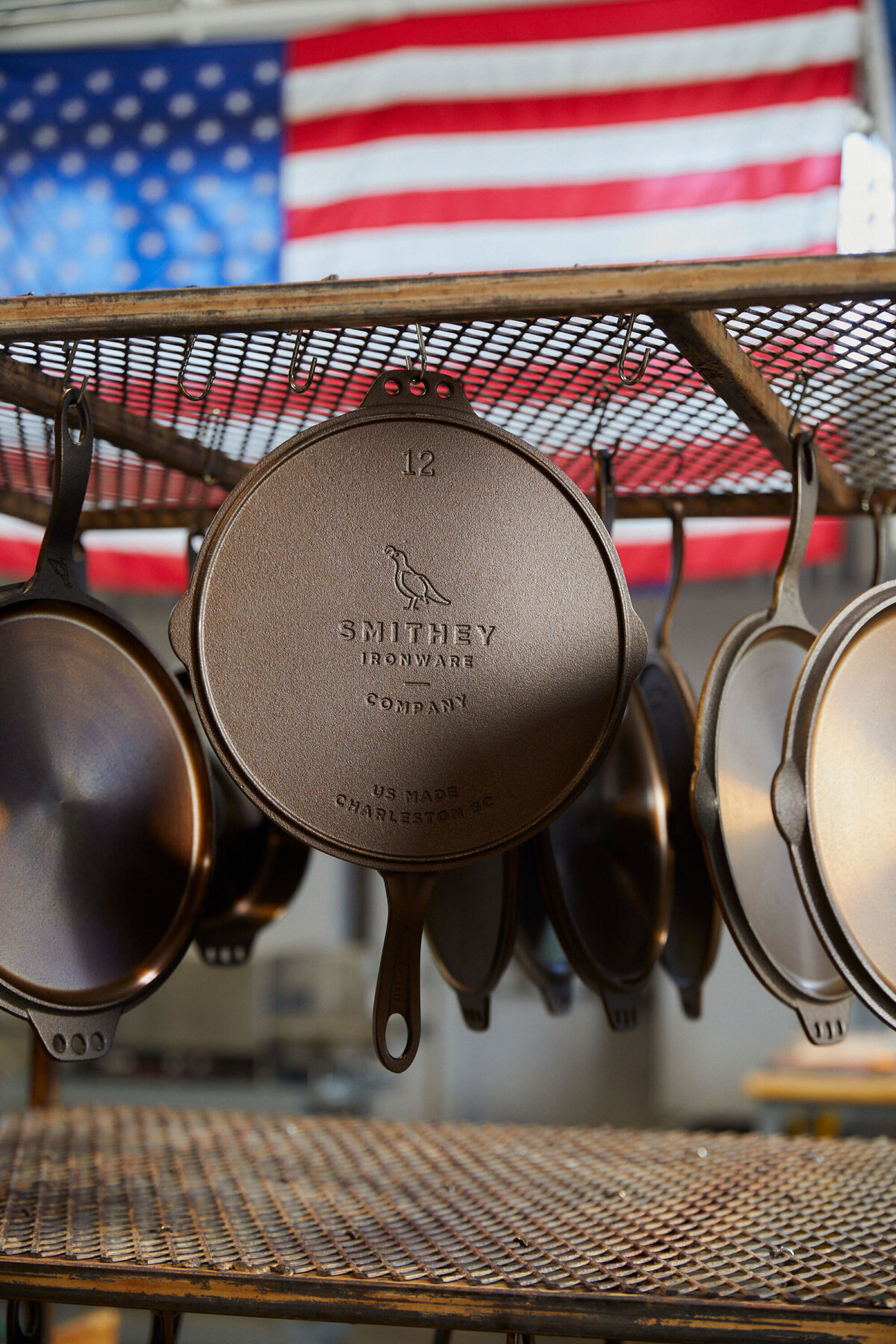
Smithey’s best-seller is the No. 12 Skillet ($220), a hefty cast iron skillet with a 10.5-inch cooking surface and 2.2-inch depth. It’s the family-size version of their original No. 10 ($180). Both feature a buttery smooth cooking surface and thoughtful pour spouts—especially useful given the pans’ heavy-duty nature. Our tester appreciated the No. 12’s sleek, deep copper-colored beauty; its ability to heat evenly and retain heat; and the ease of cooking on and cleaning the polished interior.
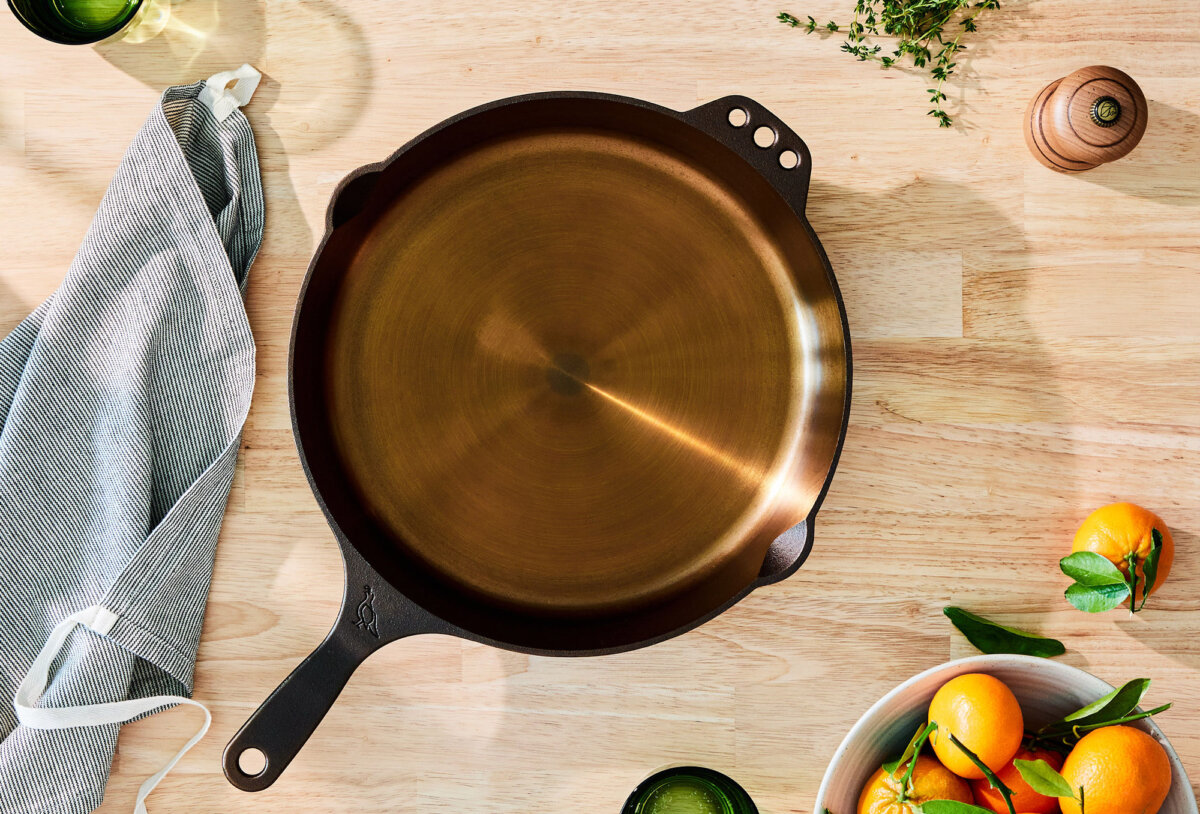
Once upon a time, your grandmother had to oil her cast iron, heat it, and let it cool repeatedly before use, baking layers of seasoning into the pan to create a non-stick surface. Smithey’s skillets come pre-seasoned with grape-seed oil, making them effectively non-stick out of the box. The seasoning may lift during the first uses, but regular use will rebuild it into a unique patina over time.
Smithey also makes a curved Chef Skillet for fried eggs and stir-fries, flat-top griddles for pancakes and pizzas, and weighty Dutch ovens for chilis and casseroles. Every piece is guaranteed for life.
This article was originally published in American Essence magazine.
