The Greeks have breached the walls of Troy.
They’ve slipped from the belly of the wooden horse, flung open the gates to their waiting comrades, and torn the Trojans from sleep into a nightmare of killing, rape, and plunder. The decade-long war is ending in slaughter, terror, and flames.
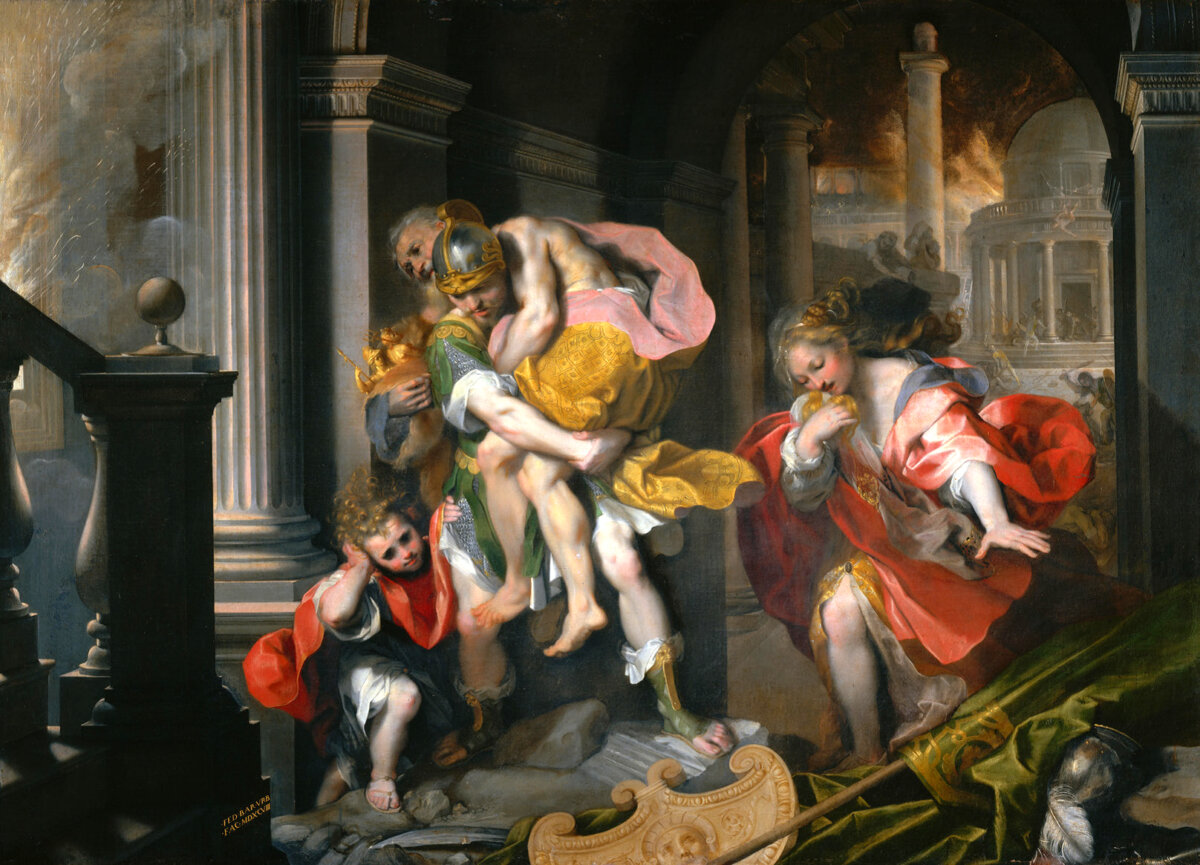
Awakened from sleep by the ghost of Hector, who tells him to take the city’s household gods and escape the butchery, one brave Trojan prince briefly battles the Greeks, witnesses the death of King Priam, then flees the carnage. Carrying his aged father on his back, he holds his young son’s hand and tells his wife, Creusa, to follow in his footsteps. After getting his father and son to a place of safety, he discovers that Creusa has gone missing, returns to Troy to search for her, and finds that she has been slain. Her ghost comforts him and tells him to leave burning Troy, that he is destined to make a home for himself and the other survivors in Italy.
This story is told in Book 2 of Virgil’s “Aeneid,” that classic epic that famously begins, “I sing of arms and the man.” The man is Aeneas, born from the coupling of legend with the poet’s imagination. In this mythical hero, we find the code of morality, manners, and manhood that was as familiar to the ancient Romans as the waters of the Tiber or the city’s seven hills.
Mos Maiorum
One of the early actions of Rome’s first emperor, Augustus Caesar (63 B.C.–A.D. 14), was to commission Virgil to write an epic poem about the fabled Aeneas, credited with bringing the people to the Italian peninsula from whom Rome’s founder, Romulus, would spring. Into Aeneas, Virgil poured the virtues developed and refined over 700 years, percolating down from the days of the kings and into the republic, values still very much alive in the time of Augustus and the early empire.
The particulars of this unwritten code fall under the heading of “mos maiorum,” meaning the custom of the ancestors. Here we find that yardstick of character values—virtus, pietas, gravitas, and more—that Romans, from senators to soldiers, were taught from childhood. A brief look into the “Aeneid” vividly illuminates these virtues.
Pietas
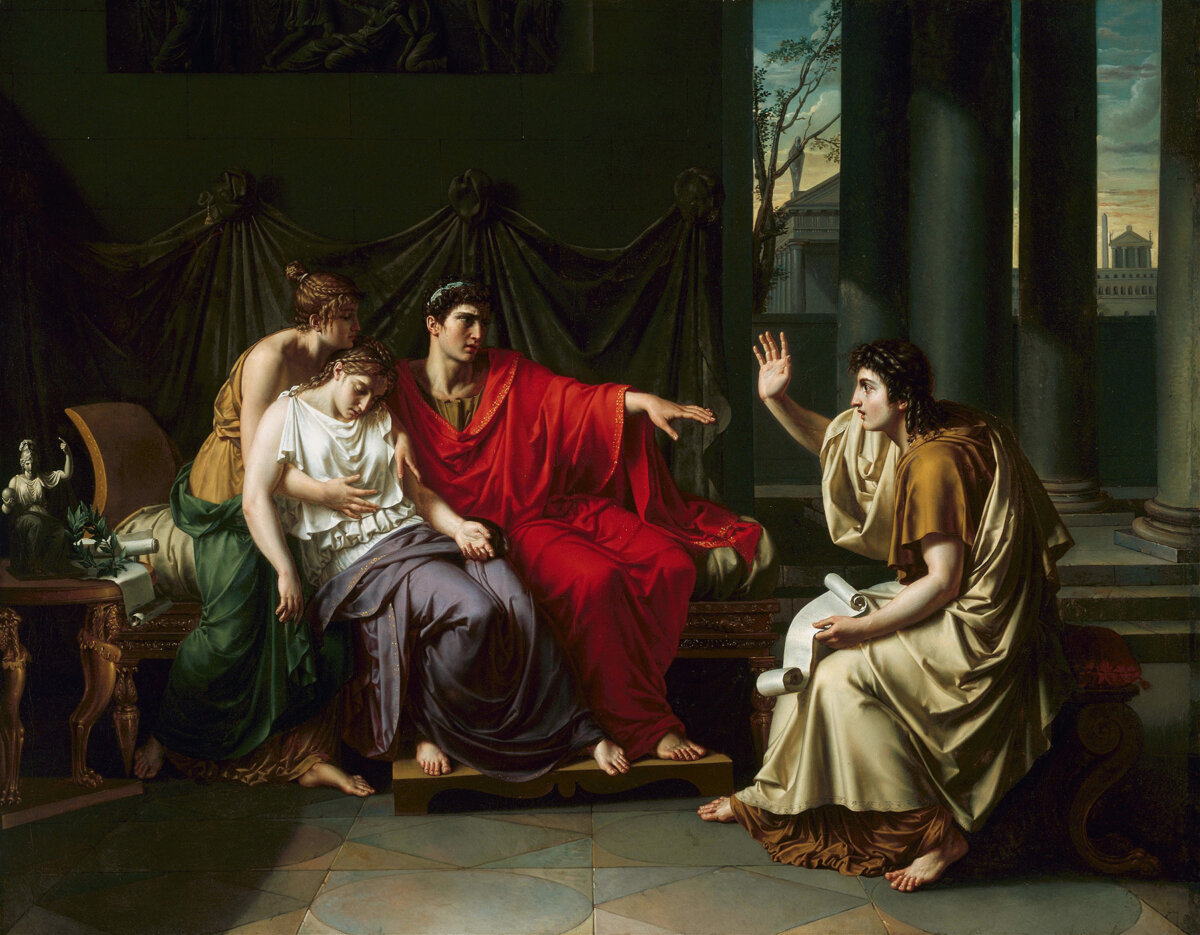
Virgil refers to his hero more than 20 times as “Pius Aeneas.” For us, piety implies religion, but for the Romans, the word summoned up not only the gods but also family and country.
When Aeneas escapes the destruction of Troy, he exhibits pietas on all these fronts. He carries his father, thereby honoring both a parent and the past. His father carries statuettes of the household gods, the Lares and Penates, which are considered essential to the establishment of a new city. This serves as an act of pietas. Aeneas holds his son by the hand and shows affection and concern for his wife, Creusa, alerting us to his love of family, yet another sign of devotion and duty.
For a Roman male of high moral character, pietas was a central virtue.
Gravitas
Just as appearance and bearing were important to the knights of the late Middle Ages and the gentleman in a Victorian drawing room, so too with the Roman man of any standing. To keep one’s cool, so to speak, under any circumstances constituted an essential element of manhood.
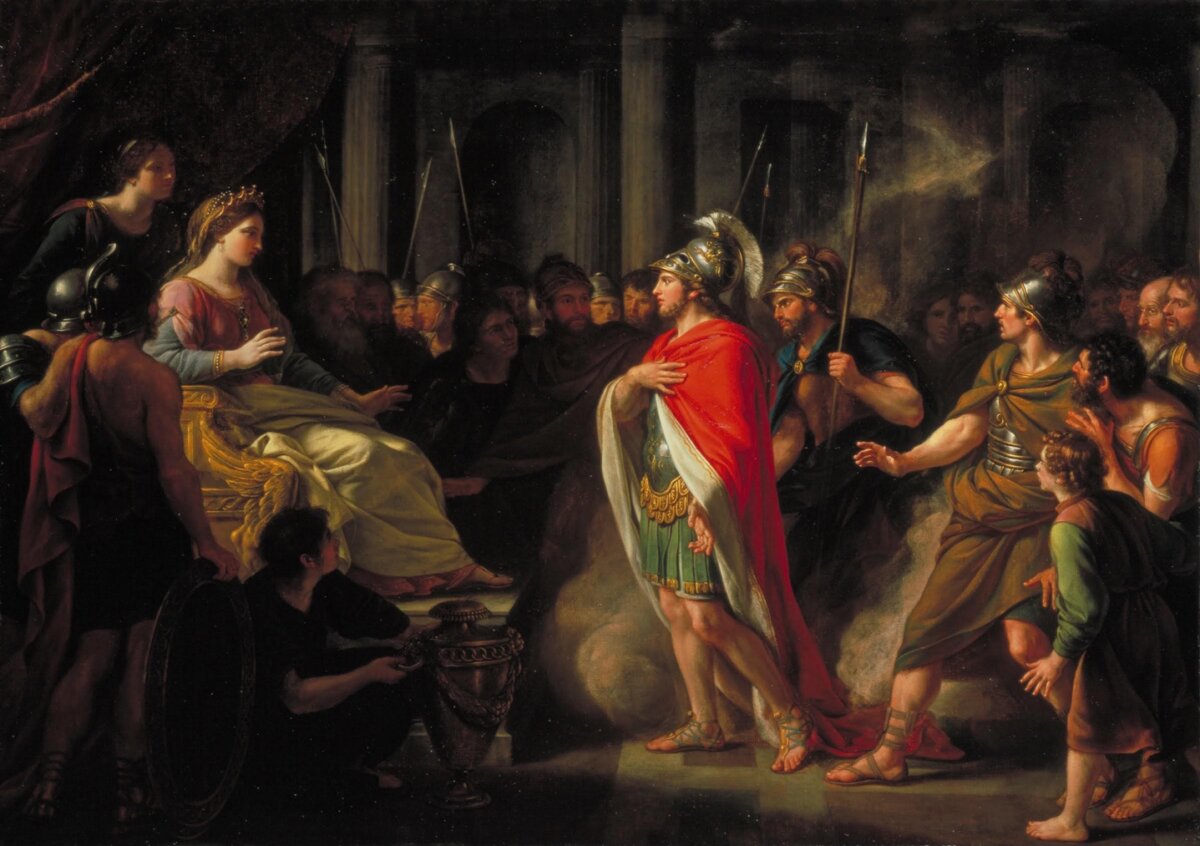
When he leads his despairing followers from Troy, Aeneas suppresses his grief and dons a stoic mask to calm the others. Later, when he breaks off his love affair with Dido, queen of Carthage, to continue his voyage and so fulfill his destiny to found the Roman race, he again puts aside his personal feelings in the service of a greater good. Dido hardly sees it this way, of course—she regards him as a thief of her affections and a liar about their marital status—but Aeneas carries through with his farewell.
Here’s just one historical example of Roman gravitas. In 387 B.C., a Gallic tribe, the Senones, invaded Italy and seized the city, leaving only Capitoline Hill still in Roman hands. The elderly senators and other state officials, dressed in togas, sat in chairs, awaiting the invaders. As the Gauls approached, they were awed by these men sitting still as statues. The spell was broken only when one Gaul stroked the beard of a senator and received a reproving wallop on the head with his staff. The Gauls quickly slaughtered him and the rest, but the Roman senators remained a prime source of gravitas.
One needn’t ponder too long what the Romans might make of today’s politicians and protesters.
Virtus
Both “virtue” and “virile” derive from this Roman word. For the Romans, virtus defined the ideals of manhood: courage in battle and in debate, strength of character in public and private affairs, largesse regarding others, and moral probity.
Here again, Aeneas served as a prototype for his audience, a reminder of the deepest meaning of manliness. Whether aboard ship during the Aeolian gales or in the murky darkness of the underworld, he faces trials bravely and with stoic determination to persevere.
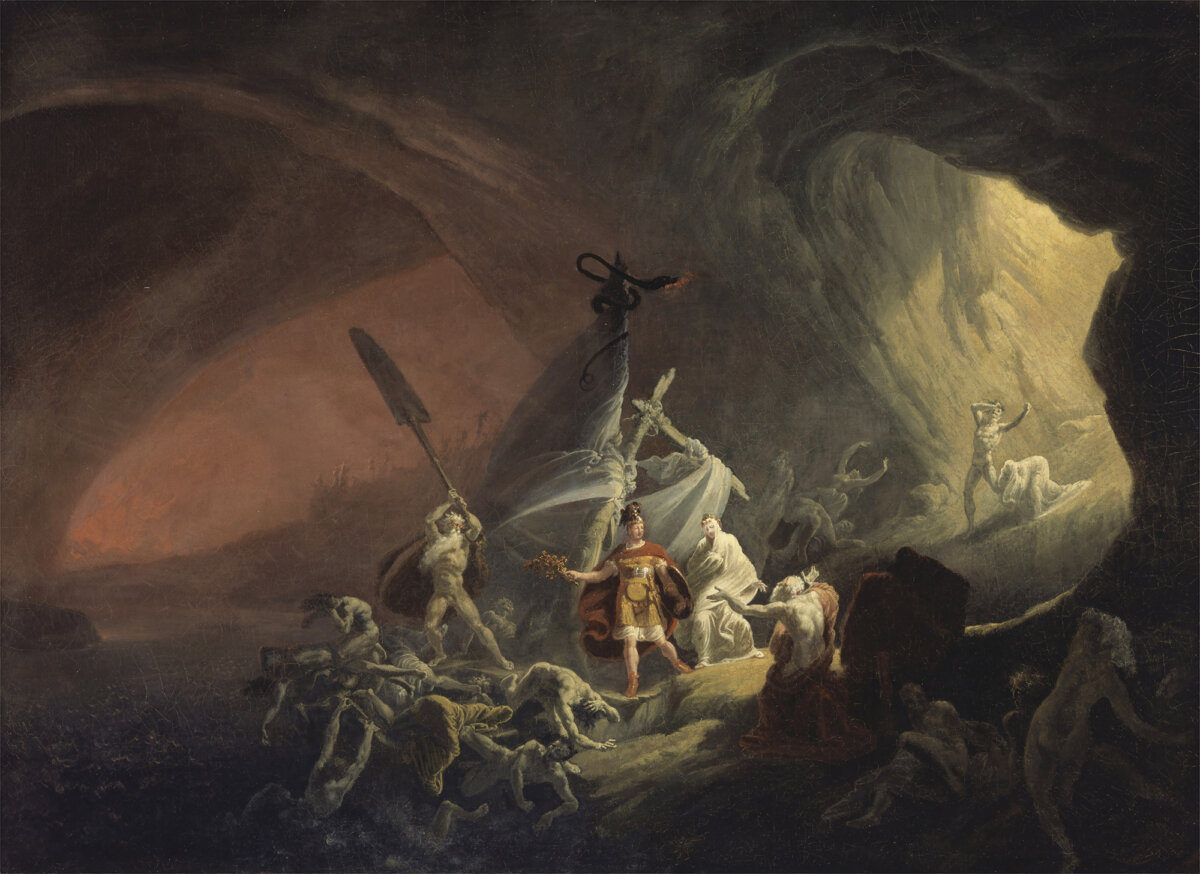
The men under his command often display this same mix of gravitas and fortitude. Following the destruction of their ships, the elderly Nautes says to Aeneas, “Son of the Goddess, let us follow wherever fate ebbs and flows/ Whatever comes, every fortune may be conquered by endurance.” This resistance to fate is virtus in action.
Some 200 years later, the emperor and philosopher Marcus Aurelius (121–180) bluntly wrote: “Waste no more time arguing about what a good man should be. Be one.”
A Roman born and raised in the mos maiorum would have known precisely what he meant.
Rome in the New World
And some 1,800 years later, many of America’s Founders understood those words as well. They were students of Roman literature and history and admirers of the virtues of the mos maiorum. Men such as John Adams, James Madison, and Thomas Jefferson read deeply in the classics, looking particularly to the republican Cicero as their guiding star in establishing an American government. Although uneducated in the classics, George Washington’s favorite play was Joseph Addison’s “Cato, a Tragedy,” which celebrated the ancient Roman patriot and the traditional virtues of manhood.
Moreover, Plutarch’s “Lives,” which contrasted good men with bad men, was widely read and studied during that time, second only to the Bible as the book most commonly found in American homes. Whether in the original or in translation, this classic deeply influenced not only the Founders but also other educated Americans, inspiring them to mirror the civic and personal virtues of the mos maiorum.
Many also absorbed Roman virtues from Virgil’s epic. Even today, the poet casts his shade on America. At the 9/11 Memorial & Museum in New York City, visitors find inscribed a line translated from Virgil’s “Aeneid”: “No day shall erase you from the memory of time.” The movie “Gladiator” expresses a similar sentiment that Virgil would have understood well: “What we do in life echoes in eternity.”
Two millennia separate us from Virgil and his “Aeneid,” but the code of Roman manhood he embedded in that epic still echoes in the hearts of men today.