These days, Labor Day is often seen as the unofficial end of summer, a final long weekend before school, fall sports, and the routines of a new season begin. The federal holiday became official in 1894, though its roots stretch back about a decade earlier to smaller, regional celebrations. The movement to honor American workers reflected a deeper transformation in American culture, shaped by the rise of the Industrial Age.
The American realist painter Charles Frederic Ulrich understood this shift. He focused on working-class people, a subject often overshadowed by the artistic opulence of the Gilded Age. With his finger on the pulse of the Western world, Ulrich painted genre scenes that captured the changing rhythms of working-class life.
Shaped by Old Masters
An award-winning genre painter, Ulrich (1858–1908) was born in New York City and studied art at the National Academy of Design and Cooper Union. In 1875, he traveled to Munich, Germany, where he enrolled at the Royal Academy of Fine Arts. There, Ulrich studied European Old Masters, including 17th-century Dutch painters such as Johannes Vermeer, Frans Hals, and Anthony van Dyck. His early work in Germany focused on peasant life, a subject that remained important throughout his career.
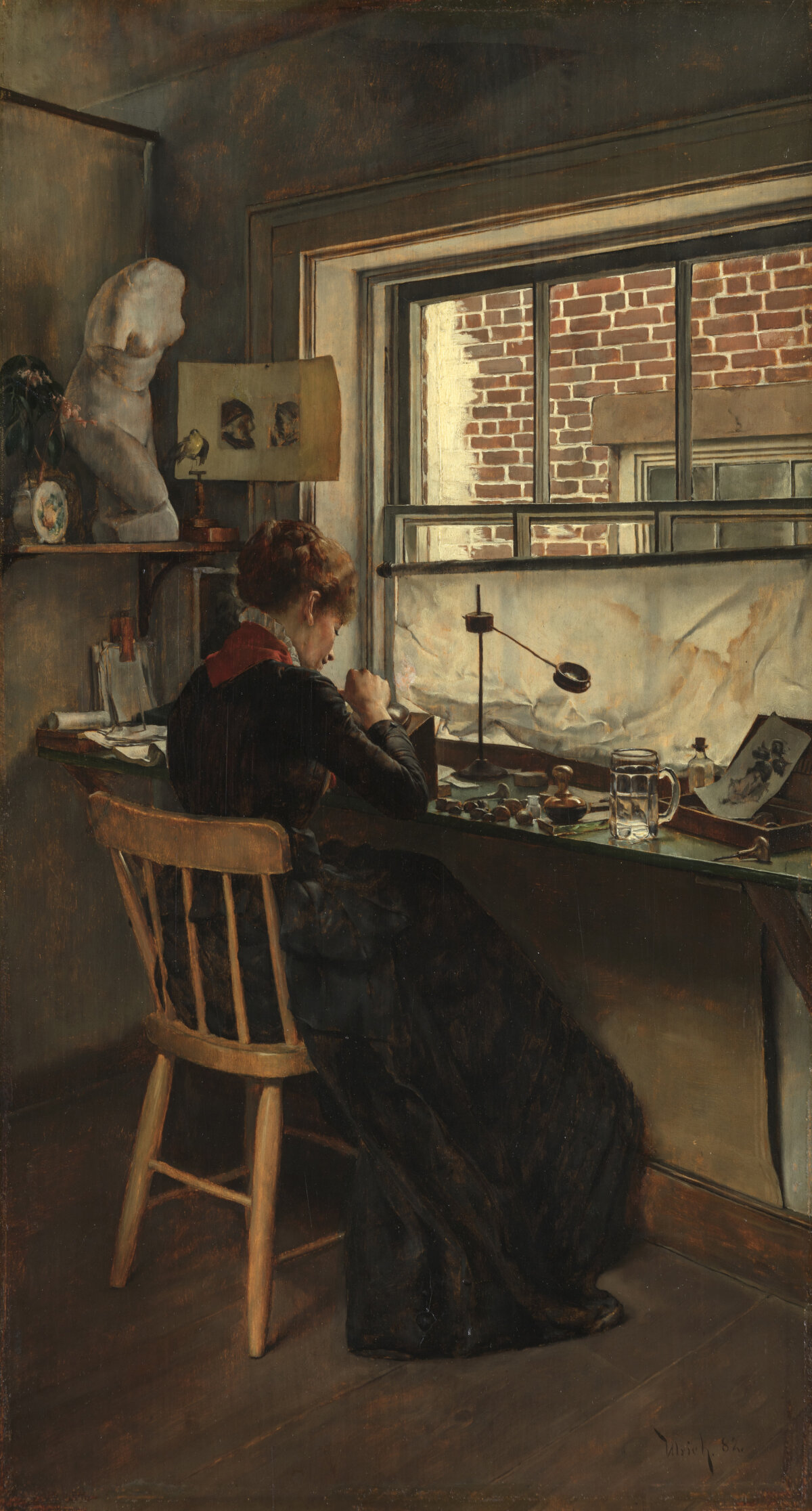
Ulrich returned to the United States around 1879 and spent several productive years in New York. In 1882, he debuted at the National Academy of Design with “The Wood Engraver,” a painting that portrayed a woodworker surrounded by the tools of the trade.
Portraits of Labor
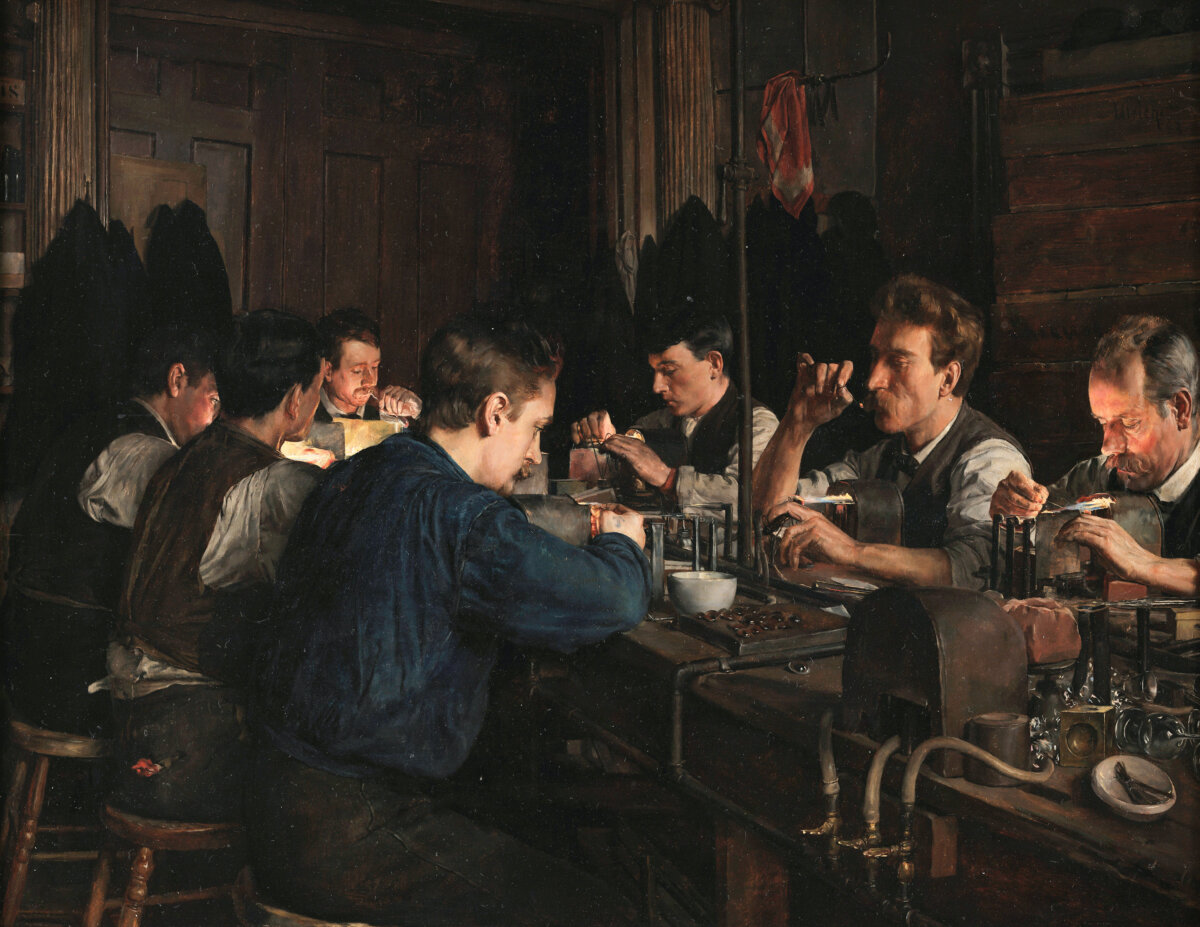
Ulrich’s interest in depicting workers soon became a defining feature of his genre painting. That same year, he produced “The Glassblowers,” depicting a team of men engaged in the demanding process of heating, shaping, and finishing glass products.
In the 1880s, glassblowing was a highly skilled form of industrial labor that required years of training. The work was physically demanding and sometimes dangerous, exposing workers to burns, cuts, respiratory problems, and toxic substances like lead. Still, their labor was essential to an expanding industrial economy, as demand for glass bottles, windows, household goods, and decorative objects increased. It would be another 20 years before the automatic bottle-blowing machine reshaped the industry.
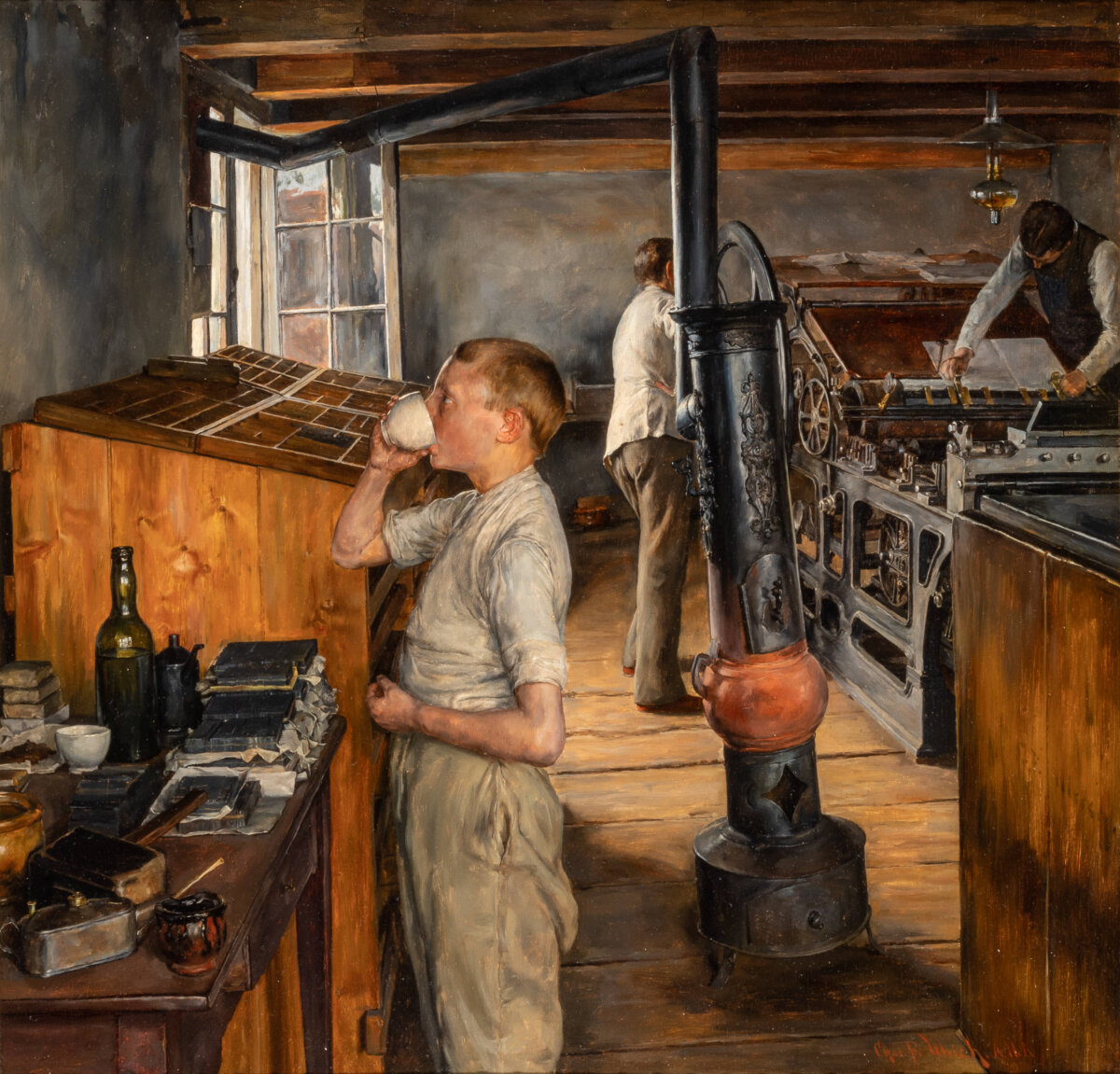
A year later, Ulrich turned to typesetters as his subject, painting “The Village Printing Shop, Haarlem, Holland.” With a sensitive eye, Ulrich captured the tedious, manual nature of typesetting, in which workers arrange words letter by letter into precise lines so text could be cleanly printed for publication. In the painting, a window stands open for ventilation as a boy drinks coffee and two men work at a large printing machine.
The long hours and occupational risks that came with glassblowing and typesetting connected these workers to the growing American working class and its support for improving labor conditions. This was a subject Ulrich found especially compelling, as he cared deeply about the workers behind the trades.
Ulrich Abroad
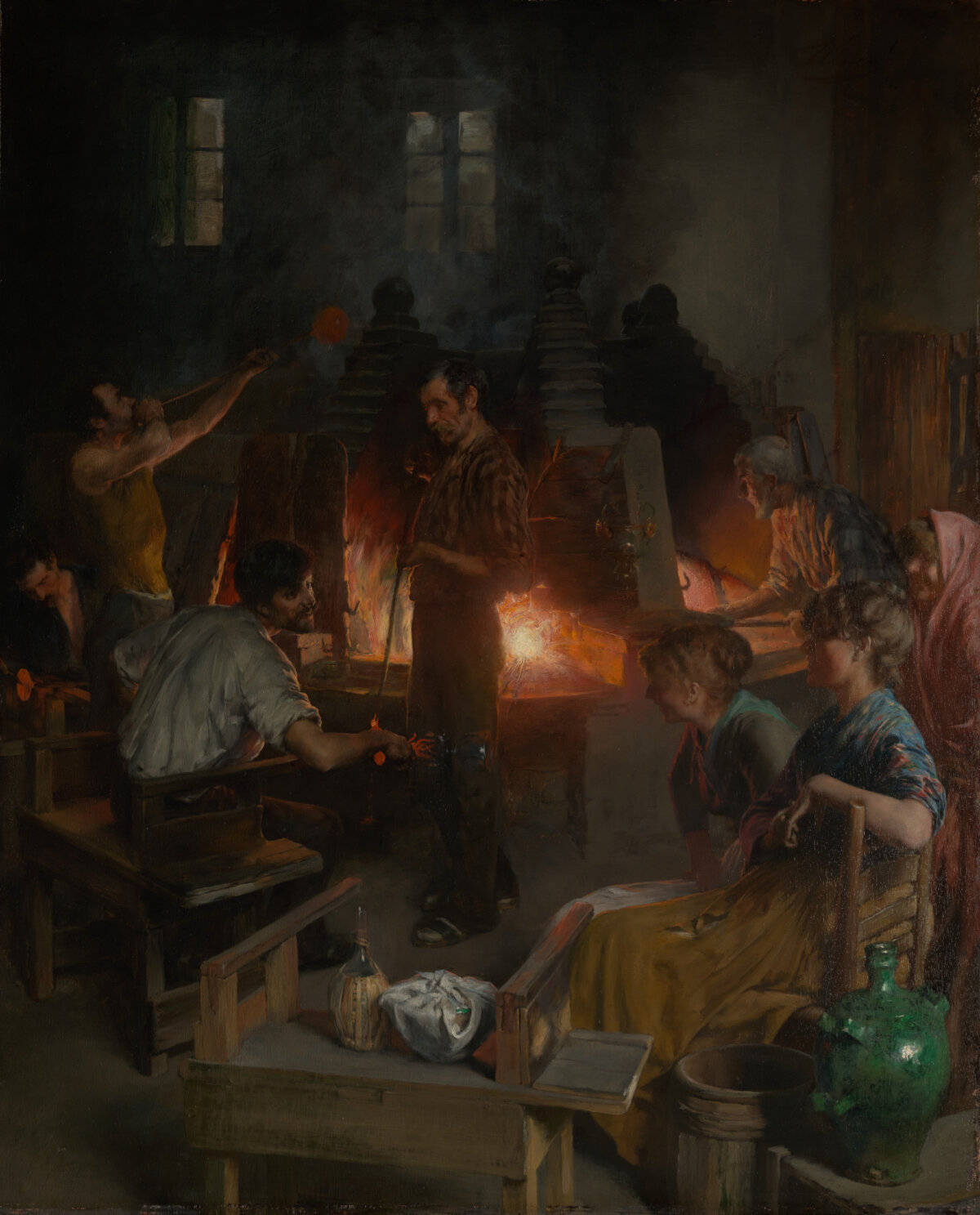
Ulrich returned to Europe in 1884 and spent most of his remaining life there. His travels allowed him to continue developing his interest in everyday life while maintaining his focus on working-class subjects. He settled in Venice in 1886, where he painted another glassblowing scene, this time workers in Venice, titled “Glass Blowers of Murano.”
He continued to travel between Venice, the Netherlands, and Rome while maintaining connections with American artists and exhibiting internationally at venues including the Royal Academy in London and the Munich Glaspalast.
His work remained grounded in the traditions of realism and in the people who built the world around him. Today, his paintings hang in major collections, including the Metropolitan Museum of Art, the National Gallery of Art, the Brooklyn Museum, and the Pennsylvania Academy of the Fine Arts, quiet reminders of the workers who rarely appeared in the era’s grander artistic narratives.
Ulrich died of pneumonia in Berlin in 1908, but his portraits of labor remain a fitting tribute to the very people Labor Day was created to honor.
What arts and culture topics would you like us to cover? Please email ideas or feedback to features@epochtimes.nyc.