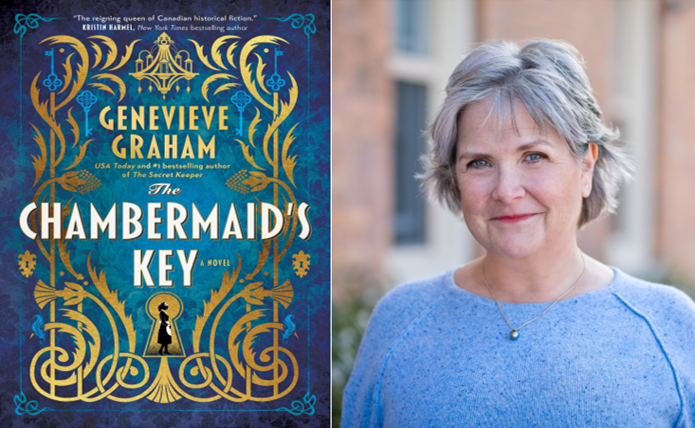
On the surface, the main characters of “The Chambermaid’s Key” are two young women separated by 100 years, each trying to find meaning, love, and a bright future in similar ways. However, there’s arguably also a third heroine at play: an opulent hotel in Canada’s biggest city inspired by a real-life landmark.
Author Genevieve Graham’s dual-timeline novel opens in 1929 Toronto with 17-year-old Roisin “Rosie” Ryan, an Irish Canadian girl living in The Ward, a poor immigrant area of the city. Her mother is long dead, her father is laying carpet in a Montreal hotel, her twin brothers pick pockets between rare visits home, and her granny is ailing but still feisty.
Rosie has every reason to expect a small life, but she refuses to live one. Saving every extra coin she makes under a loose floorboard, she puts in time at the old Queen’s Hotel laundry and walks across the city every day to watch the new Dominion Hotel being built across from Union Station.
Finally, when the hiring line forms at the new hotel’s side entrance before dawn, she’s right there. Her work ethic and experience impress the head maid, Mrs. Evans, and she’s hired as a chambermaid, a dream come true for her.
Nearly a century later, Bridget Kelly is happily working as a building inspector at Vale’s Property Inspections. Her boss, Claudia Vale, has a socialite’s attitude. She’s the kind of person who orders Champagne Taittinger and oysters at the Library Bar and brags about paying off the right people to clear the way for a contract.
When Claudia hands Bridget an assignment to inspect new renovations at the famous Dominion, Bridget is thrilled. She’s loved the hotel for years and treats the assignment as the prize it is.
Historical Resemblance
Anyone who’s ever lived in or visited Toronto will recognize the fictional Dominion almost immediately as a thinly veiled twin of the famous Fairmont Royal York. Graham acknowledges the similarity, saying the Royal York “inspired” her story but that she changed the name to respect “the integrity of a beloved Canadian landmark.”
Like its fictional counterpart, the real Fairmont opened on June 11, 1929, an Art Deco architectural marvel at the time and briefly the tallest building in the British Commonwealth. Both Rosie and Bridget are very much enamored with the regal hotel—Rosie for its cutting-edge achievement and the possibilities it holds and Bridget for its long history and timeless elegance.
Through their connections with the hotel, they each cross paths with men who change their lives.

A Romantic Suite
During the hotel’s opening gala, a green-eyed, devilishly handsome waiter named Damien Walsh notices Rosie in a way that modern readers would probably call a “meet-cute.” He waits for her outside the staff door to offer her some stolen kitchen food and have an impromptu dinner date in the alley.
He’s 18, an orphan, and utterly charming in the way boys who’ve raised themselves often are. Though he’s very good to Rosie, the people he associates with could cost her dearly.
Rosie, being industrious and highly focused, isn’t interested in romance. “I’ve no time for a man in my life,” she firmly tells herself. Besides, she’s starting to foster a personal connection with the surprisingly kind Mrs. Evans, who takes Rosie under her wing.
Rosie’s best friend, a 16-year-old Italian girl named Bianca, starts begging her to speak with Mrs. Evans about getting her a job. Rosie loves Bianca but knows the girl can be undisciplined and a gossip, two traits that could get them both into trouble if they worked together.
As for Bridget, love isn’t on her mind. She’s only interested in ensuring that the restoration of her beloved hotel is being done safely and to code. However, as in so many romantic stories, Cupid has plans of his own for her.
In both timelines, the Dominion turns out to hold more than just guests. Rosie finds herself working a floor where the very wealthy don’t always conduct lawful business, and Bridget, walking the same building’s subbasement nearly 100 years later, finds her own version of that problem waiting behind a door that doesn’t appear on any blueprint.
A Luxurious Read
Comparisons between this book and the TV series “Downton Abbey” can be easily made, and fans of that show will likely delight in “The Chambermaid’s Key.”
With Rosie’s story, author Graham weaves vivid, characterful images of the poor neighborhoods of The Ward, the high-class opulence and spectacle of the Dominion, and the people who inhabit both worlds. Her depictions of the first year of the hotel are utterly delightful and can easily linger in your imagination.
Rosie herself is a welcome relief as a heroine, a deeply realized character whom you start rooting for almost right away. She’s smart, capable, admirable, yet still vulnerable in the ways that all teenagers are.
Set in a modern metropolis, the Bridget portions don’t quite live up to the standard Graham sets with Rosie’s world. However, the suspense plotline she creates which Bridget has to overcome makes up for it nicely.
Contrasting the two eras of Toronto, along with the inevitable connection between the two women, helps craft a truly excellent romantic, historical adventure.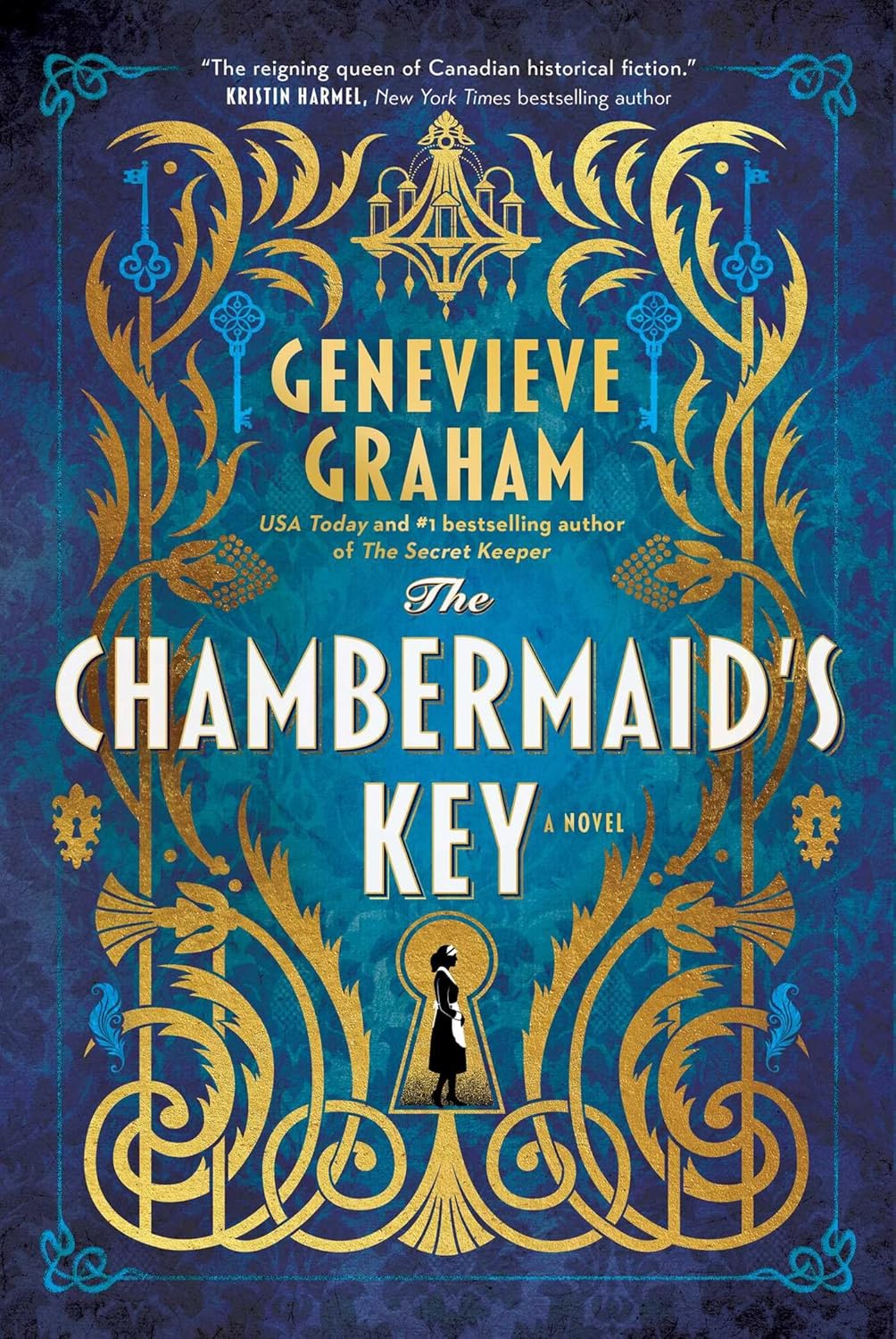
‘The Chambermaid’s Key’
By Genevieve Graham
Simon and Schuster: April 21, 2026
Paperback, 400 pages
What arts and culture topics would you like us to cover? Please email ideas or feedback to features@epochtimes.nyc