




Although the battle described in Alfred, Lord Tennyson’s poem “The Charge of the Light Brigade” was a military disaster, its conquest of the culture and of the hearts of readers was tremendously successful.
The poem is captivating in its idea of being obedient even unto death and in following what one knows is a faulty order. Most would think it a terrible thing to die for—that the idea of following such an order is absurd.

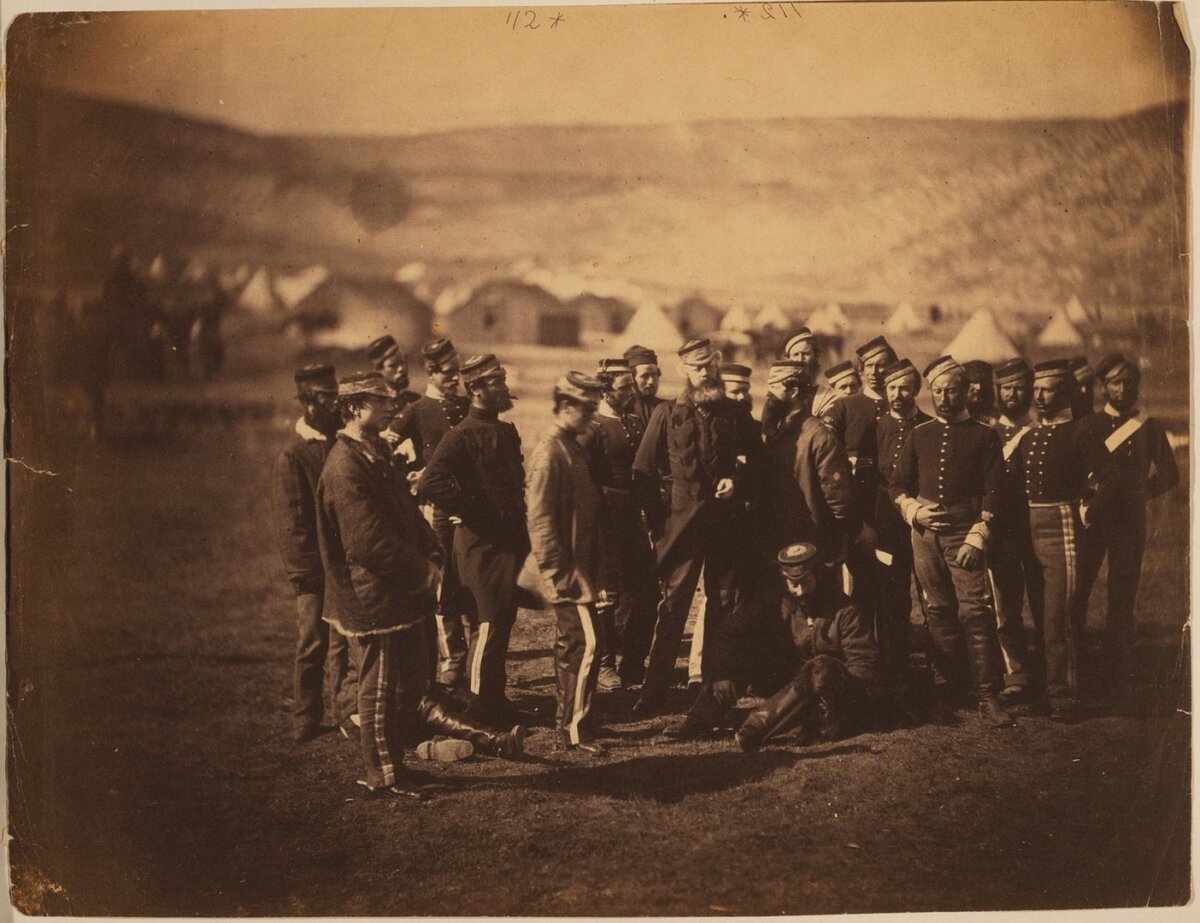
Yet on Oct. 25, 1854, during the Crimean War, the Battle of Balaklava witnessed what would go down in history as one of the most famous military blunders. The Crimean War was a conflict between Russia and the alliance of the Ottoman Empire, France, Britain and Sardinia; the war began when Russia invaded the Turkish Danubian principalities of Moldavia and Wallachia. Britain and France fought the war in the interest of resisting Russian expansionism in the Near East, and to aid the failing Ottoman Empire.
In the Battle of Balaklava, a Russian force under Prince Aleksandr Sergeyevich Menshikov mounted an attack in the direction of the British supply port of Balaklava. Checked by Maj. Gen. Sir Colin Campbell’s Highland Brigade, the Russians began to retreat and were charged by the British Heavy Cavalry Brigade commanded by Maj. Gen. Sir James Scarlett.
Gen. Lord Raglan, from his position on higher ground, saw that the Russians had begun to remove the guns from the redoubts they had captured. He sent out a vague order which read:
“Lord Raglan wishes the cavalry to advance rapidly to the front, follow the enemy & try to prevent the enemy carrying away the guns. Troop Horse Artillery may accompany. French cavalry is on your left. Immediate. R. Airey.”
The cavalry commanders were unsure as to which guns he referred to. Lord Lucan, the cavalry division commander, and Lord Cardigan, commander of the Light Brigade, did not have the same view as Raglan and could only see a Russian artillery battery at the end of a heavily defended, shallow valley.
Despite the miscommunication of their commanders, the soldiers followed their orders. Cardigan led a charge that killed 247 of 673 men. He later said,
“We advanced down a gradual descent of more than three-quarters of a mile, with the batteries vomiting forth upon us shells and shot, round and grape, with one battery on our right flank and another on the left, and all the intermediate ground covered with the Russian riflemen.”
More were not killed because the French cavalry led a maneuver to help the survivors make their way back through the valley.
Poetic Charge
The start of Tennyson’s poem encapsulates the determined charging forth of the troops:
Half a league, half a league,
Half a league onward.
Tennyson then echoes Lord Raglan’s orders:
“Forward, the Light Brigade!
Charge for the guns!” he said.
Into the valley of Death
Rode the six hundred.
The repetition of the same lines throughout the poem creates an insistent volley of the words upon the reader, imitating the persistence of the charge and the volley upon the soldiers. The falling rhythm of the poem (with the stress on the first beat of each foot) mimics not only the cadence of the horses’ galloping but also the fall of so many of the riders.
The second stanza, containing some of the most famous lines of the poem, raises the question of to what point man must obey authority figures. After all, as Tennyson states, the soldiers knew that “someone had blundered,” and many of us would balk at the idea of obeying what we know to be a poor decision. It seems almost folly to die a martyr for obedience, yet Tennyson states that it is their duty to do so:
Theirs not to make reply
Theirs not to reason why,
Theirs but to do and die.
Death to Self
In the “Summa Theologica,” St. Thomas Aquinas writes:
“God left man in the hand of his own counsel, not as though it were lawful to him to do whatever he will, but because, unlike irrational creatures, he is not compelled by natural necessity to do what he ought to do, but is left the free choice proceeding from his own counsel. And just as he has to proceed on his own counsel in doing other things, so too has he in the point of obeying his superiors. For Gregory [Pope St. Gregory I] says in Moral. xxxv [“Morals on the Book of Job” Book XXXV], ‘When we humbly give way to another’s voice, we overcome ourselves in our own hearts.’”
Spiritually speaking then, though to some it may seem a loss and something at which “all the world wondered,” the faithful soldiers were triumphant in pursuit of virtue through dying to self. They were victorious on the spiritual battlefield if not on the worldly one.
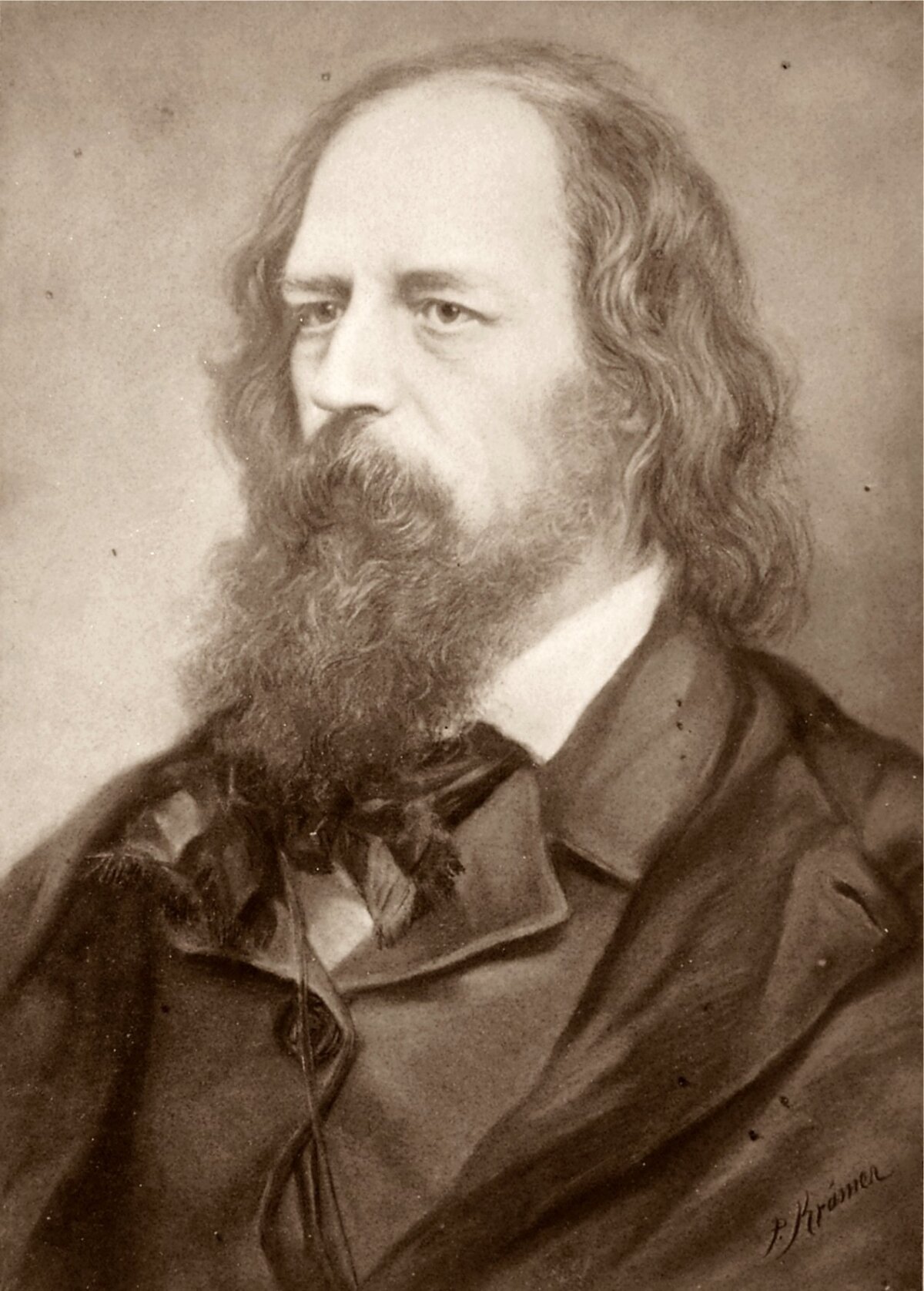
The religious undertones of the poem, with the reference to Psalm 23 in the phrase “the valley of Death” and the repeated reference to the “mouth of hell,” bear testimony to this point.
The soldiers’ free submission to their superiors’ will, even when they knew their superiors to be in the wrong, elevates their level of virtue beyond even just courage and heroism. Tennyson concludes the poem:
Honour the charge they made!
Honour the Light Brigade,
Noble six hundred!
It is the height of selfless love to die for another or for one’s country. But it is the height of the virtue of obedience to carry out the command of such a sacrifice. So long as it does not bid us to do evil, it is correct to obey rightful authority even when such authority is not in the right.
The 600, in showing both their lives and their wills were wholly in the service of their country, demonstrate a height of virtue worthy of honor. Tennyson’s poem shows they are more deserving of glory than that which can be won on the battlefields of the world.
What arts and culture topics would you like us to cover? Please email ideas or feedback to features@epochtimes.nyc
