



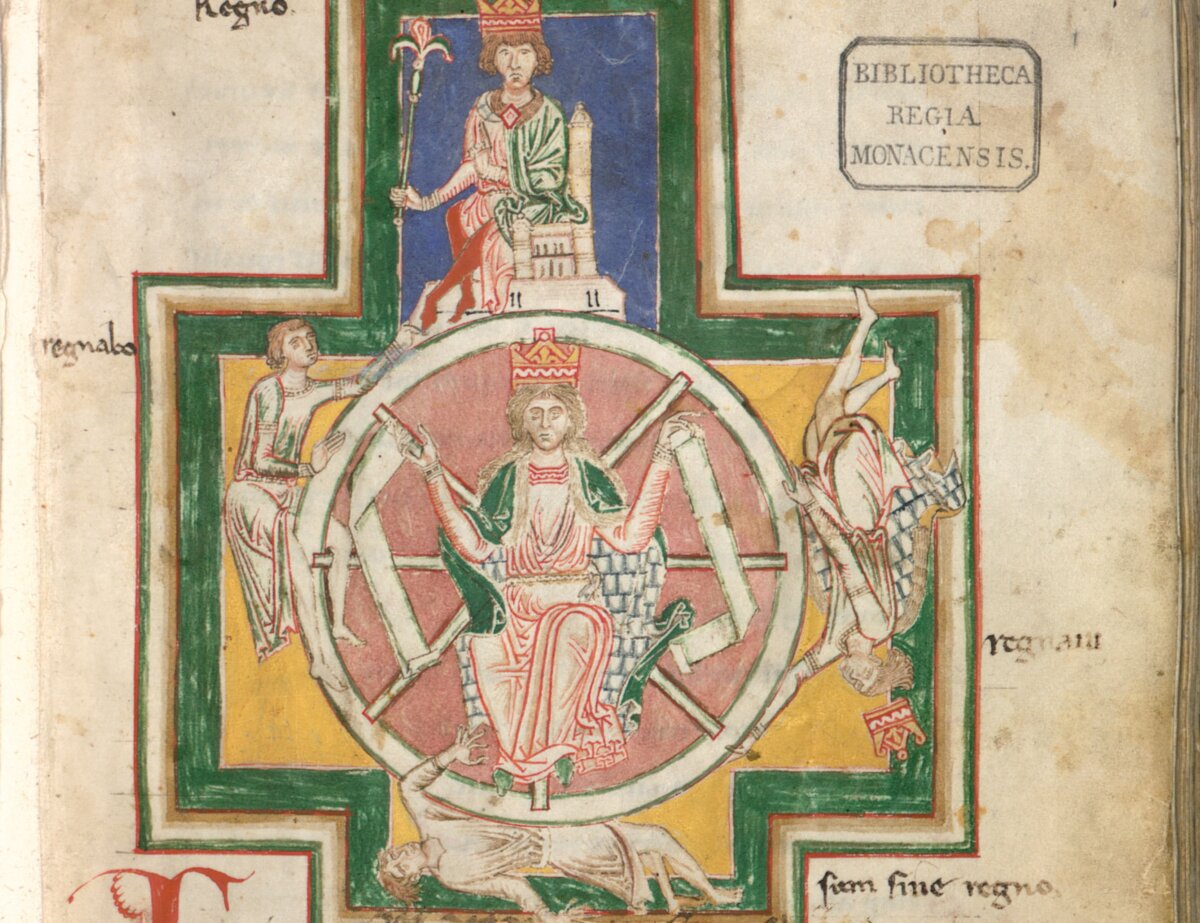
Carl Orff, born in July 1895, composed numerous pieces, including 18 stage works. Among these, he is best known for the thunderous cantata “Carmina Burana.” It was his first major work, one that he started writing when he was already 40.
It has become one of the most popular classical works of the 20th century. But what is it about “Carmina Burana” that continues to grip audiences nearly a century after its premiere?
Finding Music Within
Even if Orff had never composed any memorable music, we would still remember his name today. Early in his career, before he turned to serious composition, he founded a school in Munich where he developed a new method of teaching music to children.
He realized that children need to experience music inside themselves to enjoy it—before learning at a desk. He integrated music into children’s everyday activities: dancing, playing, and doing gymnastics. The “Orff Schulwerk,” or “Orff Approach,” as it is now known, can best be summed up with his famous quote: “Tell me, I forget. Show me, I remember. Involve me, I understand.”
During this time, Orff also composed works in a late Romantic style. But he came to believe that the classical forms had exhausted themselves and began looking around for the inspiration to create something new. He eventually found it in the most unlikely of sources.
Looking to the Past
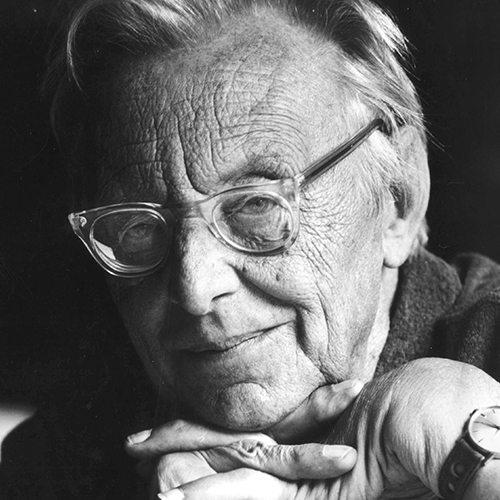
“Carmina Burana” is the Latin name for “Songs of Benediktbeuern,” a German village in the foothills of the Bavarian Alps. It was in the monastery of this village where, in 1803, a librarian discovered a 13th-century manuscript containing more than 300 poems.
The poems, secular and humorous, were largely intended for singing. Love songs, drinking songs, and satires abound. Most were written by anonymous “goliards,” or wandering clerical scholars, although some have been ascribed to known figures. The greatest of these was the “Archpoet,” a 12th-century cleric who is considered one of the best Latin poets of the Middle Ages.
The linguist J.A. Schmeller printed the collection in 1847, naming it “Carmina Burana” after the place where it was discovered. The manuscript, however, was probably produced in the southern Alps and only came to rest in Benediktbeuern sometime in the 18th century.
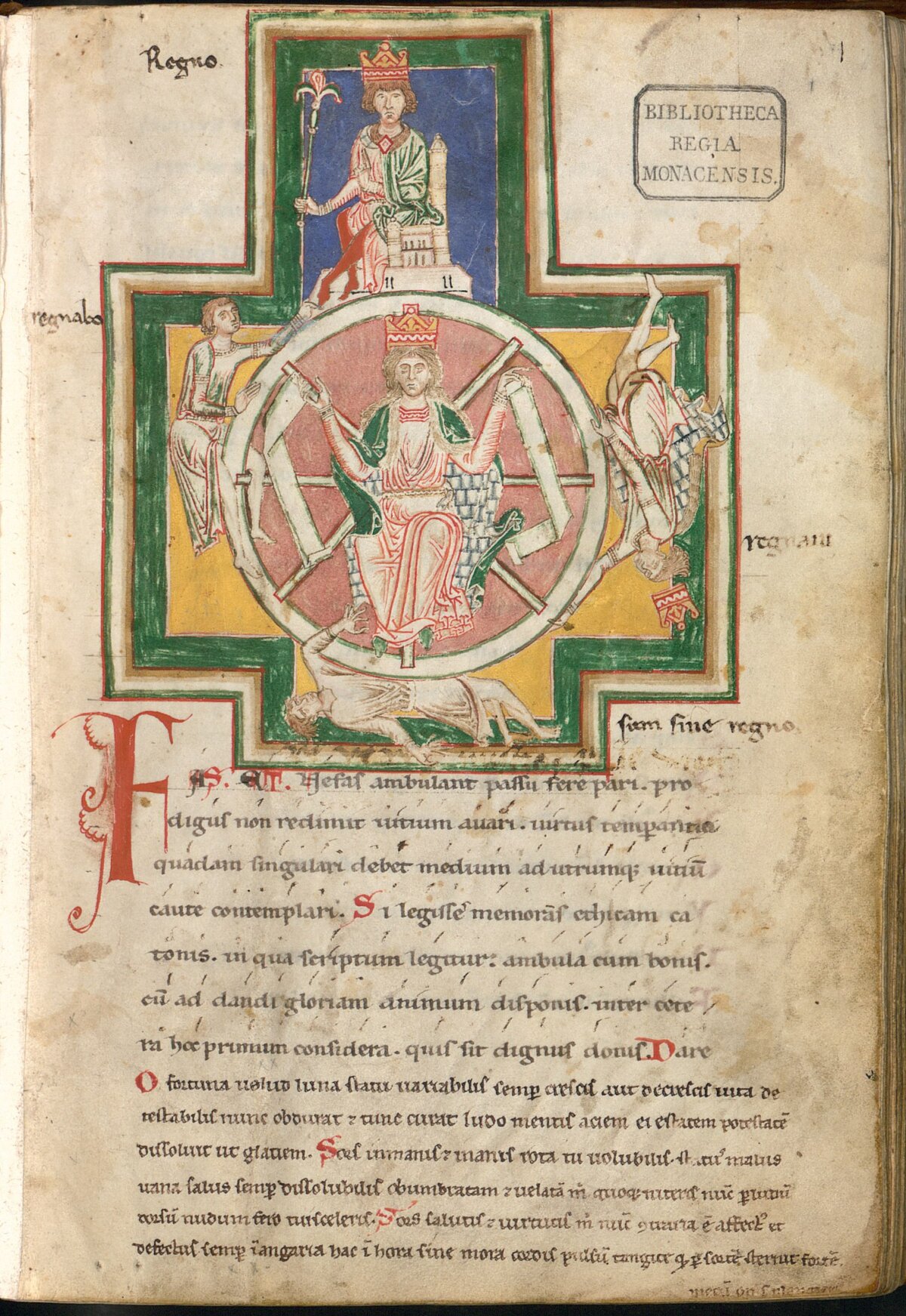
Some of the pages of the original manuscript were lost or bound out of sequence, presenting a problem for Schmeller when he published it. He rearranged the poems, giving them a more coherent structure. To open and close the work, he chose an obscure song that is now world-famous. The first stanza of the poem reads:
O Fortuna,
velut luna
statu variabilis,
semper crescis
aut decrescis;
vita detestabilis
nunc obdurat
et tunc curat
ludo mentis aciem,
egestatem,
potestatem
dissolvit ut glaciem.
In English:
O Fortune,
variable
as the moon,
always dost thou
wax and wane.
Detestable life,
first dost thou mistreat us,
and then, whimsically,
thou heedest our desires.
As the sun melts the ice,
so dost thou dissolve
both poverty and power.
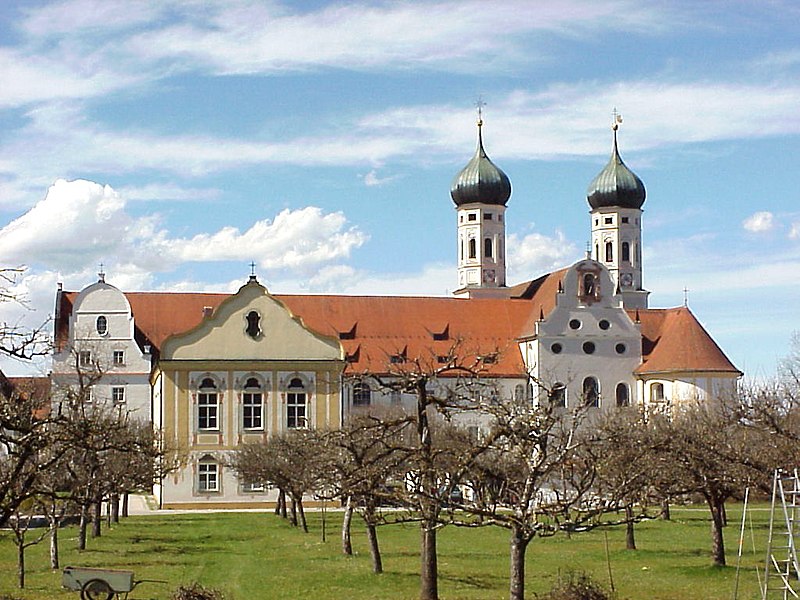
The lines refer to the Wheel of Fortuna and how it influences human lives as it turns. Like the moon, Fortuna changes, bringing both happiness and misery.
From Page to Stage
Schmeller’s arrangement would come to have a profound influence on how the work was perceived. Almost a century later, in 1935, Carl Orff stumbled upon Schmeller’s book. He opened it and was immediately struck by the first page, where “O Fortuna” was featured.
Here, he thought, was something with great potential for a musical work. Where most composers of his day went beyond the late Romantic style by turning to atonal experiments, Orff avoided this pitfall. He reached far back into history to create a bold new form of expression—one medieval yet modern.
He selected 24 of the poems from Schmeller’s compilation. In setting them to music, he didn’t try to imitate medieval styles of chanting. Instead, he thought of the young children at his school. He had always taught his students to feel the elemental rhythms in basic aspects of life like breathing and walking. Now he applied this idea to his own music and filled his cantata with a large percussion section driving the work with primal rhythms.
There is no complex melodic development, harmonic progression, or counterpoint in the “Carmina.” Melodies consist of simple scales, repeated to hypnotic effect. Nor does the chorus “sing” in any modern sense of the term. Instead, vocal parts employ speech-like rhythms in parallel intervals.
Similar to how he taught his children music through movement, his “scenic cantata” also integrated music with dance and drama.
As in Schmeller’s arrangement, Orff bracketed his composition with “O Fortuna,” representing the cyclical nature of the piece. After a thunderous introduction, the movement subsides to a quiet build. The tonal center is in a D minor key, and harsh dissonances create a feeling of unease in the listener. A little over halfway through, the tempo accelerates and the dynamics escalate to fortissimo. On the final syllable at the very end, there is an abrupt shift from D minor to D major, symbolizing the unpredictability of fate.
After “Carmina Burana” premiered in June 1937, Orff told his publisher that “Everything I have written to date, and which you have, unfortunately, printed, can be destroyed. With ‘Carmina Burana,’ my collected works begin.”
Orff later wrote two companion pieces to “Carmina”: “Catulli Carmina” (Songs of Catullus) and “Trinfo di Afrodite” (Triumph of Aphrodite). Together, these works form a trilogy of cantatas, “Trionfi” (Triumphs).
Once, Orff was asked why he always chose old material to set to music. “I do not look upon them as old,” he responded. “The time element disappears, and only the spiritual power remains. My entire interest is in the expression of spiritual realities.”
From Stage to Film
Arguably, Orff’s influence has not been in the elite realm of classical music itself, where avant-garde composers went (and continue to go) in a largely atonal direction that has alienated general audiences. Orff’s impact on cinema and film scores, though, is impossible to deny.
“O Fortuna” has been featured in countless movies and television shows to the point where it is now a cliché. Perhaps the most iconic use of this is in the 1981 film “Excalibur,” a retelling of the King Arthur legend. Orff’s chorus rises in pivotal scenes, intensifying the drama and sense of fate woven throughout the story.
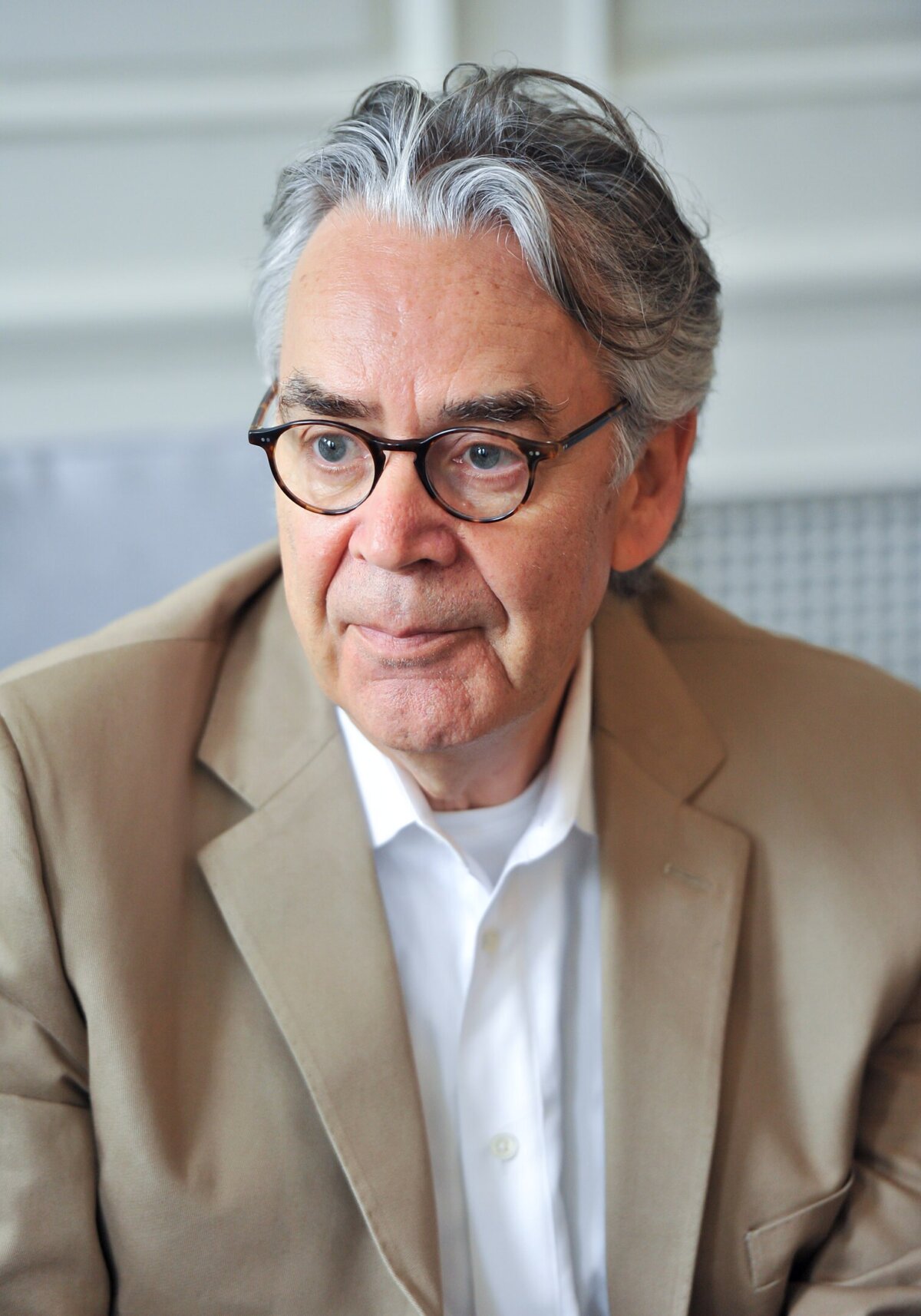
Beyond the direct use of “Carmina Burana” excerpts, Orff’s work has helped inspire the use of Latin chant in cinema. When listening to the Nazgul theme in “The Lord of the Rings” films, composed by Howard Shore, it’s difficult not to think of Orff. Shore certainly didn’t need to steal from Orff to create his score, of course, for the Latin-sounding chant is actually a fictional language constructed by J.R.R. Tolkien.
There is so much fateful Latin chant music out there that owes a debt to Orff, though, that his stamp seems to be everywhere on the genre. He remains one of the few 20th-century composers whose work is recognizable generally.
What arts and culture topics would you like us to cover? Please email ideas or feedback to features@epochtimes.nyc
